

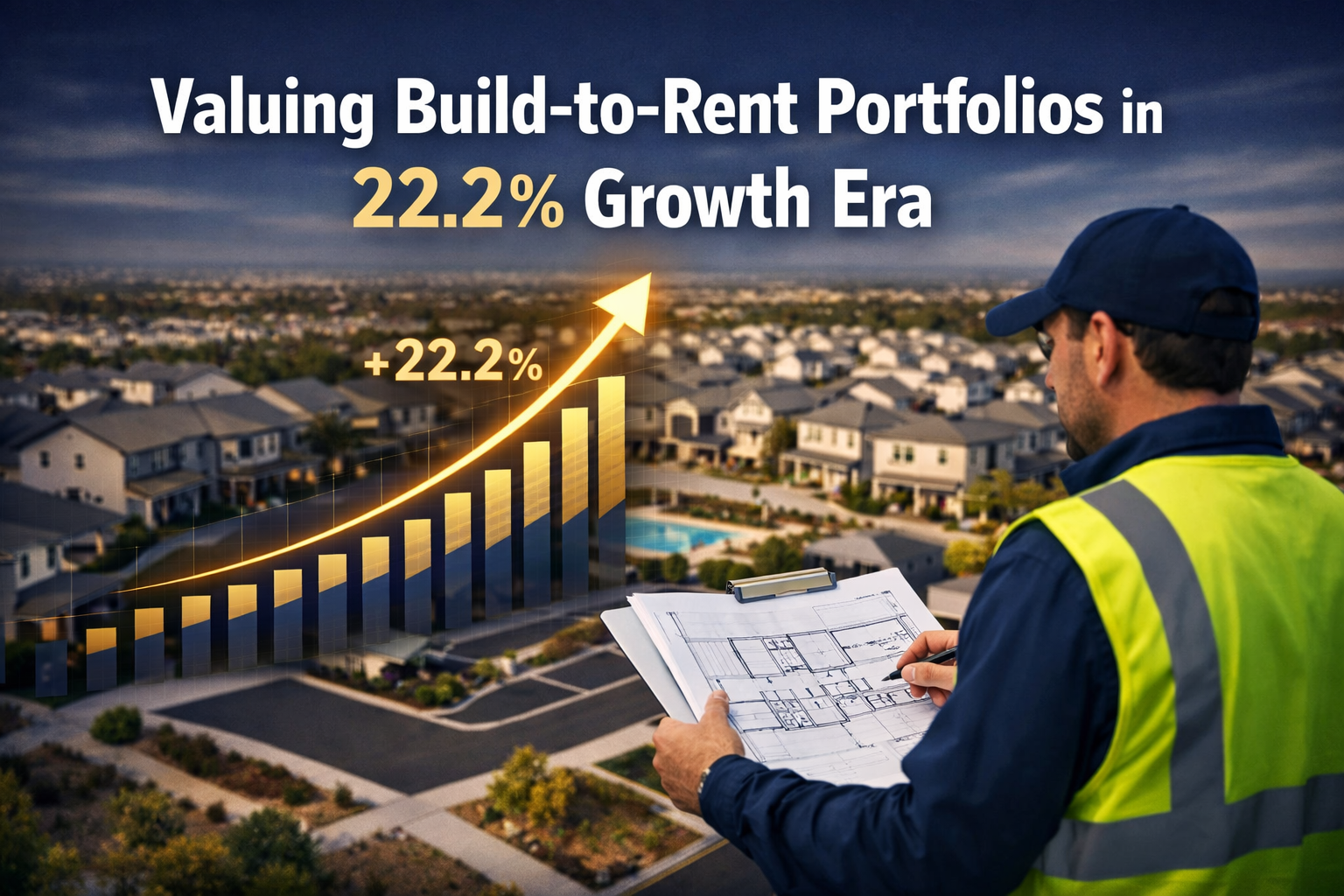
The UK build-to-rent (BTR) sector is experiencing unprecedented expansion, with Savills forecasting average value growth of 22.2% through the remainder of this decade. As institutional capital floods into this maturing asset class, the challenge for investors has shifted from market entry to accurate portfolio valuation. In 2026, understanding how to properly assess BTR holdings requires specialized chartered surveyor expertise that blends traditional property valuation methods with emerging operational metrics unique to purpose-built rental communities.
Valuing Build-to-Rent Portfolios in 22.2% Growth Era: Surveyor Insights for Institutional Investors to 2030 demands a sophisticated approach that accounts for rental premiums, operational efficiencies, tenant retention advantages, and the supply-demand dynamics reshaping residential investment. This comprehensive guide provides institutional investors with the frameworks, metrics, and professional insights needed to navigate this high-growth landscape with confidence.
Key Takeaways
- Cap rate compression is accelerating across BTR portfolios, with stabilized assets trading between 5.2% and 5.8% nationally, driven by institutional confidence and operational efficiency gains[2]
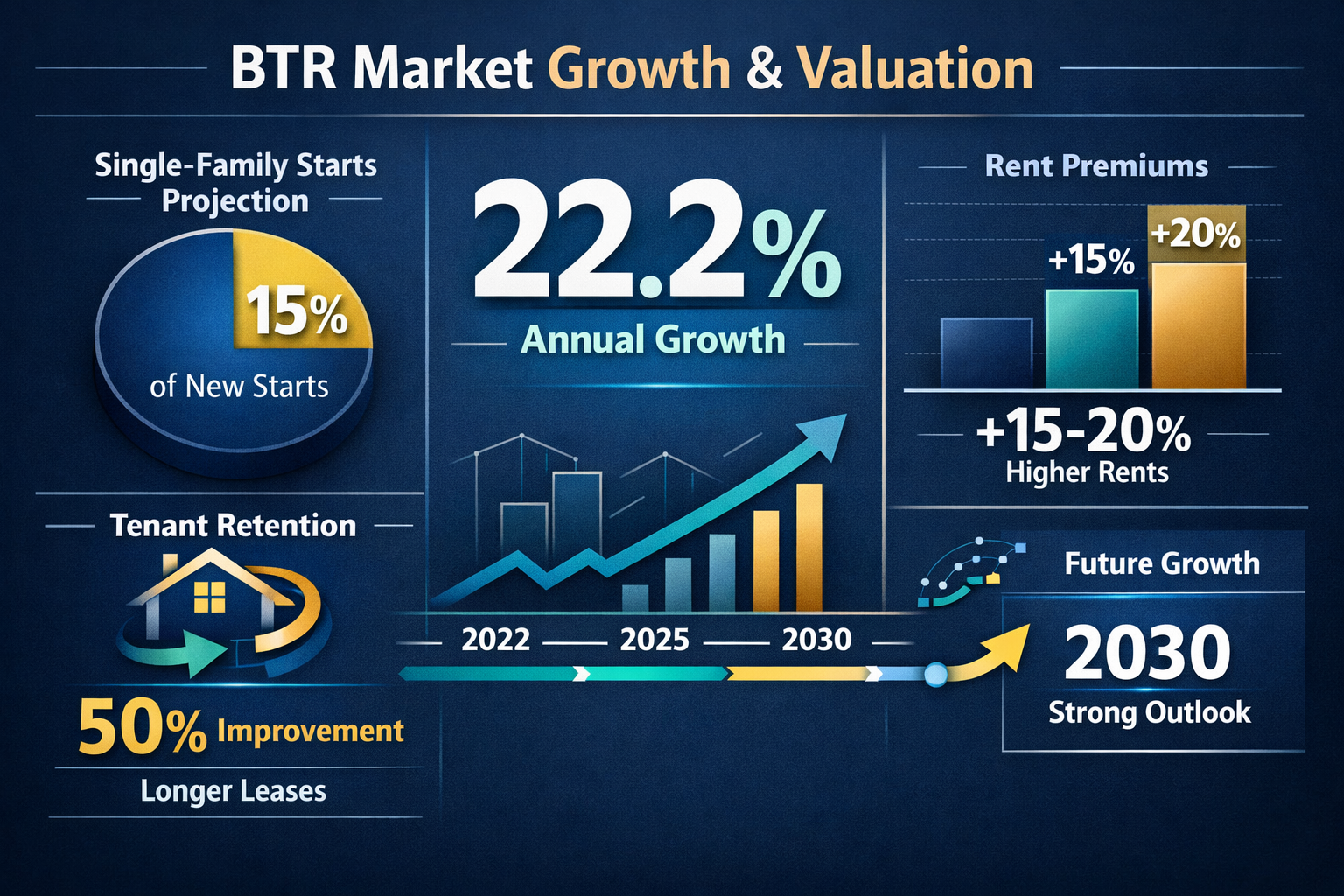
- Purpose-built BTR communities command 15-20% rent premiums over traditional rental stock, directly impacting Net Operating Income and supporting higher valuation multiples[2]
- Tenant retention rates in BTR properties exceed traditional apartments by 50%, reducing turnover costs and improving cash flow stability—critical factors in institutional valuations[2]
- Professional surveyor assessments incorporating building condition, statutory compliance, and amenity quality are essential for accurate risk profiling in the 22.2% growth environment
- Market consolidation and reduced pipeline activity through 2026 create favorable acquisition timing for well-capitalized institutional investors targeting existing portfolios[1]
Understanding BTR Market Fundamentals in the 22.2% Growth Era
The Institutional Shift from Niche to Core Asset Class
Build-to-rent has evolved from a niche investment strategy into a core institutional asset class in 2026. The sector is projected to represent 15% of single-family housing starts over the next five years, up from approximately 8% in Q1 2024[1]. This dramatic expansion reflects fundamental shifts in both housing demand and investor appetite.
Several market forces are driving this transformation:
📊 Supply-Demand Imbalance: BTR project starts fell sharply in late 2024 and early 2025, creating a notable drop in new deliveries expected through 2026 and beyond[1]. This supply constraint is supporting favorable pricing dynamics for existing portfolios.
💰 Institutional Capital Surge: Equity that remained on the sidelines during the 2022-2023 interest rate volatility is now actively deploying into both stabilized BTR acquisitions and ground-up development[4].
🏘️ Pipeline Consolidation: BTR activity is consolidating under a relatively small number of dominant operators, indicating market professionalization and creating potential valuation premiums for scale players[5].
The combination of these factors creates a unique valuation environment where traditional residential metrics must be adapted to capture the operational and strategic advantages of purpose-built rental communities.
Cap Rate Dynamics and Yield Compression
One of the most significant valuation trends in 2026 is cap rate compression across stabilized BTR portfolios. National average cap rates for institutional rental homes are trading between 5.2% and 5.8%, with notable compression occurring in secondary markets as investor capital flows toward higher-yield opportunities[2].
This yield compression reflects several key factors that chartered surveyors must incorporate into valuation frameworks:
Operational Efficiency Gains: Centralized management of 100+ contiguous single-family units reduces property management costs by as much as 20% compared to scattered-site portfolios[2]. These efficiency gains directly boost Net Operating Income (NOI), supporting tighter cap rates.
Tenant Quality and Stability: BTR communities attract "renters by choice"—high-earning, stable tenants who provide more predictable income streams than traditional Class B multifamily properties[2]. This demographic profile improves valuation quality for institutional buyers.
Alternative Exit Strategies: Unlike traditional multifamily assets, individual BTR units can be sold as fee-simple homes, providing an alternative exit strategy that compresses perceived risk in institutional valuations[2].
For surveyors conducting valuation assessments, understanding these operational nuances is critical to defending cap rate assumptions in the current market environment.
Surveyor Frameworks for Valuing Build-to-Rent Portfolios in 22.2% Growth Era

Income Capitalization Approach with BTR-Specific Adjustments
The income capitalization approach remains the primary valuation methodology for institutional BTR portfolios, but requires significant adaptations to capture the unique characteristics of purpose-built rental communities.
Rental Income Analysis and Premium Justification
Purpose-built BTR communities are achieving 15-20% rent premiums compared to older, non-amenitized rental stock[2]. Chartered surveyors must rigorously document the factors supporting these premiums:
✅ Amenity Package Assessment: Modern BTR developments feature lifestyle amenities typical of luxury urban apartments—on-site management offices, dog parks, co-working spaces, fitness centers, and community gathering areas[2]. Each amenity must be evaluated for its contribution to rental income.
✅ Property Condition and Age: New or recently constructed BTR units command premiums based on modern building standards, energy efficiency, and reduced maintenance requirements. Comprehensive building surveys are essential to validate these assumptions.
✅ Location and Transport Links: Proximity to employment centers, schools, and transportation infrastructure directly impacts achievable rents. Detailed transport link assessments should be incorporated into rental income projections.
✅ Market Positioning: BTR communities targeting specific demographic segments (young families, professionals, empty nesters) must demonstrate sustainable demand within their target markets.
Operating Expense Optimization
BTR portfolios achieve lower operating expense ratios than traditional multifamily or scattered-site single-family rentals. Surveyors should verify:
- Property management costs reduced through centralized operations
- Maintenance efficiency from standardized unit specifications and bulk purchasing
- Utility management benefits from master-metered communities
- Insurance costs reflecting reduced risk profiles of professionally managed communities
These operational advantages directly impact NOI and must be substantiated through detailed building materials assessments and maintenance forecasting.
Risk-Adjusted Valuation Metrics
Institutional investors require risk-adjusted valuation frameworks that account for both upside potential and downside protection in the 22.2% growth environment.
Tenant Retention and Turnover Cost Analysis
BTR tenants remain 50% longer than traditional apartment renters[2], creating significant valuation advantages:
Reduced Turnover Costs: Lower tenant turnover directly reduces make-ready expenses, leasing commissions, and vacancy losses. Surveyors should calculate the present value of these savings over typical institutional hold periods (7-10 years).
Cash Flow Stability: Longer tenancies create more predictable cash flows, reducing risk premiums and supporting cap rate compression. This stability is particularly valuable during economic uncertainty.
Rent Growth Potential: Established tenant relationships enable more consistent annual rent increases without triggering move-outs, supporting long-term value appreciation aligned with the 22.2% growth forecast.
Building Condition and Capital Expenditure Forecasting
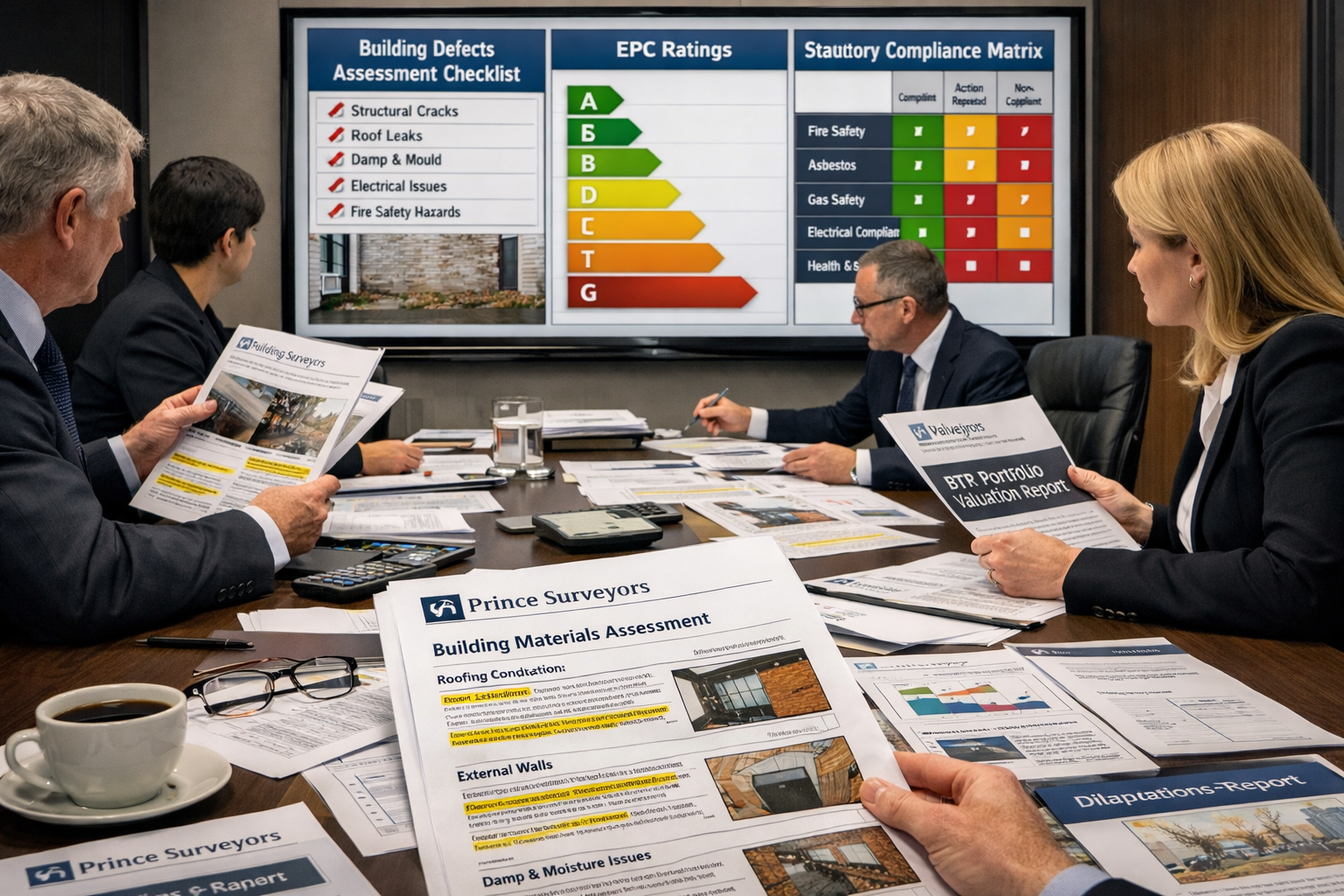
Accurate building defects surveys are critical for institutional BTR valuations. Surveyors must provide detailed capital expenditure (CapEx) forecasts covering:
- Roof systems and structural elements with expected replacement timelines
- Mechanical, electrical, and plumbing (MEP) systems lifecycle analysis
- Exterior envelope condition including siding, windows, and weatherproofing
- Common area amenities maintenance and replacement schedules
- Site infrastructure including roads, utilities, and drainage systems
These assessments directly impact Net Present Value (NPV) calculations and inform acquisition pricing negotiations.
Strategic Valuation Considerations for Institutional Investors to 2030
Market Timing and Acquisition Strategy
The current supply-demand dynamics create unique opportunities for institutional investors with proper valuation frameworks in place.
Pipeline Gap Advantage
BTR project starts have plunged, creating a notable delivery gap through 2026-2027[1]. Communities already capitalized and under construction face reduced direct competition when coming online. This creates favorable conditions for:
Stabilized Portfolio Acquisitions: Existing BTR communities with proven operating histories are commanding premium valuations, but offer immediate cash flow and reduced lease-up risk.
Well-Timed Development Acquisitions: Projects completing construction in 2026-2027 will enter markets with limited new supply, supporting aggressive lease-up assumptions and compressed stabilization timelines.
Chartered surveyors conducting Level 3 full building surveys on acquisition targets must evaluate construction quality and completion risk to support these timing advantages.
Regulatory and Statutory Compliance Impact
Regulatory compliance increasingly impacts BTR valuations in 2026, particularly around energy efficiency and tenant protection legislation.
EPC and MEES Compliance
Energy Performance Certificate (EPC) ratings and Minimum Energy Efficiency Standards (MEES) regulations directly affect rental income potential and capital expenditure requirements. Surveyors must assess:
- Current EPC ratings across portfolio units
- Required upgrades to meet evolving MEES thresholds
- Cost-benefit analysis of energy efficiency improvements
- Impact on rental premiums and tenant demand
Detailed EPC and MEES assessments should be integrated into every institutional valuation to avoid unexpected capital calls.
Statutory Planning and Development Rights
Understanding statutory considerations is essential for BTR portfolio valuations, particularly regarding:
- Permitted development rights for future expansion or unit modifications
- Planning restrictions that may limit portfolio optimization strategies
- Conservation area designations affecting renovation and improvement options
- Local authority requirements for affordable housing components
These factors can significantly impact long-term value creation potential and should be thoroughly documented in valuation reports.
Geographic Market Selection and Portfolio Diversification
The 22.2% growth forecast represents a national average, but significant regional variations exist. Institutional investors must consider:
Primary Market Premiums: Established BTR markets in major metropolitan areas offer lower perceived risk but tighter cap rates and higher entry prices.
Secondary Market Opportunities: "Smile States" and secondary markets offer higher yields and stronger growth potential but require more rigorous due diligence on local demand drivers[2].
Portfolio Geographic Diversification: Spreading investments across multiple markets reduces concentration risk while capturing regional growth variations.
Surveyors operating in specific markets, such as chartered surveyors in Central London, Hampshire, or Essex, provide critical local market intelligence that enhances valuation accuracy.
Due Diligence and Professional Surveyor Engagement
Comprehensive Technical Due Diligence Requirements
Institutional BTR acquisitions require multi-layered technical due diligence that extends beyond traditional residential property assessments.
Multi-Property Portfolio Surveys
When acquiring BTR portfolios containing dozens or hundreds of units, surveyors must implement efficient yet thorough inspection protocols:
Sampling Methodologies: Statistically valid sampling of units across the portfolio to identify systemic issues while managing inspection costs.
Common Area and Amenity Assessments: Detailed evaluation of shared facilities that drive rental premiums and operating costs.
Site Infrastructure Reviews: Assessment of roads, utilities, drainage, and landscaping that impact long-term capital requirements.
Environmental Considerations: Phase I Environmental Site Assessments (ESAs) to identify potential contamination or regulatory liabilities.
Professional property inspection services adapted for BTR portfolios ensure comprehensive risk identification.
Operational Due Diligence Integration
Technical surveyor assessments must be integrated with operational due diligence covering:
- Rent roll analysis validating claimed occupancy and rental rates
- Tenant demographic verification confirming target market alignment
- Property management systems review for operational efficiency
- Historical maintenance records analysis for deferred maintenance identification
- Warranty and guarantee documentation affecting near-term capital requirements
This integrated approach provides institutional investors with complete risk profiles supporting accurate valuation conclusions.
Valuation Report Standards for Institutional Investment
Institutional-grade BTR valuations require comprehensive reporting that meets or exceeds RICS Red Book standards:
Executive Summary: Clear statement of value conclusion with supporting cap rate and yield assumptions.
Market Analysis: Detailed assessment of local BTR market conditions, competitive supply, and demand drivers.
Property Description: Comprehensive documentation of physical assets, amenities, and site characteristics.
Income and Expense Analysis: Detailed review of historical and projected operating statements with surveyor adjustments.
Valuation Methodology: Transparent explanation of approaches used (income capitalization, sales comparison, cost approach) with supporting calculations.
Risk Assessment: Identification of key value drivers and potential downside scenarios.
Capital Expenditure Forecast: Detailed 10-year CapEx projection based on building condition assessments.
Compliance Verification: Documentation of regulatory compliance status and required future investments.
These reports support acquisition financing, portfolio valuation for fund reporting, and strategic decision-making throughout the investment lifecycle.
Ongoing Portfolio Valuation and Performance Monitoring
Institutional BTR investors require regular portfolio revaluations to support:
- Fund reporting requirements for quarterly or annual NAV calculations
- Loan covenant compliance monitoring for portfolio-level debt facilities
- Strategic planning for capital allocation and disposition timing
- Performance benchmarking against investment underwriting assumptions
Establishing relationships with qualified chartered surveyors who understand BTR-specific valuation considerations ensures consistency and credibility across reporting periods. Services such as SIPP pension valuations and inheritance tax valuations demonstrate the range of institutional valuation needs that professional surveyors address.
Conclusion: Positioning for Success in the 22.2% Growth Environment
Valuing Build-to-Rent Portfolios in 22.2% Growth Era: Surveyor Insights for Institutional Investors to 2030 requires a sophisticated blend of traditional property valuation expertise and emerging operational metrics unique to purpose-built rental communities. As the BTR sector transitions from niche investment to core institutional asset class, accurate portfolio valuation becomes the foundation for successful capital deployment.
The current market environment—characterized by cap rate compression, supply constraints, and institutional capital inflows—creates significant opportunities for investors who understand the nuances of BTR valuation. Purpose-built rental communities commanding 15-20% rent premiums, achieving 50% longer tenant retention, and delivering 20% property management cost savings represent fundamentally different investment propositions than traditional multifamily or scattered-site single-family rentals.
Actionable Next Steps for Institutional Investors
🎯 Engage Specialized Chartered Surveyors: Partner with surveying professionals who understand BTR-specific valuation considerations, including operational efficiency metrics, amenity valuations, and tenant retention impacts.
🎯 Implement Comprehensive Due Diligence Protocols: Develop standardized technical and operational due diligence frameworks that capture the unique risk and return characteristics of BTR portfolios.
🎯 Build Market Intelligence Capabilities: Establish systematic processes for tracking local BTR market conditions, competitive supply pipelines, and regulatory developments across target markets.
🎯 Develop Flexible Valuation Models: Create valuation frameworks that can adapt to changing cap rate environments, evolving tenant preferences, and shifting operational benchmarks through 2030.
🎯 Monitor Regulatory Compliance: Stay ahead of EPC, MEES, and planning regulations that increasingly impact BTR valuations and long-term value creation potential.
The 22.2% growth forecast through 2030 represents significant wealth creation potential for institutional investors who approach BTR portfolio valuation with rigor, expertise, and strategic insight. By leveraging professional surveyor capabilities and implementing best-practice valuation frameworks, investors can confidently navigate this high-growth landscape and capitalize on one of the most compelling residential investment opportunities of the decade.
References
[1] How Build To Rent Multi Family Development Trends 2026 Affect You – https://www.mountaincovehomes.com/how-build-to-rent-multi-family-development-trends-2026-affect-you/
[2] Build To Rent Statistics 2026 9 Stats You Have To Know – https://www.jakenfinancegroup.com/build-to-rent-statistics-2026-9-stats-you-have-to-know
[3] 26 Things Investors Should Know About Build To Rent Housing In 2026 – https://www.evernest.co/blog/26-things-investors-should-know-about-build-to-rent-housing-in-2026
[4] Building The Future How Build To Rent Is Reshaping Housing In 2026 – https://informaconnect.com/building-the-future-how-build-to-rent-is-reshaping-housing-in-2026/
[5] Why Build To Rent Is Shaping The Housing Market In 2026 – https://www.matthews.com/market_insights/why-build-to-rent-is-shaping-the-housing-market-in-2026