

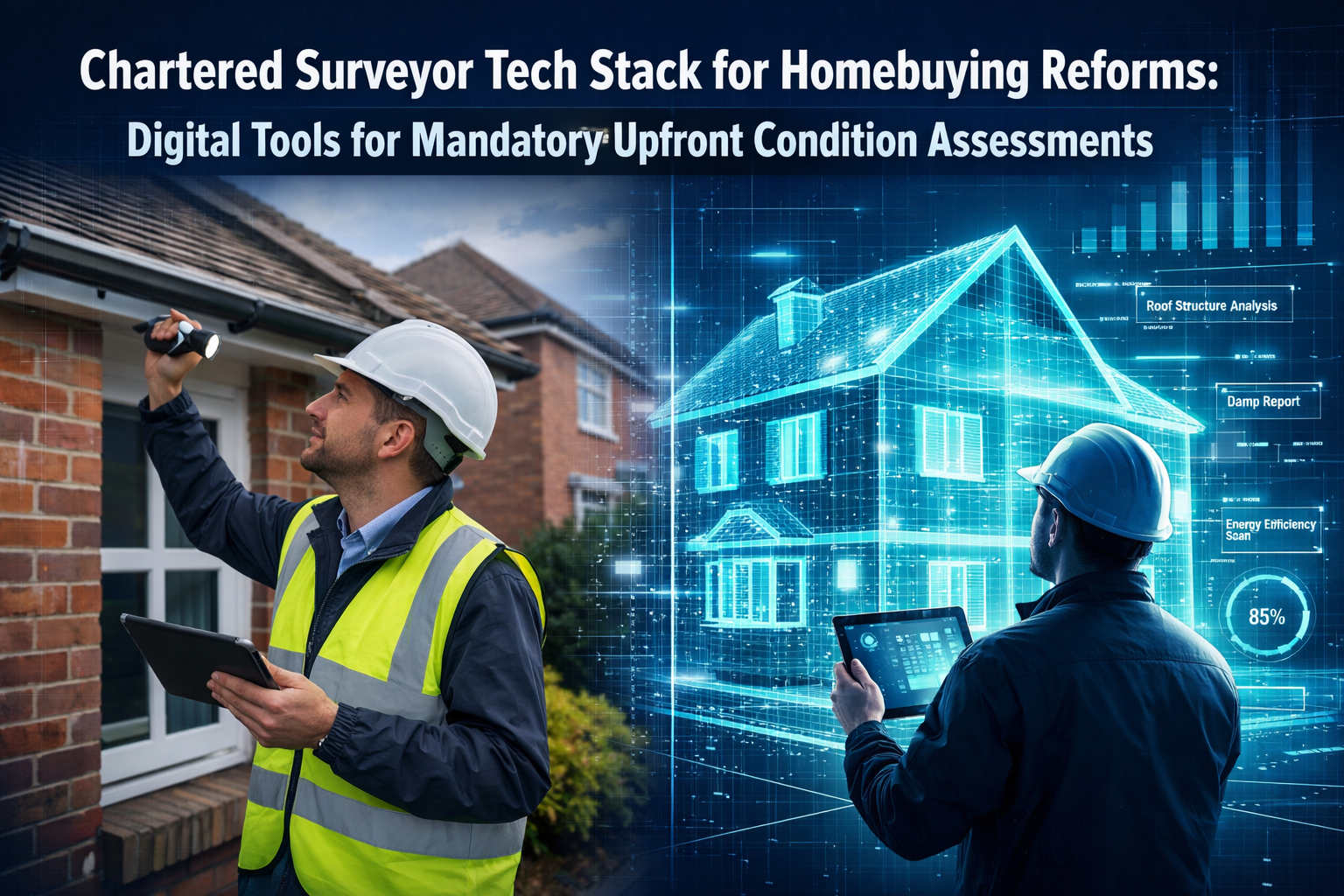
The UK property market stands at a technological crossroads in 2026. With government-proposed mandatory upfront property condition assessments reshaping the homebuying landscape, chartered surveyors face unprecedented demand pressures alongside an urgent need to modernize their operational infrastructure. The Chartered Surveyor Tech Stack for Homebuying Reforms: Digital Tools for Mandatory Upfront Condition Assessments represents more than just software adoption—it's a fundamental transformation in how property professionals deliver accurate, timely, and comprehensive building assessments at scale.
As Q2 2026 approaches, industry forecasts predict significant volume uplifts in both lending activity and property inspections. Surveyors who embrace digital twins, automation platforms, and RICS-enhanced CPD applications will gain competitive advantages, while those relying on traditional pen-and-paper methodologies risk operational bottlenecks and compliance challenges. This comprehensive guide explores the essential digital tools, implementation strategies, and best practices that define the modern chartered surveyor's technology ecosystem.
Key Takeaways
- 🏗️ Mandatory upfront assessments under proposed UK homebuying reforms will dramatically increase survey volumes starting Q2 2026, requiring scalable digital infrastructure
- 📱 RICS-enhanced CPD platforms and member apps provide streamlined compliance tracking, automated learning pathways, and real-time qualification management for surveyors
- 🔄 Digital twin technology enables comprehensive property visualization, defect tracking, and collaborative reporting that transforms traditional inspection workflows
- ⚡ Automation tools for scheduling, data capture, and report generation can reduce survey completion times by 40-60% while improving accuracy and consistency
- 🔗 API integrations with lender platforms, conveyancing systems, and property portals create seamless data flows that accelerate transaction timelines
Understanding the 2026 Homebuying Reform Landscape
The UK government's proposed reforms to the homebuying process represent the most significant structural changes to property transactions in decades. At the core of these reforms lies a simple but transformative requirement: sellers must commission comprehensive property condition assessments before listing, shifting the traditional survey burden from buyers to vendors.
This fundamental change addresses long-standing inefficiencies in the UK property market, where multiple prospective buyers often commission duplicate surveys on the same property, leading to wasted resources and transaction delays. Under the new framework, a single authoritative assessment conducted by qualified chartered surveyors becomes part of the property's upfront documentation package.
The Volume Challenge for Chartered Surveyors
Industry analysts project that mandatory upfront assessments could increase survey demand by 35-50% in the first year of implementation [6]. For chartered surveyors, this volume surge presents both opportunity and operational challenge. Traditional survey methodologies—manual site inspections, handwritten notes, desktop report compilation—simply cannot scale to meet this demand without proportional increases in staffing.
The solution lies in strategic technology adoption. Chartered surveyors across Hampshire, Hertfordshire, and Surrey are already implementing digital tools that enhance productivity without compromising assessment quality.
RICS Response and Digital Infrastructure
The Royal Institution of Chartered Surveyors (RICS) has responded to these reforms with enhanced digital infrastructure designed to support practitioners through the transition. The organization's improved CPD platforms and new RICS member app provide surveyors with streamlined access to training resources, compliance tracking, and professional development pathways specifically tailored to new regulatory requirements [6].
These digital tools ensure that chartered surveyors maintain the competencies required for mandatory upfront assessments while managing their continuing professional development obligations efficiently. Understanding what is covered in a RICS building survey remains fundamental, but the delivery mechanisms are evolving rapidly.
Core Components of the Chartered Surveyor Tech Stack for Homebuying Reforms
Building an effective technology infrastructure requires understanding the distinct functional layers that comprise the modern Chartered Surveyor Tech Stack for Homebuying Reforms: Digital Tools for Mandatory Upfront Condition Assessments. Each component addresses specific operational challenges while integrating with complementary systems to create seamless workflows.
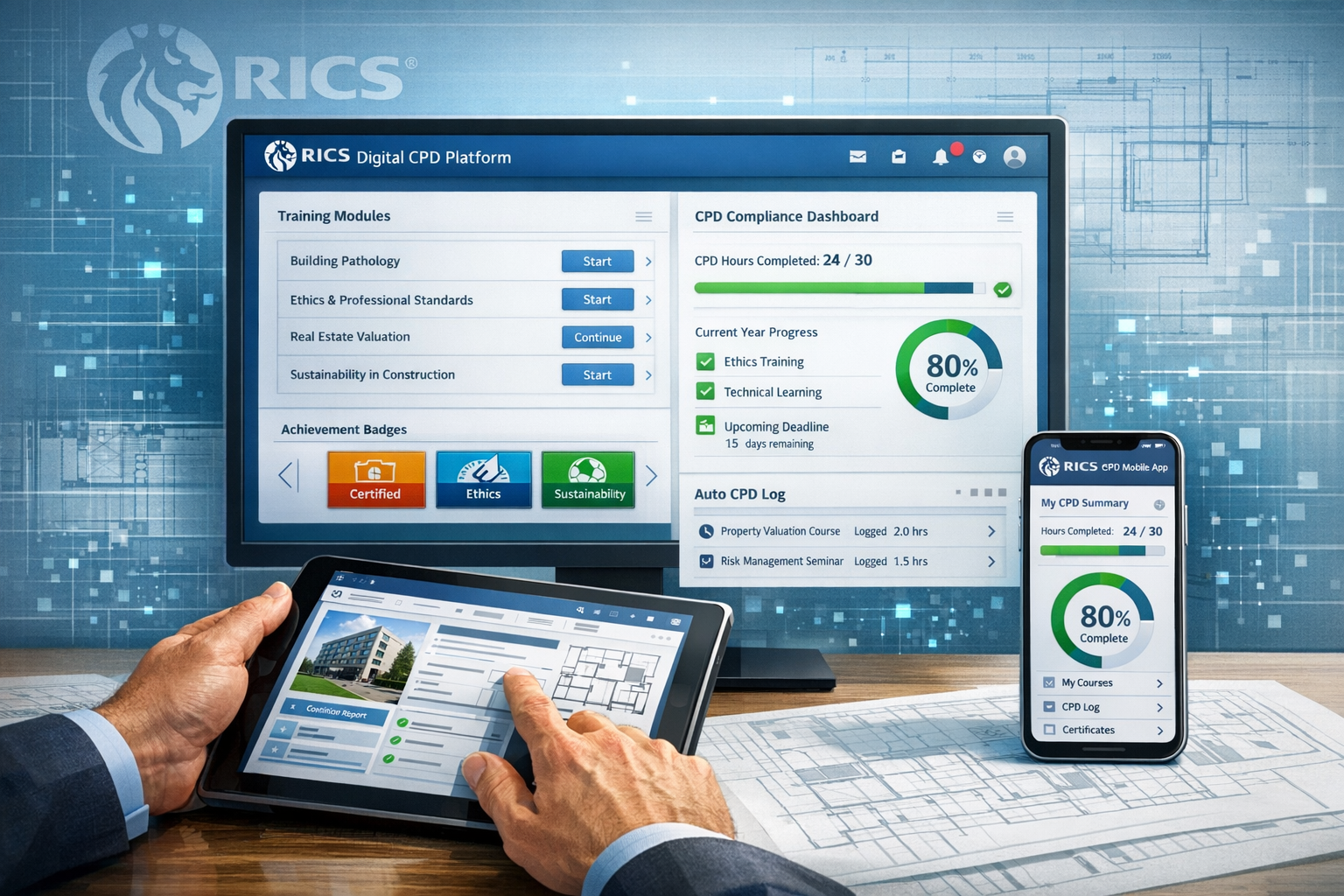
1. RICS-Enhanced CPD and Compliance Platforms 📚
The foundation of professional practice begins with maintaining qualifications and staying current with evolving standards. RICS's digital CPD ecosystem offers several critical capabilities:
Automated Learning Pathways: The enhanced platform provides personalized training recommendations based on practice areas, experience levels, and upcoming regulatory changes. Surveyors preparing for mandatory upfront assessment requirements receive targeted modules covering new documentation standards, liability considerations, and reporting protocols.
Real-Time Compliance Tracking: Digital dashboards display CPD progress against annual requirements, with automated reminders for approaching deadlines. This eliminates manual record-keeping and provides instant verification of professional standing for client inquiries or regulatory audits.
Mobile Accessibility: The new RICS member app extends CPD management to smartphones and tablets, allowing surveyors to complete training modules during downtime between site visits or access reference materials while conducting inspections.
Integration with Practice Management: Leading CPD platforms now offer API connections to practice management software, automatically logging completed training and updating team competency matrices for resource allocation decisions.
For chartered surveyors managing Level 3 building surveys, maintaining current knowledge of construction defects, materials science, and diagnostic techniques directly impacts assessment accuracy and professional liability exposure.
2. Digital Data Capture and Field Documentation Tools 📱
The site inspection phase represents the most time-intensive component of traditional survey workflows. Digital data capture tools transform this process through:
Mobile Survey Applications: Purpose-built apps enable surveyors to record observations, capture geotagged photographs, annotate floor plans, and dictate detailed notes directly into structured templates. This eliminates double-handling of information and reduces transcription errors.
Voice-to-Text Integration: Advanced speech recognition technology converts verbal observations into formatted text, allowing surveyors to maintain continuous inspection flow without stopping to type detailed descriptions.
Standardized Defect Libraries: Pre-configured databases of common building defects with associated severity ratings, repair recommendations, and cost indicators ensure consistency across reports while accelerating data entry.
Offline Functionality: Robust mobile applications continue functioning in properties with poor cellular coverage, synchronizing data automatically when connectivity resumes.
The updated ALTA/NSPS 2026 standards in the United States emphasize enhanced field documentation and records research [1][2], reflecting a global trend toward more rigorous on-site data capture practices that UK reforms are likely to mirror.
3. Digital Twin and 3D Visualization Technology 🏠
Perhaps the most transformative element of the modern tech stack, digital twin technology creates comprehensive virtual replicas of physical properties that revolutionize how surveyors document, analyze, and communicate building conditions.
Laser Scanning and Photogrammetry: Handheld or tripod-mounted scanning devices capture millions of measurement points in minutes, generating accurate 3D models that serve as permanent baseline records of property geometry and spatial relationships.
Defect Mapping and Annotation: Surveyors overlay condition observations directly onto 3D models, creating intuitive visual representations of issues that clients can navigate interactively. This dramatically improves comprehension compared to traditional text-based reports.
Thermal and Moisture Imaging Integration: Advanced systems incorporate thermal camera data and moisture meter readings into digital twins, revealing hidden defects like insulation gaps, water infiltration, or structural dampness that visual inspection alone might miss.
Collaborative Review Platforms: Cloud-hosted digital twins enable multiple stakeholders—surveyors, clients, contractors, lenders—to review property conditions simultaneously, adding comments and questions that facilitate informed decision-making.
For properties requiring detailed structural analysis, digital twins complement traditional building survey methodologies by providing measurable, revisitable documentation that supports ongoing monitoring and future renovation planning.
4. Automated Report Generation and Documentation Systems 📄
The final deliverable—the comprehensive condition assessment report—consumes significant time in traditional workflows. Automation dramatically accelerates this phase:
Template-Based Assembly: Modern systems automatically populate report templates with field-captured data, photographs, and annotations, reducing manual compilation time by 60-70%.
Intelligent Content Suggestions: AI-powered writing assistants recommend standard language for common defects, suggest repair strategies based on building type and age, and flag inconsistencies or incomplete sections before finalization.
Multi-Format Output: Single-source content generates reports in multiple formats—PDF for formal documentation, interactive web versions for client portals, data exports for lender systems—eliminating redundant formatting work.
Version Control and Audit Trails: Cloud-based documentation systems maintain complete revision histories, supporting quality assurance processes and providing defensible records for professional liability purposes.
Understanding how long a building survey takes becomes less relevant when automation compresses post-inspection report production from days to hours.
Implementation Strategies for Digital Tools in Mandatory Upfront Condition Assessments
Adopting the Chartered Surveyor Tech Stack for Homebuying Reforms: Digital Tools for Mandatory Upfront Condition Assessments requires more than purchasing software licenses. Successful implementation follows structured approaches that address technical, operational, and cultural dimensions of practice transformation.

Phased Adoption Framework
Phase 1: Foundation (Months 1-2)
Begin with core infrastructure—mobile data capture applications and cloud storage systems. Train surveyors on basic digital workflows while maintaining parallel traditional processes to ensure service continuity. Focus on simple residential properties to build confidence and identify workflow refinements.
Phase 2: Integration (Months 3-4)
Introduce automated report generation tools and integrate them with field data capture systems. Establish standardized templates that reflect mandatory upfront assessment requirements. Implement quality assurance checkpoints that verify digital outputs meet professional standards.
Phase 3: Advanced Capabilities (Months 5-6)
Deploy digital twin technology for complex properties or premium service tiers. Develop API connections with lender platforms and conveyancing systems. Create client-facing portals that provide real-time access to assessment progress and preliminary findings.
Phase 4: Optimization (Ongoing)
Continuously refine workflows based on performance metrics. Expand automation to administrative tasks like scheduling, client communications, and invoice generation. Invest in advanced analytics that identify efficiency opportunities and quality improvement areas.
Training and Change Management
Technology adoption fails when practitioners lack adequate preparation. Effective training programs include:
- Role-Specific Modules: Junior surveyors require comprehensive instruction on all system components, while senior practitioners may focus on report review and quality oversight functions
- Hands-On Practice: Simulated inspections using training properties allow surveyors to master digital tools before deploying them on client engagements
- Ongoing Support: Dedicated technical support channels, peer mentoring programs, and regular refresher sessions maintain competency as systems evolve
- Performance Incentives: Recognition and rewards for surveyors who achieve proficiency milestones encourage enthusiastic adoption rather than reluctant compliance
Chartered surveyors should also consider questions to ask during a building survey and how digital tools enhance the ability to capture and address client concerns systematically.
Data Security and Professional Liability Considerations
Digital workflows introduce new risk dimensions that require proactive management:
Client Data Protection: Ensure all platforms comply with UK GDPR requirements, including encryption for data in transit and at rest, access controls limiting information to authorized personnel, and clear data retention policies.
Professional Indemnity Insurance: Verify that technology adoption doesn't create coverage gaps. Some insurers offer premium reductions for practices implementing quality management systems that include digital audit trails.
Backup and Disaster Recovery: Cloud-based systems should include redundant storage across multiple geographic locations, automated backup schedules, and tested recovery procedures that minimize disruption from technical failures.
Cybersecurity Protocols: Implement multi-factor authentication, regular security updates, employee training on phishing and social engineering threats, and incident response plans for potential data breaches.
Preparing for Q2 2026 Volume Uplifts: Scaling Survey Operations
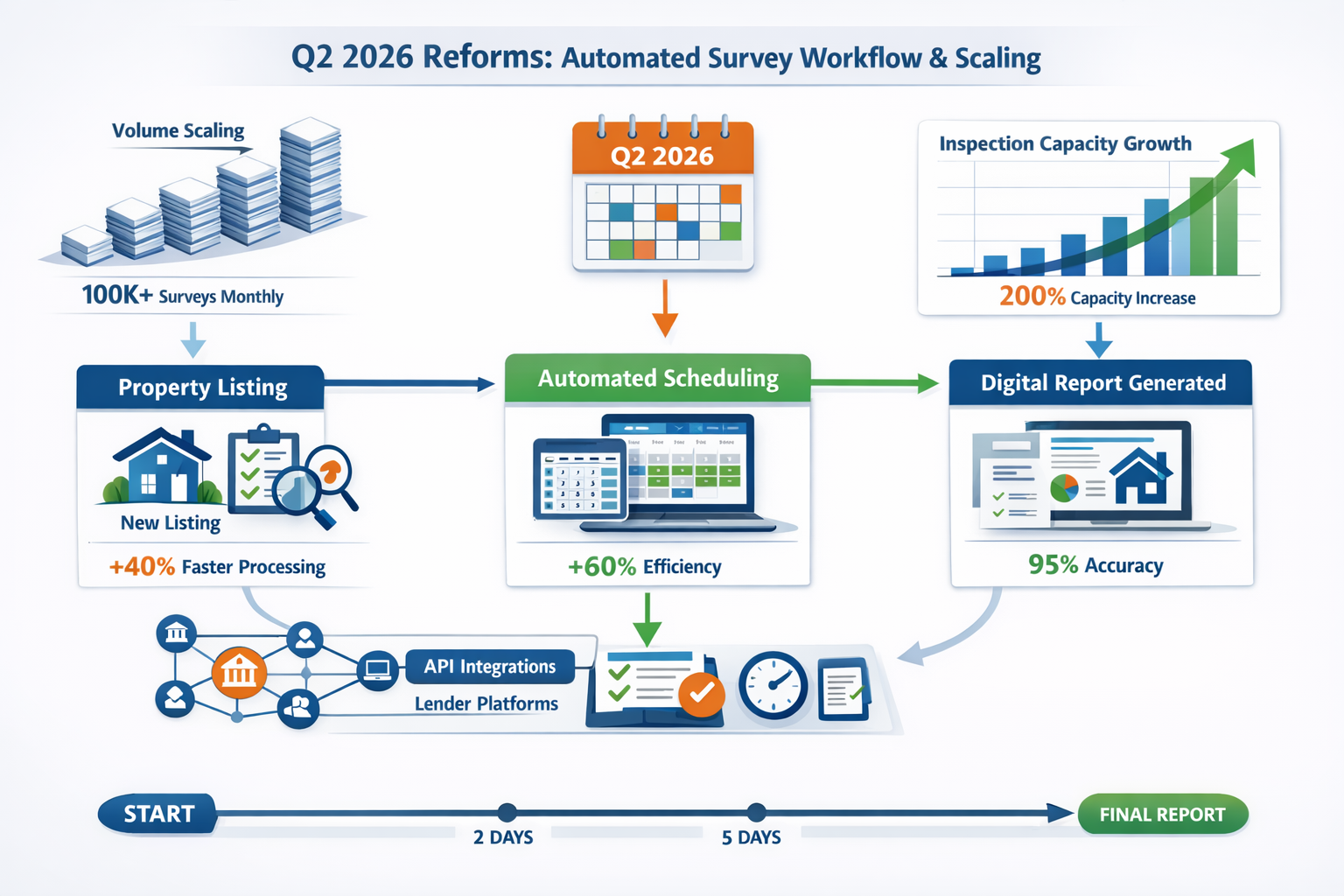
The anticipated surge in mandatory upfront assessments beginning in Q2 2026 requires proactive capacity planning. The Chartered Surveyor Tech Stack for Homebuying Reforms: Digital Tools for Mandatory Upfront Condition Assessments enables practices to scale operations without proportional increases in overhead.
Capacity Modeling and Resource Allocation
Baseline Assessment: Calculate current survey completion capacity—inspections per surveyor per week, average report turnaround times, administrative overhead ratios. This establishes the starting point for improvement initiatives.
Technology Impact Projections: Conservative estimates suggest digital tools increase surveyor productivity by 35-45% through reduced report compilation time, faster data capture, and elimination of redundant tasks. Model staffing requirements under various demand scenarios using these efficiency gains.
Flexible Resourcing Strategies: Consider hybrid models combining full-time surveyors with associate networks for peak demand periods. Digital platforms enable seamless collaboration with remote practitioners who access centralized systems for consistent output quality.
Automated Scheduling Systems: Implement intelligent booking platforms that optimize surveyor routes, account for property complexity and travel time, and automatically balance workloads across team members.
Integration with Lender and Conveyancing Platforms
Mandatory upfront assessments create opportunities for deeper integration across the property transaction ecosystem:
API Connections: Direct system-to-system data transfers eliminate manual report uploads and status updates. When a survey completes, findings automatically populate lender valuation systems and conveyancer due diligence checklists.
Standardized Data Formats: Industry-wide adoption of common data schemas ensures interoperability across platforms. The UK Finance and Law Society initiatives around digital property transactions provide frameworks for these standards.
Real-Time Status Visibility: Clients, estate agents, lenders, and legal representatives access shared dashboards showing assessment progress, preliminary findings, and expected completion dates, reducing inquiry volumes and improving transaction transparency.
Automated Compliance Verification: Integrated systems cross-reference survey findings against lender requirements, flagging issues that may affect mortgage approval and triggering appropriate follow-up actions.
Chartered surveyors operating in high-volume markets like West London or Essex will particularly benefit from these integration capabilities as transaction volumes increase.
Quality Assurance in High-Volume Environments
Scaling operations without compromising quality requires systematic oversight mechanisms:
Automated Quality Checks: Software algorithms flag incomplete sections, inconsistent observations, missing photographs, or findings that deviate from statistical norms for similar properties, triggering senior review before client delivery.
Peer Review Protocols: Randomly selected reports undergo detailed examination by experienced surveyors, with feedback loops that identify training needs or process improvements.
Client Satisfaction Monitoring: Post-delivery surveys capture feedback on report clarity, comprehensiveness, and value, providing early warning of quality issues before they escalate to complaints or professional liability claims.
Continuous Improvement Cycles: Monthly performance reviews analyze efficiency metrics, quality indicators, and client feedback, driving iterative refinements to workflows and technology configurations.
Future-Proofing Your Practice: Emerging Technologies and Trends
While current digital tools address immediate reform requirements, forward-thinking practices are already exploring next-generation capabilities that will define competitive advantage in the coming years.
Artificial Intelligence and Machine Learning
Defect Recognition: Computer vision algorithms trained on thousands of building images can automatically identify common defects—cracked masonry, damaged roofing, deteriorated timber—from survey photographs, accelerating initial assessment and ensuring nothing is overlooked.
Predictive Maintenance Modeling: Machine learning systems analyze property characteristics, maintenance histories, and environmental factors to forecast likely future issues, adding valuable forward-looking insights to condition assessments.
Natural Language Processing: AI assistants can draft initial report sections from voice dictation or field notes, suggest technical terminology improvements, and even generate client-friendly summaries of complex findings.
Blockchain and Distributed Ledgers
Immutable Property Records: Blockchain-based systems create permanent, tamper-proof records of condition assessments that follow properties through subsequent transactions, building comprehensive maintenance histories that inform future surveys and valuations.
Smart Contract Integration: Automated execution of contractual obligations—releasing survey fees upon report delivery, triggering repair escrows when defects exceed thresholds—reduces administrative friction and accelerates transaction timelines.
Internet of Things (IoT) and Continuous Monitoring
Sensor Networks: Properties equipped with environmental monitors tracking temperature, humidity, structural movement, and energy consumption provide ongoing data streams that complement periodic surveys, enabling proactive maintenance rather than reactive repairs.
Remote Inspection Capabilities: Drone technology and robotic crawlers access difficult or dangerous areas—high roofs, confined spaces, unstable structures—capturing detailed imagery and measurements without exposing surveyors to safety risks.
For practices handling specialized work like SIPP pension valuations or project management, these emerging technologies offer opportunities to expand service offerings and deliver enhanced value to clients.
Conclusion: Embracing Digital Transformation for Sustainable Practice Growth
The convergence of UK homebuying reforms and advancing digital capabilities creates a pivotal moment for chartered surveyors. The Chartered Surveyor Tech Stack for Homebuying Reforms: Digital Tools for Mandatory Upfront Condition Assessments is not merely a collection of software applications—it represents a fundamental reimagining of how property professionals deliver value in an increasingly complex and fast-paced market.
Practices that embrace this transformation position themselves to capture market share as mandatory upfront assessments drive unprecedented demand growth in Q2 2026 and beyond. Digital tools enable surveyors to scale operations efficiently, maintain consistent quality standards, and deliver comprehensive assessments that meet evolving client and regulatory expectations.
Actionable Next Steps 🎯
For Individual Chartered Surveyors:
- Complete RICS digital CPD modules focused on technology adoption and new assessment standards
- Evaluate mobile data capture applications through free trials, selecting platforms that align with your practice areas
- Attend vendor demonstrations of digital twin and automation technologies to understand implementation requirements
- Join professional networks and forums where peers share technology experiences and best practices
For Practice Leaders:
- Conduct capacity modeling exercises projecting Q2 2026 demand scenarios and technology-enabled productivity improvements
- Allocate budget for phased technology adoption following the implementation framework outlined above
- Establish cross-functional teams combining surveyors, IT specialists, and administrative staff to drive digital transformation initiatives
- Review professional indemnity insurance coverage to ensure digital workflows are adequately protected
For the Wider Industry:
- Advocate for standardized data formats and API specifications that enable seamless integration across platforms
- Participate in RICS consultations shaping digital standards and best practices for mandatory upfront assessments
- Share implementation experiences through case studies and conference presentations, accelerating collective learning
- Collaborate with technology vendors to ensure solutions address real-world surveying challenges rather than theoretical requirements
The homebuying reforms of 2026 represent more than regulatory change—they're a catalyst for professional evolution. Chartered surveyors who invest in the right digital tools, implement them thoughtfully, and continuously refine their technology-enabled workflows will not only survive the transition but thrive in the transformed property market that emerges.
Whether you're a chartered surveyor in Hertfordshire, Hampshire, or anywhere across the UK, the time to begin your digital transformation journey is now. The practices that lead this evolution will define the future of property assessment for decades to come.
References
[1] Alta Nsps 2026 Survey Standards Whats Changed And What It Means For The Industry – https://atwell.com/news-and-insights/alta-nsps-2026-survey-standards-whats-changed-and-what-it-means-for-the-industry/
[2] Five Key Updates 2026 Altansps Land Title Survey Standards – https://westwoodps.com/recent-blog-posts/five-key-updates-2026-altansps-land-title-survey-standards
[6] Surveying In 2026 Reform Recovery And Renewed Demand – https://www.lrg.co.uk/news-and-insights/surveying-in-2026-reform-recovery-and-renewed-demand/