

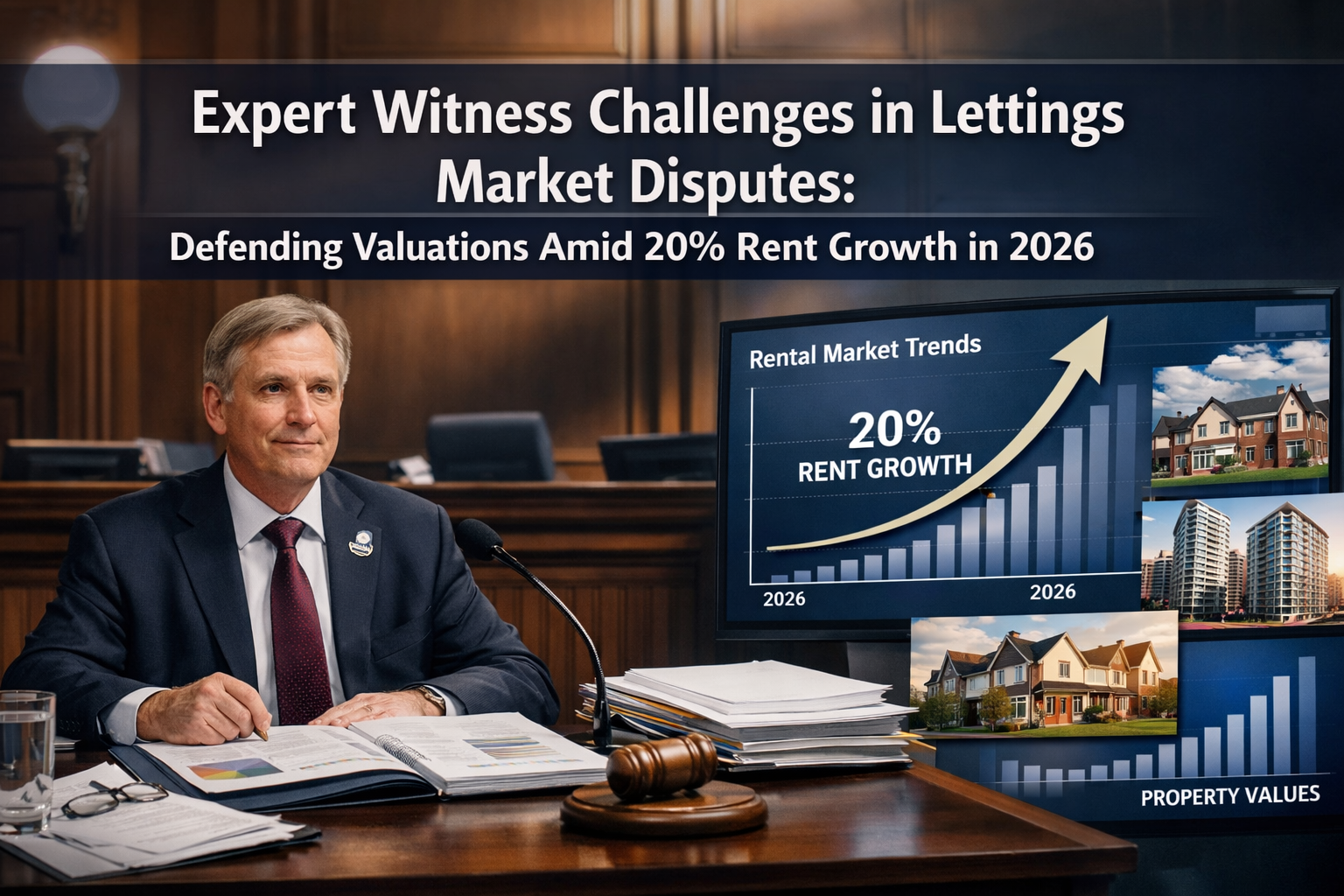
The lettings market in 2026 presents unprecedented challenges for property professionals. As Expert Witness Challenges in Lettings Market Disputes: Defending Valuations Amid 20% Rent Growth in 2026 become increasingly complex, chartered surveyors find themselves at the center of contentious landlord-tenant conflicts. While some regional markets experience dramatic rental increases, the national picture shows more measured growth—yet disputes over valuations remain fierce. With new legislation reshaping tenancy structures and enforcement powers expanding, expert witnesses must navigate a landscape where every percentage point matters and evidence standards have never been higher.
Key Takeaways
- Valuation disputes are intensifying as regional rental markets show varied growth patterns, with some areas experiencing sharp increases while UK-wide forecasts predict approximately 2.5% growth in 2026[2][5]
- The Renters' Rights Act (effective May 1, 2026) introduces new procedural requirements for rent increases that directly impact expert witness testimony and valuation methodologies[1][2]
- RICS-compliant evidence strategies are essential for defending rental valuations in tribunal settings, requiring comprehensive comparable analysis and market data documentation
- Expert witnesses must balance traditional valuation methods with emerging data analytics approaches while maintaining professional standards under increased scrutiny
- Documentation quality and adherence to professional standards will determine case outcomes as local authority enforcement powers expand significantly[2]
Understanding the 2026 Lettings Market Landscape 📊
The rental market in 2026 operates under fundamentally different conditions than previous years. While headlines may suggest dramatic rent growth across all regions, the reality requires careful analysis. National forecasts predict approximately 2.5% rent growth for 2026, representing measured expansion rather than explosive increases[2][5]. However, this national average masks significant regional variations that create fertile ground for valuation disputes.
Regional Variation and Market Segmentation
Different property markets across the UK are experiencing divergent trends:
| Market Segment | Growth Pattern | Key Drivers |
|---|---|---|
| London Prime Central | Moderate growth (2-3%) | International demand recovery |
| Regional Cities | Higher growth (4-6%) | Migration from London, affordability |
| Student Markets | Variable (1-5%) | University enrollment patterns |
| Rural Areas | Lower growth (1-2%) | Limited demand pressure |
| Coastal Towns | Mixed performance | Seasonal factors, remote work trends |
These variations mean that expert witnesses cannot rely on national statistics alone when defending valuations. Each case requires granular local market analysis supported by robust comparable evidence.
Legislative Framework Reshaping Disputes
The Renters' Rights Act implementation on May 1, 2026 fundamentally changes how rent increases are proposed and challenged[1][2]. Key provisions affecting expert witness work include:
- Mandatory notice periods for rent increases with specific procedural requirements
- Enhanced tenant rights to challenge increases through tribunal processes
- Rent increase caps in certain circumstances requiring market justification
- Expanded local authority enforcement powers to investigate excessive increases[2]
This legislative environment means expert witnesses must not only defend the reasonableness of a valuation but also demonstrate compliance with procedural requirements. Understanding property valuation fundamentals becomes crucial in this context.
Expert Witness Challenges in Lettings Market Disputes: Evidence and Methodology
Defending rental valuations in 2026 requires expert witnesses to navigate multiple layers of complexity. The challenges extend beyond simple market analysis to encompass regulatory compliance, data quality issues, and evolving professional standards.
Core Valuation Challenges
1. Comparable Evidence Quality
Finding truly comparable rental properties presents the first major hurdle. Expert witnesses must identify properties that match:
- Location specificity (same neighborhood, similar amenities access)
- Property characteristics (size, condition, features, age)
- Tenancy terms (furnished vs. unfurnished, lease length)
- Timing relevance (recent lettings reflecting current market)
The challenge intensifies when dealing with unique properties or rapidly changing markets where historical comparables may not reflect current conditions.
2. Data Source Reliability
Expert witnesses must critically evaluate data sources:
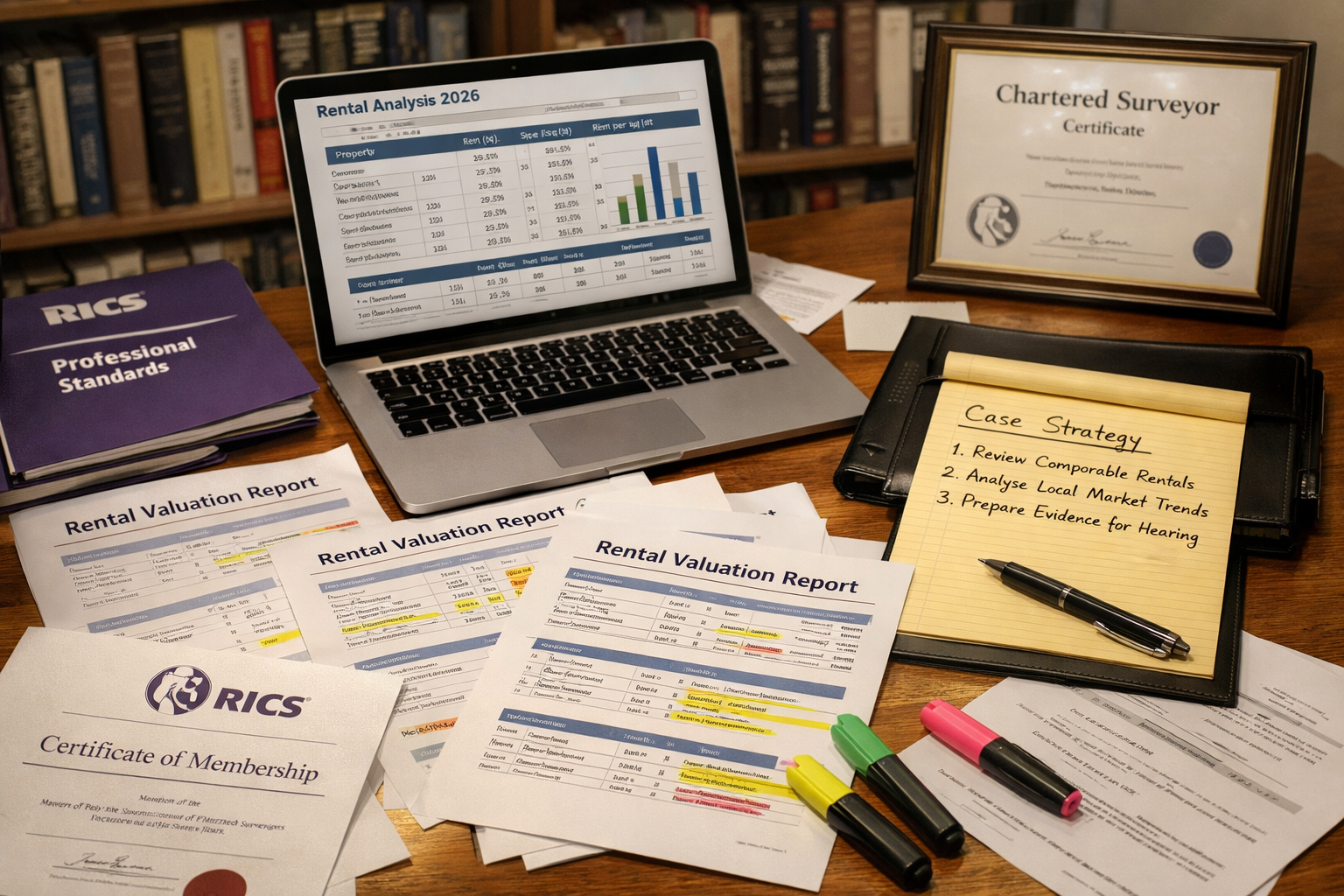
- ✅ Reliable sources: RICS databases, Land Registry data, verified letting agent records
- ⚠️ Questionable sources: Unverified online listings, asking prices vs. achieved rents, incomplete datasets
- ❌ Inadmissible sources: Anecdotal evidence, unsubstantiated claims, outdated information
Professional commercial valuations follow strict data verification protocols that residential experts must equally observe.
3. Market Timing Adjustments
With markets experiencing variable growth rates, expert witnesses must justify:
- Time adjustments applied to older comparables
- Seasonal variations affecting rental values
- Market momentum considerations in rising or falling markets
- Legislative impact on market conditions post-May 2026
Methodological Frameworks for 2026
Expert witnesses defending valuations amid market growth must employ robust methodologies:
Comparative Method Enhanced
The traditional comparative approach requires enhancement for 2026 disputes:
- Identify minimum 5-8 comparable properties from the past 3-6 months
- Apply systematic adjustments for differences (location, size, condition)
- Weight comparables based on similarity and reliability
- Document adjustment rationale with supporting evidence
- Cross-reference with multiple data sources for validation
Market Analysis Integration
Beyond individual comparables, expert witnesses must demonstrate understanding of:
- Supply and demand dynamics in the specific micro-market
- Vacancy rates and letting periods indicating market tightness
- Tenant demographics and income levels supporting rental levels
- Competing properties and their impact on achievable rents
Regulatory Compliance Overlay
Every valuation must consider:
- Energy efficiency requirements approaching compliance deadlines[2]
- Tenant fee restrictions under existing legislation
- Rent increase procedural compliance under the Renters' Rights Act[1][3]
- Local authority guidance on reasonable rent levels
Understanding tenant fee regulations helps expert witnesses avoid common pitfalls in their analysis.
Defending Valuations: Strategic Approaches for Expert Witnesses
Successfully defending rental valuations in tribunal or court settings requires more than technical competence. Expert witnesses must combine rigorous methodology with effective communication and unimpeachable professional standards.
Pre-Hearing Preparation Strategies
Documentation Excellence
The foundation of any successful expert witness engagement lies in comprehensive documentation:
- 📋 Instruction letter clearly defining scope and questions to address
- 📊 Comparable evidence schedule with full property details and adjustments
- 📈 Market analysis report demonstrating broader context
- 📸 Photographic evidence of subject property and comparables where relevant
- 📝 Methodology statement explaining approach and assumptions
Evidence Hierarchy
Not all evidence carries equal weight. Expert witnesses should structure their reports using a clear hierarchy:
- Primary evidence: Direct comparables from verified sources within 3 months
- Secondary evidence: Broader market data and trends from reliable sources
- Tertiary evidence: Expert opinion based on experience and market knowledge
- Supporting evidence: Regulatory context and compliance considerations
Addressing Common Challenges in Testimony
Challenge 1: Aggressive Cross-Examination on Comparables
Opposing counsel often attacks the selection or adjustment of comparable properties. Defense strategies include:
- Anticipate objections by addressing potential weaknesses in the report
- Provide alternative analyses showing consistent results with different comparable sets
- Explain adjustment methodology using industry-standard approaches
- Reference RICS guidance and professional standards supporting the approach
Challenge 2: Market Growth Rate Disputes
When parties dispute whether growth justifies a rent increase, expert witnesses must:
- Present multiple data sources showing consistent growth patterns
- Distinguish between asking rents and achieved rents in the market
- Explain micro-market variations that may differ from regional averages
- Demonstrate supply constraints or demand factors driving growth
Challenge 3: Regulatory Compliance Questions
With the Renters' Rights Act creating new requirements, expert witnesses face questions about:
- Whether the proposed rent increase follows proper procedures[1][3]
- If the increase represents a reasonable market adjustment or excessive demand
- How energy efficiency standards impact valuation[2]
- Whether comparable properties meet current regulatory requirements
Professional Standards and Ethical Considerations
Expert witnesses in lettings disputes must maintain unwavering adherence to professional standards:
RICS Practice Statement Requirements
- Duty to the tribunal takes precedence over duty to the instructing party
- Independence and objectivity must be maintained throughout
- Competence in the specific property type and market
- Transparency about limitations and assumptions in the analysis
Common Ethical Pitfalls to Avoid
❌ Cherry-picking comparables that support a predetermined conclusion
❌ Overstating certainty in volatile or data-poor markets
❌ Failing to disclose conflicts of interest or relationship to parties
❌ Exceeding expertise by opining on legal or non-valuation matters
The same professional rigor applied to inheritance tax valuations must extend to rental market disputes.
Emerging Trends Affecting Expert Witness Work in 2026
The lettings market continues to evolve, creating new challenges and opportunities for expert witnesses.
Technology and Data Analytics
Big Data Integration
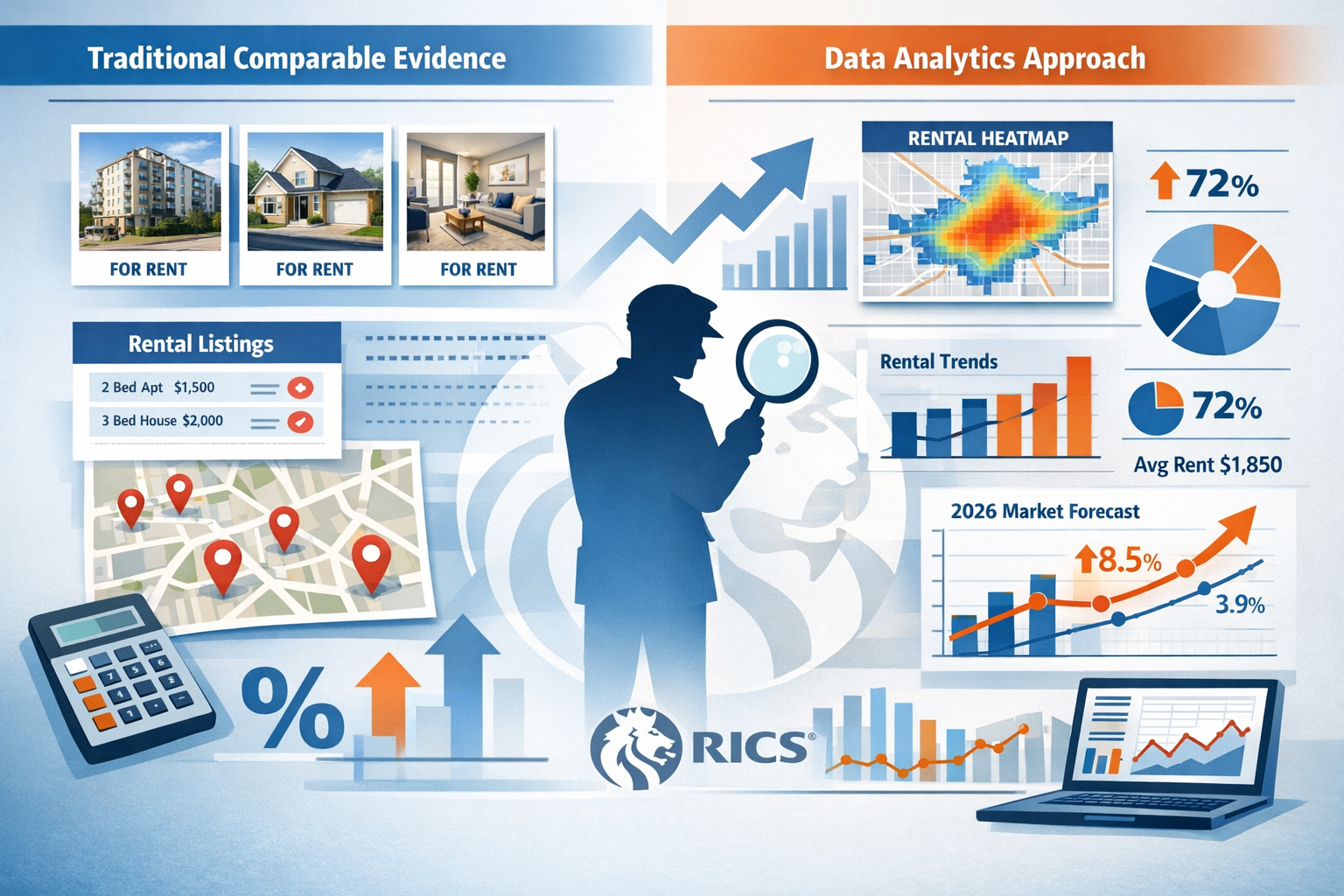
Modern expert witnesses increasingly leverage:
- Automated valuation models (AVMs) as supporting evidence
- Geographic information systems (GIS) for location analysis
- Rental market platforms providing real-time market data
- Predictive analytics for market trend forecasting
However, tribunals expect expert witnesses to critically evaluate rather than blindly accept technology-generated valuations.
Sustainability and Energy Efficiency
Energy performance increasingly impacts rental values in 2026:
- Properties approaching EPC compliance deadlines face valuation adjustments[2]
- Green premium for energy-efficient properties becomes quantifiable
- Retrofit costs must be factored into valuation analysis
- Expert witnesses need technical knowledge of energy standards
Understanding how property renovations add value helps expert witnesses assess improvement impacts.
Build-to-Rent Sector Influence
The growing institutional rental sector affects traditional lettings valuations:
- Professional management standards set new market benchmarks
- Amenity expectations rise across the rental market
- Rental pricing strategies become more sophisticated
- Comparable evidence from BTR schemes requires careful interpretation
Local Authority Intervention
Expanded enforcement powers mean expert witnesses must consider:
- Rent control discussions in certain local authorities
- Licensing scheme requirements affecting property values
- Selective enforcement in areas with perceived excessive rents[2]
- Local housing allowance rates as reference points in disputes
Best Practices for Expert Witnesses in Rental Valuation Disputes
Drawing from case experience and professional guidance, several best practices emerge for expert witnesses handling lettings disputes in 2026.
Report Structure and Content
Essential Report Elements
- Executive summary stating key conclusions upfront
- Property description with comprehensive details
- Market context explaining relevant trends and conditions
- Methodology explanation with clear rationale
- Comparable evidence analysis with detailed adjustments
- Valuation conclusion with range if appropriate
- Assumptions and limitations clearly stated
- Professional qualifications and declaration of independence
Communication Strategies
Writing for Non-Technical Audiences
Tribunals often include lay members unfamiliar with valuation terminology:
- Use plain language wherever possible
- Define technical terms when first introduced
- Include visual aids (maps, charts, photographs) to illustrate points
- Provide clear explanations of adjustment calculations
- Avoid jargon that obscures rather than clarifies
Effective Oral Testimony
When presenting evidence in person:
- 🎯 Answer the question asked without unnecessary elaboration
- 📊 Reference report sections to maintain consistency
- ⏸️ Pause before responding to consider the question fully
- 🤝 Maintain composure under aggressive cross-examination
- 📚 Admit limitations rather than speculate beyond expertise
Continuing Professional Development
The rapidly changing lettings landscape requires ongoing education:
- Regular training on legislative changes and market developments
- Peer review of reports and methodologies
- Market research maintaining current knowledge of local conditions
- Professional networking to share challenges and solutions
- Technical skills development in data analytics and technology tools
Expert witnesses who also handle leasehold extension valuations benefit from cross-discipline knowledge application.
Case Study Scenarios: Navigating Complex Disputes
Scenario 1: Regional Market with High Growth
Situation: Landlord proposes 15% rent increase in regional city experiencing strong demand from London relocators. Tenant challenges increase as excessive.
Expert Witness Approach:
- Gather comparables showing actual achieved rents (not asking prices) in past 3 months
- Analyze supply constraints (low vacancy rates, limited new supply)
- Document demand factors (employment growth, migration patterns)
- Compare increase to verified market movements rather than national averages
- Consider tenant's current rent relative to market to assess if below-market
Key Success Factor: Demonstrating that the proposed increase brings rent to market level rather than exceeding it, supported by multiple comparable transactions.
Scenario 2: Disputed Comparable Selection
Situation: Opposing expert relies on comparables from different neighborhood. Instructing party's expert must defend more localized comparable selection.
Expert Witness Approach:
- Clearly define micro-market boundaries using objective criteria
- Demonstrate location value differences through price/rent gradients
- Provide alternative analysis using opposing expert's comparables with proper adjustments
- Show consistency of conclusion across different comparable sets
- Reference local market knowledge and agent feedback on location premiums
Key Success Factor: Proving that location-specific factors justify different comparable selection while showing results remain consistent with broader market evidence.
Scenario 3: Energy Efficiency Impact
Situation: Property with poor EPC rating faces valuation dispute as compliance deadline approaches.
Expert Witness Approach:
- Assess cost of compliance improvements required
- Analyze rental market discount for poor energy performance
- Compare with energy-efficient alternatives in same market
- Consider regulatory timeline and enforcement likelihood[2]
- Factor tenant demand shifts toward efficient properties
Key Success Factor: Quantifying the energy efficiency impact on rental value using market evidence of green premiums/discounts.
Future-Proofing Expert Witness Practice
As the lettings market continues to evolve, expert witnesses must anticipate future developments:
Regulatory Evolution
- Further rent control measures may emerge in high-demand areas
- Stricter energy standards will continue raising compliance bars
- Enhanced tenant protections may create new grounds for disputes
- Digital tenancy management will change evidence availability
Market Structure Changes
- Institutional landlord growth will professionalize market standards
- Technology platforms will increase pricing transparency
- Demographic shifts will alter demand patterns and rental expectations
- Economic uncertainty may create volatility requiring adaptive methodologies
Professional Practice Development
- Specialization in specific property types or dispute areas
- Technology adoption for data analysis and evidence presentation
- Collaborative approaches with other property professionals
- Enhanced training in tribunal procedures and advocacy skills
Conclusion
Expert Witness Challenges in Lettings Market Disputes: Defending Valuations Amid 20% Rent Growth in 2026 represent a complex intersection of market dynamics, regulatory change, and professional practice. While actual UK-wide rent growth forecasts suggest more measured increases around 2.5%[2][5], regional variations and individual circumstances create numerous opportunities for disputes requiring expert testimony.
Success in this challenging environment demands:
✅ Rigorous methodology grounded in RICS standards and professional best practices
✅ Comprehensive evidence from multiple reliable sources supporting conclusions
✅ Clear communication making technical analysis accessible to tribunals
✅ Regulatory awareness of the Renters' Rights Act and compliance requirements[1][2][3]
✅ Professional integrity maintaining independence and objectivity throughout
Actionable Next Steps
For chartered surveyors and property professionals engaged in expert witness work:
- Review and update valuation methodologies to reflect 2026 market conditions and regulatory requirements
- Invest in data sources providing reliable, current rental market information
- Develop templates for comprehensive expert reports meeting tribunal expectations
- Pursue training on the Renters' Rights Act implications for valuation practice
- Build networks with other experts to share insights on emerging challenges
- Document case outcomes to refine approaches based on tribunal decisions
The lettings market in 2026 presents both challenges and opportunities for expert witnesses. Those who combine technical excellence with professional integrity and effective communication will find their services increasingly valued as disputes continue to arise. By staying current with market trends, regulatory changes, and professional standards, expert witnesses can provide the high-quality evidence that tribunals need to resolve disputes fairly and efficiently.
For property professionals seeking to enhance their valuation expertise or requiring professional valuation services, partnering with experienced chartered surveyors ensures compliance with the highest professional standards in this demanding environment.
References
[1] The Trends Legislation And Challenges Of The Buy To Let Market In 2026 What Advisers Need To Know – https://www.financialreporter.co.uk/academy/the-trends-legislation-and-challenges-of-the-buy-to-let-market-in-2026-what-advisers-need-to-know.html
[2] 2026 Predictions For Landlords – https://www.simplybusiness.co.uk/knowledge/rental/2026-predictions-for-landlords/
[3] Gt Alert The Uk Living Sector What Might We Expect In 2026 – https://www.gtlaw.com/-/media/files/insights/alerts/2025/12/gt-alert_the-uk-living-sector-what-might-we-expect-in-2026.pdf?rev=c1b0b8426c0b458ca47038aafbe87c31
[5] Rental Market Trends And Forecasts Whats Ahead For Landlords – https://www.nrla.org.uk/news/rental-market-trends-and-forecasts-whats-ahead-for-landlords