

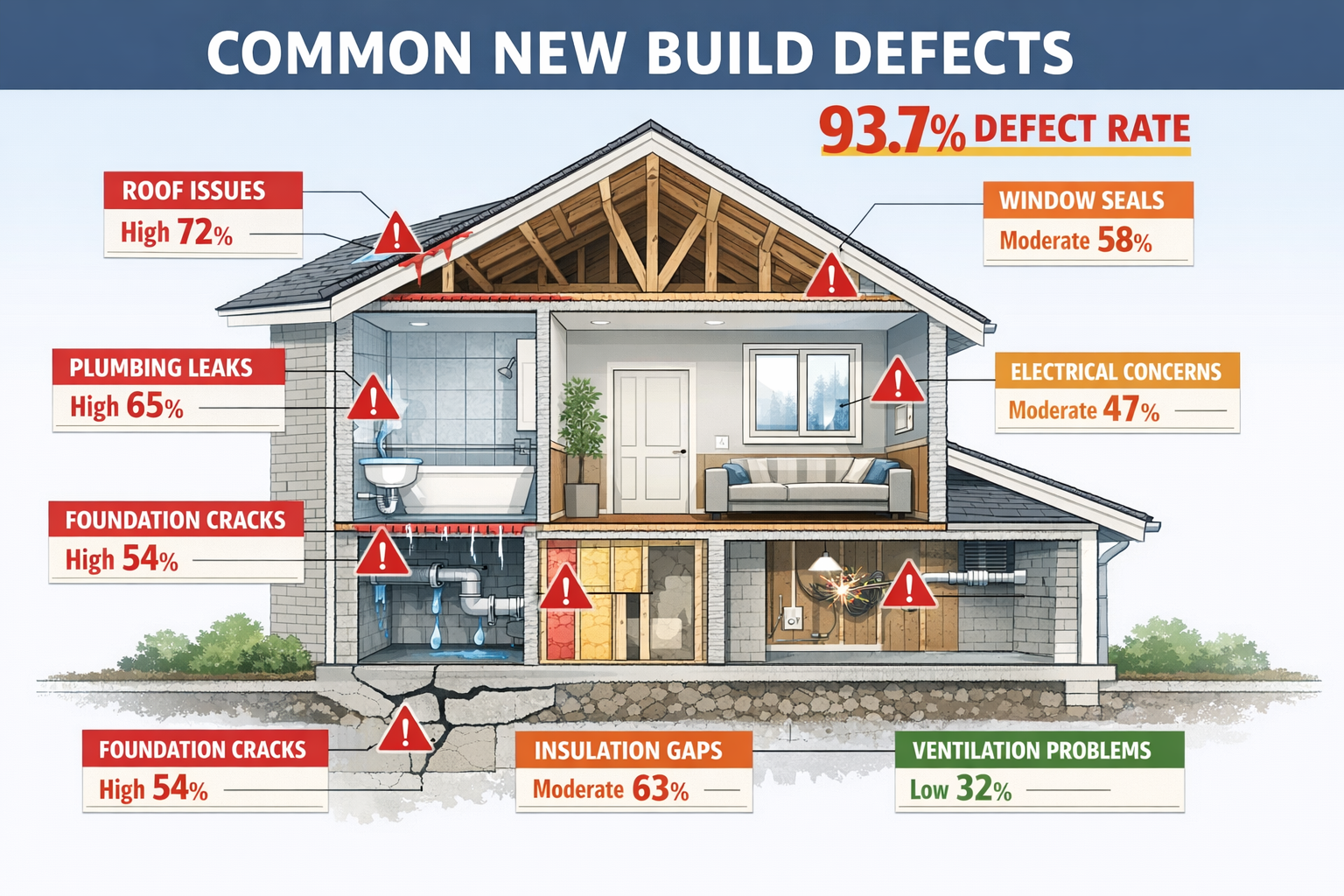
The dream of owning a brand-new home comes with an unexpected reality check: 93.7% of new build buyers report serious defects after moving in, with the average property containing 141 faults across UK new builds [1]. As 2026's property market experiences modest growth of 2-5%, understanding Building Surveys for New Build Buyers: Spotting Defects and Premium Adjustments in 2026's 2-5% Growth Market has become essential for first-time buyers and institutional investors navigating this challenging landscape. The assumption that "new means perfect" has been thoroughly debunked, making professional building surveys more critical than ever.
With the New Homes Quality Board releasing its first update to the New Homes Quality Code in March 2026 [3], regulatory frameworks are evolving to address widespread quality concerns. This comprehensive guide empowers buyers with practical checklists, warranty insights, and value risk assessments needed to make informed decisions in today's competitive new build market.

Key Takeaways
- 93.7% of new build properties contain serious defects, averaging 141 faults per home, making professional surveys essential rather than optional [1]
- The New Homes Quality Code received its first major update in March 2026, strengthening buyer protections and developer accountability [3]
- Level 3 building surveys provide comprehensive defect identification that standard warranties often miss, protecting buyers from hidden costs
- Premium adjustments of 5-15% are increasingly negotiable when surveys reveal significant construction issues in new builds
- Earlier inspection timing under 2026 regulations allows buyers to identify problems before legal commitment, reducing financial risk [2]
Understanding Building Surveys for New Build Buyers in 2026's Market Context
The Changing Landscape of New Build Quality
The UK new build sector faces unprecedented scrutiny in 2026. Despite expectations that newly constructed properties should be defect-free, industry data reveals a troubling pattern. The average new build contains 141 identifiable faults, ranging from cosmetic issues to serious structural concerns [1]. This reality has fundamentally shifted how savvy buyers approach new build purchases.
The modest 2-5% growth in new build prices during 2026 creates a unique opportunity window. Unlike previous boom periods where buyers felt pressured to skip due diligence, the current market favors those who take time for thorough inspections. First-time buyers and institutional investors alike are leveraging this slower growth environment to negotiate better terms based on survey findings.
Regulatory Evolution and the New Homes Quality Code
March 2026 marked a significant milestone with the New Homes Quality Board's first update to the New Homes Quality Code [3]. This regulatory evolution represents the industry's response to widespread quality complaints and buyer dissatisfaction. The updated code strengthens:
- Pre-completion inspection rights for buyers
- Developer accountability for defect remediation
- Warranty provider obligations beyond standard coverage
- Dispute resolution mechanisms for quality issues
These changes make professional building surveys even more valuable, as they provide documented evidence that aligns with the new regulatory framework. Understanding what's included in a Level 3 survey helps buyers maximize these enhanced protections.
Why New Builds Need Professional Surveys
The misconception that new builds don't require surveys stems from outdated assumptions. Modern construction practices, while advanced, introduce new complexities:
🏗️ Complex Building Systems: Modern homes incorporate sophisticated ventilation, insulation, and smart home technologies that require expert evaluation
⚡ Rushed Construction Timelines: Developer pressure to complete projects quickly can compromise quality control
📋 Limited Site Supervision: Reduced on-site oversight compared to previous decades increases defect likelihood
🔍 Hidden Defects: Many issues aren't visible during casual viewings but become apparent under professional scrutiny
A comprehensive Level 3 full building survey provides the detailed analysis necessary to uncover these hidden problems before financial commitment.
The Reality of New Build Defects: What Surveys Reveal
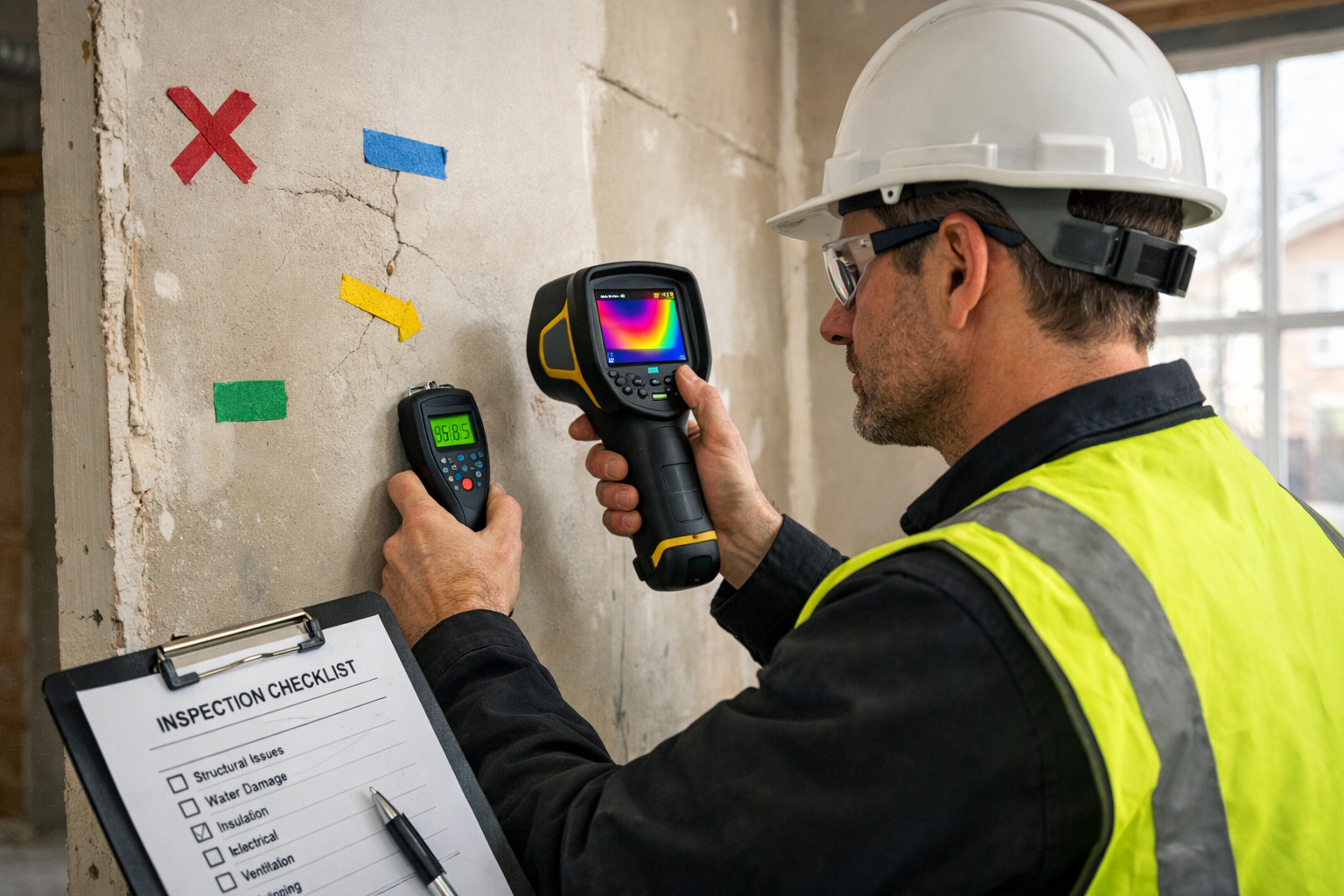
Common Defect Categories in 2026 New Builds
Professional building surveys consistently identify specific defect patterns across new build properties. Understanding these categories helps buyers know what to look for:
Structural and Foundation Issues
- Settlement cracks appearing within first year
- Inadequate foundation drainage causing moisture problems
- Improperly installed structural supports in load-bearing walls
- Roof truss misalignment affecting structural integrity
Water Ingress and Damp Problems
Water-related defects represent the most common serious issue in new builds. Surveys frequently reveal:
- Faulty window and door seals allowing water penetration
- Inadequate waterproofing in bathrooms and kitchens
- Poorly installed guttering and downpipes causing exterior damp
- Condensation issues from inadequate ventilation systems
Understanding what causes moisture in buildings helps buyers recognize early warning signs during viewings.
Electrical and Plumbing Defects
Technical installations often reveal shortcuts during construction:
- Incorrectly wired circuits creating safety hazards
- Inadequate electrical capacity for modern appliance loads
- Poorly installed plumbing connections prone to leaks
- Insufficient pipe insulation risking freeze damage
Finishing and Cosmetic Issues
While less serious, these defects affect livability and value:
- Poor plastering quality with visible imperfections
- Misaligned doors and windows affecting operation
- Inadequate paint coverage requiring immediate redecoration
- Flooring defects including gaps and poor installation
The 141-Fault Reality: Statistical Breakdown
Recent industry analysis reveals that the average new build contains 141 identifiable faults [1]. This staggering figure breaks down approximately as:
| Defect Category | Average Number per Property | Severity Level |
|---|---|---|
| Cosmetic/Finishing | 65-75 | Minor |
| Plumbing/Electrical | 25-35 | Moderate |
| Structural/Damp | 15-20 | Serious |
| Safety/Compliance | 10-15 | Critical |
| Other Issues | 15-20 | Variable |
Critical insight: While many defects are minor, the 15-20 serious structural or damp issues per property represent significant financial risk. These are precisely the problems that professional surveys identify before purchase completion.
Case Study: Typical Survey Findings
A recent Level 3 survey on a £425,000 new build property in the Southeast revealed:
✅ 23 serious defects requiring immediate attention
✅ 47 moderate issues needing resolution within 12 months
✅ 68 minor cosmetic problems affecting finish quality
Financial impact: The buyer negotiated a £21,000 price reduction (approximately 5% of purchase price) based on documented survey findings. Without the survey, these issues would have become the buyer's responsibility post-completion, with limited recourse against the developer.
Building Surveys for New Build Buyers: Essential Checklists and Inspection Protocols
Choosing the Right Survey Level for New Builds
Not all surveys provide equal value for new build properties. Understanding the differences helps buyers make informed decisions:
Level 2 (Homebuyer Report) vs Level 3 (Full Building Survey)
For new builds, Level 3 surveys provide significantly better value despite higher costs. Here's why:
Level 3 Survey Advantages:
- Comprehensive defect identification across all building elements
- Detailed analysis of construction quality and compliance
- Specific remediation recommendations with cost estimates
- Legal-grade documentation supporting price negotiations
- Access to concealed areas where serious defects hide
The difference between Level 2 and Level 3 surveys becomes crucial when dealing with new builds, where hidden defects are common.
Pre-Survey Preparation Checklist
Before commissioning your building survey:
📋 Document Review
- Obtain all available construction documentation
- Review developer's warranty terms and exclusions
- Collect planning permissions and building regulation approvals
- Request completion certificates and compliance documentation
🏠 Property Access Planning
- Coordinate with developer for full property access
- Ensure surveyor can access roof spaces, under-floor areas, and service cupboards
- Schedule survey during daylight hours for optimal visibility
- Understand building surveyor access requirements
📸 Initial Documentation
- Take your own photos during viewings for comparison
- Note any visible concerns for surveyor attention
- Record developer promises about specifications
- Document show home differences versus actual property
The Comprehensive New Build Survey Checklist
Professional surveyors follow systematic protocols when examining new builds:
External Inspection Elements
🔍 Roof and Chimneys
- Tile/slate alignment and fixing quality
- Flashing installation around penetrations
- Gutter and downpipe installation and function
- Roof ventilation adequacy
- Ridge and hip tile security
🔍 Walls and External Finishes
- Brickwork quality and mortar consistency
- Render application and cracking
- Cavity wall tie installation
- Damp-proof course installation and height
- Window and door frame installation quality
🔍 Drainage and Groundworks
- Surface water drainage effectiveness
- Foul drainage installation and testing
- Ground levels and water runoff patterns
- Paving and pathway construction quality
- Boundary wall construction
Internal Inspection Elements
🔍 Structural Components
- Wall plumb and alignment
- Floor level consistency
- Ceiling height and finish
- Staircase construction and safety
- Load-bearing wall integrity
🔍 Services Installation
- Electrical installation quality and safety
- Plumbing system installation and testing
- Heating system operation and efficiency
- Ventilation system adequacy
- Smart home system integration
🔍 Finishes and Fixtures
- Plastering quality and finish
- Decoration standards
- Kitchen and bathroom installation quality
- Flooring installation and finish
- Door and window operation
Thermal Imaging and Advanced Detection Technologies
Modern building surveys increasingly incorporate advanced technologies:
Thermal Imaging Benefits:
- Identifies hidden insulation gaps causing heat loss
- Reveals moisture ingress not visible to naked eye
- Detects air leakage around windows and doors
- Locates underfloor heating issues before floor damage occurs
Moisture Detection Equipment:
- Pinpoints damp penetration in walls and floors
- Identifies plumbing leaks within concealed pipework
- Measures condensation risk in poorly ventilated areas
These technologies transform surveys from visual inspections into comprehensive diagnostic assessments, justifying the investment in professional Level 3 surveys.
Premium Adjustments and Negotiation Strategies in 2026's Growth Market
Understanding Value Risk in New Build Purchases
The 2-5% growth market of 2026 creates unique negotiation opportunities. Unlike boom periods where developers held all leverage, current market conditions favor informed buyers who can demonstrate legitimate concerns through professional surveys.
Value risk factors identified through surveys:
💰 Immediate Remediation Costs
- Defects requiring correction before occupation
- Safety issues demanding urgent attention
- Compliance failures needing rectification
💰 Future Maintenance Implications
- Poor construction quality reducing property lifespan
- Inadequate materials requiring premature replacement
- Design flaws creating ongoing maintenance burdens
💰 Market Value Impact
- Defects affecting property resale value
- Stigma from known construction issues
- Reduced buyer appeal in future transactions
Calculating Appropriate Premium Adjustments
Professional surveys provide the evidence needed to calculate fair price adjustments:
The Three-Tier Adjustment Approach
Tier 1: Minor Defects (1-2% adjustment)
- Cosmetic issues requiring simple correction
- Finishing quality below specification
- Minor operational problems with fixtures
Tier 2: Moderate Defects (3-5% adjustment)
- Plumbing or electrical issues requiring professional correction
- Water ingress requiring remedial work
- Ventilation inadequacies needing system upgrades
Tier 3: Serious Defects (5-15% adjustment)
- Structural problems affecting building integrity
- Major damp issues requiring extensive remediation
- Building regulation compliance failures
- Safety hazards requiring immediate attention
Expert Insight: "In 2026's market, buyers with documented survey evidence successfully negotiate average adjustments of 5-8% on new build properties with multiple serious defects. The key is professional documentation and realistic cost estimates." [2]
Negotiation Strategy Framework
Step 1: Survey Evidence Compilation
- Organize findings by severity category
- Obtain remediation cost estimates from qualified contractors
- Cross-reference defects with warranty exclusions
- Prepare photographic evidence and technical reports
Step 2: Developer Engagement
- Present findings professionally and factually
- Request developer's remediation proposal
- Establish realistic timelines for corrections
- Document all communications in writing
Step 3: Adjustment Calculation
- Calculate total remediation costs from independent quotes
- Add contingency for unforeseen complications (typically 15-20%)
- Consider inconvenience and delay costs
- Factor in reduced value from known defect history
Step 4: Negotiation Tactics
✅ Start with remediation request: Give developer opportunity to fix issues
✅ Present price adjustment as alternative: If remediation timeline unacceptable
✅ Use comparative market analysis: Show how defects affect competitive position
✅ Remain flexible but firm: Demonstrate willingness to walk away if necessary
Warranty Limitations and Survey Importance
New build warranties often create false security. Understanding their limitations explains why surveys remain essential:
Common Warranty Exclusions:
- Cosmetic defects and minor finishing issues
- Issues not reported within strict timeframes
- Problems attributed to "normal settlement"
- Defects caused by "lack of maintenance" (broadly interpreted)
- Many electrical and plumbing issues after initial period
Survey Value Beyond Warranties:
- Documents defects before warranty clock starts
- Identifies issues warranty providers often dispute
- Provides independent evidence for claims
- Enables immediate negotiation rather than post-purchase disputes
The cost of a measured building survey represents a fraction of potential savings through successful negotiations.
Real-World Negotiation Outcomes in 2026
Case Example 1: First-Time Buyer Success
- Property value: £385,000
- Survey cost: £850
- Defects identified: 18 serious, 34 moderate
- Negotiated adjustment: £19,250 (5% reduction)
- Net benefit: £18,400
Case Example 2: Institutional Investor Portfolio Purchase
- Portfolio value: £12.5 million (32 units)
- Survey costs: £24,500
- Average defects per unit: 127
- Negotiated adjustment: £625,000 (5% reduction)
- Net benefit: £600,500
These examples demonstrate how Building Surveys for New Build Buyers: Spotting Defects and Premium Adjustments in 2026's 2-5% Growth Market delivers measurable financial returns far exceeding survey costs.
Timing and Process: Integrating Surveys into New Build Purchases
The 2026 Regulatory Shift: Earlier Inspections
New homebuying rules introduced in 2026 fundamentally change survey timing. Earlier inspections are now required as part of risk mitigation strategies [2], providing buyers with:
⏰ Pre-Exchange Inspection Rights
- Access to properties before legal commitment
- Opportunity to identify defects during cooling-off periods
- Time for proper negotiation without completion pressure
⏰ Staged Inspection Options
- Pre-plastering inspections revealing hidden work
- Pre-completion snagging surveys
- Final handover inspections
⏰ Extended Due Diligence Periods
- Regulatory protection for survey scheduling
- Developer obligations to accommodate inspections
- Reduced pressure tactics during purchase process
Optimal Survey Timing Strategy
The Three-Phase Approach:
Phase 1: Pre-Reservation (If Possible)
- Request access to show homes and similar completed units
- Conduct preliminary assessment of build quality
- Review developer's track record and previous buyer experiences
Phase 2: Pre-Exchange (Critical)
- Commission full Level 3 building survey
- Allow 2-3 weeks for comprehensive inspection and reporting
- Review findings with surveyor before proceeding
- This is your primary negotiation window
Phase 3: Pre-Completion (Final Check)
- Conduct snagging survey 1-2 weeks before completion
- Verify previously identified issues have been corrected
- Document any new defects discovered
- Create completion defects list for developer action
Working with Developers: Access and Cooperation
Successful surveys require developer cooperation. Understanding property market legislation changes helps buyers assert their rights:
Your Legal Rights:
- Reasonable access for professional inspections
- Adequate time for survey completion
- Access to relevant construction documentation
- Opportunity to instruct independent experts
Best Practices for Developer Relations:
- Provide advance notice of survey appointments
- Use RICS-qualified surveyors for credibility
- Request specific documentation professionally
- Maintain written records of all interactions
Red Flags Indicating Problems:
- Developer resistance to survey access
- Unreasonable restrictions on inspection areas
- Pressure to waive survey conditions
- Refusal to provide construction documentation
Post-Survey Action Timeline
Week 1: Report Review and Analysis
- Receive and thoroughly review survey report
- Identify priority defects requiring immediate attention
- Obtain remediation cost estimates
- Consult with surveyor on technical questions
Week 2: Developer Negotiation
- Present findings formally to developer
- Request remediation proposal with timeline
- Discuss price adjustment alternatives
- Establish communication protocol
Week 3: Decision and Documentation
- Evaluate developer's response
- Make informed proceed/withdraw decision
- Document agreed remediation or adjustments
- Update purchase contract with survey findings
Week 4: Final Verification
- Conduct pre-completion inspection
- Verify agreed works completed satisfactorily
- Prepare completion defects list
- Confirm warranty registration includes survey findings
Protecting Your Investment: Beyond the Initial Survey
Warranty Registration and Survey Documentation
Professional surveys create valuable documentation for warranty claims:
Critical Documentation Steps:
- Register survey findings with warranty provider immediately
- Photograph all identified defects before any remediation
- Maintain complete correspondence record with developer
- Create defects tracking spreadsheet with dates and actions
Warranty Provider Notification:
Send formal notification including:
- Complete survey report
- Photographic evidence
- Developer's remediation commitments
- Timeline for correction
This proactive approach prevents warranty providers from later claiming defects weren't reported within required timeframes.
Long-Term Monitoring and Maintenance
New builds require vigilant monitoring during the critical first two years:
Year 1 Monitoring Checklist:
- Monthly visual inspection of previously identified defect areas
- Seasonal checks after heavy rain or extreme weather
- Quarterly review of ventilation and heating system performance
- Documentation of any new issues with dates and photos
Year 2 Focus Areas:
- Settlement crack monitoring and measurement
- Damp and moisture level testing
- Drainage system performance evaluation
- External seal and weatherproofing condition
Understanding how to prevent and remove damp and mould growth becomes essential for new build owners.
Building Relationships with Professional Surveyors
Ongoing professional relationships provide long-term value:
Annual Review Surveys:
- Periodic condition assessments tracking defect progression
- Early identification of developing problems
- Documentation supporting warranty claims
- Peace of mind through professional oversight
Expert Consultation Access:
- Technical advice on maintenance priorities
- Guidance on contractor selection for repairs
- Support during warranty claim disputes
- Property improvement planning
Many surveyors offer maintenance survey packages for new build buyers, providing annual inspections at reduced rates compared to initial comprehensive surveys.
Insurance and Valuation Considerations
Survey findings affect insurance and future valuations:
Insurance Implications:
- Disclosure requirements for known defects
- Premium impacts from structural issues
- Coverage exclusions for pre-existing problems
- Claims evidence from survey documentation
Future Valuation Impact:
- Survey records supporting property condition claims
- Documentation of remediation work completed
- Evidence of proper maintenance and monitoring
- Professional validation of property quality
Professional property valuations benefit significantly from comprehensive survey history.
The First-Time Buyer Advantage in 2026's Market
Why New Build Surveys Particularly Benefit First-Time Buyers
First-time buyers represent a significant portion of the new build market in 2026. Professional surveys provide specific advantages for this demographic:
Financial Protection:
- Limited savings make defect costs particularly devastating
- Survey-based negotiations stretch deposit and budget further
- Early defect identification prevents financial surprises
- Professional documentation supports first-time buyer schemes
Knowledge Gap Mitigation:
- Expert guidance compensating for property experience lack
- Education about building quality and standards
- Confidence in purchase decision-making
- Protection against developer pressure tactics
Long-Term Security:
- Foundation for successful homeownership
- Prevention of early financial distress
- Quality assurance for major life investment
- Peace of mind during stressful purchase process
Government Schemes and Survey Requirements
Many first-time buyer assistance schemes now recognize survey importance:
Help to Buy and Shared Ownership:
- Some schemes now require professional surveys
- Survey costs sometimes eligible for assistance
- Defect identification protects scheme providers
- Enhanced buyer protection standards
Mortgage Lender Requirements:
- Increasing lender insistence on new build surveys
- Survey findings affecting lending decisions
- Valuation protection for lender security
- Risk mitigation in uncertain markets
Cost-Benefit Analysis for First-Time Buyers
Typical Investment:
- Level 3 Survey: £800-£1,200
- Thermal imaging add-on: £150-£300
- Total investment: £950-£1,500
Potential Returns:
- Average price negotiation: 5% (£19,250 on £385,000 property)
- Avoided remediation costs: £5,000-£25,000
- Reduced future maintenance: £3,000-£8,000 over 5 years
- Peace of mind: Priceless
Return on Investment: Typically 1,200-1,800% when negotiation succeeds, making surveys the highest-return investment in the entire purchase process.
Conclusion
Building Surveys for New Build Buyers: Spotting Defects and Premium Adjustments in 2026's 2-5% Growth Market represents an essential investment rather than an optional expense. With 93.7% of new build buyers reporting serious defects and an average of 141 faults per property [1], the evidence overwhelmingly supports professional survey commissioning before purchase completion.
The modest 2-5% growth environment of 2026 creates unprecedented opportunity for informed buyers. Combined with the March 2026 update to the New Homes Quality Code [3] and new regulatory frameworks requiring earlier inspections [2], buyers now possess both the tools and the market conditions to protect their investments effectively.
Key Action Steps for New Build Buyers
✅ Commission a Level 3 building survey before exchange of contracts
✅ Incorporate thermal imaging and moisture detection for comprehensive assessment
✅ Document all findings with photographs and detailed reports
✅ Negotiate confidently using professional evidence and cost estimates
✅ Register survey findings with warranty providers immediately
✅ Monitor property condition systematically during the critical first two years
✅ Maintain professional surveyor relationships for ongoing support
Taking the Next Step
Don't let the excitement of a new build purchase override due diligence. The investment in a comprehensive building survey typically returns 12-18 times its cost through successful negotiations, avoided remediation expenses, and long-term peace of mind.
For first-time buyers and institutional investors alike, professional surveys level the playing field against experienced developers, providing the technical expertise and documentation needed to make informed decisions in 2026's evolving property market.
Ready to protect your new build investment? Contact qualified RICS surveyors to discuss your specific property and arrange comprehensive pre-purchase inspections. In 2026's market, knowledge truly is power—and professional building surveys provide the knowledge you need to buy with confidence.
References
[1] Watch – https://www.youtube.com/watch?v=YAtxNq6E8Tw
[2] Building Surveys Under New Homebuying Rules Earlier Inspections And Risk Mitigation In 2026 – https://nottinghillsurveyors.com/blog/building-surveys-under-new-homebuying-rules-earlier-inspections-and-risk-mitigation-in-2026
[3] The New Homes Quality Code March 2026 Update What You Need To Know – https://www.walkermorris.co.uk/comment-opinion/the-new-homes-quality-code-march-2026-update-what-you-need-to-know/
[4] Property Buying Predictions For 2026 What New Build Buyers Should Expect – https://snagmastersw.co.uk/property-buying-predictions-for-2026-what-new-build-buyers-should-expect/