

The UK rental market in 2026 faces a critical inflection point. As tenant demand stabilizes following years of unprecedented pressure, landlord instructions have plummeted to historic lows, creating a supply crisis that threatens to reshape the entire lettings landscape. The latest Lettings Market Surveys Amid Surging Tenant Demand: RICS Insights on Landlord Instructions and Rental Price Pressures in Q1 2026 reveal a market caught between moderating demand and severe supply constraints, with chartered surveyors playing an increasingly vital role in navigating this complex environment.
According to the Royal Institution of Chartered Surveyors (RICS), February 2026 data shows tenant demand at a net balance of just +2%, while new landlord instructions remain deeply negative at -27%[4]. This imbalance continues to drive rental price pressures across most UK regions, even as affordability concerns begin to temper growth in high-cost areas like London. For property professionals, landlords, and tenants alike, understanding these market dynamics through comprehensive lettings market surveys has never been more crucial.
Key Takeaways
- Tenant demand has stabilized at modest levels (+2% net balance in February 2026) after reaching its lowest monthly reading since April 2020, indicating a significant cooling from previous peaks[1][4]
- Landlord instructions remain at historic lows (-27% net balance), representing the most severe supply shortage on record and reflecting anticipated regulatory changes from the Renters Reform Bill[1][4]
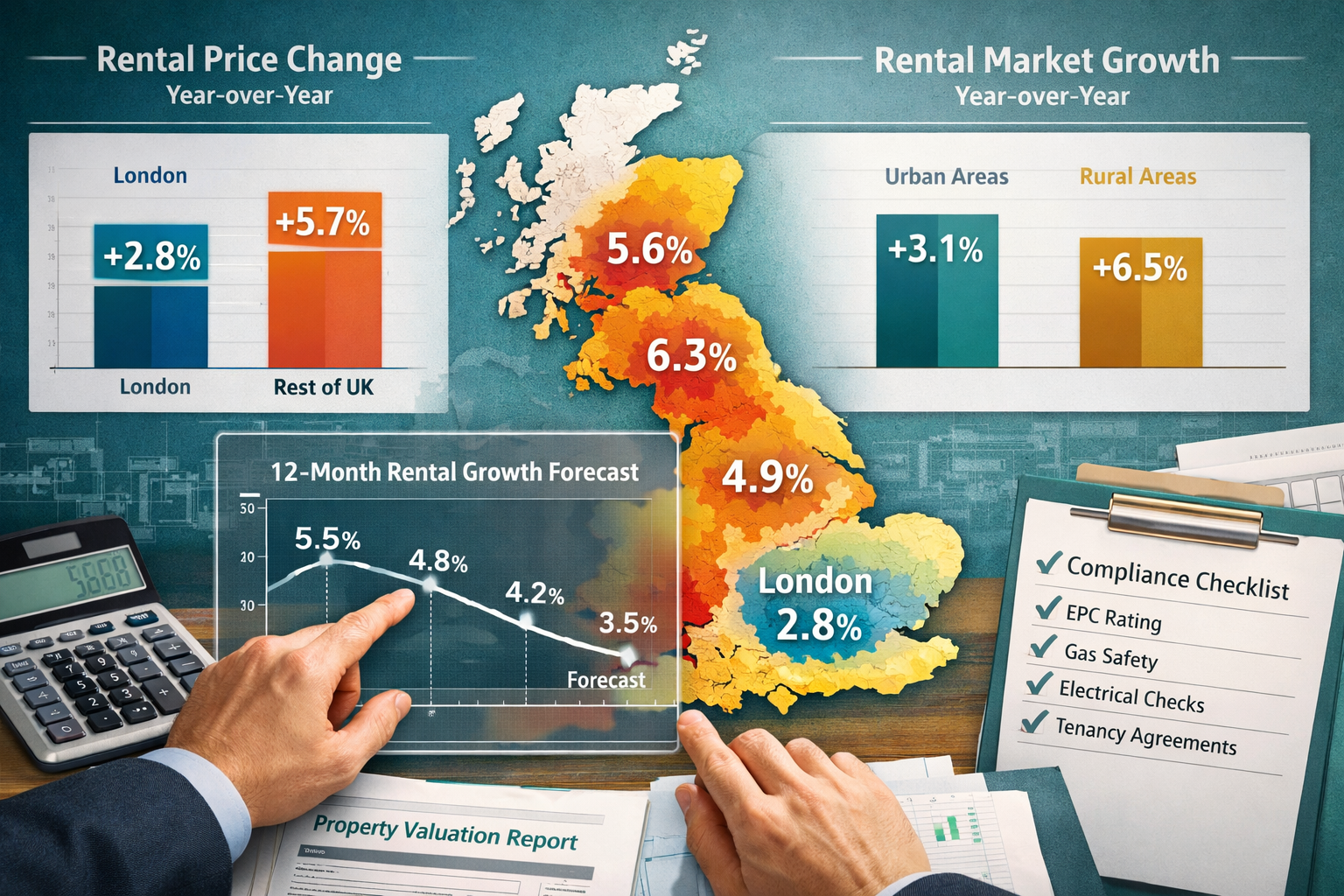
- Rental price expectations show regional divergence, with 20% of surveyors anticipating near-term increases despite London's annual growth collapsing to just 2.8% from 11.5% a year earlier[1][4]
- Chartered surveyors conducting lettings market surveys provide essential guidance on pricing strategies, compliance requirements, and investment decisions amid 2-4% rental growth forecasts
- Macroeconomic pressures including inflation concerns and interest rate uncertainty continue to weigh on market sentiment throughout Q1 2026[4]

Understanding Lettings Market Surveys Amid Surging Tenant Demand in Q1 2026
The Current State of Tenant Demand
The Lettings Market Surveys Amid Surging Tenant Demand: RICS Insights on Landlord Instructions and Rental Price Pressures in Q1 2026 paint a nuanced picture of demand dynamics. While the headline figure of +2% net balance in February 2026 suggests broadly stable conditions, this represents a marked deceleration from January's more encouraging +13% quarterly reading (seasonally adjusted)[3][4].
More significantly, monthly tenant demand reached its weakest level since April 2020 during the survey period[1]. This dramatic shift reflects several converging factors:
- 🏠 Affordability ceilings limiting tenant capacity to absorb further rent increases
- 📊 Economic uncertainty dampening household formation and mobility
- 💷 Interest rate pressures affecting disposable incomes
- 🔄 Market normalization following the post-pandemic rental surge
For chartered surveyors conducting property market assessments, these demand indicators provide critical context for rental valuations and investment advice. Understanding whether local markets are experiencing similar stabilization or divergent trends requires granular, property-specific analysis that only comprehensive lettings market surveys can provide.
Regional Variations in Tenant Demand
The RICS data reveals important geographic disparities in tenant demand patterns. While national figures show stabilization, certain regions continue to experience robust demand driven by:
- Employment growth in specific sectors
- University and student accommodation pressures
- Migration patterns from higher-cost areas
- Local housing supply constraints
Professional surveyors must account for these regional nuances when advising landlords on rental pricing strategies. A Level 3 building survey that includes market context helps landlords understand how property condition and location interact with broader demand trends.
Landlord Instructions Crisis: Understanding the Supply Shortage
Historic Lows in New Landlord Instructions
Perhaps the most alarming finding in the Lettings Market Surveys Amid Surging Tenant Demand: RICS Insights on Landlord Instructions and Rental Price Pressures in Q1 2026 concerns the supply side of the equation. February 2026 saw new landlord instructions at a net balance of -27%, indicating far more surveyors reported decreases than increases in available rental stock[4].
This represents a slight deterioration from January's -24% reading, though both figures remain significantly negative[3]. More concerning still, these readings represent the lowest levels on record for landlord instructions, signaling an unprecedented retreat from the buy-to-let market[1].
| Month | Landlord Instructions (Net Balance) | Change from Previous Month |
|---|---|---|
| December 2025 | -34% | – |
| January 2026 | -24% | +10 points (improvement) |
| February 2026 | -27% | -3 points (deterioration) |
Drivers of Landlord Retreat
The severe contraction in landlord instructions stems from multiple interconnected factors:
1. Regulatory Uncertainty 🏛️
The anticipated Renters Reform Bill looms large over landlord decision-making. Expected provisions including:
- Abolition of Section 21 "no-fault" evictions
- Enhanced tenant rights and protections
- Stricter property standards requirements
- Increased compliance burdens
These regulatory changes are prompting many landlords to exit the market entirely rather than navigate the new compliance landscape[1].
2. Economic Pressures 💰
Rising mortgage costs, insurance premiums, and maintenance expenses have compressed landlord margins significantly. When combined with:
- Higher capital gains tax considerations
- Reduced mortgage interest tax relief
- Energy efficiency upgrade requirements (see our guide on EPC and MEES considerations)
Many landlords find the investment case for buy-to-let increasingly challenging.
3. Professionalization of the Sector 📈
The shift toward institutional investors and professional block management is displacing traditional individual landlords who lack the scale and expertise to manage complex compliance requirements efficiently.
"New landlord instructions reached their lowest level historically during the survey period, reflecting the Renters Reform Bill's anticipated impact and macroeconomic uncertainty amplifying affordability pressures for landlords." – Aberdeen Investments Q1 2026 Outlook[1]
The Role of Chartered Surveyors in Supply Decisions
For landlords contemplating whether to remain in the market, professional lettings market surveys conducted by chartered surveyors provide invaluable decision-making support. These assessments help landlords understand:
- Current market rental values for their specific property
- Required capital expenditure to meet evolving standards
- Comparative returns versus alternative investments
- Local supply-demand dynamics affecting rental security
Engaging building survey specialists early in the decision process ensures landlords have comprehensive information about property condition, compliance requirements, and realistic rental potential before committing to continued lettings activity.

Rental Price Pressures: Lettings Market Surveys Reveal Regional Divergence
Near-Term Rental Price Expectations
Despite moderating tenant demand, rental price pressures persist due to the severe supply shortage. The Lettings Market Surveys Amid Surging Tenant Demand: RICS Insights on Landlord Instructions and Rental Price Pressures in Q1 2026 show evolving expectations among property professionals:
- February 2026: 20% net balance of surveyors expected rental price increases over the next three months[4]
- January 2026: 28% net balance anticipated near-term rental growth, up from 16% in the prior month[3]
The fluctuation between these readings suggests uncertainty about the trajectory of rental prices, with surveyors weighing supply constraints against affordability limits.
London's Dramatic Rental Growth Collapse
Perhaps the most striking finding concerns London's rental market, where annual growth has collapsed to just 2.8% in early 2026, down dramatically from 11.5% one year prior[1]. This represents a deceleration of more than 75% in rental price growth.
This sharp slowdown reflects:
- 🎯 Affordability ceilings reached in the capital
- 🏢 Hybrid working reducing demand for central London locations
- 📉 Economic uncertainty affecting high-value rental segments
- 🔄 Supply adjustments as some landlords reduce asking rents
However, this London-specific cooling does not reflect conditions across the broader UK market.
Regional Markets Show Continued Strength
Outside London, rental growth expectations remain considerably stronger, with many regional markets anticipated to see sustained price increases throughout 2026[1]. Key factors supporting regional rental growth include:
- Lower absolute rent levels providing more headroom for increases
- Stronger local employment markets in certain regions
- Continued migration from higher-cost areas
- Even more constrained supply in some regional locations
For chartered surveyors conducting lettings market surveys, understanding these geographic disparities is essential for providing accurate rental valuations. A property in Manchester, Birmingham, or Bristol may face entirely different market dynamics than a comparable London property.
Forecasting Rental Growth: The 2-4% Outlook
Most market analysts project 2-4% annual rental growth across the UK for 2026, with significant regional variation around this central estimate. This forecast reflects:
- Persistent supply shortages supporting upward pressure
- Affordability constraints limiting tenant capacity
- Economic uncertainty creating volatility
- Regulatory changes affecting landlord behavior
For landlords working with chartered surveyors to set rental prices, these forecasts provide important context but must be supplemented with property-specific analysis that accounts for:
- Local market conditions and comparable properties
- Property condition and amenities (assessed through comprehensive building surveys)
- Tenant demand for specific property types
- Competition from similar rental properties
Strategic Pricing Through Professional Surveys
Landlords who engage chartered surveyors for lettings market surveys gain several strategic advantages:
Accurate Market Positioning 📊
Professional surveys provide data-driven rental valuations based on comparable properties, local demand indicators, and property-specific features. This prevents both under-pricing (leaving money on the table) and over-pricing (resulting in extended void periods).
Compliance Confidence ✅
Surveyors identify necessary upgrades to meet evolving standards, helping landlords budget for required improvements and understand their impact on achievable rents.
Competitive Intelligence 🔍
Understanding how competing properties are positioned allows landlords to differentiate their offerings through strategic improvements or amenity additions.
Void Period Minimization ⏱️
Accurate pricing based on comprehensive market analysis reduces time to let, maximizing rental income and minimizing carrying costs.
The Critical Role of Chartered Surveyors in the 2026 Lettings Market
Comprehensive Lettings Market Survey Methodology
Professional lettings market surveys conducted by chartered surveyors in 2026 encompass multiple analytical dimensions:
1. Comparative Market Analysis
Surveyors analyze recent lettings of comparable properties within the local area, adjusting for:
- Property size and layout differences
- Condition and modernization levels
- Location micro-variations (transport links, amenities)
- Timing and seasonal factors
2. Property Condition Assessment
A thorough evaluation of the property's physical condition, including:
- Structural integrity and major systems
- Compliance with current regulations
- Energy efficiency ratings and improvement potential
- Required maintenance or upgrades
This assessment often draws on Level 2 or Level 3 survey methodologies depending on property age and complexity.
3. Regulatory Compliance Review
Identification of current and anticipated compliance requirements:
- Energy Performance Certificate (EPC) standards
- Electrical and gas safety certifications
- Fire safety requirements (particularly for HMOs)
- Accessibility and habitability standards
4. Market Trend Analysis
Integration of broader market intelligence including:
- RICS survey data on demand and supply trends
- Regional economic indicators
- Demographic shifts affecting tenant profiles
- Competitive supply pipeline
Navigating Regulatory Complexity
The evolving regulatory landscape makes professional survey guidance increasingly valuable. Landlords must navigate:
- Minimum Energy Efficiency Standards (MEES) requiring EPC ratings of at least 'E' (with potential future increases)
- Electrical Safety Standards mandating five-year inspection cycles
- Smoke and Carbon Monoxide Regulations requiring appropriate detector installation
- Deposit Protection Schemes with specific compliance timelines
- Right to Rent Checks with landlord verification responsibilities
Chartered surveyors help landlords understand how these requirements affect their specific properties and the costs associated with achieving compliance. For properties with environmental concerns, specialized assessment may be necessary.
Investment Decision Support
Beyond rental pricing, lettings market surveys inform broader investment decisions:
Portfolio Optimization 🎯
Multi-property landlords can use survey insights to identify which properties offer the strongest returns and which might be candidates for disposal.
Acquisition Due Diligence 🔍
Prospective landlords benefit from understanding realistic rental potential before purchase, enabling more accurate investment return calculations. Understanding how to negotiate house prices after surveys can significantly impact investment returns.
Capital Improvement Prioritization 🔧
Surveys identify which property improvements deliver the strongest rental premium, helping landlords allocate capital efficiently.
Exit Strategy Planning 🚪
For landlords considering market exit, surveys provide realistic rental income projections that inform hold-versus-sell decisions.
Macroeconomic Context: External Pressures on the Lettings Market
Interest Rates and Inflation Concerns
The Lettings Market Surveys Amid Surging Tenant Demand: RICS Insights on Landlord Instructions and Rental Price Pressures in Q1 2026 reflect broader macroeconomic headwinds affecting market sentiment. Renewed concerns over inflation and interest rates have weakened confidence as 2026 has progressed, despite some surveyors reporting an encouraging start to the year[4].
Key macroeconomic factors include:
- Persistent inflation affecting both landlord costs and tenant affordability
- Interest rate uncertainty impacting mortgage costs and refinancing decisions
- Global economic instability creating broader financial market volatility
- Employment market shifts affecting tenant income security
The Affordability Squeeze
Both landlords and tenants face affordability pressures that constrain market dynamics:
Tenant Affordability Challenges 💷
- Stagnant wage growth relative to rental increases
- Higher living costs reducing disposable income
- Student loan repayments affecting younger renters
- Deposit requirements creating entry barriers
Landlord Cost Pressures 📈
- Mortgage rate increases affecting leveraged properties
- Insurance premium inflation
- Maintenance and repair cost escalation
- Compliance upgrade expenditure
This dual affordability squeeze creates a structural tension in the market that lettings market surveys must carefully navigate when establishing rental valuations.
Future Market Outlook
Looking beyond Q1 2026, several scenarios could reshape the lettings market:
Scenario 1: Continued Supply Constraint 🔒
If landlord exits accelerate and new supply remains limited, rental price pressures could intensify in regions with stronger affordability headroom, while high-cost areas see further moderation.
Scenario 2: Demand Weakening 📉
Economic downturn or increased homeownership accessibility could reduce tenant demand, bringing rental markets into better balance despite constrained supply.
Scenario 3: Regulatory Impact 🏛️
Implementation of the Renters Reform Bill could trigger additional landlord exits while potentially improving tenant security and property standards.
Scenario 4: Institutional Growth 🏢
Continued expansion of institutional landlords and purpose-built rental developments could gradually offset individual landlord retreat, professionalizing the sector.
Practical Guidance for Landlords in Q1 2026
When to Commission a Lettings Market Survey
Landlords should consider professional lettings market surveys in several circumstances:
✅ Before setting or adjusting rental prices for existing tenancies
✅ When preparing a property for the lettings market after vacancy or acquisition
✅ During portfolio reviews to assess comparative property performance
✅ When considering property improvements to understand rental impact
✅ Before refinancing decisions that depend on rental income projections
✅ When evaluating hold-versus-sell decisions for investment properties
Selecting the Right Surveyor
Not all surveyors offer equivalent expertise in lettings market analysis. Landlords should seek:
- RICS-qualified professionals with specific lettings market experience
- Local market knowledge in the relevant geographic area
- Track record of accurate rental valuations
- Comprehensive service including condition assessment and compliance review
- Clear reporting with actionable recommendations
Firms offering comprehensive building survey services often provide integrated lettings market analysis as part of their portfolio.
Maximizing Survey Value
To extract maximum value from a lettings market survey:
- Provide complete information about the property, including any recent improvements or known issues
- Clarify your objectives – whether focused on maximizing income, minimizing voids, or optimizing for specific tenant demographics
- Request comparable evidence to understand the basis for rental valuations
- Discuss improvement options and their potential rental impact
- Understand compliance requirements and associated costs
- Review market trend context to inform longer-term strategy
Acting on Survey Findings
Professional survey recommendations might include:
- Rental price adjustments based on current market conditions
- Property improvements offering strong rental return on investment
- Compliance upgrades necessary to maintain lettability
- Marketing strategy to reach appropriate tenant demographics
- Tenancy term optimization balancing security and flexibility
Landlords who act decisively on survey findings typically achieve better outcomes than those who delay necessary adjustments or improvements.
Conclusion
The Lettings Market Surveys Amid Surging Tenant Demand: RICS Insights on Landlord Instructions and Rental Price Pressures in Q1 2026 reveal a rental market at a critical juncture. With tenant demand stabilizing at modest levels while landlord instructions plummet to historic lows, the fundamental supply-demand imbalance continues to drive rental price pressures across most UK regions, even as affordability concerns temper growth in high-cost areas like London.
For landlords navigating this complex environment, professional lettings market surveys conducted by chartered surveyors provide essential guidance on pricing strategies, compliance requirements, and investment decisions. The RICS data showing a -27% net balance in landlord instructions and just +2% in tenant demand underscores the importance of precise, property-specific analysis rather than relying on broad market generalizations.
As 2026 progresses, the anticipated implementation of the Renters Reform Bill, continued macroeconomic uncertainty, and evolving regional market dynamics will require landlords to remain agile and well-informed. Those who invest in comprehensive lettings market surveys position themselves to make data-driven decisions that maximize returns while managing risk effectively.
Actionable Next Steps
For landlords and property investors in 2026:
- Commission a professional lettings market survey if you haven't reviewed your rental pricing in the past 12 months
- Assess compliance status for all rental properties against current and anticipated regulatory requirements
- Evaluate your portfolio strategy in light of the historic supply shortage and regulatory changes
- Consider property improvements that deliver measurable rental premiums based on surveyor recommendations
- Monitor regional market trends as geographic divergence creates varying opportunities and challenges
- Engage with RICS-qualified surveyors who can provide integrated analysis of property condition, market positioning, and compliance requirements
The lettings market of 2026 rewards informed, strategic decision-making based on comprehensive professional analysis. By leveraging the insights from lettings market surveys and RICS data on demand, supply, and pricing trends, landlords can navigate the current market challenges while positioning for long-term success in an evolving rental landscape.
References
[1] UK Real Estate Market Outlook Q1 2026 – https://www.aberdeeninvestments.com/en-gb/professional/insights-and-research/uk-real-estate-market-outlook-q1-2026
[2] UK Residential Market Survey February 2026 – https://www.rics.org/content/dam/ricsglobal/documents/market-surveys/uk-residential-market-survey/UK-Residential-Market-Survey_February-2026.pdf
[3] UK Residential Market Survey January 2026 – https://www.rics.org/content/dam/ricsglobal/documents/market-surveys/uk-residential-market-survey/UK-Residential-Market-Survey_January-2026.pdf
[4] UK Residential Survey February 2026 – https://www.rics.org/news-insights/uk-residential-survey-february-2026