

The UK property landscape stands at a pivotal crossroads in 2026. With the government's draft Commonhold and Leasehold Reform Bill advancing through Parliament, a new era of property ownership disputes is emerging—and expert witnesses are taking center stage. As thousands of leaseholders consider converting to commonhold ownership, disputes over service charges, enfranchisement rights, and property valuations are intensifying. Understanding Expert Witness Roles in Leasehold Reform Disputes: RICS Guidance for 2026 Commonhold Transitions has never been more critical for property professionals, legal practitioners, and property owners navigating this transformative period.
The Royal Institution of Chartered Surveyors (RICS) has submitted detailed parliamentary evidence and updated professional standards to address these challenges. With expert surveyors providing oral testimony to UK Parliament and new guidance frameworks being established, the role of the expert witness in leasehold reform disputes is evolving rapidly[1].
Key Takeaways
⚡ Expert witnesses must maintain strict independence and objectivity when providing evidence in leasehold reform disputes, adhering to updated RICS professional standards for 2026 commonhold transitions.
📊 Valuation methodology remains a critical challenge, with the draft Bill referring back to LAFRA 2024 legislation that still awaits secondary legislation and further consultation[1].
🏢 Service charge disputes are escalating as the fourth edition of the RICS Service Charge Residential Management Code emphasizes fairness, transparency, and professionalism across all property management activities[2].
⚖️ RICS conducted 340 policy development engagements in 2025, working directly with Ministers and MPs to shape leasehold reform implementation and expert witness protocols[3].
🔄 Commonhold conversion presents practical barriers requiring professional advice on insurance, valuation, and dispute resolution, particularly in mixed-use or higher-risk buildings[1].
Understanding Expert Witness Roles in Leasehold Reform Disputes: RICS Guidance for 2026 Commonhold Transitions
What Makes an Expert Witness in Property Disputes?
An expert witness in leasehold reform disputes serves a fundamentally different role than a standard surveyor or valuer. Their primary duty is to the court or tribunal, not to the party instructing them. This distinction becomes particularly important in 2026 as commonhold transitions create unprecedented valuation and management challenges.
RICS members acting as expert witnesses must demonstrate:
- Professional qualifications and relevant experience in leasehold/commonhold property matters
- Independence and objectivity in all opinions and evidence provided
- Comprehensive understanding of current legislation including LAFRA 2024 and the draft Commonhold and Leasehold Reform Bill
- Adherence to RICS standards and the updated Service Charge Residential Management Code[2]
Expert witnesses typically engage in disputes involving:
✅ Service charge reasonableness challenges
✅ Enfranchisement and lease extension valuations
✅ Commonhold conversion feasibility assessments
✅ Property management standard disputes
✅ Reserve fund adequacy determinations
✅ Major works cost justification
The 2026 Legislative Landscape
The draft Commonhold and Leasehold Reform Bill represents the most significant property ownership reform in decades. Vanessa Griffiths MRICS, Partner at Knight Frank and RICS Residential Professional Group Panel member, emphasized in her parliamentary testimony the critical need for "clear guidance, robust valuation methodology, and strong professional oversight" to ensure commonhold transitions work effectively[1].
Key legislative developments affecting expert witness roles include:
Ground Rent Reform: The elimination or capping of ground rents creates valuation challenges when determining compensation for freeholders and calculating enfranchisement premiums.
Lowered Conversion Thresholds: The 50% consent threshold for commonhold conversion (down from previous requirements) increases the volume of potential disputes as more buildings become eligible for conversion[1].
Mandatory Reserve Funds: New requirements for reserve funds across both leasehold and commonhold properties create disputes over contribution levels and fund management[1].
Enhanced Management Standards: The updated RICS Service Charge Residential Management Code establishes higher expectations for transparency, competence, and value-for-money service delivery[2].
For property owners considering professional surveys, understanding these changes is essential. Our RICS Building Survey services provide comprehensive assessments that can identify potential dispute areas before they escalate.
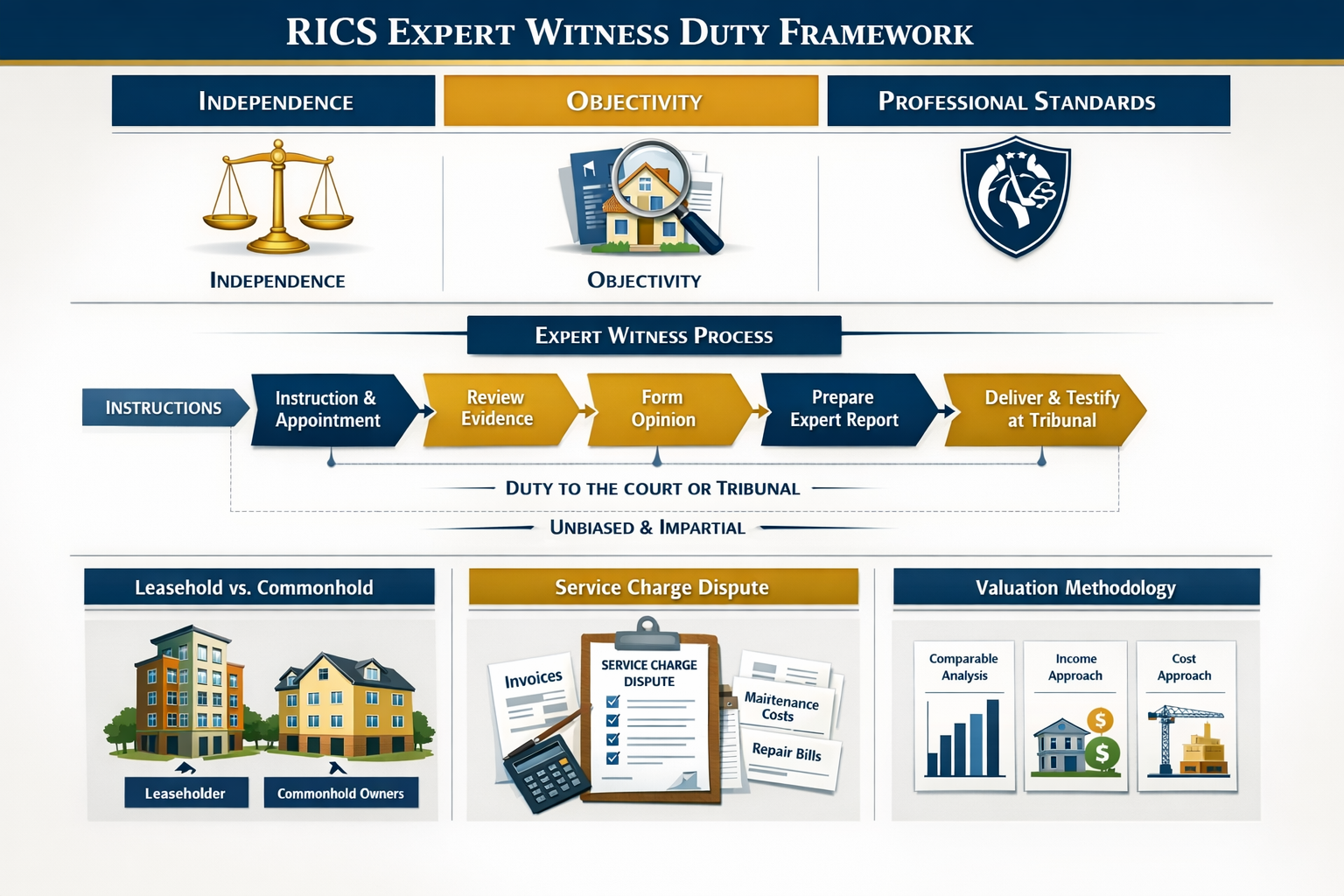
RICS Professional Standards for Expert Witnesses in Commonhold Transition Cases
Core Duties and Obligations
The RICS expert witness guidance establishes clear professional obligations that extend beyond general surveying practice. In the context of Expert Witness Roles in Leasehold Reform Disputes: RICS Guidance for 2026 Commonhold Transitions, these standards take on heightened importance.
Independence Requirements:
Expert witnesses must remain completely independent from the party instructing them. This means:
- Providing unbiased opinions based solely on professional expertise and evidence
- Disclosing any conflicts of interest immediately upon identification
- Refusing instructions where independence cannot be maintained
- Avoiding advocacy for the instructing party's position
Objectivity Standards:
Every opinion must be supported by verifiable evidence and sound methodology. Expert witnesses cannot:
- Cherry-pick data to support a predetermined conclusion
- Ignore contradictory evidence
- Exceed their area of genuine expertise
- Provide opinions without adequate investigation
Transparency Obligations:
The updated RICS Service Charge Residential Management Code emphasizes transparency across all property management activities[2]. Expert witnesses must:
- Clearly explain their methodology and assumptions
- Provide access to underlying data and calculations
- Acknowledge limitations in their analysis
- Present alternative viewpoints where relevant
Valuation Methodology Challenges in 2026
Valuation methodology remains a critical outstanding issue in leasehold reform disputes[1]. The draft Bill's reference back to LAFRA 2024 creates uncertainty, as secondary legislation and further consultation are still pending.
Expert witnesses face particular challenges when valuing:
| Valuation Scenario | Key Challenge | RICS Guidance Approach |
|---|---|---|
| Commonhold Conversion | Limited comparable evidence | Use adjusted leasehold comparables with conversion premium analysis |
| Enfranchisement Claims | Ground rent capitalization post-reform | Apply updated discount rates reflecting legislative changes |
| Service Charge Disputes | Reasonableness assessment | Reference RICS Code standards and comparable property evidence[2] |
| Reserve Fund Adequacy | Long-term maintenance forecasting | Employ building condition surveys and lifecycle costing |
| Mixed-Use Properties | Commercial/residential apportionment | Detailed floor area and use analysis with market evidence |
For properties requiring detailed condition assessment before valuation, our Level 3 Full Building Survey provides the comprehensive analysis expert witnesses need to support their opinions.
Service Charge Dispute Resolution
The fourth edition of the RICS Service Charge Residential Management Code, approved by the Secretary of State, establishes enhanced standards for budgeting, accounting, complaints handling, procurement, and dispute resolution[2].
Expert witnesses in service charge disputes must evaluate:
🔍 Reasonableness of Charges: Whether costs incurred represent value for money and meet professional standards
🔍 Procurement Compliance: Whether managing agents followed proper tendering and contractor selection processes
🔍 Transparency Standards: Whether leaseholders received adequate documentation and explanation of charges
🔍 Consultation Requirements: Whether Section 20 procedures were properly followed for major works
🔍 Reserve Fund Management: Whether contributions are appropriate for the property's long-term maintenance needs
Professional service charge accounting and budgeting services can help property managers maintain standards that withstand expert scrutiny.
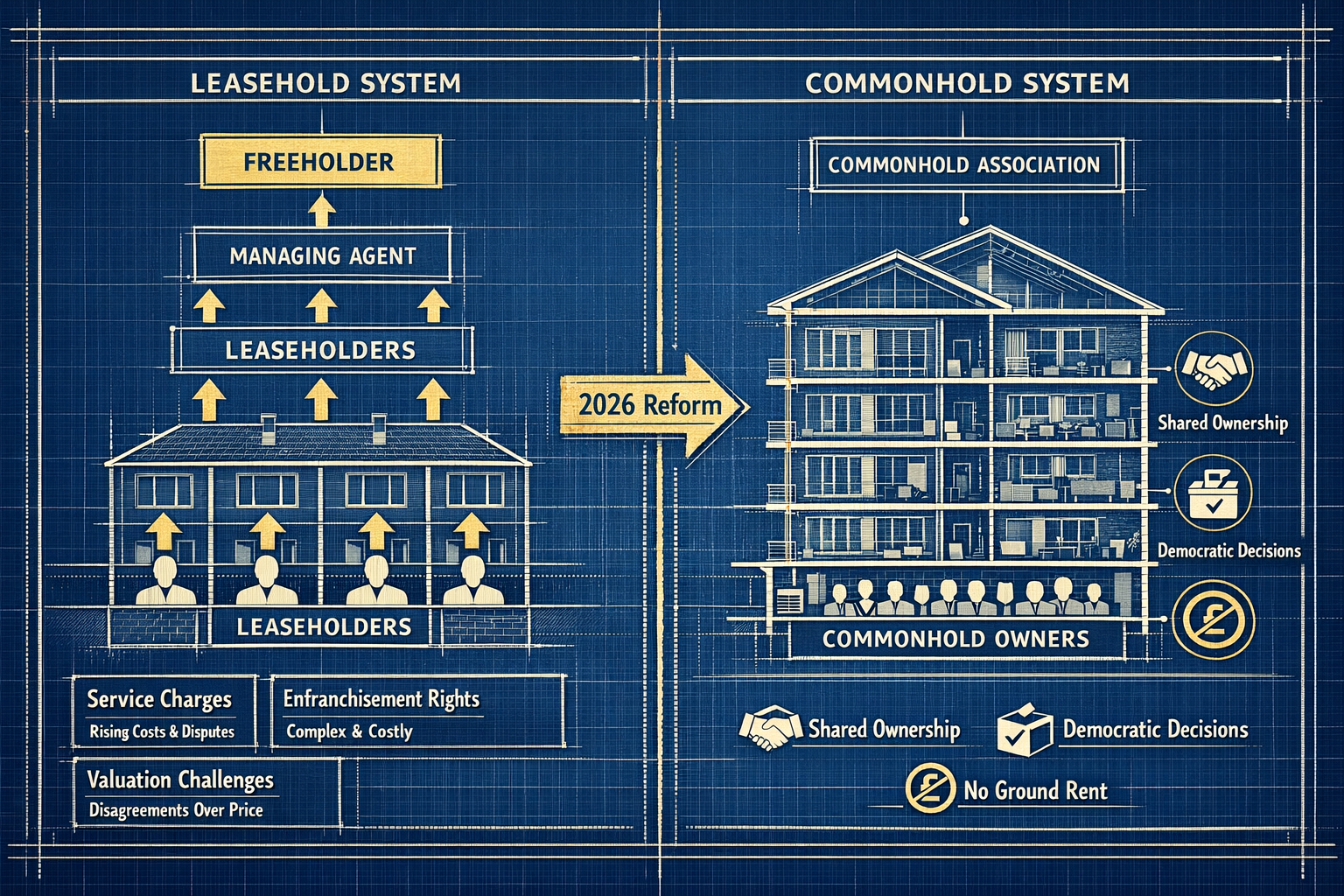
Practical Implementation: Expert Witness Roles in Leasehold Reform Disputes for 2026
Preparing Expert Witness Reports
A comprehensive expert witness report in a leasehold reform dispute must follow strict structural and content requirements. RICS guidance emphasizes that reports should be accessible, thorough, and defensible.
Essential Report Components:
1. Executive Summary
A concise overview of instructions, key findings, and conclusions (typically 1-2 pages)
2. Instructions and Scope
Clear statement of what the expert was asked to investigate and any limitations on scope
3. Property Description
Detailed description of the subject property, including:
- Physical characteristics and condition
- Lease terms and management arrangements
- Service charge history
- Relevant building defects or maintenance issues
4. Methodology Statement
Explanation of the approach taken, including:
- Inspection procedures
- Data sources consulted
- Valuation or assessment methods employed
- Professional standards applied
5. Evidence Analysis
Systematic review of all relevant evidence, including:
- Comparable properties or transactions
- Service charge accounts and budgets
- Maintenance records and contractor quotes
- Relevant case law and statutory provisions
6. Professional Opinion
Clear statement of conclusions with supporting reasoning
7. Declaration of Truth
Formal statement confirming the expert's duty to the court/tribunal and the accuracy of the report
Common Dispute Scenarios in 2026
Scenario 1: Commonhold Conversion Feasibility
A block of 30 flats seeks to convert from leasehold to commonhold. The freeholder opposes the conversion, claiming the building's mixed residential/commercial use makes commonhold unsuitable.
Expert Witness Role:
- Assess the practical viability of commonhold management for the specific property
- Evaluate insurance availability and cost implications
- Analyze the impact on property values
- Consider lender willingness to provide commonhold mortgages
- Review the proposed commonhold association structure
RICS has highlighted that practical barriers exist for commonhold conversion, particularly regarding professional advice access and appropriate insurance in mixed-use buildings[1]. Expert witnesses must provide balanced analysis of these challenges.
Scenario 2: Service Charge Reasonableness Challenge
Leaseholders dispute £450,000 in major works charges for roof replacement and external decoration, claiming the costs are excessive and procurement was inadequate.
Expert Witness Role:
- Review the condition of the building and necessity of works
- Assess whether the scope of works was appropriate
- Evaluate contractor selection and tendering processes against RICS Code standards[2]
- Provide comparable costs for similar works
- Determine whether Section 20 consultation was properly conducted
Our Section 20 major works expertise helps property managers navigate these complex requirements from the outset.
Scenario 3: Enfranchisement Valuation Dispute
Leaseholders seek to collectively enfranchise a building. The freeholder's valuation is £2.1 million; the leaseholders' valuation is £1.4 million—a £700,000 difference.
Expert Witness Role:
- Determine the appropriate valuation methodology under current legislation
- Analyze comparable enfranchisement transactions
- Calculate marriage value (if applicable under reformed rules)
- Assess ground rent capitalization rates
- Consider the impact of recent legislative reforms on valuation parameters
Professional valuation services provide the foundation for defensible expert opinions in these high-stakes disputes.
Managing Agent Competence Disputes
The RICS Service Charge Residential Management Code establishes clear competence, objectivity and transparency requirements for landlords and managing agents[2]. Expert witnesses increasingly evaluate whether managing agents meet these professional standards.
Key assessment areas include:
Professional Qualifications: Whether managing agents hold appropriate RICS or equivalent qualifications
Communication Standards: Whether leaseholders receive timely, clear documentation about charges, works, and decisions
Financial Management: Whether accounts are properly maintained and audited according to RICS standards
Procurement Practices: Whether contractors are selected through competitive processes that deliver value for money
Complaint Handling: Whether disputes are addressed professionally and in accordance with formal procedures
Health and Safety Compliance: Whether fire risk assessments and other safety obligations are properly discharged
Understanding what constitutes good block management helps leaseholders and expert witnesses evaluate whether professional standards are being met.
The Role of Reserve Funds in Dispute Prevention
RICS evidence to Parliament emphasized that mandatory reserve funds are essential for both commonhold and leasehold properties to protect residents from unexpected major works costs[1].
Expert witnesses evaluating reserve fund disputes must consider:
📌 Adequacy of Contributions: Whether the fund will realistically cover anticipated major works over the building's lifecycle
📌 Investment Strategy: Whether funds are held in appropriate accounts that balance accessibility with reasonable returns
📌 Forecasting Methodology: Whether long-term maintenance planning is based on professional building condition surveys
📌 Transparency: Whether leaseholders receive clear reporting on fund balances and planned expenditure
📌 Fairness: Whether contribution formulas appropriately reflect each unit's share of benefit from communal areas
For buildings requiring detailed condition assessment to support reserve fund planning, our comprehensive building surveys provide the technical foundation for accurate forecasting.
Future Developments and Regulatory Changes
Implementation Challenges Ahead
RICS has warned of significant implementation challenges as commonhold transitions accelerate in 2026 and beyond[1]. Expert witnesses must stay informed about evolving guidance in several critical areas:
Lender Readiness: Mortgage providers must develop commonhold lending criteria and risk assessment frameworks. Expert witnesses may be called to assess whether commonhold conversion will impact property mortgageability.
Ground Rent Reform Impact: The elimination of ground rents affects investment models and loan note repayments. Valuation experts must develop new methodologies for compensating freeholders and calculating enfranchisement premiums.
Professional Standards Consistency: Ensuring uniform competence across managing agents, valuation professionals, and dispute resolution specialists remains an ongoing challenge requiring regulatory development.
Insurance Market Evolution: Commonhold properties require appropriate insurance products. Expert witnesses must understand the availability and cost implications of commonhold-specific coverage.
Regulation of Property Agents (RoPA)
RICS is actively urging implementation of remaining Regulation of Property Agents (RoPA) recommendations to ensure professional competence, qualifications, and regulatory consistency[1]. This regulatory framework will affect expert witness practice by:
- Establishing minimum qualification standards for managing agents and property professionals
- Creating clearer pathways for professional development and continuing education
- Enhancing consumer protection through mandatory professional indemnity insurance
- Providing stronger enforcement mechanisms for professional misconduct
Expert witnesses must demonstrate awareness of these evolving regulatory requirements when assessing whether property professionals have met their duties.
The 340 Engagements: RICS Policy Development
RICS conducted 340 policy development engagements in the UK during 2025 with policymakers, industry leaders, and members[3]. This extensive consultation focused significantly on:
- Home buying and selling process improvements
- Leasehold reform implementation
- Building safety standards
- Professional competence requirements
- Dispute resolution mechanisms
This ongoing policy development means expert witnesses must continuously update their knowledge of emerging guidance and best practices. The professional landscape for Expert Witness Roles in Leasehold Reform Disputes: RICS Guidance for 2026 Commonhold Transitions continues to evolve rapidly.
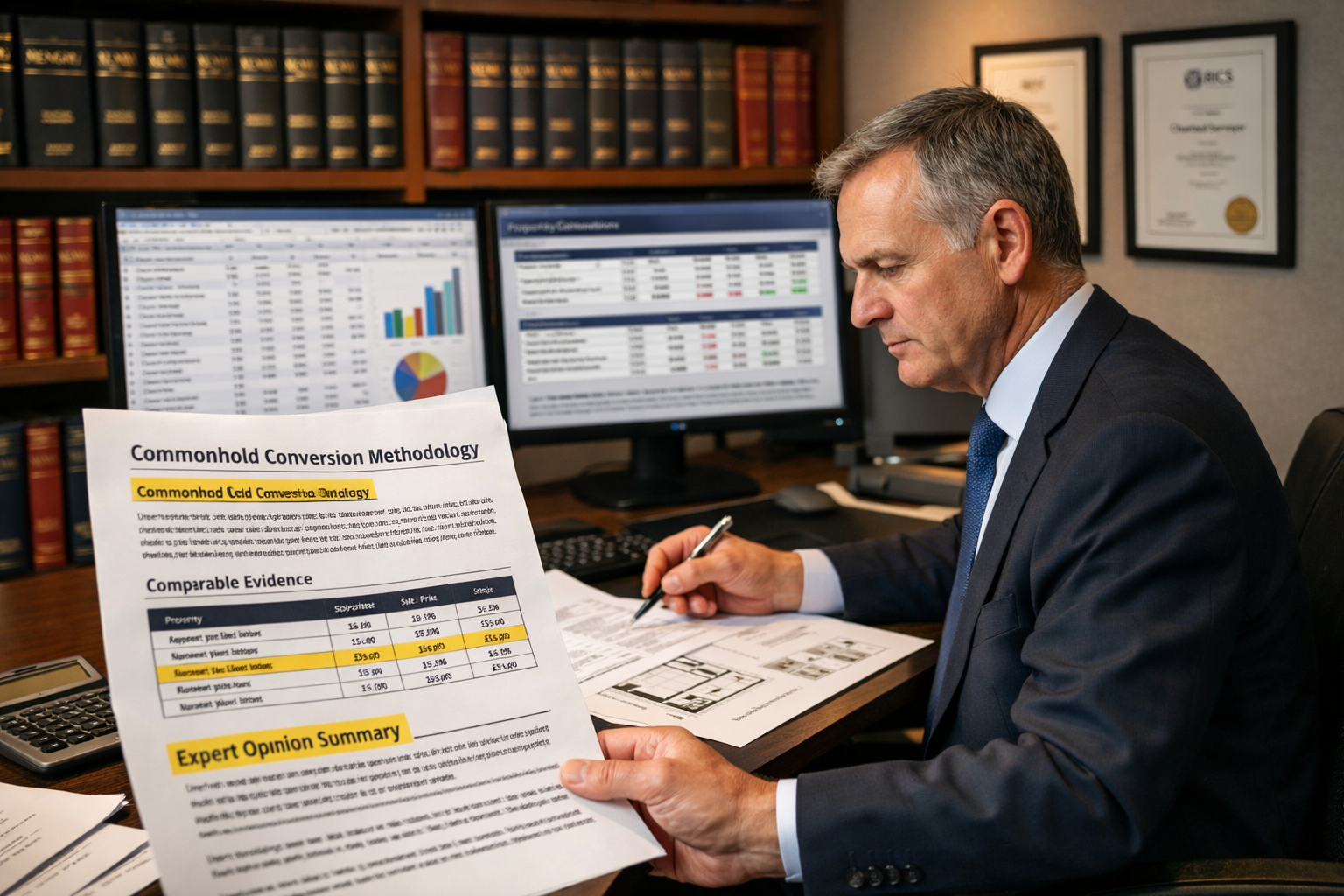
Selecting and Instructing an Expert Witness
Qualification and Experience Requirements
When selecting an expert witness for leasehold reform disputes, parties should verify:
✅ RICS Membership: Ideally MRICS or FRICS with relevant specialization
✅ Relevant Experience: Demonstrated expertise in leasehold/commonhold matters
✅ Tribunal Experience: Previous experience providing expert evidence in property tribunals
✅ Technical Knowledge: Up-to-date understanding of LAFRA 2024 and the draft Commonhold Bill
✅ Professional Indemnity Insurance: Adequate coverage for expert witness work
✅ Independence: No conflicts of interest with parties to the dispute
Our team of chartered surveyors across London includes professionals with extensive expert witness experience in leasehold reform disputes.
The Instruction Process
Proper instruction of an expert witness follows a structured process:
1. Initial Consultation
Discuss the dispute, potential issues, and whether expert evidence would be beneficial
2. Conflict Check
Ensure the expert has no conflicts of interest that would compromise independence
3. Letter of Instruction
Provide clear, comprehensive written instructions outlining:
- Background to the dispute
- Specific questions to be addressed
- Relevant documents and evidence
- Timescales and deadlines
- Fee arrangements
4. Document Disclosure
Provide all relevant documentation, including:
- Lease agreements and deeds
- Service charge accounts and demands
- Correspondence between parties
- Previous tribunal decisions or court orders
- Building condition reports or surveys
5. Site Inspection
Arrange access for the expert to inspect the property (if required)
6. Report Preparation
The expert prepares their report independently, without interference from instructing parties
7. Expert Discussion
In many cases, opposing experts will meet to narrow issues and agree facts where possible
8. Tribunal Hearing
The expert may be required to give oral evidence and answer questions
Cost Considerations
Expert witness fees in leasehold reform disputes typically range from £150-£400 per hour depending on the expert's experience and the complexity of the matter. A comprehensive expert report may cost £3,000-£15,000+ depending on:
- Complexity of the property and issues
- Amount of documentation to review
- Necessity of site inspections
- Requirement for detailed valuation analysis
- Likelihood of tribunal attendance
Parties should discuss fee arrangements clearly at the instruction stage, including whether fees are fixed, hourly, or a combination.
Conclusion: Navigating Expert Witness Roles in 2026's Leasehold Reform Landscape
The transformation of UK property ownership through commonhold reform represents both opportunity and challenge. As the draft Commonhold and Leasehold Reform Bill progresses through Parliament, expert witnesses play an indispensable role in ensuring disputes are resolved fairly, based on sound professional evidence and robust methodology.
The RICS guidance for 2026 emphasizes independence, objectivity, and professional competence as non-negotiable standards for expert witnesses. With valuation methodology still evolving, service charge disputes increasing, and commonhold conversions creating unprecedented scenarios, property professionals must maintain the highest standards of practice.
Key Actions for Property Professionals
For RICS Members and Surveyors:
- Stay updated on evolving RICS guidance and legislative developments
- Maintain professional development in leasehold reform and commonhold matters
- Ensure expert witness work adheres strictly to independence and objectivity standards
- Participate in RICS policy consultations to shape future guidance
For Property Owners and Leaseholders:
- Seek professional advice early when considering commonhold conversion
- Ensure managing agents comply with the updated RICS Service Charge Code[2]
- Obtain comprehensive building surveys before major decisions
- Instruct qualified expert witnesses if disputes cannot be resolved through negotiation
For Legal Practitioners:
- Instruct expert witnesses with specific leasehold/commonhold expertise
- Provide comprehensive documentation and clear instructions
- Allow experts sufficient time for thorough investigation
- Respect expert independence throughout the process
For Managing Agents and Freeholders:
- Implement robust service charge management that meets RICS Code standards
- Maintain transparent communication with leaseholders
- Establish adequate reserve funds for long-term maintenance[1]
- Seek professional guidance on commonhold transition implications
Looking Ahead
The landscape of Expert Witness Roles in Leasehold Reform Disputes: RICS Guidance for 2026 Commonhold Transitions will continue evolving as secondary legislation is finalized and the first wave of commonhold conversions proceeds. The 340 policy engagements RICS conducted in 2025[3] demonstrate the institution's commitment to shaping workable, fair reforms.
As Vanessa Griffiths MRICS emphasized in her parliamentary testimony, success requires "clear guidance, robust valuation methodology, and strong professional oversight"[1]. Expert witnesses who maintain these standards while adapting to new legislative frameworks will be essential to ensuring leasehold reform achieves its goals of fairness, transparency, and consumer protection.
The transition to commonhold ownership represents a fundamental shift in how we conceive of property rights in multi-occupancy buildings. With professional expertise, rigorous standards, and commitment to independence, expert witnesses will help navigate this transformation—one dispute at a time.
For professional guidance on leasehold matters, building surveys, or expert witness services, contact experienced chartered surveyors who understand the complexities of 2026's evolving property landscape.
References
[1] Rics Responds To Latest Government Reforms On Leasehold And Commonhold – https://www.rics.org/news-insights/rics-responds-to-latest-government-reforms-on-leasehold-and-commonhold
[2] Rics Publishes Updated Service Charge Residential Management Code – https://www.rics.org/news-insights/rics-publishes-updated-service-charge-residential-management-code
[3] Update From Justin Young Rics Ceo March 2026 – https://www.rics.org/news-insights/update-from-justin-young-rics-ceo-march-2026