

The rental landscape is transforming dramatically in 2026. With tenant demand surging and new regulatory frameworks taking effect, landlords face unprecedented compliance requirements that could significantly impact their rental yields. Stricter Rental Regulations 2026: Building Survey Checklists for Landlord Compliance and Risk Mitigation have become essential tools for property owners navigating this complex environment. Understanding how to conduct thorough building surveys and maintain comprehensive compliance checklists isn't just good practice—it's now a legal necessity that protects both tenants and landlords' investments.
The enforcement of Awaab's Law, the extension of the Decent Homes Standard to private rentals, and enhanced council powers mean that landlords must adopt a proactive approach to property management.[1] Building surveys that identify issues early can prevent costly penalties, protect rental income, and ensure properties meet the stringent standards now required by law.
Key Takeaways
✅ Awaab's Law enforcement requires landlords to address serious hazards like damp and mould within strict timelines, making regular building surveys essential for early detection and compliance.[1]
✅ The Decent Homes Standard now applies to private rentals for the first time, giving councils enhanced powers to inspect properties and require improvements.[1]
✅ Comprehensive building survey checklists help landlords systematically identify compliance gaps, prioritize repairs, and maintain documentation for regulatory requirements.
✅ Enhanced penalties including doubled Rent Repayment Orders (up to 24 months) and increased civil penalties make non-compliance financially devastating for landlords.[1]
✅ Proactive surveying strategies protect rental yields by preventing emergency repairs, reducing void periods, and maintaining property values in an increasingly regulated market.
Understanding the New Rental Regulations Framework in 2026
The regulatory environment for landlords has undergone a fundamental shift in 2026. The Renters Rights Act introduces multiple layers of compliance requirements that affect every aspect of property management, from initial tenant placement to ongoing maintenance obligations.
Awaab's Law: Mandatory Response Timelines ⏰
Named after Awaab Ishak, a two-year-old who died from prolonged exposure to mould, Awaab's Law establishes legally enforceable timelines for addressing serious hazards. These timelines will be implied into tenancy agreements and enforceable through court action.[1] Landlords must now:
- Investigate reported hazards within specified timeframes
- Complete repairs for serious issues like damp and mould according to prescribed schedules
- Maintain detailed records of all tenant complaints and remedial actions
- Demonstrate compliance when challenged by tenants or local authorities
The law fundamentally changes the landlord-tenant relationship by creating statutory obligations that cannot be waived or negotiated away. Building surveys and regular inspections become critical tools for identifying these hazards before tenants report them, allowing landlords to address issues proactively rather than reactively.
Decent Homes Standard Extension to Private Rentals
For the first time, the Decent Homes Standard—previously applied only to social housing—now extends to the private rental sector.[1] This standard requires properties to meet specific criteria across four key areas:
| Standard Category | Requirements | Compliance Impact |
|---|---|---|
| Statutory Minimum | Property must meet current statutory minimum for housing | Mandatory HHSRS compliance |
| Reasonable Repair | Property must be in a reasonable state of repair | Regular maintenance schedules required |
| Modern Facilities | Reasonably modern facilities and services | Kitchen and bathroom upgrades may be needed |
| Thermal Comfort | Effective insulation and efficient heating | EPC improvements and heating system upgrades |
Councils now have clearer powers to conduct property inspections and require improvements to bring properties up to standard. This represents a significant expansion of local authority oversight into private rental properties.
Enhanced Council Powers and Investigatory Authority
Local councils have gained substantially enhanced investigatory powers in 2026.[1] These include:
- Proactive inspection rights without requiring tenant complaints
- Authority to require documentation proving compliance with minimum standards
- Power to issue improvement notices with enforceable deadlines
- Increased civil penalties for breaches, creating stronger financial deterrents
The shift from reactive to proactive enforcement means landlords can no longer rely on the absence of complaints as evidence of compliance. Regular building surveys provide the documentation needed to demonstrate ongoing compliance when councils exercise their inspection powers.
Rent Repayment Orders: Doubled Financial Consequences
Perhaps the most financially significant change involves Rent Repayment Orders (RROs). The maximum repayment has doubled to 24 months' rent, with a 24-month claim window for tenants to pursue claims.[1] RROs can now be triggered by:
- Housing Health and Safety Rating System (HHSRS) violations
- Failure to comply with improvement notices
- Operating without required licenses
- Breaches of management regulations
The financial exposure is substantial. For a property rented at £1,500 per month, a successful RRO claim could require the landlord to repay £36,000—potentially wiping out years of rental income. This dramatic increase in financial risk makes compliance verification through systematic building surveys an essential risk management strategy.
Stricter Rental Regulations 2026: Building Survey Checklists for Landlord Compliance
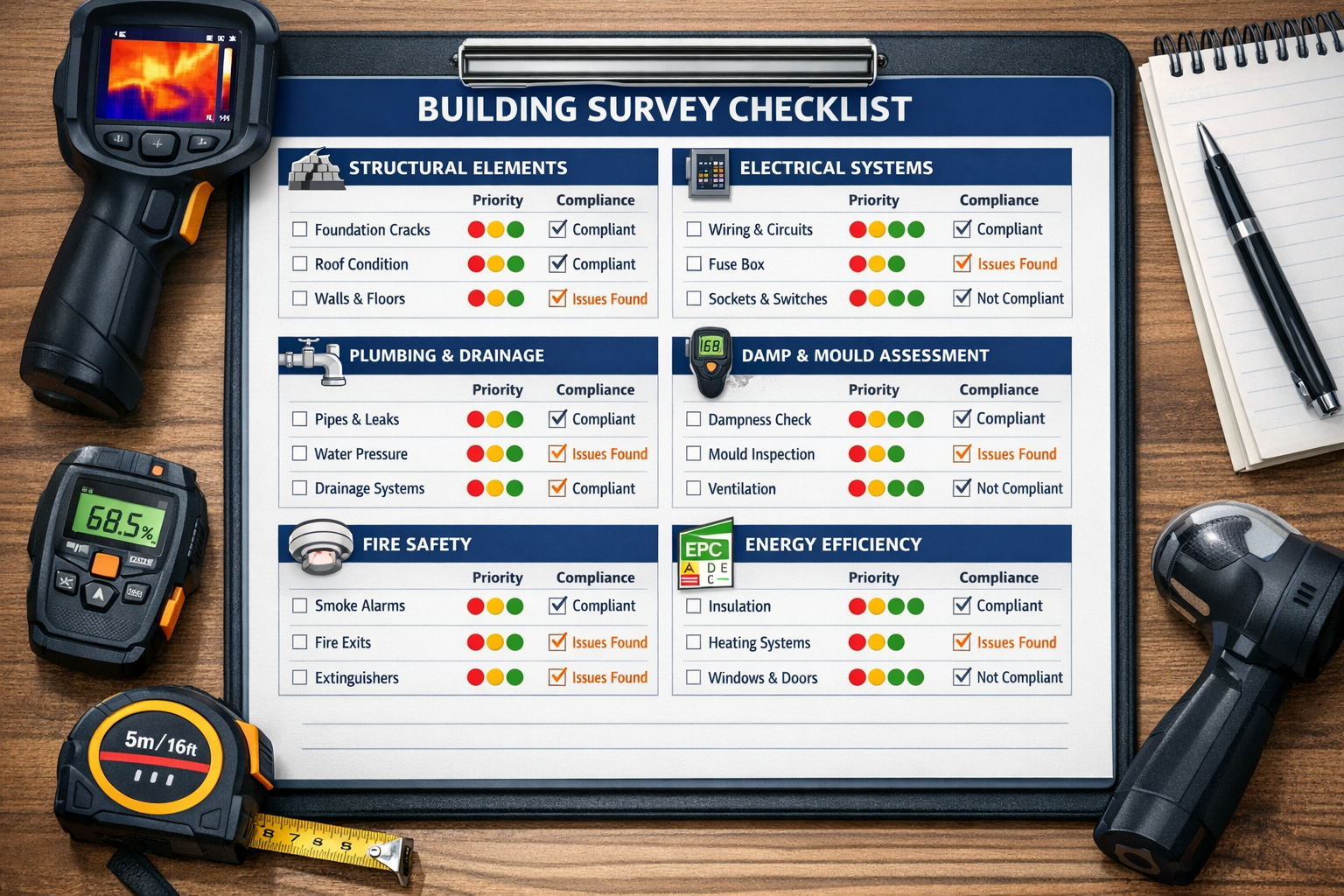
Creating comprehensive building survey checklists tailored to the 2026 regulatory framework is essential for landlord compliance. These checklists must address both traditional building condition issues and the specific compliance requirements introduced by recent legislation.
Essential Structural and Exterior Elements 🏠
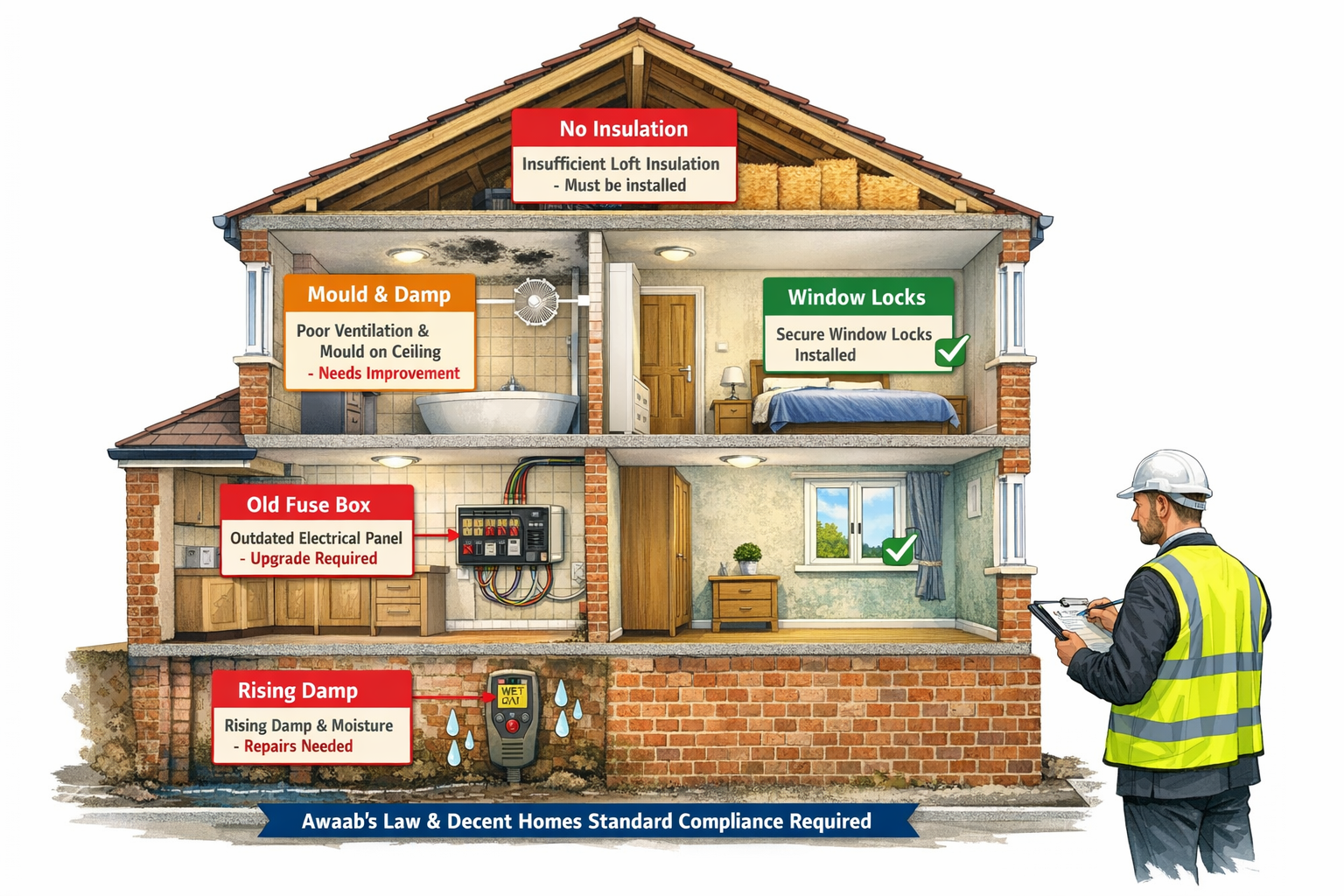
A thorough building survey checklist begins with structural integrity and exterior condition assessments:
Foundation and Structural Elements:
- Visible foundation cracks or settlement signs
- Structural wall integrity and load-bearing capacity
- Floor level variations indicating structural movement
- Beam and joist condition in accessible areas
- Evidence of previous structural repairs or alterations
Roof and Exterior:
- Roof covering condition (tiles, slates, felt)
- Chimney stack stability and pointing condition
- Guttering and downpipe functionality and condition
- External wall render or brickwork condition
- Window and door frame condition and weather-tightness
- Presence of adequate ventilation systems
Understanding building survey timeframes helps landlords plan inspections around tenancy transitions, minimizing disruption while ensuring compliance.
Damp, Mould, and Moisture Management (Awaab's Law Compliance)
Given Awaab's Law's specific focus on damp and mould, this section requires particular attention:
Moisture Ingress Assessment:
- Evidence of penetrating damp from external sources
- Rising damp indicators at ground floor level
- Condensation patterns on windows and cold surfaces
- Water staining on ceilings, walls, or floors
- Moisture meter readings in suspect areas
Ventilation and Mould Prevention:
- Adequacy of natural ventilation (windows, air bricks)
- Mechanical ventilation in bathrooms and kitchens
- Extractor fan functionality and extraction rates
- Evidence of existing mould growth (visible or concealed)
- Tenant education materials on condensation management
Thermal Performance:
- Insulation levels in loft spaces, walls, and floors
- Thermal bridging or cold spots that promote condensation
- Window glazing performance (single, double, triple)
- Door and window draught-proofing effectiveness
Understanding moisture causes in buildings enables landlords to address root causes rather than symptoms, ensuring compliance with Awaab's Law requirements.
Electrical, Gas, and Fire Safety Compliance ⚡
Safety systems require regular certification and inspection:
Electrical System Assessment:
- Date of last Electrical Installation Condition Report (EICR)
- Compliance with current wiring regulations
- Adequate socket provision for modern living
- RCD protection on all circuits
- Condition of consumer unit and distribution board
- Portable appliance testing (PAT) status for provided appliances
Gas Safety:
- Annual Gas Safety Certificate currency
- Boiler age, condition, and efficiency rating
- Gas appliance condition and ventilation
- Carbon monoxide detector presence and functionality
- Gas pipe condition and accessibility for servicing
Fire Safety Measures:
- Smoke alarm provision (every floor minimum)
- Carbon monoxide alarm placement (rooms with solid fuel appliances)
- Fire door compliance in HMOs
- Escape route accessibility and signage
- Fire blanket and extinguisher provision where required
Energy Performance and Decent Homes Standard Requirements
The Decent Homes Standard includes specific thermal comfort requirements that overlap with energy efficiency regulations:
Energy Performance Certificate (EPC) Compliance:
- Current EPC rating (minimum Band E required since 2020)
- Recommendations for cost-effective improvements
- Exemption status if improvements aren't cost-effective
- Planned improvements to reach Band C (future requirement)
Understanding the relationship between EPCs, MEES, and building surveys helps landlords develop strategic improvement plans that address multiple regulatory requirements simultaneously.
Heating System Assessment:
- Heating system type, age, and efficiency
- Adequate heating provision for all habitable rooms
- Programmer and thermostat functionality
- Radiator condition and heat output
- Alternative heating sources (electric heaters, fires)
Insulation Standards:
- Loft insulation depth (minimum 270mm recommended)
- Cavity wall insulation presence
- Solid wall insulation (internal or external)
- Floor insulation in suspended timber floors
- Pipe and tank insulation in unheated spaces
Modern Facilities and Amenities Standards
The Decent Homes Standard requires "reasonably modern facilities and services," which includes:
Kitchen Facilities:
- Kitchen age and condition (less than 20 years old preferred)
- Adequate food preparation surfaces
- Sink with hot and cold water supply
- Cooking facilities (oven, hob)
- Adequate electrical sockets for appliances
- Ventilation (window or mechanical extraction)
Bathroom and Sanitary Facilities:
- Bathroom age and condition (less than 30 years old preferred)
- Bath or shower with hot and cold water
- WC (separate or combined with bathroom)
- Wash hand basin with hot and cold water
- Adequate ventilation (window or mechanical extraction)
- Condition of sanitary ware and fixtures
General Amenities:
- Adequate natural lighting in all habitable rooms
- Sufficient storage space
- Secure entry systems
- Adequate refuse storage facilities
Documentation and Record-Keeping Requirements 📋
Compliance isn't just about meeting standards—it's about proving compliance through comprehensive documentation:
Essential Documentation Checklist:
- Complete building survey reports with photographs
- All safety certificates (gas, electrical, EPC, fire risk assessments)
- Maintenance logs and repair records
- Tenant complaint records and response timelines
- Improvement notices and compliance evidence
- Licensing documentation where applicable
- Insurance certificates and policy details
- Tenancy agreements with implied Awaab's Law terms
Maintaining organized records protects landlords when councils exercise their enhanced investigatory powers or when tenants pursue Rent Repayment Orders. Digital documentation systems with cloud backup ensure records remain accessible and secure.
Implementing Stricter Rental Regulations 2026: Building Survey Checklists for Landlord Risk Mitigation
Having a comprehensive checklist is only the first step. Effective implementation requires systematic processes, professional expertise, and strategic planning to mitigate risks while protecting rental yields.

Establishing Regular Survey Schedules
Proactive surveying prevents regulatory breaches and identifies issues before they escalate:
Pre-Tenancy Surveys:
- Comprehensive Level 3 building survey before first letting
- Detailed condition documentation with photographs
- Identification of compliance gaps requiring remediation
- Cost estimates for required improvements
- Priority ranking of remedial works
Annual Compliance Inspections:
- Scheduled inspections between tenancies when possible
- Focus on high-risk areas (damp, electrical, gas safety)
- Verification of safety certificate currency
- Assessment of wear and tear versus damage
- Updating of maintenance schedules
Responsive Surveys:
- Immediate investigation of tenant-reported hazards
- Professional assessment of reported issues
- Documentation of findings and proposed remediation
- Compliance with Awaab's Law response timelines
- Follow-up surveys to verify repair completion
Understanding how long building surveys take helps landlords schedule inspections efficiently, minimizing void periods and tenant disruption.
Engaging Qualified Building Surveyors
Professional surveyor involvement provides expertise and credibility that self-assessments cannot match:
Benefits of Professional Surveys:
- Technical expertise in identifying concealed defects
- Regulatory knowledge of current compliance requirements
- Credible documentation for council inspections or legal proceedings
- Prioritized recommendations for cost-effective compliance
- Access to specialist testing (moisture meters, thermal imaging, structural calculations)
When selecting a surveyor, landlords should ensure they have:
- RICS (Royal Institution of Chartered Surveyors) qualification
- Experience with rental property compliance requirements
- Knowledge of local authority enforcement practices
- Professional indemnity insurance
- Understanding of 2026 regulatory framework
Ensuring surveyors have appropriate access to all property areas is essential for comprehensive assessments that don't miss critical compliance issues.
Prioritizing Remedial Works Strategically
Not all identified issues require immediate attention. Strategic prioritization balances compliance requirements with budget constraints:
Priority 1 – Immediate Action Required:
- Serious hazards under Awaab's Law (active damp/mould)
- Expired safety certificates (gas, electrical)
- Structural safety concerns
- Fire safety deficiencies
- HHSRS Category 1 hazards
Priority 2 – Short-Term Action (3-6 months):
- HHSRS Category 2 hazards
- Decent Homes Standard non-compliance
- EPC improvements for below Band E properties
- Preventative maintenance to avoid hazard development
- Moderate repair issues affecting habitability
Priority 3 – Medium-Term Planning (6-24 months):
- Aging systems approaching end of life
- EPC improvements toward future Band C requirement
- Cosmetic improvements to maintain competitiveness
- Energy efficiency upgrades with longer payback periods
- Accessibility improvements
Budgeting for repairs and restoration ensures landlords can address compliance issues without compromising cash flow or forcing property sales.
Creating Compliance Documentation Systems
Systematic documentation protects landlords from regulatory penalties and tenant claims:
Digital Documentation Best Practices:
- Cloud-based storage with automatic backup
- Organized folder structure by property and category
- Date-stamped records with version control
- Searchable document naming conventions
- Secure sharing capabilities for council inspections
- Regular backup verification
Essential Document Categories:
- Property surveys and inspection reports
- Safety certificates and testing records
- Maintenance logs and contractor invoices
- Tenant correspondence and complaint records
- Improvement notice responses and compliance evidence
- Insurance documentation
- Licensing and registration documents
Retention Periods:
- Building surveys: Permanent retention
- Safety certificates: Minimum 5 years after expiry
- Maintenance records: Minimum 6 years (limitation period)
- Tenant correspondence: Duration of tenancy plus 6 years
- Compliance evidence: Permanent retention
Leveraging Technology for Compliance Management 💻
Modern property management technology streamlines compliance tracking:
Property Management Software Features:
- Automated certificate expiry reminders
- Inspection scheduling and tracking
- Digital document storage and retrieval
- Maintenance request logging and resolution tracking
- Compliance dashboard with status indicators
- Reporting capabilities for portfolio analysis
Mobile Inspection Tools:
- Tablet-based inspection apps with offline capability
- Photograph capture with automatic geolocation
- Voice-to-text note-taking
- Instant report generation
- Cloud synchronization for immediate access
Tenant Communication Platforms:
- Online maintenance request portals
- Automated acknowledgment of reported issues
- Progress updates on repair timelines
- Document sharing for information sheets and certificates
- Communication history for dispute resolution
Understanding Statutory Considerations and Enforcement
Landlords must understand how enforcement mechanisms work to appreciate the importance of compliance:
Council Enforcement Powers:
- Proactive inspection programs targeting private rentals
- Information requests requiring documentation provision
- Improvement notices with specified timelines
- Prohibition orders preventing property occupation
- Civil penalties up to £30,000 for serious breaches
- Prosecution for criminal offenses
Statutory considerations extend beyond basic compliance to include planning permissions, building regulations, and listed building consents that affect renovation and improvement works.
Tenant Enforcement Rights:
- Rent Repayment Order claims (up to 24 months)
- Environmental Health complaints triggering inspections
- Legal aid availability for housing disrepair claims
- Rent withholding rights in certain circumstances
- Tenancy termination rights for serious breaches
Financial Consequences:
- Civil penalties: £5,000-£30,000 per breach
- Rent Repayment Orders: Up to 24 months' rent
- Legal costs for defending claims or appeals
- Property improvement costs under enforcement notices
- Lost rental income during prohibition periods
- Reputational damage affecting future lettings
Understanding the consequences of failing to act on survey findings motivates proactive compliance rather than reactive crisis management.
Mandatory Information Sheet Requirements
By May 31, 2026, landlords must provide government-produced information sheets to all tenants, detailing new rights and landlord obligations.[1] These sheets will be published in March 2026 and will cover:
- Tenant rights under the Renters Rights Act
- Landlord obligations including Awaab's Law timelines
- Complaint and enforcement mechanisms
- Contact information for local authority housing teams
- Guidance on Rent Repayment Orders and other remedies
Landlords should:
- Download official information sheets when published in March 2026
- Provide sheets to all existing tenants by May 31, 2026 deadline
- Include sheets in new tenancy welcome packs as standard practice
- Maintain records of information sheet provision
- Update sheets when government publishes revised versions
Failure to provide information sheets may constitute a breach of tenancy requirements, potentially triggering penalties or affecting possession proceedings.
Protecting Rental Yields Through Proactive Compliance
The 2026 regulatory framework creates both risks and opportunities for landlords. Those who view compliance as merely a cost burden will struggle, while those who integrate systematic surveying and proactive maintenance into their business model will protect and potentially enhance their rental yields.
Cost-Benefit Analysis of Proactive Surveying
Upfront Investment:
- Professional building survey: £500-£1,500 depending on property size
- Annual compliance inspections: £200-£500
- Remedial works identified: Variable, but planned and budgeted
Avoided Costs:
- Rent Repayment Orders: Up to £36,000 (24 months at £1,500/month)
- Civil penalties: £5,000-£30,000 per breach
- Emergency repairs: Typically 30-50% more expensive than planned maintenance
- Void periods from prohibition orders: £1,500+ per month lost income
- Legal costs: £5,000-£20,000+ for defending claims
The return on investment for proactive surveying is substantial. A £1,000 annual survey investment that prevents a single Rent Repayment Order claim delivers a 3,500% return—and that's before considering avoided emergency repairs, reduced insurance premiums, and maintained property values.
Maintaining Competitive Advantage in Regulated Markets
Properties that demonstrably exceed minimum standards attract better tenants, command premium rents, and experience lower void periods:
Market Differentiation:
- Marketing properties as "fully compliant and certified"
- Providing tenants with comprehensive survey reports
- Highlighting proactive maintenance programs
- Offering longer tenancies with rent stability
- Building reputation for responsive, professional management
Tenant Retention Benefits:
- Reduced turnover costs (marketing, void periods, referencing)
- Stable rental income with predictable cash flow
- Lower wear and tear from long-term, satisfied tenants
- Positive reviews and referrals
- Reduced risk of complaints and enforcement action
Strategic Portfolio Management
For landlords with multiple properties, systematic surveying enables strategic portfolio decisions:
Property Performance Analysis:
- Identifying underperforming properties with high compliance costs
- Prioritizing improvement budgets across portfolio
- Timing property sales to optimize tax position
- Selecting properties for major upgrades versus disposal
- Identifying acquisition opportunities in compliant properties
Risk Diversification:
- Balancing property ages and condition profiles
- Geographic diversification across enforcement jurisdictions
- Tenant mix to balance risk and yield
- Property type diversification (houses, flats, HMOs)
Sourcing extra advice from specialists in property tax, insurance, and portfolio strategy ensures landlords make informed decisions that optimize both compliance and returns.
Long-Term Property Value Protection
Compliance isn't just about avoiding penalties—it's about protecting and enhancing property values:
Value Protection Mechanisms:
- Preventing deterioration through regular maintenance
- Maintaining insurability and mortgage eligibility
- Ensuring saleability in increasingly regulated market
- Avoiding stigma from enforcement history
- Demonstrating investment-grade management standards
Value Enhancement Opportunities:
- Strategic improvements that exceed minimum standards
- Energy efficiency upgrades reducing running costs
- Modern amenities attracting premium tenants
- Professional presentation and marketing
- Documented maintenance history supporting premium valuations
Properties with comprehensive survey documentation and proven compliance records will command premium prices when sold, as purchasers increasingly demand evidence of regulatory compliance before acquisition.
Conclusion
Stricter Rental Regulations 2026: Building Survey Checklists for Landlord Compliance and Risk Mitigation represent a fundamental shift in how landlords must approach property management. The enforcement of Awaab's Law, extension of the Decent Homes Standard to private rentals, enhanced council powers, and doubled Rent Repayment Orders create a regulatory environment where proactive compliance isn't optional—it's essential for business survival.[1]
Comprehensive building survey checklists that address structural integrity, damp and mould risks, safety systems, energy performance, and modern amenities provide the foundation for systematic compliance. Regular professional surveys identify issues early, enabling planned remediation that costs significantly less than emergency repairs or regulatory penalties.
The financial case for proactive surveying is compelling: a modest annual investment in professional inspections and systematic maintenance prevents potentially devastating financial consequences from Rent Repayment Orders, civil penalties, and enforcement actions. Beyond avoiding penalties, landlords who embrace comprehensive compliance strategies protect rental yields through reduced void periods, better tenant retention, and maintained property values.
Actionable Next Steps for Landlords
- Schedule comprehensive building surveys for all rental properties using qualified RICS surveyors with rental sector experience
- Develop property-specific compliance checklists addressing all 2026 regulatory requirements
- Create prioritized remediation plans with budgets and timelines for identified issues
- Implement digital documentation systems for certificates, surveys, and maintenance records
- Establish regular inspection schedules balancing tenancy transitions with annual compliance reviews
- Download and distribute mandatory information sheets to all tenants by the May 31, 2026 deadline
- Review insurance coverage ensuring adequate protection for regulatory risks and compliance costs
- Consider professional property management if portfolio size or complexity exceeds personal capacity
- Join landlord associations for regulatory updates and compliance guidance
- Conduct portfolio analysis identifying properties requiring significant investment versus disposal candidates
The 2026 regulatory environment rewards professionalism, planning, and proactive management. Landlords who view compliance as an investment in business sustainability rather than a cost burden will not only survive but thrive in this new landscape, protecting yields while providing quality homes that meet the standards tenants deserve and the law now requires.
References
[1] Renters Rights Act 2025 Whats Changing For Landlords And Tenants And When – https://www.burtons-solicitors.com/blog/renters-rights-act-2025-whats-changing-for-landlords-and-tenants—and-when
[2] Renting Is Changing – https://housinghub.campaign.gov.uk/renting-is-changing/