

The UK property market stands on the brink of its most significant transformation in decades. As 2026 unfolds, government proposals to make property condition assessments mandatory are reshaping how homes change hands across England and Wales. This seismic shift in the homebuying process reforms 2026 promises to eliminate costly surprises for buyers while creating unprecedented demand for qualified chartered surveyors. For property professionals, the message is clear: prepare now or risk being left behind.

The traditional approach—where building surveys remain optional and many buyers skip professional inspections entirely—has long been criticized for creating uncertainty and contributing to transaction failures. Now, proposed reforms aim to standardize upfront property condition assessments, fundamentally altering the timeline and requirements for both buyers and surveying professionals.
Key Takeaways
- 🏠 Mandatory assessments proposed: Government reforms for 2026 aim to make property condition reports standard upfront requirements for all UK home sales
- 📊 Surveyor demand surge expected: Industry experts project a 300-400% increase in survey requests, requiring chartered surveyors to scale operations significantly
- 💷 Cost implications for buyers: While surveys add upfront costs (£400-£1,500), mandatory assessments could reduce transaction failures and long-term expenses
- 📋 RICS standards evolving: The Royal Institution of Chartered Surveyors is updating its Home Survey Standard to align with new regulatory requirements
- ⏰ Timeline acceleration: Surveyors must complete retraining and capacity building before full implementation to meet anticipated demand
Understanding the Current UK Survey Landscape
Before examining how the homebuying process reforms 2026 will transform the market, it's essential to understand the existing system and its limitations.
The Optional Survey System
Currently, when purchasing a property in the UK, building surveys are not legally required. As the Homeowners Alliance confirms, "When you buy a house, homebuyer surveys are not a legal requirement. However, most professionals advise you to have one carried out before you buy the property."[1] This optional framework has created a market where many first-time buyers, particularly those stretching their budgets, choose to forgo professional inspections entirely.
The existing survey options include:
| Survey Type | Cost Range (2026) | Best For | Detail Level |
|---|---|---|---|
| RICS Level 1 (Condition Report) | £250-£400 | Newer properties in good condition | Basic overview |
| RICS Level 2 (Homebuyer Report) | £400-£1,000 | Standard properties | Moderate detail |
| RICS Level 3 (Building Survey) | £630-£1,500+ | Older or altered properties | Comprehensive |
These different survey levels serve distinct purposes, yet the voluntary nature means approximately 30-40% of buyers proceed without any professional assessment beyond the basic mortgage valuation.
Problems with the Current System
This optional approach has created several persistent issues:
Transaction Failures: Many property sales collapse after buyers discover significant defects late in the process, wasting time and money for all parties.
Hidden Defects: Buyers moving into properties without surveys often face unexpected repair bills running into tens of thousands of pounds.
Information Asymmetry: Sellers typically know more about property conditions than buyers, creating an unbalanced negotiating position.
Mortgage Lender Risk: Basic valuations conducted for lenders don't protect buyers from structural issues or costly repairs.
The limitations of this system have prompted calls for reform from consumer advocates, industry professionals, and government officials alike.
The 2026 Mandatory Survey Proposals: What's Changing
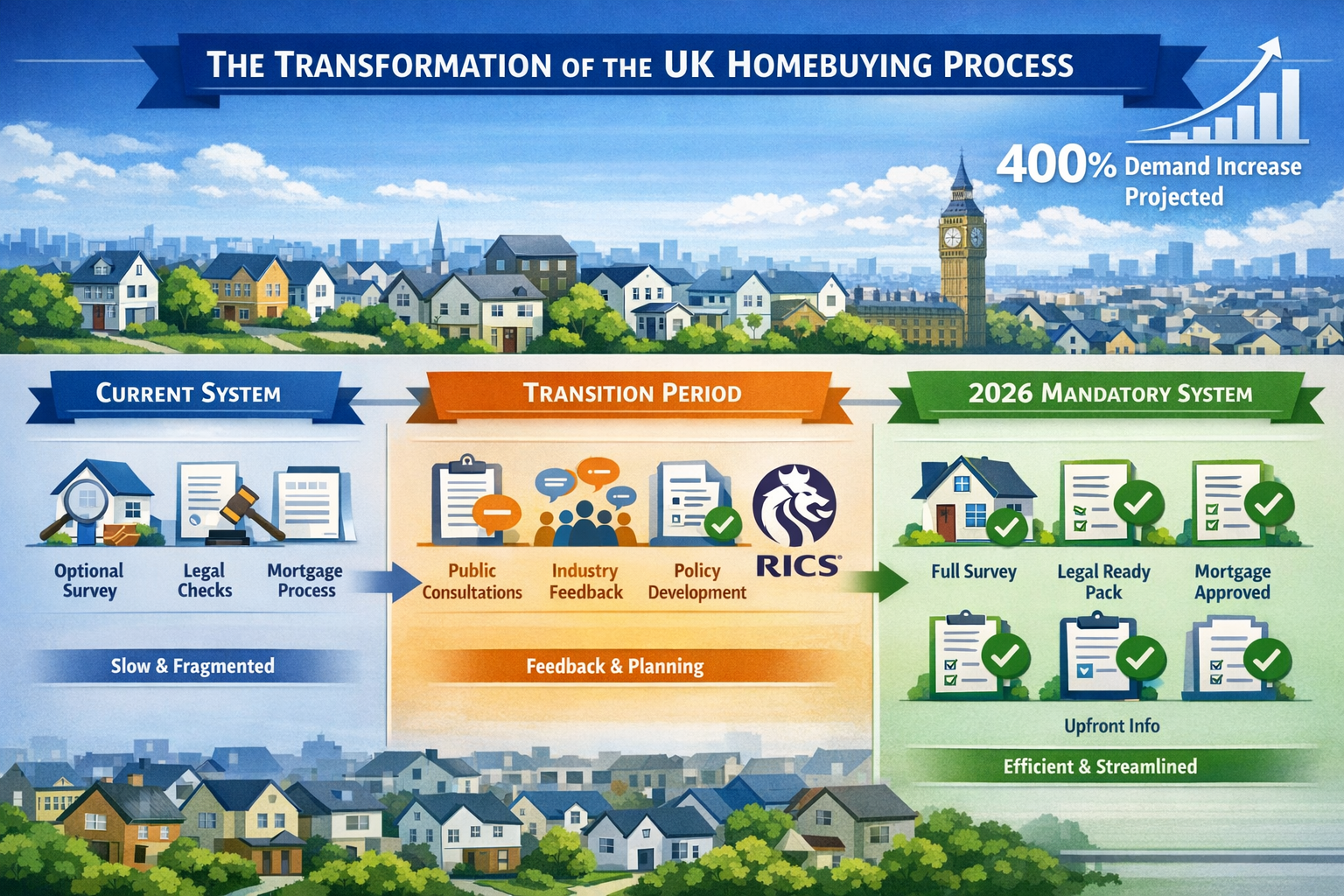
The proposed homebuying process reforms 2026 represent a fundamental restructuring of property transactions, introducing mandatory upfront condition assessments that will affect every residential sale in England and Wales.
Key Elements of the Proposed Reforms
While the government has not yet published complete legislation, industry sources indicate the reforms will include:
Mandatory Pre-Marketing Assessments: Sellers would be required to commission a standardized property condition report before listing their home for sale. This shifts the timing and responsibility for surveys from buyers to sellers.
Standardized Reporting Format: All condition assessments would follow a consistent RICS-approved template, making property comparisons easier for buyers and reducing confusion about different survey types.
Upfront Disclosure Requirements: Sellers must provide the condition report to all potential buyers early in the transaction, typically before offers are made.
Enhanced Liability Framework: Surveyors conducting these mandatory assessments would face clearer professional liability standards, with strengthened insurance requirements.
RICS Standards Evolution
The Royal Institution of Chartered Surveyors (RICS) is actively updating its Home Survey Standard to align with these anticipated changes. According to RICS, consultation feedback from over 1,400 homeowners and 325 RICS members has been completed, though final standards await approval.[3]
RICS has also "reinforced its commitment to professional standards, emphasising technical competence and ethical conduct" in 2026, ensuring surveyors meet higher benchmarks for mandatory assessments.[4]
Timeline and Implementation
The proposed implementation follows this general timeline:
- Early 2026: Consultation period concludes with final regulatory framework
- Mid 2026: RICS publishes updated Home Survey Standard 2nd Edition
- Late 2026: Phased rollout begins in select regions
- 2027: Full nationwide implementation expected
This gradual approach allows the surveying profession time to scale capacity and complete necessary retraining.
Impact on UK Property Buyers
The homebuying process reforms 2026 will dramatically alter the buyer experience, with both advantages and challenges emerging from mandatory surveys.
Benefits for Homebuyers
Greater Transparency: Buyers will receive detailed property condition information before making offers, reducing uncertainty and enabling informed decisions.
Reduced Transaction Failures: Early identification of defects means fewer sales collapse due to unexpected survey findings late in the process.
Stronger Negotiating Position: Armed with professional condition reports, buyers can negotiate prices based on documented repair needs rather than speculation.
Long-term Cost Savings: While upfront survey costs increase, buyers avoid expensive surprises after purchase. Understanding issues like environmental concerns or asbestos presence before completion proves invaluable.
Challenges and Considerations
Upfront Cost Burden: Sellers will bear initial survey costs, potentially adding £500-£1,500 to marketing expenses. These costs may be reflected in asking prices.
Market Adjustment Period: The transition to mandatory assessments will create temporary confusion as buyers, sellers, and agents adapt to new procedures.
Survey Quality Variation: Not all chartered surveyors offer identical service levels. Buyers should verify that mandatory reports meet their needs or consider commissioning additional Level 3 full building surveys for older properties.
Interpretation Challenges: Standardized reports still require proper interpretation. Buyers may need additional advice to understand implications of identified defects.
Practical Steps for Buyers in 2026
To navigate the reformed system effectively:
- Review seller-provided reports carefully: Don't assume a mandatory survey eliminates the need for due diligence
- Consider supplementary inspections: For period properties or those with known issues, commission your own comprehensive building survey
- Use survey findings strategically: Learn how to negotiate house prices down based on survey findings
- Verify surveyor credentials: Ensure mandatory assessments were conducted by properly qualified RICS-registered professionals
- Budget appropriately: Factor potential repair costs identified in condition reports into your overall purchase budget
Implications for Chartered Surveyors and the Surveying Profession
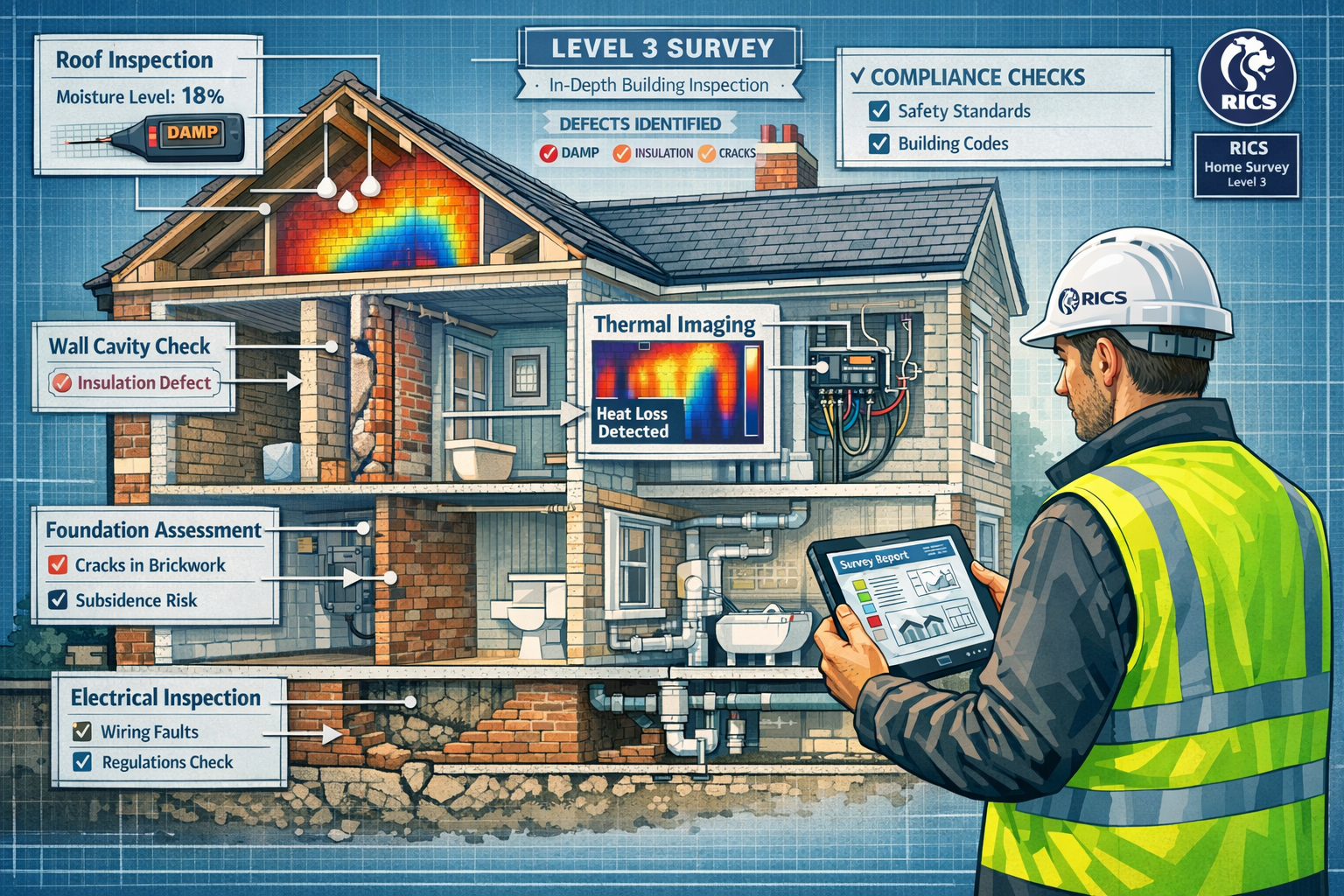
The homebuying process reforms 2026 create both opportunities and challenges for surveying professionals, who must prepare for unprecedented demand increases while maintaining quality standards.
Projected Demand Surge
Industry analysts forecast a 300-400% increase in survey requests once mandatory assessments take effect. This surge stems from:
- Universal coverage: Every residential property sale will require a professional condition assessment
- Repeat assessments: Properties that don't sell immediately may need updated reports
- Supplementary surveys: Many buyers will still commission their own independent surveys for additional peace of mind
This demand explosion will strain existing surveyor capacity, particularly in regions with active property markets like London, Hertfordshire, and other metropolitan areas.
Required Professional Adaptations
Chartered surveyors must undertake several critical adaptations:
Capacity Scaling: Firms need to expand their surveyor teams, invest in training, and potentially recruit from related professions to meet demand.
Technology Integration: Premium drone surveys and digital inspection tools will become essential for efficient, high-quality assessments at scale.
Standardization Compliance: Surveyors must master the new RICS Home Survey Standard 2nd Edition and ensure all reports meet mandatory formatting requirements.
Enhanced Insurance: Professional indemnity insurance requirements will likely increase given the mandatory nature of assessments and associated liability.
Specialized Training: Understanding what's included in a Level 3 survey and other specialized assessment types becomes crucial for comprehensive service delivery.
Business Opportunities
Forward-thinking surveying practices can capitalize on these reforms:
Market Positioning: Early adopters who build capacity quickly will capture significant market share during the transition period.
Value-Added Services: Offering bundled services—surveys plus construction law advice or repair cost estimates—differentiates firms in a competitive market.
Seller-Focused Marketing: Since sellers will commission mandatory surveys, practices should develop marketing strategies targeting property vendors rather than just buyers.
Regional Expansion: Firms with capacity can expand into underserved areas where local surveyor shortages are most acute.
Professional Standards and Ethics
The mandatory nature of these assessments raises the bar for professional conduct:
"The shift to mandatory surveys places surveying professionals at the center of every property transaction, demanding unwavering commitment to accuracy, independence, and ethical practice."
Surveyors must maintain objectivity despite being commissioned by sellers, ensure thorough inspections despite time pressures, and communicate findings clearly to all stakeholders. The RICS emphasis on "technical competence and ethical conduct" in 2026 reflects these heightened expectations.[4]
Preparing Your Surveying Practice for 2026

Practical preparation steps include:
Workforce Development: Begin recruiting and training additional surveyors now, focusing on RICS-qualified professionals or those pursuing accreditation.
Process Optimization: Streamline inspection workflows, standardize reporting templates, and implement quality control procedures to handle increased volume without sacrificing accuracy.
Technology Investment: Deploy digital survey tools, scheduling software, and client portals that support efficient, high-volume operations.
Stakeholder Engagement: Build relationships with estate agents, solicitors, and property developers who will refer sellers to your practice for mandatory assessments.
Continuing Education: Ensure all team members complete training on updated RICS standards, new regulatory requirements, and emerging inspection technologies.
Regional Variations and Market-Specific Considerations
The impact of homebuying process reforms 2026 will vary across UK property markets, with distinct challenges and opportunities emerging in different regions.
High-Demand Metropolitan Areas
Cities like London and surrounding areas (Putney, Hampstead, Richmond) will experience the most acute surveyor capacity constraints due to high transaction volumes and property complexity.
Challenges: Longer wait times for surveys, premium pricing during peak periods, difficulty scheduling inspections for competitive properties.
Opportunities: Established firms with strong metropolitan presence can command premium fees and expand teams to capture market share.
Suburban and Commuter Belt Markets
Areas like St Albans, Hemel Hempstead, and Guildford blend modern developments with period properties, requiring diverse surveying expertise.
Challenges: Mixed property stock demands versatile surveyors comfortable with both contemporary builds and Victorian/Edwardian homes.
Opportunities: Surveyors with specialized knowledge—such as Edwardian cottage expertise—can differentiate their services.
Rural and Regional Markets
Counties like Sussex, Essex, and Berkshire may face surveyor shortages as demand increases without proportional capacity growth.
Challenges: Limited local surveyor availability, longer travel times for inspections, potential delays in rural transactions.
Opportunities: Regional practices can expand service areas and potentially attract surveyors from oversaturated metropolitan markets.
Cost Implications and Financial Planning
Understanding the financial impact of mandatory surveys helps both buyers and sellers prepare for the reformed system.
Survey Cost Breakdown (2026)
Current market rates provide guidance for expected mandatory assessment costs:[1]
- Basic Mandatory Assessment (equivalent to Level 2): £400-£1,000
- Enhanced Assessment (Level 3 equivalent): £630-£1,500+
- Supplementary Inspections (specialized): £200-£500 each
Factors affecting costs include property size, age, location, and complexity. A measured building survey cost varies significantly based on these variables.
Who Bears the Cost?
Under proposed reforms, sellers commission and pay for mandatory assessments. However, market dynamics may shift these costs:
Price Adjustments: Sellers may increase asking prices to recover survey costs, effectively passing expenses to buyers.
Competitive Pressure: In buyer's markets, sellers may absorb costs to make properties more attractive.
Repeat Assessments: Properties remaining unsold for extended periods may require updated surveys, increasing seller expenses.
Long-Term Economic Impact
The reforms should reduce overall transaction costs by:
- Fewer failed transactions: Saving legal fees, survey duplication, and emotional costs
- Better-informed pricing: Reducing post-purchase disputes and renegotiations
- Reduced litigation: Clearer condition disclosure minimizes buyer-seller legal conflicts
Preparing for the Transition: Action Steps
Whether you're a buyer, seller, or surveying professional, proactive preparation ensures smooth adaptation to the homebuying process reforms 2026.
For Homebuyers
✅ Educate yourself on new mandatory assessment requirements and what they cover
✅ Budget accordingly for potential supplementary surveys beyond mandatory reports
✅ Verify surveyor credentials when reviewing seller-provided assessments
✅ Understand limitations of standardized reports versus comprehensive inspections
✅ Seek professional advice when interpreting condition reports and planning negotiations
For Property Sellers
✅ Commission surveys early to avoid delays when listing your property
✅ Choose qualified surveyors with strong RICS credentials and local market knowledge
✅ Address identified issues before marketing to maximize property value
✅ Budget for assessment costs as part of your selling expenses (£500-£1,500)
✅ Provide complete disclosure to avoid legal complications and maintain buyer trust
For Chartered Surveyors
✅ Begin capacity building immediately through recruitment and training programs
✅ Invest in technology that enables efficient, high-quality inspections at scale
✅ Update professional knowledge on revised RICS standards and mandatory assessment requirements
✅ Strengthen insurance coverage to address increased liability exposure
✅ Develop seller-focused marketing to capture the market shift in who commissions surveys
✅ Build strategic partnerships with estate agents, solicitors, and property professionals
Frequently Asked Questions
When exactly will mandatory surveys become law?
The government has proposed mandatory property condition assessments for 2026, with phased implementation expected throughout the year. Final legislation and specific effective dates are still being finalized.
Will mandatory surveys replace mortgage valuations?
No. Mandatory condition assessments serve different purposes than mortgage valuations. Lenders will still require their own valuations to determine lending amounts, while mandatory surveys protect buyers by disclosing property conditions.
Can buyers still commission their own surveys?
Absolutely. Buyers can and should commission supplementary building inspections if they want additional detail beyond mandatory seller-provided reports, particularly for older or complex properties.
What happens if a mandatory survey identifies serious defects?
Sellers must disclose the survey to potential buyers. Buyers can then negotiate price reductions, request repairs before completion, or withdraw from the transaction without penalty if defects are unacceptable.
How do I know if a surveyor is properly qualified?
Verify the surveyor is RICS-registered and holds appropriate professional indemnity insurance. Check their specializations match your property type, and request examples of previous survey reports.
Conclusion
The homebuying process reforms 2026 mark a watershed moment for UK property transactions, introducing mandatory building surveys that will fundamentally reshape how homes are bought and sold across England and Wales. These changes promise greater transparency for buyers, reduced transaction failures, and more informed property markets—but they also demand significant adaptation from all stakeholders.
For property buyers, the reforms offer unprecedented access to professional condition assessments, enabling better-informed decisions and stronger negotiating positions. However, buyers must remain vigilant, understanding that mandatory reports may not eliminate the need for supplementary inspections, particularly for period properties or those with complex histories.
For property sellers, the shift to mandatory upfront assessments adds costs and complexity to the selling process, but it also reduces the risk of late-stage transaction failures and provides a competitive advantage through transparent disclosure.
For chartered surveyors, the reforms create extraordinary opportunities alongside significant challenges. Practices that invest now in capacity building, technology integration, and professional development will thrive in the transformed market. Those that delay risk being overwhelmed by demand they cannot meet.
Next Steps
If you're buying a property in 2026:
- Research the mandatory assessment requirements in your region
- Budget for both mandatory surveys and potential supplementary inspections
- Engage qualified professionals early to review condition reports
- Contact experienced chartered surveyors for guidance on interpreting mandatory assessments
If you're selling a property:
- Commission your mandatory survey from a reputable RICS-registered practice before listing
- Address any identified defects that could impact marketability
- Factor survey costs (£500-£1,500) into your selling budget
- Ensure complete disclosure to avoid legal complications
If you're a surveying professional:
- Begin workforce expansion and training programs immediately
- Update your knowledge on RICS Home Survey Standard 2nd Edition
- Invest in technology and processes that enable efficient, high-quality assessments at scale
- Develop marketing strategies targeting sellers rather than just buyers
The transformation of UK property transactions is underway. Those who prepare proactively will navigate the changes successfully, while those who wait risk being left behind in a fundamentally reformed market.
References
[1] What Sort Of Survey Should I Have – hoa.org.uk
[2] Building Surveys Under New Homebuying Rules Earlier Inspections And Risk Mitigation In 2026 – nottinghillsurveyors.com
[3] Home Survey Standard 2nd Edition A Progress Update – rics.org
[4] Things About Building Surveying You Need To Know In 2026 – mcessex.co.uk