

The 2026 budget has sent shockwaves through London's prime property market. With new tax thresholds targeting properties valued over £2 million, owners and investors face unprecedented financial pressures that demand immediate attention. Chartered Surveyor Checklists for High-Value Properties Under 2026 Budget Tax Thresholds: Mitigating £2M+ Risks have become essential tools for navigating this challenging landscape, where accurate valuations can mean the difference between substantial tax liabilities and strategic financial planning.
The stakes have never been higher. Properties in Central London and affluent areas across the South East are experiencing market corrections, with sellers struggling to achieve pre-budget valuations while buyers demand price reductions to offset increased tax burdens. Professional chartered surveyors now play a critical role in quantifying these impacts, supporting financing decisions, and providing the evidence-based assessments that HMRC requires.
Key Takeaways
- Tax threshold changes in 2026 have created new valuation challenges for properties exceeding £2 million, requiring specialized surveyor expertise
- Comprehensive checklists enable chartered surveyors to document property conditions, identify value-affecting defects, and support accurate assessments under new regulations
- Risk mitigation strategies include early inspections, detailed structural analysis, and ESG compliance reviews that can influence property valuations
- Professional surveyor reports provide essential documentation for HMRC submissions, mortgage applications, and negotiating price adjustments
- Regional variations across London and the South East require location-specific expertise from qualified chartered surveyors
Understanding the 2026 Budget Tax Threshold Impact on High-Value Properties
The 2026 budget introduced significant changes to property taxation that specifically target high-value assets. Properties valued at or above £2 million now face enhanced scrutiny from HMRC, increased stamp duty land tax rates, and more stringent reporting requirements. These changes have created immediate challenges for property owners, particularly in prime London locations like Fulham, Islington, and Chiswick.
Market Corrections in Prime Locations 📉
The London and South East property markets have experienced notable corrections since the budget announcement. Properties that previously commanded premium prices are now facing:
- Extended marketing periods as buyers factor in higher tax costs
- Price reductions averaging 8-12% in some prime postcodes
- Financing challenges as lenders reassess valuations against new tax liabilities
- Increased due diligence requirements from both buyers and financial institutions
Why Accurate Valuations Matter More Than Ever
Under the 2026 regulations, property valuations must withstand HMRC scrutiny. Inaccurate assessments can result in:
- Tax penalties for undervaluation
- Rejected mortgage applications
- Disputed inheritance tax calculations
- Failed property transactions
This is where Chartered Surveyor Checklists for High-Value Properties Under 2026 Budget Tax Thresholds: Mitigating £2M+ Risks become indispensable. Professional surveyors provide the independent, evidence-based assessments that satisfy regulatory requirements while protecting client interests.
Essential Chartered Surveyor Checklists for Properties Over £2M
Chartered surveyors utilize comprehensive checklists that go far beyond basic property inspections. For high-value properties under the 2026 tax thresholds, these checklists must address multiple layers of assessment to ensure accurate valuations and risk identification[1].

Structural Integrity and Building Fabric Assessment
The foundation of any high-value property survey begins with structural analysis:
External Inspection Elements:
- Roof condition (tiles, slates, flat roofing materials, guttering systems)
- Chimney stacks and flues for stability and weatherproofing
- External walls for cracks, movement, or damp penetration
- Window and door frames for decay, security, and thermal efficiency
- Drainage systems and potential flooding risks
- Boundary walls, gates, and external structures
Internal Structural Components:
- Load-bearing walls and structural alterations
- Floor levels and evidence of subsidence or settlement
- Ceiling conditions and signs of water damage
- Internal damp-proofing effectiveness
- Timber condition in floors, joists, and roof structures
For properties in areas like Hertfordshire or Surrey, surveyors must also consider regional building characteristics and common defects specific to local construction methods.
Building Services and Systems Evaluation
High-value properties typically feature sophisticated building systems that require specialized assessment:
| System Category | Inspection Points | Value Impact |
|---|---|---|
| Heating & Hot Water | Boiler age, efficiency ratings, radiator condition, underfloor heating systems | £15,000-£40,000 |
| Electrical Systems | Consumer unit compliance, wiring age, earthing systems, smart home integration | £8,000-£25,000 |
| Plumbing | Pipe materials, water pressure, drainage efficiency, bathroom/kitchen fixtures | £10,000-£30,000 |
| Ventilation | MVHR systems, extraction fans, air quality management | £5,000-£15,000 |
| Security Systems | Alarms, CCTV, access control, fire detection | £3,000-£12,000 |
These systems directly affect property valuations and can provide negotiating leverage when deficiencies are identified.
Environmental and Sustainability Compliance
The RICS has published updated ESG and sustainability standards for property valuation effective April 30, 2026[2]. These new frameworks require chartered surveyors to assess:
- Energy Performance Certificates (EPCs) and potential improvement costs
- Carbon footprint and net-zero pathway compliance
- Sustainable materials and green building certifications
- Climate resilience including flood risk and overheating potential
- Biodiversity considerations for properties with significant grounds
For high-value properties, poor environmental performance can reduce valuations by 5-15%, making this assessment crucial under the new tax thresholds.
Legal and Planning Compliance Verification ⚖️
Chartered surveyors must verify:
- Building Regulations compliance for all alterations and extensions
- Planning permission documentation for structural changes
- Listed building consent where applicable
- Party wall agreements and potential disputes
- Rights of way and access restrictions
- Conservation area limitations
Undocumented alterations or planning breaches can significantly impact property values and create substantial legal liabilities. Professional valuation services ensure these issues are identified before they become costly problems.
Implementing Chartered Surveyor Checklists for High-Value Properties Under 2026 Budget Tax Thresholds
The practical implementation of comprehensive surveyor checklists requires systematic methodology and professional expertise. Under the new 2026 homebuying rules, earlier inspections and enhanced risk mitigation strategies have become standard practice[3].
Pre-Inspection Preparation and Documentation
Before conducting on-site assessments, chartered surveyors must gather:
Property Documentation:
- Title deeds and land registry information
- Previous survey reports and building records
- Planning permission history and building control certificates
- Energy performance certificates and sustainability assessments
- Insurance claims history and structural warranty documentation
Client Briefing Requirements:
- Specific concerns or known defects
- Intended use or renovation plans
- Financing requirements and lender specifications
- HMRC submission deadlines for tax purposes
- Budget constraints for remedial works
This preparation ensures that Chartered Surveyor Checklists for High-Value Properties Under 2026 Budget Tax Thresholds: Mitigating £2M+ Risks address all relevant factors affecting property valuation.
On-Site Inspection Methodology
Professional chartered surveyors employ standardized inspection protocols that ensure consistency and thoroughness[1]:
Visual Inspection Techniques:
- Systematic room-by-room assessment documenting all visible defects
- Photographic evidence of significant issues and overall property condition
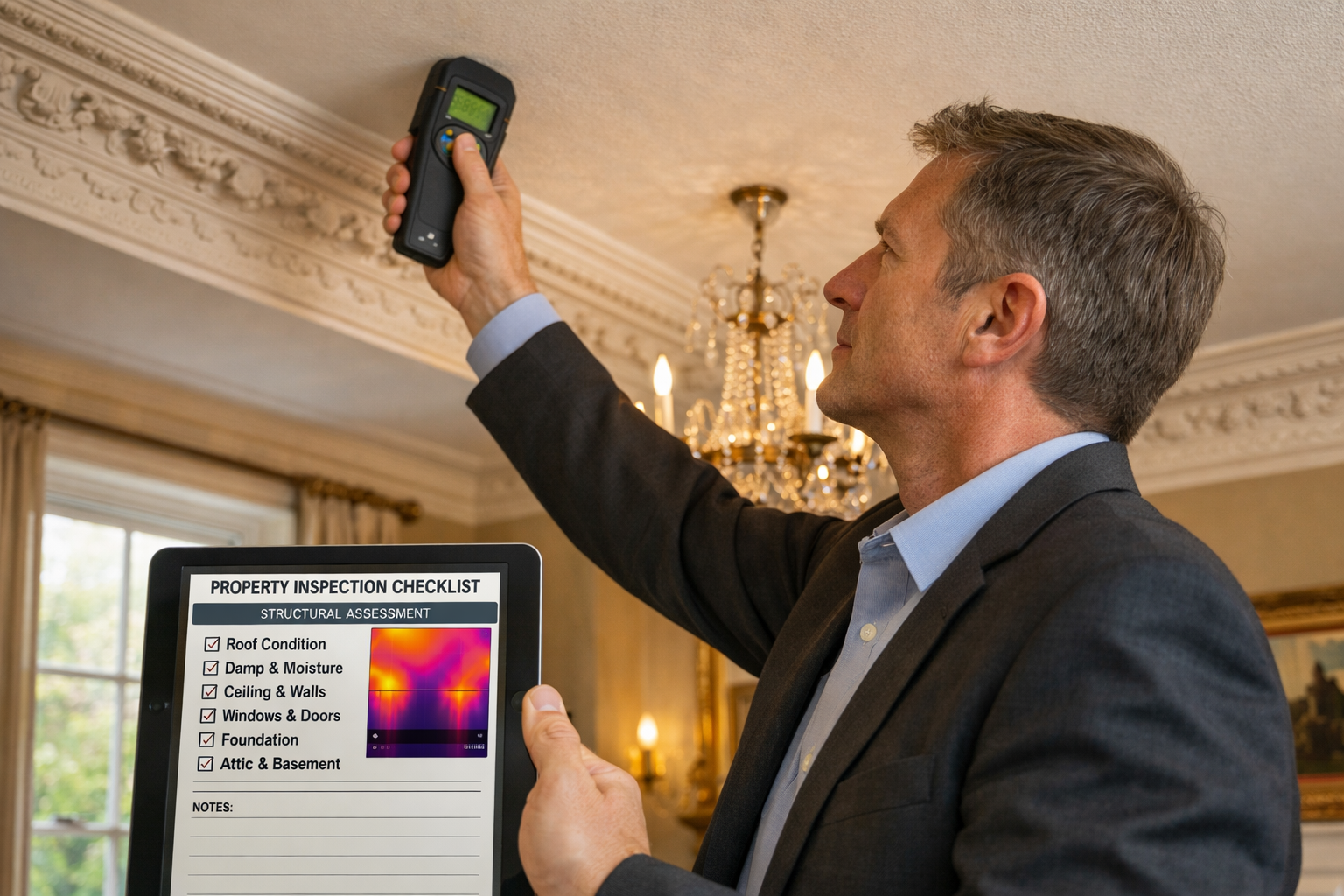
- Moisture meter readings to detect hidden damp problems
- Thermal imaging to identify insulation deficiencies and heat loss
- Binocular inspection of roof and chimney details
Specialist Testing When Required:
- Structural engineering assessments for significant movement or alterations
- Electrical installation condition reports (EICR)
- Drainage surveys using CCTV technology
- Asbestos surveys for properties built before 2000
- Timber and damp specialist reports
For properties in locations like Battersea or Putney, local knowledge of common building defects and market conditions enhances inspection quality.
Defect Categorization and Risk Assessment
Chartered surveyors classify identified issues using a standardized system:
Category 1 Defects (Urgent) 🔴
- Serious structural movement requiring immediate attention
- Dangerous electrical installations
- Active water penetration causing damage
- Failed damp-proofing with significant timber decay
Category 2 Defects (Significant) 🟡
- Roof repairs needed within 2-3 years
- Aging heating systems requiring replacement
- Moderate damp issues requiring investigation
- Building regulation non-compliance
Category 3 Defects (Minor) 🟢
- Cosmetic repairs and routine maintenance
- Minor drainage improvements
- Decorative works
- Garden and boundary maintenance
This categorization helps clients understand repair priorities and budget accordingly. It also provides crucial evidence for price negotiations when significant defects are discovered.
Valuation Impact Analysis
For properties approaching or exceeding the £2 million threshold, surveyors must quantify how identified defects affect market value:
"A comprehensive defect analysis can justify valuation reductions of £50,000 to £500,000+ on high-value properties, potentially bringing them below critical tax thresholds or supporting price renegotiation."
Valuation Adjustment Factors:
- Immediate repair costs for Category 1 defects
- Future maintenance liabilities for aging building systems
- Market perception of property condition and presentation
- Comparable sales with similar defect profiles
- Location-specific factors affecting desirability
Professional inheritance tax valuations and annual tax assessments rely on this detailed analysis to ensure HMRC compliance.

Risk Mitigation Strategies for High-Value Property Transactions
Implementing effective risk mitigation strategies requires coordinated action from surveyors, clients, and professional advisors. The 2026 budget changes have made these strategies essential for protecting financial interests.
Early-Stage Survey Commissioning
The new homebuying rules encourage earlier property inspections to identify risks before significant transaction costs accumulate[3]. Benefits include:
- Informed offer decisions based on actual property condition
- Reduced transaction failures from unexpected defect discoveries
- Stronger negotiating position with documented evidence
- Faster completion timelines when issues are addressed proactively
For high-value properties, commissioning a Level 3 Full Building Survey provides the most comprehensive assessment available.
Strategic Valuation Timing
Under the 2026 tax thresholds, the timing of property valuations can significantly impact tax liabilities:
Pre-Sale Valuations:
- Identify value-reducing factors before marketing
- Allow time for strategic improvements or repairs
- Establish realistic pricing expectations
- Support tax planning strategies
Purchase Valuations:
- Verify asking price justification
- Identify negotiation opportunities
- Satisfy lender requirements
- Document condition for future reference
Tax-Driven Valuations:
- HMRC submission compliance
- Inheritance tax planning
- Capital gains tax calculations
- Annual tax on enveloped dwellings (ATED)
Documentation and Evidence Management
Comprehensive documentation protects all parties in high-value property transactions:
Essential Records:
- Complete survey reports with photographic evidence
- Specialist reports from structural engineers or damp specialists
- Building regulation certificates and planning permissions
- Correspondence regarding identified defects
- Quotations for remedial works
- Comparable property evidence supporting valuations
This documentation becomes invaluable if HMRC challenges valuations or disputes arise during transactions.
Multi-Disciplinary Professional Coordination
Complex high-value properties often require input from multiple specialists:
- Chartered surveyors for overall assessment and valuation
- Structural engineers for significant movement or alterations
- Tax advisors for optimization strategies
- Legal professionals for compliance and contractual protection
- Financial advisors for funding and investment analysis
Coordinated professional advice ensures that Chartered Surveyor Checklists for High-Value Properties Under 2026 Budget Tax Thresholds: Mitigating £2M+ Risks address all relevant factors comprehensively.
Regional Considerations Across London and the South East
Property markets vary significantly across different locations, requiring surveyors to apply regional expertise when assessing high-value properties.
Prime Central London Challenges
Properties in Central London face unique challenges:
- Leasehold complexities with short remaining terms
- Listed building restrictions limiting alterations
- Service charge liabilities exceeding £10,000 annually
- Parking and access constraints affecting desirability
- Noise and pollution considerations
Suburban and County Properties
High-value properties in areas like Berkshire, Hertfordshire, and Surrey present different considerations:
- Larger grounds requiring maintenance and management
- Outbuildings and ancillary structures needing assessment
- Septic tanks and private drainage systems
- Rural access and rights of way issues
- Agricultural ties or planning restrictions
Market-Specific Valuation Approaches
Chartered surveyors must adapt their methodologies to local market conditions:
Urban Premium Properties:
- Square footage optimization and space planning
- Modernization and specification standards
- Proximity to transport and amenities
- View and aspect considerations
Country Estate Properties:
- Land quality and agricultural potential
- Sporting rights and income generation
- Heritage and architectural significance
- Privacy and security features
Understanding these regional variations ensures accurate valuations that reflect true market conditions under the 2026 tax thresholds.
Leveraging Technology in Modern Surveying Practice
Advanced technology enhances the accuracy and efficiency of chartered surveyor checklists for high-value properties.
Digital Inspection Tools 📱
Modern surveyors utilize:
- Tablet-based checklist applications for real-time data capture
- Thermal imaging cameras detecting hidden defects
- Moisture meters providing quantified damp readings
- Laser measuring devices ensuring accurate dimensions
- Drone photography for roof and chimney inspections
These tools provide objective evidence supporting valuation conclusions and defect identification.
Data Analytics and Market Intelligence
Sophisticated surveyors leverage:
- Property price databases for comparable evidence
- Market trend analysis showing value trajectories
- Tax threshold modeling predicting liability impacts
- Risk scoring algorithms quantifying transaction risks
This data-driven approach strengthens the credibility of survey reports and valuations submitted to HMRC or lenders.
Digital Reporting and Communication
Modern survey reports feature:
- Interactive digital formats with clickable navigation
- Embedded photographs linked to specific defects
- Video walkthroughs explaining key findings
- Cost estimation tools for repair budgeting
- Secure client portals for document access
These innovations improve client understanding and decision-making while maintaining professional standards.
Preparing for HMRC Scrutiny and Compliance
High-value property valuations under the 2026 tax thresholds face increased scrutiny from HMRC, making professional surveyor input essential.
Valuation Methodology Documentation
HMRC expects detailed justification for property valuations, including:
- Comparable sales evidence from similar properties
- Adjustment explanations for differences in condition, location, or specification
- Defect impact quantification showing how issues affect value
- Market conditions analysis at the valuation date
- Professional qualifications of the valuing surveyor
Chartered surveyors provide this documentation as standard practice, protecting clients from challenges.
Common HMRC Challenge Areas
Tax authorities frequently question:
- Optimistic valuations that minimize tax liabilities
- Insufficient comparable evidence supporting conclusions
- Undocumented defects or condition issues
- Timing inconsistencies between valuations and transactions
- Qualification concerns about surveyor expertise
Professional surveys addressing Chartered Surveyor Checklists for High-Value Properties Under 2026 Budget Tax Thresholds: Mitigating £2M+ Risks preemptively address these concerns.
Building Defensible Valuation Reports
Strong survey reports include:
- Clear methodology statements explaining the valuation approach
- Comprehensive property descriptions documenting all relevant features
- Photographic evidence supporting condition assessments
- Market analysis demonstrating due diligence
- Professional indemnity insurance backing the surveyor's opinion
This thoroughness provides confidence to clients, lenders, and tax authorities.
Conclusion: Protecting Your High-Value Property Investment
The 2026 budget tax threshold changes have fundamentally altered the landscape for properties valued at or above £2 million. Chartered Surveyor Checklists for High-Value Properties Under 2026 Budget Tax Thresholds: Mitigating £2M+ Risks provide the essential framework for navigating these challenges successfully.
Professional chartered surveyors deliver comprehensive assessments that:
✅ Identify defects affecting property values and negotiating positions
✅ Quantify repair costs enabling informed financial decisions
✅ Support accurate valuations that withstand HMRC scrutiny
✅ Mitigate transaction risks through early identification of issues
✅ Provide documentary evidence protecting all parties' interests
Your Next Steps
If you own or are considering purchasing a high-value property in London or the South East:
- Commission a professional survey from RICS-qualified chartered surveyors before making significant financial commitments
- Request comprehensive checklists addressing structural, environmental, and compliance factors
- Obtain specialist valuations for tax planning and HMRC submissions
- Document all findings thoroughly for future reference and protection
- Coordinate professional advisors including surveyors, tax specialists, and legal counsel
The investment in professional surveying services represents a fraction of potential tax liabilities or transaction risks. With properties in areas like Harrow, Kilburn, and Bromley experiencing market adjustments, expert guidance has never been more valuable.
Don't let the 2026 tax threshold changes catch you unprepared. Engage qualified chartered surveyors who understand the complexities of high-value property assessment and can provide the evidence-based analysis that protects your financial interests while ensuring full regulatory compliance.
References
[1] House Survey Checklist Rics – hardingsurveyors.co.uk
[2] Rics Publishes Updated Global Standard Esg Sustainability Commercial Property Valuation – rics.org
[3] Building Surveys Under New Homebuying Rules Earlier Inspections And Risk Mitigation In 2026 – nottinghillsurveyors.com