

The UK property market stands on the brink of its most significant transformation in decades. As 2026 unfolds, chartered surveyors face unprecedented changes that will reshape how homebuyers access property information. The Homebuying Reforms 2026: Training Protocols for Chartered Surveyors Handling Mandatory Condition Surveys represent a fundamental shift in the conveyancing process, requiring professionals to adapt quickly to new standards, timelines, and expectations.
Gone are the days when property surveys were optional afterthoughts in the homebuying journey. Under the new reforms, condition surveys become mandatory upfront requirements, published before properties even appear online. This seismic shift means chartered surveyors must prepare for surging demand while maintaining rigorous quality standards. The challenge is clear: how can the profession scale up capacity without compromising the thorough, detailed assessments that protect homebuyers?

Key Takeaways
- 🏠 Mandatory upfront surveys become required before property listings go online, fundamentally changing the homebuying timeline and surveyor workload
- ⏱️ Two-week ordering deadline after offer acceptance creates urgent demand for streamlined survey processes and efficient scheduling systems
- 📚 RICS-backed training protocols establish enhanced qualification requirements and professional standards to ensure consistent, high-quality condition assessments
- 💻 Digital workflow tools become essential for managing increased survey volume while maintaining thorough property evaluations
- ✅ Quality assurance frameworks protect professional standards even as surveyors handle significantly higher caseloads under reform pressures
Understanding the Homebuying Reforms 2026 Framework
The government's announcement of what officials call "the biggest shake-up to home buying process in the country's history" sets the stage for comprehensive changes throughout 2026 [1]. These reforms aim to address longstanding frustrations in the UK property market, where transactions frequently collapse after weeks or months of negotiation.
The Shift to Mandatory Condition Surveys
Under the new framework, property surveys and searches will be published before a property listing is shared online so buyers can see the physical condition, characteristics, and flood risk [1]. This represents a complete reversal of traditional practice, where buyers typically commissioned surveys only after making offers.
The implications for chartered surveyors are substantial:
- Increased volume: Every property entering the market requires a professional survey
- Seller-commissioned work: Surveys shift from buyer-initiated to seller-initiated transactions
- Upfront timeline pressure: Sellers need surveys completed before marketing begins
- Standardization requirements: Reports must follow consistent formats for easy comparison
Timeline Requirements and Deadlines
The reforms introduce strict timing requirements that reshape surveyor workflows. Surveys must be ordered within 2 weeks of offer acceptance under the proposed reforms [1]. This compressed timeline eliminates the leisurely pace that previously characterized some property transactions.
For chartered surveyors, this means:
| Traditional Process | Reformed Process (2026) |
|---|---|
| Survey ordered after offer | Survey completed before listing |
| Flexible scheduling | Strict 2-week compliance window |
| Buyer-driven timeline | Seller-driven timeline |
| Variable report formats | Standardized condition reports |
Understanding the difference between Level 2 and Level 3 surveys becomes even more critical as surveyors guide sellers on appropriate survey types for their properties.
Homebuying Reforms 2026: Training Protocols and RICS Qualification Requirements
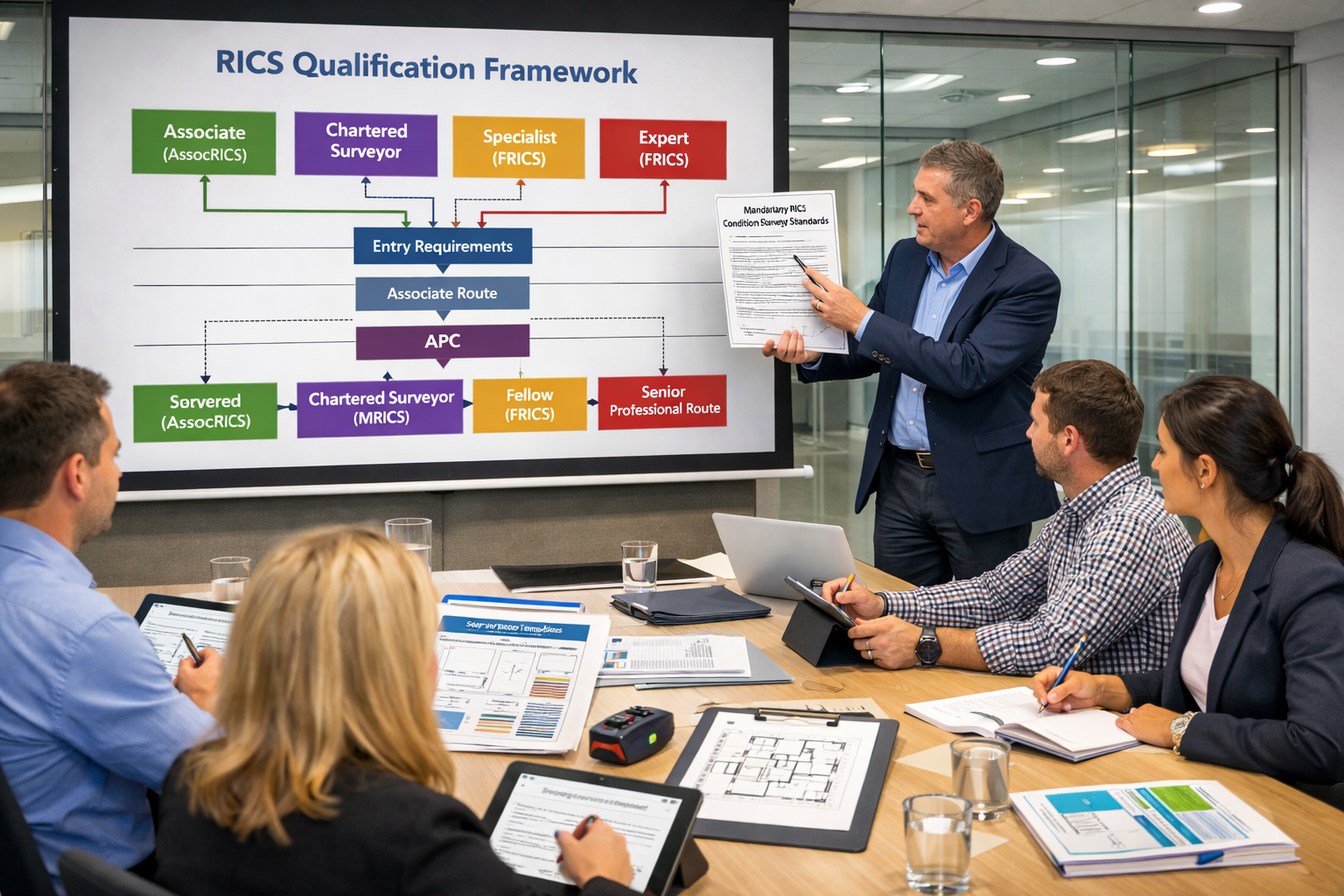
The Royal Institute of Chartered Surveyors (RICS) plays a central role in implementing the Homebuying Reforms 2026: Training Protocols for Chartered Surveyors Handling Mandatory Condition Surveys. RICS welcomed the proposals and stated it would support the proposed qualification requirements and code of practice, which it said "should lead to enhanced standards and create better experiences and outcomes for consumers" [1].
Enhanced Qualification Standards
The new training protocols establish elevated baseline competencies for surveyors conducting mandatory condition surveys. These requirements ensure professionals possess the skills necessary to handle increased workloads without quality deterioration.
Core competency areas include:
- 🔍 Advanced defect identification: Recognizing subtle structural issues that impact property value
- 📊 Standardized reporting: Creating consistent, comparable condition assessments
- ⚖️ Legal compliance: Understanding regulatory requirements for mandatory surveys
- 🏗️ Building pathology: Deep knowledge of construction defects and deterioration patterns
- 💬 Client communication: Explaining technical findings to non-specialist audiences
Surveyors specializing in building pathology find their expertise increasingly valuable under the new regime, as thorough defect analysis becomes standard rather than optional.
Continuing Professional Development (CPD) Requirements
The reforms introduce mandatory CPD modules specifically addressing condition survey protocols. Chartered surveyors must complete these training programs to maintain their qualification for conducting mandatory surveys.
2026 CPD curriculum includes:
-
Regulatory Framework Module (8 hours)
- Understanding legislative requirements
- Compliance obligations and penalties
- Professional liability considerations
-
Digital Assessment Tools (12 hours)
- Survey software platforms
- Mobile data capture techniques
- Quality control automation
-
Standardized Reporting (10 hours)
- Mandatory report formats
- Risk categorization systems
- Consumer-friendly language guidelines
-
Workflow Optimization (6 hours)
- Scheduling efficiency
- Time management under deadlines
- Team coordination strategies
RICS Code of Practice Integration
RICS noted it has "already developed such a code with the Property Ombudsman and would be pleased to work with the government to incorporate it into future plans" [1]. This existing framework provides the foundation for standardized professional conduct under the reforms.
The code establishes clear expectations for:
- Report comprehensiveness: Minimum standards for property assessment scope
- Turnaround times: Maximum periods between inspection and report delivery
- Conflict of interest management: Protocols preventing bias in seller-commissioned surveys
- Complaint resolution: Procedures for addressing consumer concerns
- Quality assurance: Peer review and audit mechanisms
Professionals offering Level 3 full building surveys must ensure their methodologies align with these enhanced standards while maintaining the thorough approach clients expect.
Digital Tools and Workflow Management for Increased Survey Demand
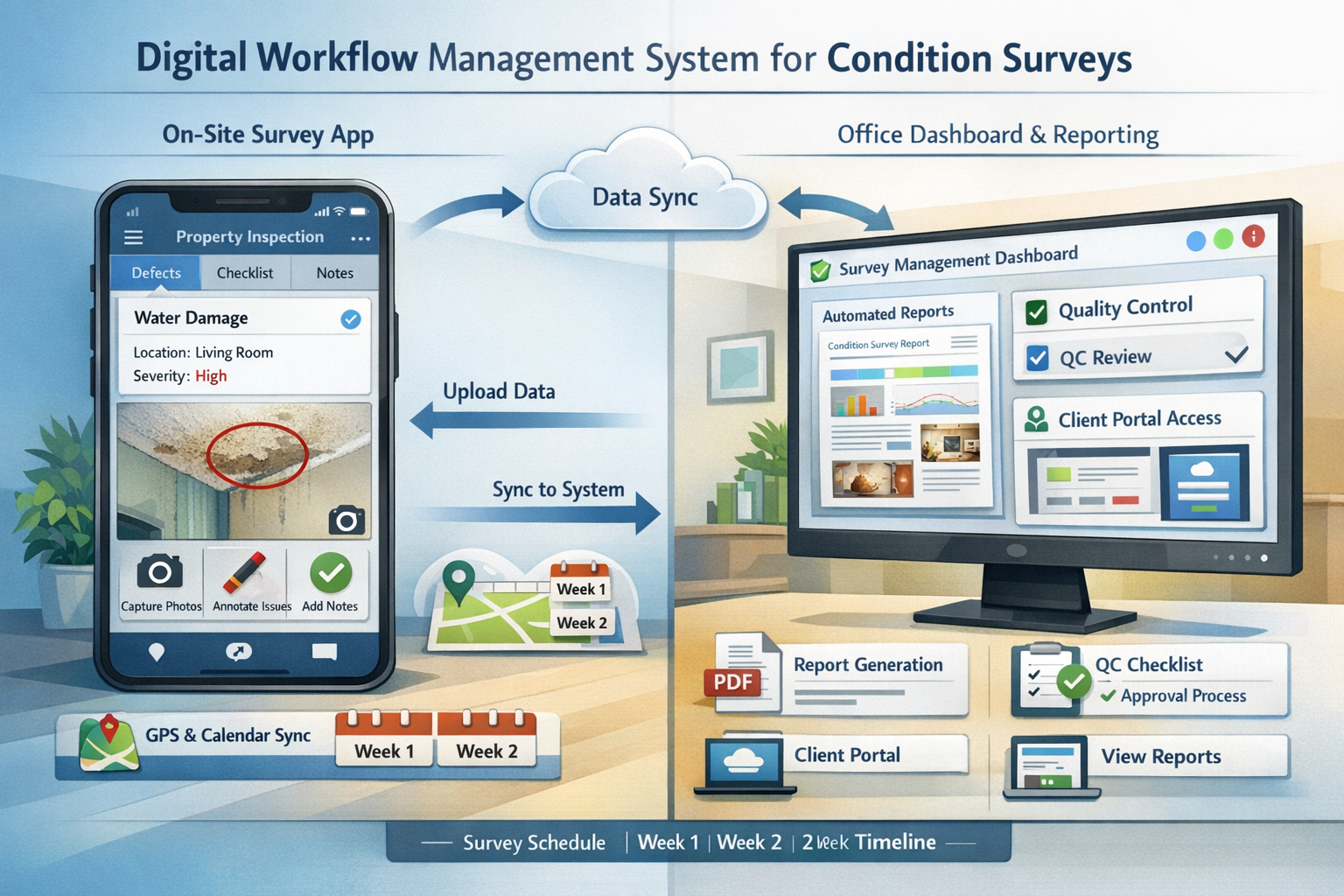
Meeting the surge in survey demand created by mandatory condition surveys requires more than additional personnel. Chartered surveyors must embrace digital transformation to maintain quality while scaling operations efficiently.
Survey Management Software Platforms
Modern survey management platforms integrate every stage of the condition survey process, from initial scheduling through final report delivery. These systems become essential infrastructure under the reforms.
Key platform capabilities:
- Automated scheduling: Intelligent calendar management that optimizes surveyor routes and minimizes travel time
- Mobile data capture: Tablet-based inspection tools that record findings, photographs, and measurements on-site
- Template-based reporting: Pre-structured report formats ensuring consistency and compliance with mandatory standards
- Quality control checkpoints: Built-in review stages that flag incomplete or inconsistent assessments
- Client portals: Secure access for sellers and buyers to view survey results
Streamlining On-Site Inspections
Efficiency during property inspections directly impacts surveyor capacity. Digital tools accelerate data collection without sacrificing thoroughness.
Inspection optimization techniques:
✅ Pre-populated checklists: Comprehensive assessment frameworks adapted to property type and age
✅ Voice-to-text notation: Hands-free observation recording during inspections
✅ Integrated photography: Automatic image tagging and organization linked to specific defects
✅ Measurement tools: Digital laser measures and thermal imaging cameras that sync directly with reports
✅ Offline functionality: Mobile apps that work without internet connectivity, syncing when connection resumes
Surveyors conducting assessments in areas like Barnes or Hertfordshire benefit from these tools when managing multiple inspections across diverse property types in a single day.
Automated Report Generation
The most time-consuming aspect of traditional surveying—report writing—sees dramatic efficiency gains through automation. Modern systems transform raw inspection data into polished, compliant reports with minimal manual intervention.
Automation features include:
- Intelligent narrative generation: Software that converts checklist responses and observations into coherent prose
- Defect prioritization algorithms: Systems that categorize findings by urgency and cost implications
- Comparative analysis: Tools that benchmark property condition against similar properties
- Cost estimation integration: Automatic inclusion of repair budget ranges for identified defects
- Regulatory compliance checking: Automated verification that reports meet all mandatory requirements
Understanding budgeting for repairs and restoration becomes streamlined when digital tools provide instant cost estimates for identified issues.
Quality Assurance Without Bottlenecks
Maintaining rigorous quality standards while processing higher volumes requires systematic review processes that don't create delays.
Quality management strategies:
| Challenge | Digital Solution |
|---|---|
| Inconsistent reporting | Standardized templates with mandatory fields |
| Missed defects | AI-assisted image analysis flagging potential issues |
| Delayed peer review | Parallel review workflows with automated routing |
| Compliance gaps | Built-in regulatory checklists and validation rules |
| Report errors | Automated proofreading and technical accuracy checks |
Managing Capacity Challenges in the Homebuying Reforms 2026 Era
The transition to mandatory upfront surveys creates immediate capacity pressures across the chartered surveyor profession. Strategic workforce planning and operational adjustments become essential for firms navigating these changes.
Workforce Development and Training
Expanding surveyor capacity requires both recruiting new professionals and upskilling existing team members. The reforms accelerate demand for qualified personnel just as training requirements become more stringent.
Capacity-building approaches:
🎓 Accelerated training programs: Intensive courses that prepare candidates for RICS qualification faster while maintaining standards
👥 Team-based survey models: Senior surveyors supervising junior colleagues, enabling knowledge transfer while increasing throughput
📱 Specialization tracks: Surveyors focusing on specific property types or survey components, developing deep expertise that improves efficiency
🤝 Partnership networks: Collaboration agreements between firms to share capacity during peak demand periods
Firms with open roles for chartered surveyors find recruitment increasingly competitive as the industry expands to meet reform requirements.
Geographic Coverage Optimization
The mandatory survey requirement affects all UK property markets simultaneously, creating regional capacity imbalances. Strategic geographic planning helps firms serve clients effectively across their service areas.
Coverage strategies include:
- Regional hubs: Establishing surveyor bases in high-demand areas like West London and Buckinghamshire
- Mobile workforce: Surveyors covering multiple locations rather than fixed territories
- Remote assessment capabilities: Video survey options for preliminary assessments or follow-up questions
- Local partnerships: Relationships with regional specialists for overflow capacity
Pricing Models Under Reform Pressures
The shift from buyer-commissioned to seller-commissioned surveys changes the economic dynamics of the surveying business. Firms must develop pricing strategies that reflect new market realities.
Pricing considerations:
- Volume discounts: Reduced rates for estate agents or developers commissioning multiple surveys
- Package pricing: Combined survey and valuation services at bundled rates
- Tiered service levels: Basic mandatory surveys versus enhanced assessments for premium properties
- Subscription models: Regular survey services for property portfolio owners or frequent sellers
Understanding what types of building surveys are available helps surveyors develop appropriate pricing tiers for different property categories and client needs.
Implementation Timeline and Phased Rollout
The government's reform implementation follows a structured timeline designed to give the property industry adequate preparation time. A full roadmap with draft legislation and phased implementation is expected to begin from early 2026 following the consultation period [2].
Phase 1: Regulatory Framework (Q1-Q2 2026)
The initial phase establishes the legal foundation for mandatory surveys:
- Legislation drafting: Parliamentary process for new homebuying laws
- Regulatory guidance: Detailed rules for survey requirements and standards
- Professional standards publication: Finalized RICS codes of practice
- Consultation feedback integration: Adjustments based on industry input
Phase 2: Professional Preparation (Q2-Q3 2026)
Mid-year 2026 focuses on preparing chartered surveyors for the new regime:
- Training program launch: CPD courses become available nationwide
- Qualification assessments: Testing and certification for mandatory survey authorization
- Technology platform deployment: Survey management systems go live
- Practice runs: Pilot programs in select regions testing new workflows
Phase 3: Market Transition (Q3-Q4 2026)
The final phase brings reforms into full effect:
- Mandatory compliance date: All new listings require upfront surveys
- Enforcement begins: Penalties for non-compliant property sales
- Performance monitoring: Government tracking of reform impacts
- Adjustment period: Flexibility for addressing unforeseen implementation challenges
Surveyors working in diverse markets from Central London to Sussex must prepare for these phases simultaneously, as national implementation affects all regions concurrently.
Quality Standards and Consumer Protection
While efficiency and capacity matter, the ultimate goal of the Homebuying Reforms 2026: Training Protocols for Chartered Surveyors Handling Mandatory Condition Surveys is improving outcomes for property buyers. Maintaining high-quality assessments protects consumers and preserves professional credibility.
Standardized Assessment Criteria
Consistency across surveyors and properties requires clear, objective evaluation standards. The reforms establish detailed criteria for assessing property condition.
Assessment framework components:
- Structural integrity ratings: Standardized scales for foundation, walls, and roof condition
- Building systems evaluation: Consistent approaches to electrical, plumbing, and heating assessments
- Environmental risk factors: Uniform protocols for damp, ventilation, and insulation analysis
- Maintenance status indicators: Clear categorization of immediate, short-term, and long-term repair needs
Expertise in building materials assessments becomes crucial for accurate condition evaluation under these standardized frameworks.
Transparency and Accessibility
Mandatory surveys only benefit consumers if reports are understandable and actionable. The reforms emphasize clear communication over technical jargon.
Consumer-friendly reporting requirements:
📋 Executive summaries: One-page overviews highlighting critical findings and cost implications
🎨 Visual condition indicators: Color-coded rating systems (green/amber/red) for quick assessment
📸 Photographic evidence: Extensive images documenting all significant defects
💰 Cost transparency: Clear repair budget ranges for identified issues
❓ Plain language explanations: Technical terms defined in accessible terms
Understanding average price reductions after surveys helps surveyors contextualize their findings in terms buyers understand—the financial impact on property value.
Complaints and Dispute Resolution
Even with enhanced standards, disagreements about survey findings inevitably occur. Robust dispute resolution mechanisms protect both consumers and surveyors.
Resolution framework:
- Internal review: Surveyor firm's quality assurance team reassesses contested findings
- Independent peer review: Another chartered surveyor examines the property and original report
- Ombudsman involvement: Property Ombudsman mediates unresolved disputes
- Professional standards tribunal: RICS disciplinary process for serious professional misconduct
Special Considerations for Different Property Types
The mandatory survey requirement applies across all residential properties, but different building types present unique assessment challenges requiring specialized approaches.
Period and Heritage Properties
Older buildings demand particular expertise in historical construction methods and period-specific defects. Surveyors must balance thorough assessment with sensitivity to architectural significance.
Period property considerations:
- Traditional construction techniques: Understanding lime mortar, solid walls, and historic timber framing
- Conservation requirements: Identifying repairs that preserve architectural integrity
- Listed building implications: Noting restrictions on alterations and improvements
- Specialist contractor needs: Flagging work requiring heritage construction expertise
Knowledge of common defects in older homes proves essential for surveyors handling period properties under the new mandatory regime.
New Build Properties
Despite being recently constructed, new builds require careful assessment for construction defects and compliance issues. The reforms extend mandatory surveys to these properties, challenging the assumption that new means problem-free.
New build assessment focus:
✓ Snagging issues: Cosmetic and functional defects from construction
✓ Building regulation compliance: Verification of proper approvals and standards adherence
✓ Warranty coverage: Understanding NHBC or similar warranty terms and limitations
✓ Specification verification: Confirming promised features and finishes were delivered
Surveyors should understand whether surveys are needed on new builds and what house snagging involves to properly assess these properties.
Flats and Leasehold Properties
Multi-unit buildings present complexity beyond individual property assessment, requiring evaluation of shared structures and communal areas.
Leasehold survey considerations:
- Common parts condition: Assessing roof, structure, and shared facilities even though not owned by the flat owner
- Service charge implications: Identifying upcoming major works that will increase costs
- Building management quality: Evaluating maintenance standards and reserve fund adequacy
- Lease terms impact: Understanding how lease length and terms affect property value
Technology Integration and Future-Proofing
As the Homebuying Reforms 2026: Training Protocols for Chartered Surveyors Handling Mandatory Condition Surveys take effect, forward-thinking firms invest in emerging technologies that position them for long-term success.
Artificial Intelligence and Machine Learning
AI tools augment surveyor capabilities, identifying patterns and potential issues that human inspection might miss.
AI applications in surveying:
- Image analysis: Computer vision detecting cracks, damp patterns, or structural anomalies in photographs
- Predictive maintenance: Algorithms forecasting when building components will require replacement
- Comparable property analysis: Machine learning identifying similar properties for condition benchmarking
- Report quality checking: Natural language processing reviewing reports for completeness and clarity
Drone and Remote Sensing Technology
Aerial inspection capabilities expand assessment scope while improving safety and efficiency.
Remote sensing benefits:
🚁 Roof inspection: Detailed examination without ladder access or scaffolding
🔍 Elevation surveys: High-resolution imagery of upper floors and chimneys
🌡️ Thermal imaging: Infrared detection of heat loss and insulation defects
📐 3D modeling: Photogrammetry creating detailed property models
Data Analytics and Market Intelligence
Aggregated survey data provides valuable market insights beyond individual property assessments.
Analytics applications:
- Regional condition trends: Identifying common defects in specific areas or property types
- Price impact modeling: Quantifying how specific defects affect property values
- Maintenance forecasting: Predicting repair needs based on property age and type
- Risk mapping: Identifying geographic patterns in structural or environmental issues
Conclusion
The Homebuying Reforms 2026: Training Protocols for Chartered Surveyors Handling Mandatory Condition Surveys represent a watershed moment for the UK property market. These changes fundamentally reshape the surveying profession, creating both challenges and opportunities for chartered surveyors nationwide.
Success in this new environment requires a multi-faceted approach:
✅ Professional development: Completing RICS-mandated training and maintaining enhanced qualification standards
✅ Technology adoption: Implementing digital tools that enable efficient, high-quality assessments at scale
✅ Workflow optimization: Redesigning operational processes to handle increased volume without quality compromise
✅ Quality assurance: Maintaining rigorous standards that protect consumers and professional credibility
✅ Strategic planning: Preparing for phased implementation through workforce development and capacity building
For property buyers, these reforms promise greater transparency and reduced transaction failures. For chartered surveyors, they demand adaptation, investment, and commitment to excellence. The firms that embrace these changes—viewing them as opportunities rather than obstacles—will thrive in the transformed property market.
Next Steps for Chartered Surveyors
If you're a chartered surveyor preparing for the 2026 reforms:
- Enroll in CPD programs addressing mandatory condition survey protocols as soon as they become available
- Evaluate technology platforms that streamline survey workflows and ensure compliance with new standards
- Review capacity planning to identify workforce, training, and operational needs for handling increased demand
- Develop standardized processes that maintain quality while improving efficiency
- Stay informed about regulatory developments and implementation timelines through RICS communications
The homebuying landscape is changing permanently. Chartered surveyors who prepare thoroughly will not only navigate these reforms successfully but position themselves as trusted experts in the new property market reality.
References
[1] Government announces 'biggest shake-up to home buying process in country's history' – https://todaysconveyancer.co.uk/government-announces-biggest-shake-up-home-buying-process-countrys-history/
[2] UK Government Announces Plans to Reform the Home-Buying Process – https://www.petermans.co.uk/news-and-updates/uk-government-announces-plans-to-reform-the-homebuying-process.html