

The UK housing market is experiencing a remarkable transformation in 2026, with sustainable home extensions leading the recovery. As property owners increasingly opt for eco-friendly improvements over relocating, Party Wall Agreements for 2026 Sustainable Extensions: Integrating Eco-Clauses in Recovering Markets has emerged as a critical consideration for homeowners, surveyors, and construction professionals alike. With the Future Homes Standard now mandatory and green building practices becoming the norm rather than the exception, traditional party wall agreements require substantial updates to address environmental concerns, low-carbon construction methods, and the unique challenges posed by sustainable building technologies.
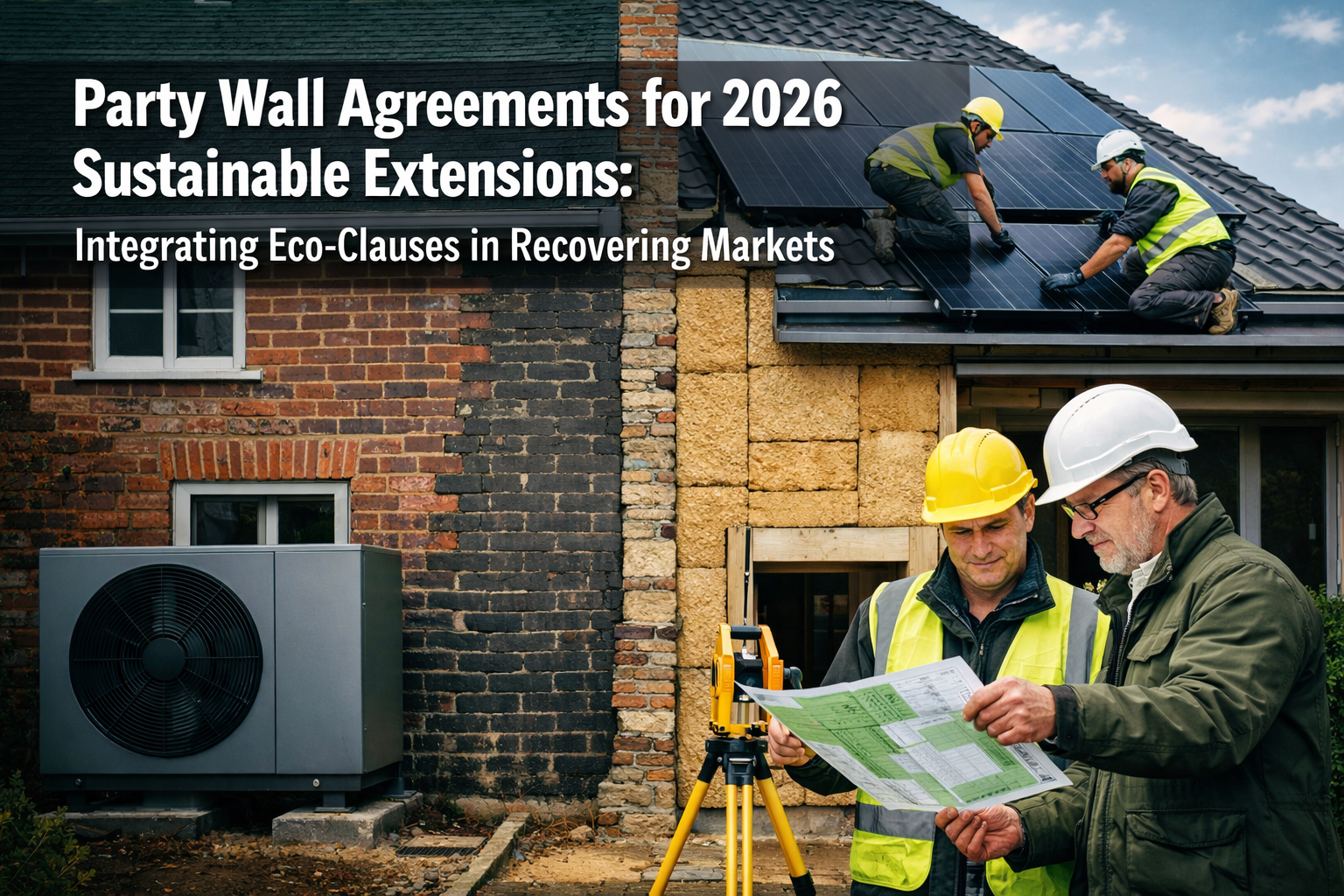
This comprehensive guide explores how party wall agreements are evolving to accommodate eco-friendly extensions, the RICS protocols governing green developments, and practical strategies for dispute avoidance in sustainable loft and basement projects—all within the context of 2026's recovering housing market.
Key Takeaways
- 🏗️ Party wall agreements now require eco-specific clauses addressing low-carbon materials, heat pump installations, and enhanced thermal performance standards mandated by 2026 Building Regulations
- 📋 RICS protocols for sustainable developments include detailed schedules of condition documenting thermal imaging, moisture levels, and environmental baselines before green construction begins
- ⚡ Future Homes Standard compliance fundamentally changes party wall considerations, with air-source heat pumps replacing gas connections and requiring new noise mitigation clauses
- 💰 Party wall agreement costs range from £700–£1,500 per neighbour, with additional fees for specialized green building assessments and SAP calculations when required[2]
- ⏱️ Extended notice periods may be necessary for sustainable extensions involving complex eco-installations, allowing adequate time for neighbours to understand green technology impacts
Understanding Party Wall Agreements for 2026 Sustainable Extensions: Integrating Eco-Clauses in Recovering Markets
What Makes 2026 Party Wall Agreements Different?
The landscape of party wall agreements has transformed dramatically in 2026. Traditional agreements focused primarily on structural integrity and construction noise. However, sustainable extensions introduce entirely new considerations that require specialized clauses and expert oversight.
Key differences in 2026 party wall agreements include:
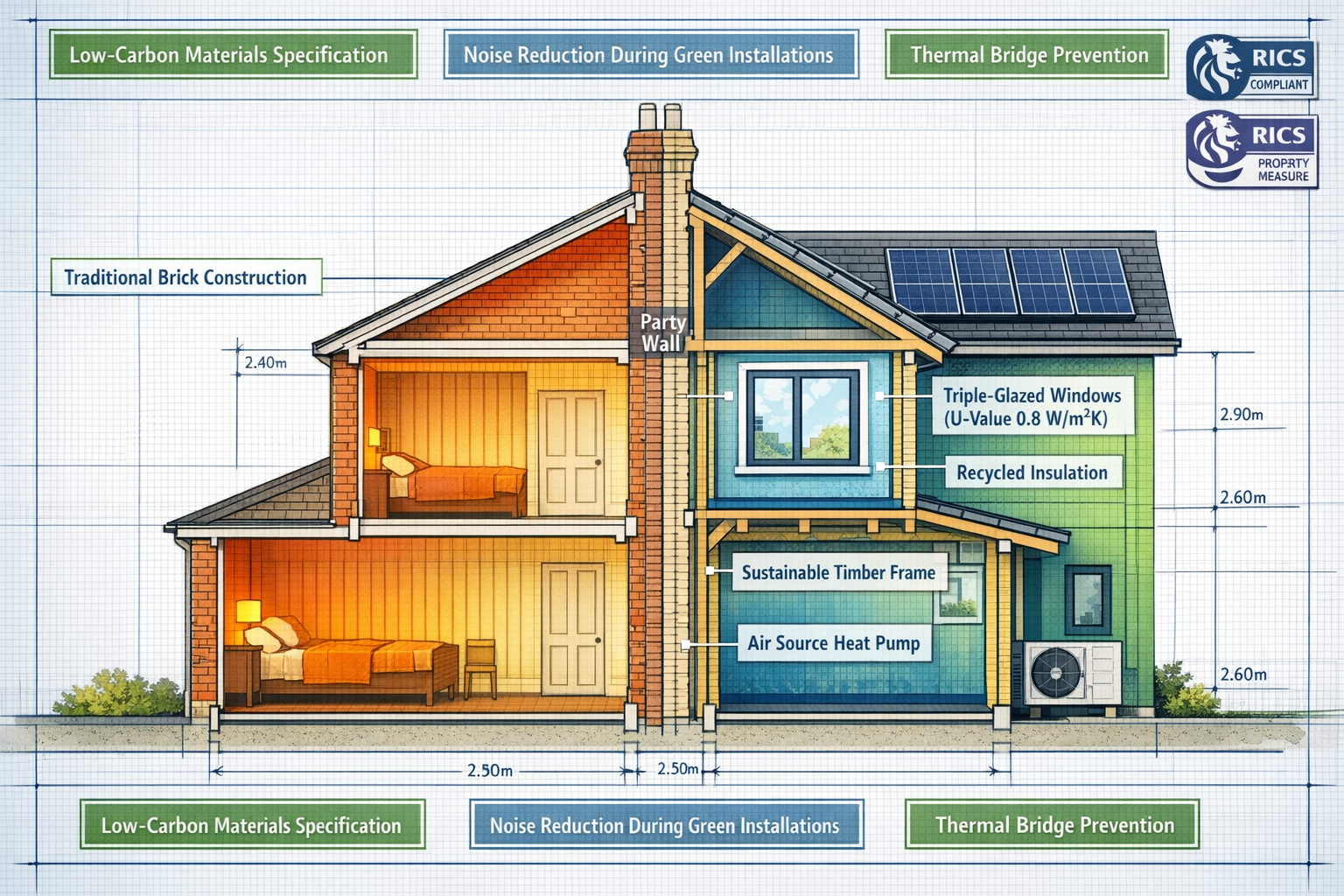
- Low-carbon material specifications that may affect wall loading, thermal bridging, and moisture management
- Heat pump installation requirements demanding specific noise level commitments and vibration assessments
- Enhanced insulation protocols that can alter wall thickness, potentially affecting property boundaries
- Solar panel integration requiring roof access agreements and structural load calculations
- Thermal performance documentation proving compliance with Part L Building Regulations
The Party Wall etc. Act 1996 remains the governing legislation, but its application now extends to environmental considerations that weren't contemplated when the Act was drafted. Property owners undertaking sustainable extensions must serve proper notice—typically two months for most building works affecting party walls, or one month for excavation work[1].
The Future Homes Standard Impact
The Future Homes Standard represents the most significant regulatory change affecting extensions in 2026. All new extensions must now be designed as "zero-carbon ready," fundamentally changing how party wall agreements address heating systems[2].
Critical implications include:
✅ Air-source heat pumps as the standard heating solution instead of gas boilers
✅ Noise mitigation clauses specifically addressing heat pump operation near party walls
✅ Electrical capacity upgrades potentially requiring party wall notice for cable routing
✅ Thermal bridging prevention at party wall junctions to maintain energy performance
When planning a home extension, property owners must now factor in these green technology requirements from the earliest design stages, as they directly impact party wall negotiations and agreement terms.
Mandatory Notice Periods and Documentation
Serving proper notice remains fundamental to party wall compliance. The process requires:
For building work on party walls:
- 2-month notice period before work commences[1]
- Detailed description of proposed sustainable works
- Specifications for eco-friendly materials and methods
- Heat pump installation plans with noise level predictions
For excavation or new boundary walls:
- 1-month notice period[1]
- Foundation design incorporating sustainable drainage systems
- Soil contamination assessments if using recycled materials
The notice must be comprehensive enough for neighbours to understand the environmental implications of the proposed work. Vague descriptions of "sustainable extension" are insufficient—specific details about heat pumps, insulation methods, and green technologies must be clearly articulated.
RICS Protocols for Green Developments and Eco-Clause Integration
RICS Best Practice for Sustainable Extensions
The Royal Institution of Chartered Surveyors (RICS) has established evolving best practices for party wall surveyors dealing with sustainable developments. While formal guidance continues to develop, professional surveyors in 2026 follow established principles adapted for green building contexts.
RICS-aligned protocols for sustainable extensions include:
1. Enhanced Schedule of Condition
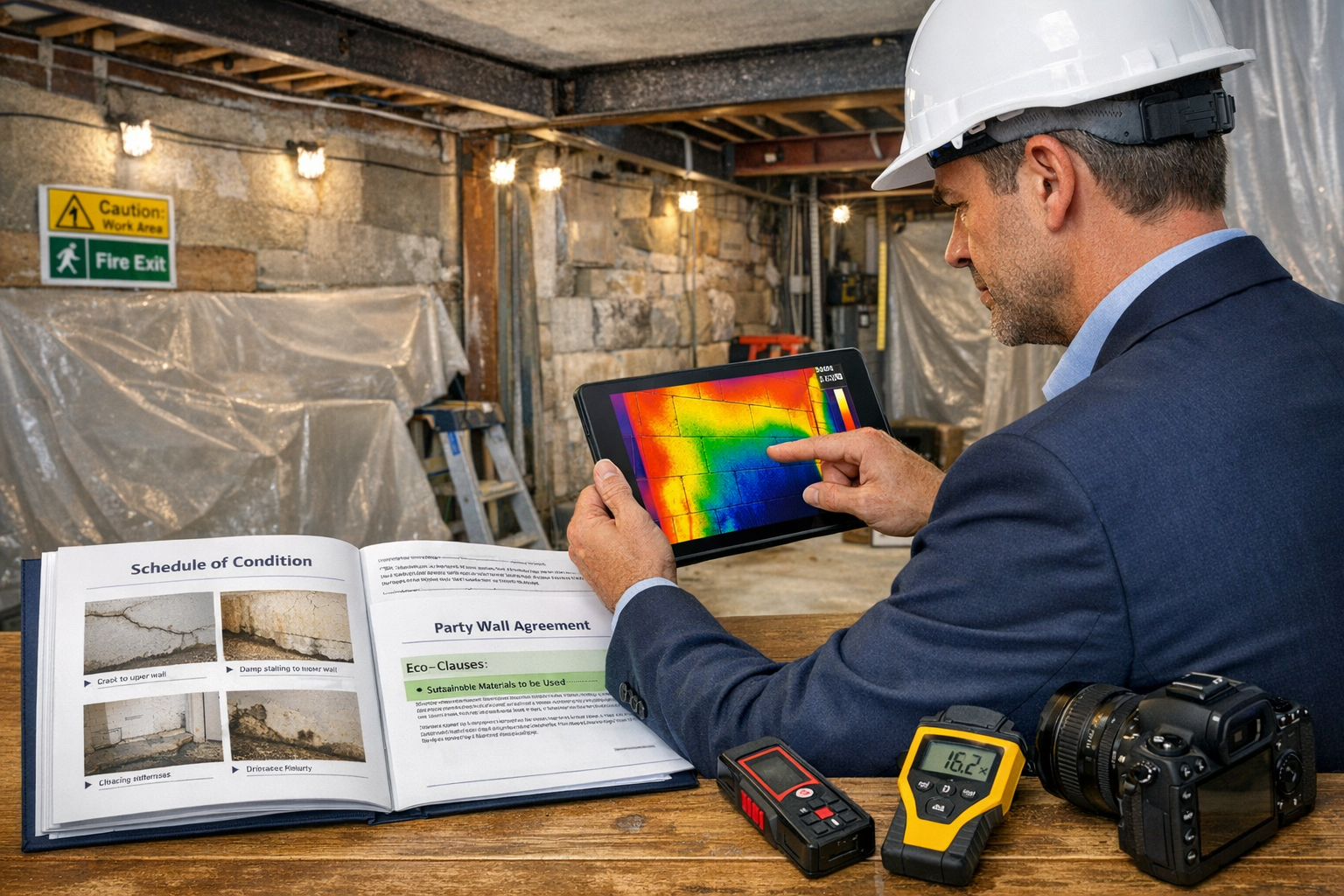
Traditional schedules document visible defects and structural conditions. For sustainable extensions, the schedule must expand to include:
- Thermal imaging surveys establishing baseline heat loss patterns at party walls
- Moisture meter readings documenting existing dampness levels before insulation work
- Acoustic baseline measurements for comparison after heat pump installation
- Air quality assessments particularly relevant for basement conversions with mechanical ventilation
- Photographic evidence of existing insulation, ventilation, and heating systems
This comprehensive documentation protects both parties by establishing clear pre-work conditions[1]. Disputes about whether sustainable construction caused dampness or thermal issues can be resolved by reference to baseline measurements.
2. Specialist Surveyor Appointment
Complex sustainable extensions often require surveyors with specific green building expertise. When appointing a party wall surveyor, consider:
- RICS accreditation with additional environmental assessment qualifications
- Experience with Future Homes Standard compliance projects
- Understanding of heat pump technology and associated party wall implications
- Knowledge of sustainable materials and their structural characteristics
The cost of party wall surveyors varies, but specialist expertise in sustainable construction may command premium fees justified by the technical complexity involved.
3. Award Clauses for Green Technologies
The party wall award—the formal agreement document—must contain specific clauses addressing sustainable features:
Essential eco-clauses include:
| Clause Category | Key Provisions |
|---|---|
| Heat Pump Operations | Maximum noise levels (typically 42dB at 1m), operating hours restrictions, vibration dampening requirements |
| Thermal Performance | Commitment to prevent thermal bridging at party wall junctions, insulation continuity standards |
| Material Specifications | Approved low-carbon materials list, recycled content percentages, VOC emission limits |
| Moisture Management | Breathable construction methods, condensation risk assessments, vapour barrier specifications |
| Access Requirements | Extended access for green technology installations, maintenance access for heat pumps and solar equipment |
| Working Hours | Adjusted schedules for specialized eco-installations requiring extended setup times |
Dispute Avoidance in Loft and Basement Sustainable Projects
Loft conversions and basement extensions present unique party wall challenges, amplified when incorporating sustainable technologies. Proactive dispute avoidance strategies are essential for maintaining neighbourly relations while pursuing green improvements.
Loft Conversion Sustainability Considerations
Modern loft conversions in 2026 must meet stringent thermal performance standards. When the conversion affects party walls:
Common dispute triggers and solutions:
🔧 Enhanced insulation thickness reducing usable space:
- Provide clear drawings showing insulation extent
- Demonstrate compliance with 25% glazing rule for thermal efficiency[2]
- Offer to improve neighbour's loft insulation at party wall junction
🔧 Dormer window placement affecting neighbour's light or privacy:
- Position windows to minimize overlooking
- Use obscured glazing where appropriate
- Integrate solar panels thoughtfully to avoid shadowing neighbour's property
🔧 Roof-mounted heat pump equipment generating noise concerns:
- Provide manufacturer's noise specifications
- Position equipment away from party wall where possible
- Offer acoustic barrier installation
Basement Conversion Green Challenges
Sustainable basement conversions involve complex party wall considerations, particularly regarding:
Underpinning and excavation:
- Traditional underpinning methods may conflict with sustainable drainage requirements
- Permeable paving systems require careful party wall boundary management
- Ground source heat pump loops may extend beyond property boundaries
Ventilation and moisture control:
- Mechanical ventilation with heat recovery (MVHR) systems require external venting
- Ductwork routing may affect party walls
- Condensation management critical at party wall/floor junctions
Waterproofing and sustainability:
- Eco-friendly waterproofing membranes have different application requirements
- Sustainable drainage systems (SuDS) may affect neighbour's foundations
- Radon barriers required in certain areas impact construction methodology
For comprehensive guidance on basement projects, reviewing common defects in older homes helps identify pre-existing issues that sustainable work might reveal or exacerbate.
SAP Calculations and Party Wall Implications
The 2026 Building Regulations mandate SAP (Standard Assessment Procedure) calculations when glazing exceeds 25% of new floor area[2]. This energy performance assessment has direct party wall implications:
SAP-related party wall considerations:
- Thermal bridging at party walls significantly impacts SAP scores, requiring careful detailing
- Air tightness testing may reveal party wall defects requiring remediation
- Heat loss calculations determine whether proposed sustainable measures meet standards
- U-value requirements for party wall insulation may necessitate internal or external upgrades
Failure to provide adequate SAP calculations can result in planning rejections, making early surveyor involvement crucial. Professional party wall drawings should integrate thermal performance specifications from the outset.
Practical Implementation: Party Wall Agreements for 2026 Sustainable Extensions in Recovering Markets
The 2026 Extension Planning Timeline
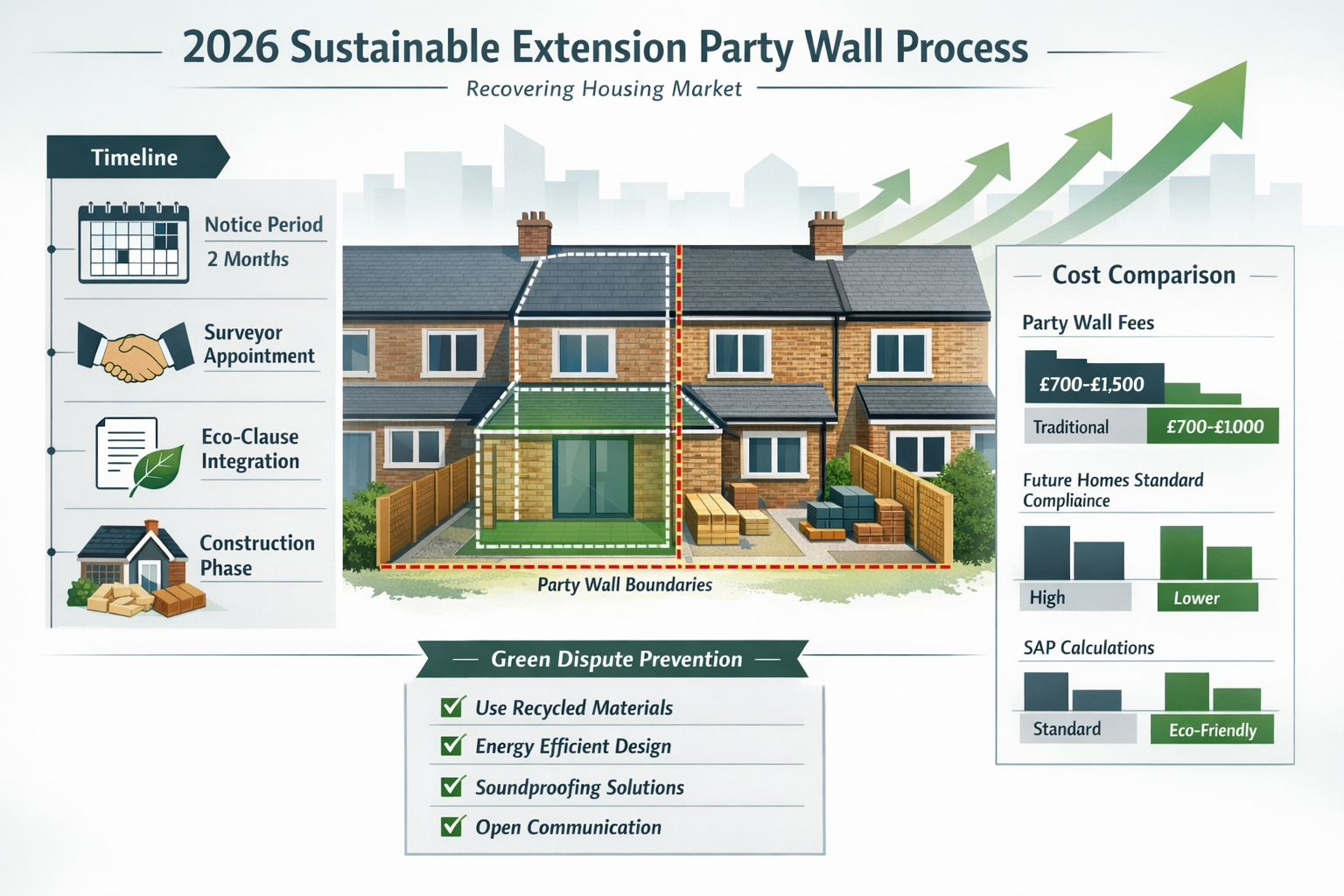
Understanding the complete timeline helps property owners plan sustainable extensions effectively while meeting party wall obligations. The standard process involves four key stages[3]:
Stage 1: Initial Design and Party Wall Notice (Weeks 1-6)
- Develop sustainable extension concept with architect
- Identify party wall implications
- Prepare and serve party wall notice (2-month requirement)[1]
- Prepare planning drawings (4 weeks)[3]
- Neighbour response period begins
Stage 2: Planning and Surveyor Appointment (Weeks 7-18)
- Council planning approval process (8-12 weeks)[3]
- Appoint party wall surveyors if neighbour dissents or doesn't respond
- Conduct enhanced schedule of condition with thermal imaging
- Negotiate eco-clause terms in party wall award
Stage 3: Detailed Design and Building Control (Weeks 19-23)
- Detailed building control drawings incorporating sustainable features (3 weeks)[3]
- Structural calculations for heat pump installations and enhanced insulation
- SAP calculations if required[2]
- Council building control review (1 week)[3]
- Finalize party wall award with agreed eco-clauses
Stage 4: Construction Preparation (Weeks 24-26)
- Detailed quote preparation (10 days)[3]
- Contractor selection with sustainable construction experience
- Pre-commencement meeting with neighbours
- Final party wall documentation exchange
Total timeline: Approximately 6 months from concept to construction start, with party wall requirements adding 2-3 months to standard planning processes.
Cost Considerations in the Recovering Market
The 2026 housing market recovery has influenced extension economics significantly. Party wall agreement costs remain a notable expense, ranging from £700–£1,500 per neighbour[2], with sustainable extensions potentially incurring additional fees for:
- Specialized thermal imaging surveys (£200-£400)
- Acoustic baseline assessments (£150-£300)
- SAP calculations when required (£300-£600)
- Specialist green building surveyor premiums (10-20% above standard fees)
However, the recovering market makes these investments worthwhile. Property values are rising, and sustainable extensions command premium valuations due to:
✅ Enhanced Energy Performance Certificates (EPCs) attracting eco-conscious buyers
✅ Future-proofed heating systems avoiding costly retrofits
✅ Reduced running costs from efficient insulation and heat pumps
✅ Planning advantages in areas prioritizing sustainable development
When budgeting for sustainable extensions, factor in comprehensive party wall costs from the outset. Attempting to economize on surveyor fees often results in disputes requiring expensive resolution later.
Permitted Development and Lawful Development Certificates
Many sustainable extensions qualify for permitted development rights, avoiding full planning permission requirements. Single-storey rear extensions may proceed without planning permission if they remain within specific limits[2]:
- Maximum 6 metres depth for detached houses
- Maximum 4 metres depth for semi-detached and terraced properties
- 4 metres overall height maximum
- No more than 50% plot coverage
However, permitted development does NOT exempt projects from:
- Party wall agreement requirements[1]
- Building Regulations compliance, including Future Homes Standard[2]
- SAP calculations if glazing exceeds thresholds[2]
Lawful Development Certificates (LDC) are strongly recommended even for permitted development projects[2]. An LDC provides:
- Official confirmation of compliance with permitted development rules
- Documentation streamlining future property sales
- Protection against retrospective planning enforcement
- Evidence of regulatory compliance for mortgage lenders
The certificate costs £100-£200 but significantly reduces transaction complications when selling properties with sustainable extensions.
Negotiating Eco-Clauses: Practical Tips
Successfully negotiating party wall agreements for sustainable extensions requires diplomatic skill and technical knowledge. Effective negotiation strategies include:
1. Early Engagement
Contact neighbours before formal notice periods:
- Explain sustainable extension benefits (reduced carbon emissions, property value enhancement)
- Address concerns proactively (noise from heat pumps, construction disruption)
- Offer to share thermal imaging surveys showing heat loss benefits
- Provide manufacturer specifications for green technologies
2. Visual Communication
Technical jargon alienates neighbours. Instead:
- Use 3D renderings showing finished sustainable extension
- Provide simple diagrams explaining heat pump operation
- Share case studies of similar successful projects
- Offer site visits to completed sustainable extensions
3. Reciprocal Benefits
Consider offering tangible benefits:
- Improved party wall insulation benefiting both properties
- Shared sustainable drainage improvements
- Coordinated external decoration at party wall boundaries
- Information sharing about green technology performance
4. Flexible Construction Scheduling
Sustainable installations may require specialized timing:
- Heat pump commissioning during moderate weather for accurate testing
- Insulation installation requiring extended drying periods
- Solar panel installation dependent on weather conditions
Build flexibility into party wall agreements allowing reasonable schedule adjustments while maintaining overall completion commitments.
Common Pitfalls and How to Avoid Them
Pitfall 1: Inadequate Notice Details
❌ Mistake: Serving generic party wall notice mentioning "sustainable extension" without specifics
✅ Solution: Provide detailed specifications including heat pump models, insulation types, thermal performance targets, and construction methodology
Pitfall 2: Ignoring Acoustic Implications
❌ Mistake: Failing to address heat pump noise in party wall agreements
✅ Solution: Include specific noise level commitments (typically 42dB maximum at 1 metre), operating hour restrictions, and acoustic barrier specifications
Pitfall 3: Underestimating Thermal Bridging
❌ Mistake: Designing insulation that terminates at party walls creating cold bridges
✅ Solution: Engage thermal modelling specialists to design continuous insulation strategies meeting SAP requirements while respecting party wall boundaries
Pitfall 4: Delayed Surveyor Appointment
❌ Mistake: Waiting for neighbour dissent before appointing surveyors, causing timeline delays
✅ Solution: Identify qualified party wall surveyors with sustainable construction expertise during design phase, enabling rapid appointment if needed
Pitfall 5: Insufficient Schedule of Condition
❌ Mistake: Basic photographic survey missing thermal and moisture baselines
✅ Solution: Invest in comprehensive thermal imaging and moisture surveys establishing clear pre-work conditions protecting both parties from future disputes
The Housing Market Recovery Context
Understanding Party Wall Agreements for 2026 Sustainable Extensions: Integrating Eco-Clauses in Recovering Markets requires appreciating the broader economic context. The UK housing market's 2026 recovery is characterized by:
Key market dynamics:
📈 Extension preference over relocation driven by high transaction costs and limited housing stock
📈 Sustainability premium with eco-friendly properties commanding 10-15% value increases
📈 Regulatory compliance urgency as Future Homes Standard becomes mandatory
📈 Green mortgage incentives offering preferential rates for sustainable improvements
📈 Planning authority priorities favoring sustainable development applications
These factors create a compelling case for sustainable extensions despite the additional complexity of eco-enhanced party wall agreements. Property owners who navigate the process successfully position themselves advantageously in the recovering market.
Regional Variations and Local Authority Approaches
Party wall requirements remain consistent across England and Wales under the Party Wall etc. Act 1996, but local authority approaches to sustainable development vary significantly:
Progressive authorities (e.g., Camden, Islington, Brighton) actively encourage sustainable extensions through:
- Fast-track planning for Future Homes Standard compliance
- Reduced fees for projects exceeding minimum environmental standards
- Pre-application advice services specializing in green developments
Conservative authorities maintain traditional approaches:
- Standard processing timelines regardless of sustainability features
- Strict interpretation of permitted development rules
- Limited specialist green building guidance
Research local authority priorities before finalizing sustainable extension plans. Some areas offer significant advantages for eco-friendly projects that offset additional party wall complexity. For location-specific guidance, explore resources for chartered surveyors across various London areas.
Insurance and Liability Considerations
Sustainable extensions introduce novel insurance considerations affecting party wall agreements:
Building insurance implications:
- Heat pump installations may require policy endorsements covering refrigerant leaks
- Enhanced insulation affecting fire spread characteristics requires insurer notification
- Solar panels need specific coverage for storm damage and performance guarantees
- Structural modifications for sustainable features must be disclosed to insurers
Party wall liability insurance:
Professional party wall surveyors carry indemnity insurance, but property owners should verify coverage extends to:
- Sustainable technology assessments
- Thermal performance evaluations
- Acoustic impact determinations
- Environmental baseline surveys
Request confirmation that surveyor insurance specifically covers green building expertise, as standard policies may exclude emerging technologies.
Building Regulations Compliance Beyond Party Walls
While party wall agreements address neighbourly relations, Building Regulations compliance remains mandatory for all extensions regardless of planning permission status[2]. The 2026 regulations are increasingly stringent, particularly regarding:
Part L (Energy Efficiency):
- Future Homes Standard compliance for all new extensions
- SAP calculations demonstrating thermal performance[2]
- Air tightness testing requirements
- Thermal bridging elimination at party wall junctions
Part F (Ventilation):
- MVHR systems increasingly required for airtight sustainable extensions
- Trickle ventilators in high-performance windows
- Extraction rates meeting enhanced 2026 standards
Part E (Sound Insulation):
- Enhanced acoustic performance at party walls
- Impact sound insulation for loft conversions above neighbours
- Airborne sound insulation standards for party walls affected by works
Part B (Fire Safety):
- Fire resistance maintenance at party walls during works
- Sustainable insulation materials meeting fire performance standards
- Escape route protection in loft conversions
Comprehensive building survey services help identify compliance requirements early, preventing costly mid-project modifications.
Conclusion
Party Wall Agreements for 2026 Sustainable Extensions: Integrating Eco-Clauses in Recovering Markets represents a critical evolution in property development practice. As the UK housing market recovers and environmental regulations intensify, property owners pursuing sustainable extensions must navigate increasingly complex party wall requirements while maintaining positive neighbourly relations.
The integration of eco-specific clauses addressing heat pumps, enhanced insulation, thermal performance, and low-carbon materials is no longer optional—it's essential for compliance with the Future Homes Standard and Building Regulations. RICS-aligned protocols emphasizing comprehensive schedules of condition, specialist surveyor expertise, and detailed environmental baselines protect all parties while facilitating green development.
Success requires:
✅ Early engagement with neighbours explaining sustainable technology benefits
✅ Specialist surveyor appointment with green building expertise
✅ Comprehensive documentation including thermal imaging and acoustic baselines
✅ Detailed eco-clauses addressing heat pump noise, thermal bridging, and material specifications
✅ Realistic timelines accommodating the 2-month notice period and complex approval processes
✅ Adequate budgeting for party wall costs ranging from £700–£1,500 per neighbour plus specialist assessments
The recovering housing market rewards property owners who invest in sustainable extensions. Enhanced EPCs, future-proofed heating systems, and reduced running costs create compelling value propositions that offset the additional complexity of eco-enhanced party wall agreements.
Next Steps
For property owners planning sustainable extensions:
- Consult a specialist surveyor experienced in both party wall agreements and green building technologies—explore party wall services to find qualified professionals
- Review the top considerations for party wall agreement renovations before commencing design work
- Engage neighbours early with clear explanations of sustainable features and their benefits
- Obtain comprehensive baseline surveys including thermal imaging and moisture assessments
- Budget realistically for party wall costs, specialist assessments, and potential SAP calculations
- Plan timelines accommodating the mandatory 2-month notice period and approval processes
- Verify Building Regulations compliance for all sustainable features, not just party wall elements
The intersection of party wall law, sustainable construction, and market recovery creates both challenges and opportunities. Property owners who navigate this complexity successfully position themselves advantageously in 2026's evolving housing market, creating valuable, environmentally responsible homes that benefit occupants, neighbours, and the broader community.
References
[1] Party Wall Agreement – hoa.org.uk
[2] Home Extension Ideas To Transform Your Property – resident.com
[3] What Are The Key Steps For Planning A Extension In 2026 – prgextensions.co.uk