

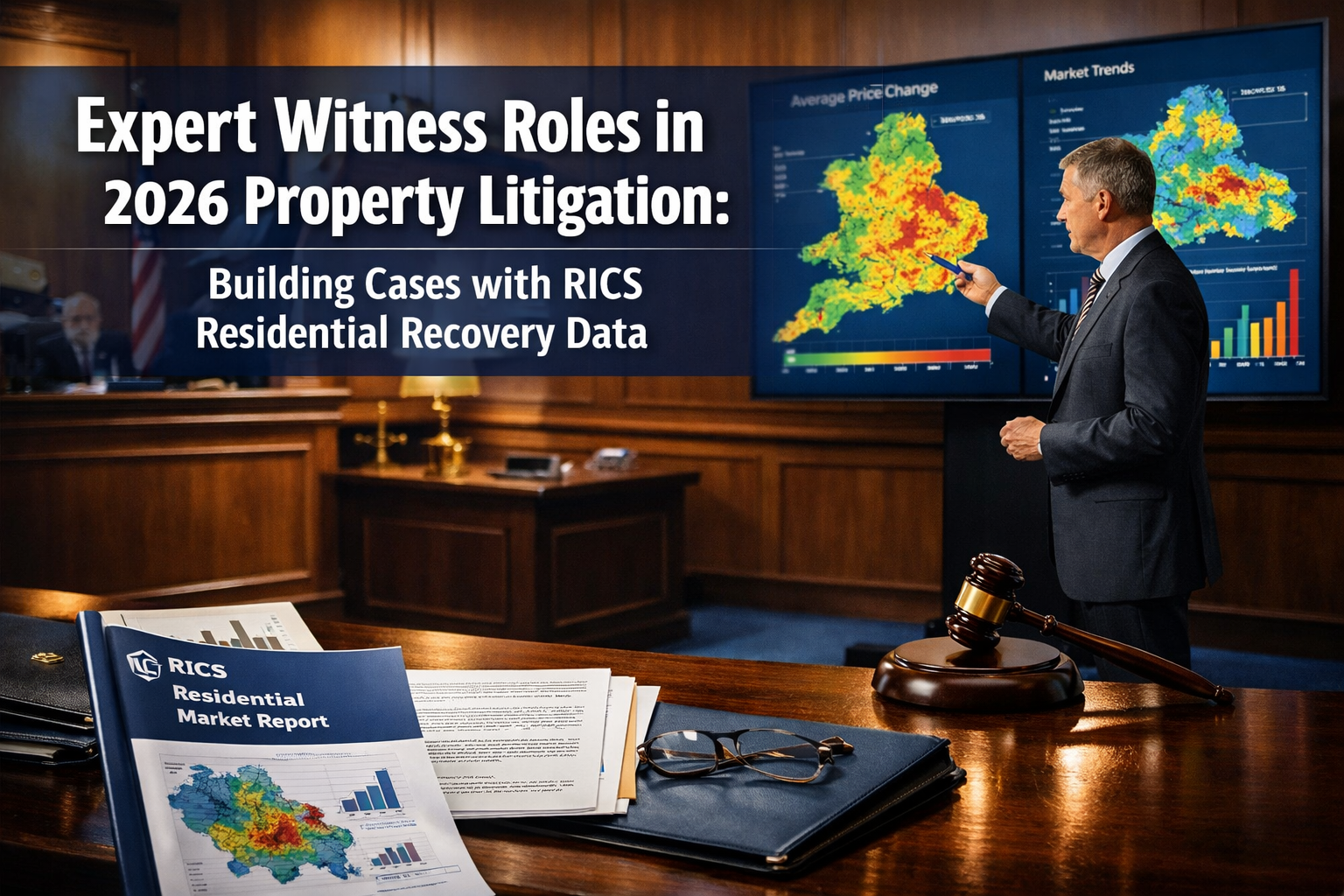
The UK property market stands at a pivotal crossroads in 2026, with regional divergences creating unprecedented challenges for property litigation. When a valuation dispute reaches the courtroom, the difference between winning and losing often hinges on one critical factor: the quality of expert witness testimony backed by robust, current market data. As the latest RICS Residential Market Survey reveals stabilizing prices in the South while Scotland and Northern Ireland surge ahead, chartered surveyors serving as expert witnesses must navigate this complex landscape with precision and authority.
Expert Witness Roles in 2026 Property Litigation: Building Cases with RICS Residential Recovery Data has never been more crucial, as the January 2026 RICS survey data provides the evidentiary foundation for court-ready arguments in valuation disputes, boundary disagreements, and property damage claims.
Key Takeaways
- Market recovery indicators from January 2026 RICS data show house prices stabilizing at -10% net balance, providing critical benchmarks for establishing valuation comparables in litigation
- Regional divergence between Scotland/Northern Ireland (showing growth) and London/South East (lagging) requires location-specific expert analysis for accurate property valuations
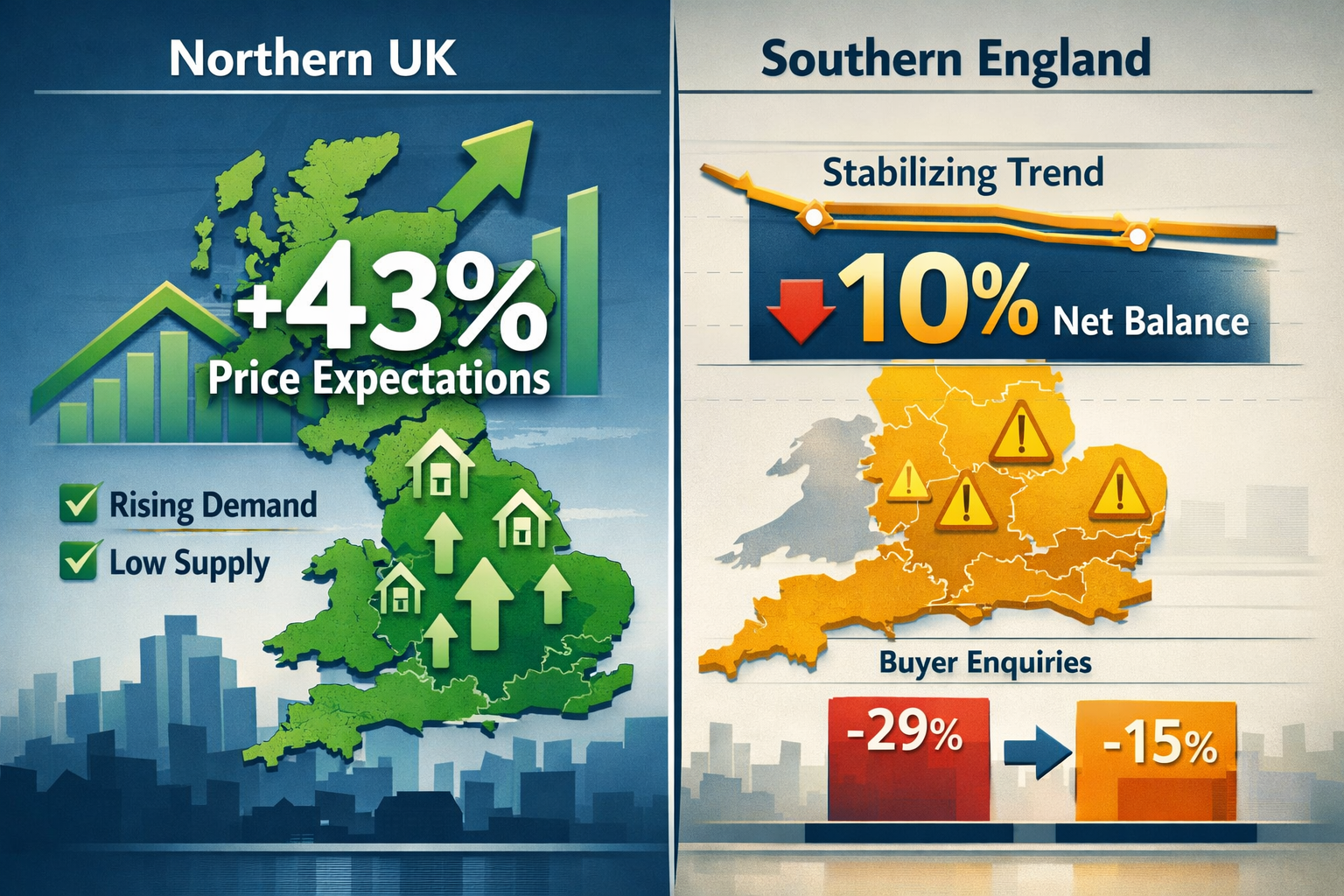
- Buyer enquiry improvements from -29% to -15% and 12-month price expectations jumping to +43% offer evidence for future value projections in long-term disputes
- Expert witnesses must integrate RICS residential recovery data with comprehensive building surveys and technical assessments to build compelling, defensible cases
- Court-ready documentation combining market trends, comparable sales data, and professional survey findings strengthens credibility and withstands cross-examination
Understanding Expert Witness Roles in 2026 Property Litigation: Building Cases with RICS Residential Recovery Data
The Evolving Landscape of Property Litigation in 2026
Property litigation in 2026 encompasses a broad spectrum of disputes, from valuation disagreements during divorce proceedings to boundary conflicts between neighbors, and from dilapidation claims in commercial leases to defect disputes following property purchases. Each case type demands specialized expertise, but all share a common requirement: credible, data-driven expert testimony that can withstand rigorous cross-examination.
The role of the expert witness extends far beyond simply providing an opinion. In 2026, courts expect chartered surveyors to demonstrate:
✅ Professional accreditation through RICS or equivalent bodies
✅ Current market knowledge supported by recent survey data
✅ Technical competence in building pathology and construction
✅ Impartial analysis free from advocacy for either party
✅ Clear communication that makes complex technical matters accessible to judges and juries
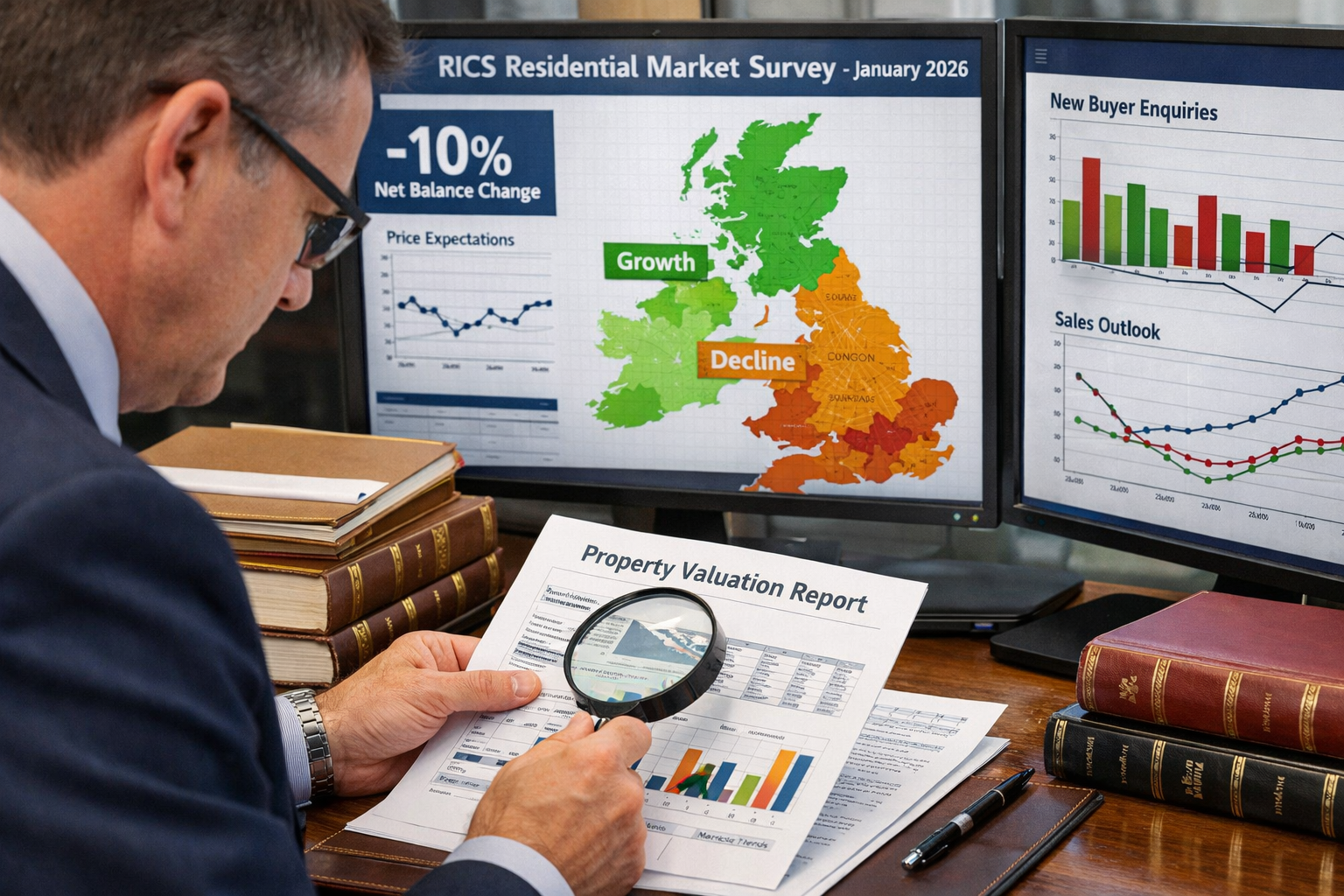
The January 2026 RICS Residential Market Survey provides expert witnesses with a treasure trove of current market intelligence. With house prices stabilizing at a -10% net balance (improved from -19% in October 2025), surveyors can now establish more reliable valuation baselines than during the volatile periods of 2024-2025[2].
Critical Data Points from RICS Residential Recovery Metrics
The RICS survey data for January 2026 reveals several market dynamics that directly impact property litigation cases:
| Metric | January 2026 Reading | Previous Period | Litigation Relevance |
|---|---|---|---|
| House Price Net Balance | -10% | -19% (Oct 2025) | Establishes current valuation trends |
| New Buyer Enquiries | -15% | -21% (Dec 2025) | Indicates demand-side market conditions |
| Agreed Sales | -9% | Least negative since June 2025 | Provides comparable transaction evidence |
| 12-Month Price Expectations | +43% | Most positive since Feb 2025 | Supports future value projections |
| Regional Divergence | Scotland/NI growth vs. South decline | Widening gap | Critical for location-specific valuations |
These metrics provide quantifiable evidence that expert witnesses can reference when establishing property values at specific points in time—essential for retrospective valuations in litigation[2].
When preparing comprehensive building surveys for potential litigation, chartered surveyors must now contextualize their findings within this recovering but regionally divergent market.
Building Court-Ready Cases: Integrating RICS Data with Technical Assessments
Leveraging Regional Market Intelligence for Valuation Disputes
One of the most significant findings from the January 2026 RICS survey is the widening regional divergence in property markets. Scotland and Northern Ireland are experiencing price growth, while London, the South East, South West, and East Anglia continue to lag[2]. For expert witnesses, this regional variation demands a nuanced approach to valuation methodology.
Case Example: In a divorce settlement valuation dispute involving a property in Hampstead, London, an expert witness cannot simply apply national trend data. The surveyor must:
- Reference London-specific RICS data showing continued price softness in the capital
- Identify comparable sales within the same postcode district during the relevant valuation period
- Account for micro-market factors such as proximity to transport links or schools
- Distinguish between asking prices and achieved prices using agreed sales data
- Consider future market trajectory based on the +43% 12-month price expectations metric
For properties in areas covered by chartered surveyors in Hampstead or chartered surveyors in North West London, understanding these regional nuances becomes paramount to credible expert testimony.
Combining RICS Market Data with Building Defect Analysis
Expert witness testimony in property litigation often requires integration of market valuation data with technical building assessments. The RICS recovery data provides the market context, while detailed building surveys identify physical defects that may impact value.
Consider a scenario where a buyer discovers significant structural defects after purchase and pursues litigation against the seller for non-disclosure. The expert witness must:
🔍 Establish pre-defect value using RICS market data for the transaction period
🔍 Quantify defect impact through detailed building defects surveys
🔍 Calculate diminution in value based on repair costs and market perception
🔍 Account for market conditions at both discovery and trial dates
The January 2026 data showing improved buyer enquiries (-15% vs. -29% in November 2025) suggests increasing market activity, which may affect the saleability of defective properties differently than during the 2025 downturn[2].
Documentation Standards for Expert Witness Reports
Courts in 2026 demand rigorous documentation standards from expert witnesses. A court-ready expert report integrating RICS residential recovery data should include:
Section 1: Expert Qualifications and Independence
- RICS membership credentials and specializations
- Declaration of impartiality and understanding of expert duties
- Disclosure of any potential conflicts of interest
Section 2: Property Description and Inspection Findings
- Comprehensive property details with photographic evidence
- Technical findings from site inspection
- Reference to Level 3 full building survey methodology where applicable
Section 3: Market Context and RICS Data Integration
- National market trends from January 2026 RICS survey
- Regional-specific data relevant to property location
- Comparable sales analysis with transaction dates and prices
- Market trajectory analysis using 12-month expectations data
Section 4: Valuation Methodology and Conclusions
- Clear explanation of valuation approach (comparative, income, or residual)
- Adjustment calculations for property-specific factors
- Range of values with supporting rationale
- Sensitivity analysis for key assumptions
Section 5: Supporting Appendices
- RICS survey data extracts
- Comparable property details and evidence
- Photographs and technical drawings
- Calculation worksheets
This structured approach ensures that Expert Witness Roles in 2026 Property Litigation: Building Cases with RICS Residential Recovery Data meet judicial expectations for thoroughness and transparency.
Strengthening Expert Testimony: Practical Applications of RICS Recovery Data
Addressing Cross-Examination Challenges with Data-Backed Responses
The courtroom environment demands that expert witnesses defend their opinions under rigorous cross-examination. Opposing counsel will challenge methodology, assumptions, and conclusions. The January 2026 RICS data provides expert witnesses with objective, third-party evidence to support their positions.
Common Cross-Examination Challenges:
Challenge 1: "Your valuation is based on outdated market assumptions."
Data-Backed Response: "My valuation incorporates the most recent RICS Residential Market Survey from January 2026, which shows house prices stabilizing at -10% net balance, representing a significant improvement from -19% in October 2025. This current data ensures my analysis reflects the market as it stands today."[2]
Challenge 2: "You've ignored regional variations in your assessment."
Data-Backed Response: "On the contrary, I've specifically accounted for the widening regional divergence identified in the January 2026 RICS survey. While Scotland and Northern Ireland show price growth, London and the South East continue to lag. My valuation reflects the specific regional dynamics applicable to this [property location]."[2]
Challenge 3: "Your future value projections are speculative."
Data-Backed Response: "My forward-looking analysis is grounded in the RICS survey data showing 12-month price expectations at +43%, the most positive outlook since February 2025. This represents professional surveyor sentiment across the industry, not personal speculation."[2]
Utilizing Rental Market Data in Investment Property Disputes
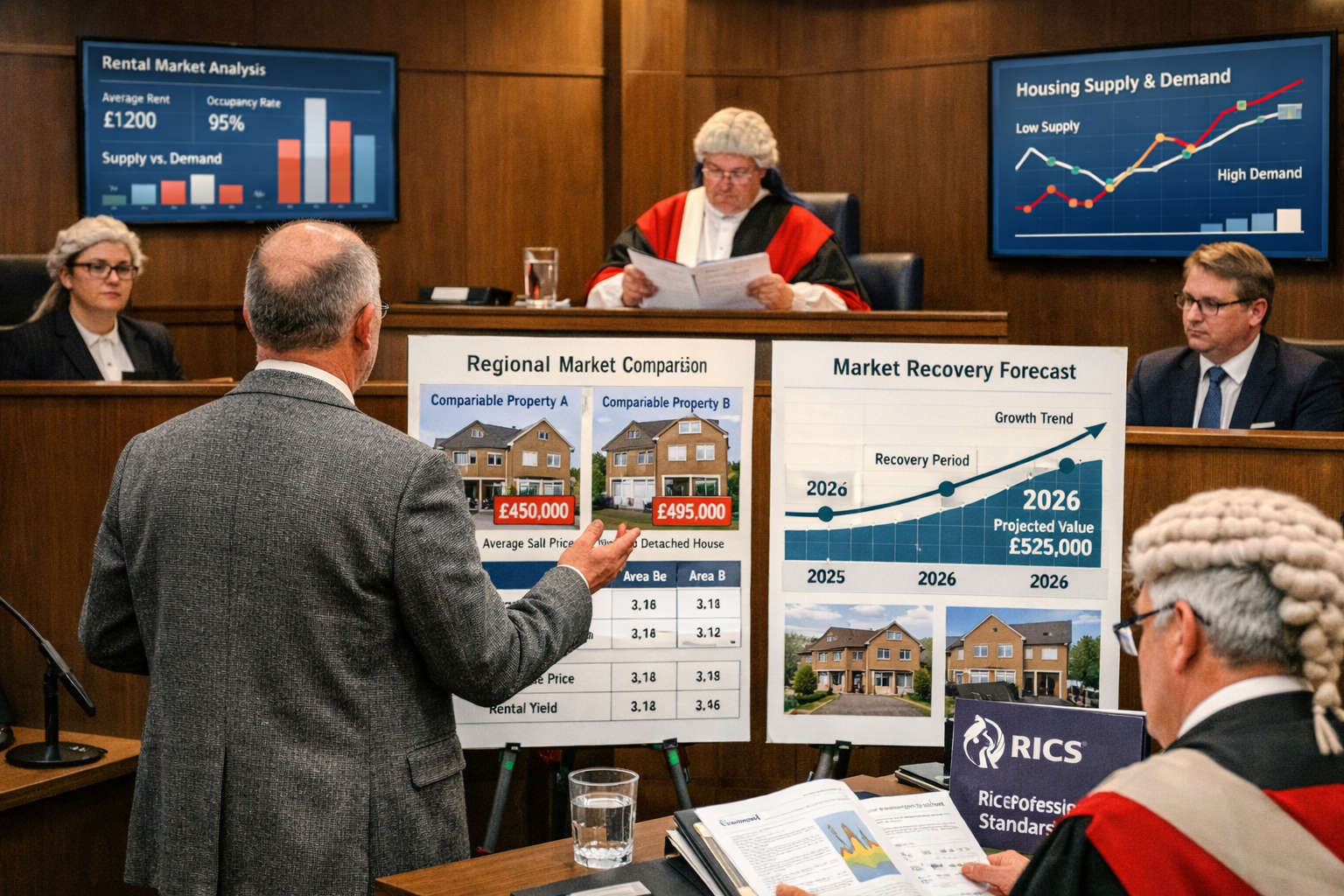
Property litigation increasingly involves investment properties and landlord-tenant disputes. The January 2026 RICS survey reveals that tenant demand continues to increase while supply remains constrained, with rental prices expected to rise[2]. This rental market intelligence proves invaluable for expert witnesses in several litigation contexts:
Scenario 1: Leasehold Valuation Disputes
When determining the capital value of investment properties for leasehold extension and enfranchisement valuations, expert witnesses must capitalize rental income using appropriate yields. The RICS data on rental growth expectations provides evidence for income projections.
Scenario 2: Dilapidations Claims
In dilapidations cases involving commercial or residential properties, the impact of disrepair on rental value becomes critical. Rising rental demand (as evidenced by RICS data) may mitigate diminution arguments, as properties may achieve market rents despite minor defects.
Scenario 3: Service Charge Disputes
For block management and service charge disputes, expert witnesses can reference rental market strength when assessing the reasonableness of major works expenditure and its impact on property values.
Integrating Advanced Survey Technologies with Market Data
Modern expert witnesses in 2026 combine traditional surveying expertise with advanced technologies to create compelling evidence packages. Premium drone surveys provide aerial documentation of property conditions, while thermal imaging reveals hidden defects.
When integrated with RICS market recovery data, these technological tools create a powerful litigation package:
📊 Drone imagery documents property condition and context
📊 Thermal surveys identify defects affecting value
📊 3D modeling illustrates spatial relationships in boundary disputes
📊 RICS market data provides valuation context
📊 Comparable sales analysis establishes market benchmarks
This multi-layered approach demonstrates the expert witness's thoroughness and strengthens the overall case presentation.
Case Study: Valuation Dispute in a Recovering Market
Background: A property developer challenges a compulsory purchase order valuation, arguing the local authority's valuation fails to account for market recovery signals.
Expert Witness Approach:
-
Baseline Valuation: Establish property value using comparable sales from the relevant valuation date, accounting for the -10% net balance in house prices[2]
-
Market Trajectory Analysis: Present evidence of improving market sentiment, including the surge in 12-month sales sentiment to +35%, representing strengthening confidence in market recovery[2]
-
Regional Context: Demonstrate how the specific location's market dynamics align with or diverge from national trends identified in the RICS survey
-
Future Development Potential: Reference new buyer enquiries improving to -15% net balance (up from -21% in December) as evidence of recovering demand that supports development value arguments[2]
-
Risk Assessment: Acknowledge RICS Chief Economist Simon Rubinsohn's statement that recovery is "likely to be gradual" and dependent on mortgage rates, providing balanced testimony that acknowledges uncertainty[2]
This comprehensive approach, grounded in current RICS data, provides the court with objective evidence to assess the competing valuations.
Professional Standards and Ethical Considerations for Expert Witnesses
RICS Practice Standards for Expert Witness Work
The Royal Institution of Chartered Surveyors maintains rigorous standards for members acting as expert witnesses. In 2026, these standards emphasize:
Independence and Objectivity 🎯
Expert witnesses owe their primary duty to the court, not to the party instructing them. The RICS Practice Statement on Surveyors Acting as Expert Witnesses requires members to provide impartial opinions based on their professional expertise, regardless of whether those opinions support their client's position.
Competence and Specialization 🎯
Experts must only accept instructions in areas where they possess appropriate expertise. A surveyor specializing in residential valuations should not accept instructions for complex industrial property disputes without relevant experience.
Continuing Professional Development 🎯
Staying current with market data, including the latest RICS Residential Market Survey releases, forms part of the expert's professional obligation. The January 2026 data represents the most current market intelligence available, and expert witnesses must incorporate this into their analyses[2].
Transparency in Methodology 🎯
Expert reports must clearly explain the methodology employed, assumptions made, and limitations acknowledged. When using RICS survey data, experts should explain how the -10% net balance translates into specific valuation adjustments for the property in question[2].
Avoiding Common Pitfalls in Expert Witness Testimony
Even experienced chartered surveyors can encounter challenges when serving as expert witnesses. Common pitfalls to avoid include:
❌ Over-reliance on national data without considering regional variations
❌ Failing to update analysis with the most recent market intelligence
❌ Advocacy creep where objectivity becomes compromised
❌ Inadequate documentation of comparable sales and adjustments
❌ Ignoring market trajectory when valuing for future dates
❌ Insufficient technical detail in building defect assessments
By grounding testimony in objective RICS data and maintaining professional standards, expert witnesses build credibility that withstands even the most aggressive cross-examination.
The Importance of Multi-Disciplinary Collaboration
Complex property litigation often requires collaboration between different specialists. An expert witness surveyor might work alongside:
- Structural engineers on structural defect cases
- Party wall surveyors on boundary and party wall disputes
- Project managers on construction defect claims
- Specialist roofing surveyors when roof defects impact property values
This collaborative approach ensures comprehensive case preparation while maintaining clear delineation of each expert's scope and responsibilities.
Future-Proofing Expert Witness Practice: Trends and Developments
Emerging Technologies in Property Litigation
The landscape of expert witness work continues to evolve with technological advancement. In 2026, several emerging technologies are reshaping how surveyors prepare and present evidence:
Artificial Intelligence and Data Analytics
AI-powered platforms can analyze thousands of comparable sales transactions, identifying patterns and anomalies that inform valuation opinions. However, expert witnesses must ensure they understand and can explain the algorithms underlying any AI-assisted analysis.
Virtual Reality Courtroom Presentations
Some jurisdictions now accept VR presentations that allow judges and juries to "walk through" properties without site visits. This technology proves particularly valuable when the property has been demolished or substantially altered since the dispute arose.
Blockchain Property Records
As blockchain-based property registries become more prevalent, expert witnesses gain access to immutable transaction records that eliminate disputes over historical ownership and transaction prices.
Real-Time Market Data Integration
Platforms that aggregate RICS survey data with Land Registry transactions and local market intelligence provide expert witnesses with unprecedented analytical capabilities.
Preparing for Climate-Related Property Litigation
An emerging area of property litigation involves climate change impacts on property values. Expert witnesses in 2026 increasingly encounter cases involving:
- Flood risk reassessments affecting property valuations
- Building defects related to extreme weather events
- Energy efficiency requirements and retrofit costs
- Environmental contamination and remediation
When addressing these issues, expert witnesses must integrate RICS market data with specialized environmental and sustainability expertise, potentially collaborating with sustainability consultants on complex cases.
The Impact of Regulatory Changes on Valuation Methodology
The UK property market in 2026 operates under evolving regulatory frameworks that affect valuation approaches. Recent changes include:
📋 Enhanced energy performance requirements for rental properties
📋 Updated building safety regulations following the Building Safety Act
📋 Revised leasehold reform legislation affecting ground rents and service charges
📋 Changes to permitted development rights impacting development potential
Expert witnesses must stay abreast of these regulatory developments and understand their impact on property values. The RICS survey data provides market-level context, but regulatory compliance costs must be factored into individual property valuations.
Continuing Education and Professional Development
Maintaining expertise as an expert witness requires ongoing learning. Recommended professional development activities include:
✅ Regular review of RICS Residential Market Survey releases and analysis
✅ Attendance at property litigation conferences and seminars
✅ Participation in expert witness training programs
✅ Study of recent case law affecting valuation methodology
✅ Networking with other expert witnesses to share best practices
✅ Technical training in emerging survey technologies
Organizations like RICS provide specialized training for members serving as expert witnesses, ensuring they maintain the highest professional standards.
Conclusion
Expert Witness Roles in 2026 Property Litigation: Building Cases with RICS Residential Recovery Data represents a critical competency for chartered surveyors navigating today's complex property disputes. The January 2026 RICS Residential Market Survey provides invaluable market intelligence, revealing a stabilizing market with house prices at -10% net balance, improving buyer enquiries, and significant regional divergences between growing Northern markets and lagging Southern regions[2].
Successful expert witnesses in 2026 must combine this objective market data with comprehensive technical assessments, rigorous documentation standards, and unwavering professional ethics. By integrating RICS recovery metrics with detailed building surveys, advanced survey technologies, and location-specific market analysis, expert witnesses build compelling, defensible cases that withstand courtroom scrutiny.
The recovering property market presents both challenges and opportunities for property litigation. Regional variations demand nuanced, location-specific analysis rather than blanket national assumptions. The +43% of respondents anticipating higher prices over the next 12 months signals optimism, but RICS Chief Economist Simon Rubinsohn's caution that recovery will be "gradual" reminds expert witnesses to maintain balanced, evidence-based perspectives[2].
Actionable Next Steps
For chartered surveyors seeking to strengthen their expert witness capabilities:
- Subscribe to RICS market intelligence and integrate the latest survey data into all valuation analyses
- Develop regional market expertise for your primary practice areas, understanding local variations from national trends
- Invest in advanced survey technologies including drone surveys and thermal imaging to enhance evidence quality
- Maintain detailed comparable sales databases organized by region, property type, and transaction date
- Participate in expert witness training to sharpen courtroom skills and understand evolving legal standards
- Build multi-disciplinary networks with structural engineers, party wall surveyors, and other specialists
- Document methodology rigorously to ensure your analysis can withstand cross-examination
- Stay current with regulatory changes affecting property values and market dynamics
The intersection of professional surveying expertise and current market intelligence creates powerful expert witness testimony. As the UK property market continues its gradual recovery through 2026, chartered surveyors who master the integration of RICS residential recovery data with comprehensive technical assessments will find themselves in high demand for property litigation cases.
Whether addressing valuation disputes, building defect claims, boundary disagreements, or dilapidations cases, the expert witness who combines objective data, technical competence, and clear communication will consistently deliver value to courts and clients alike. The January 2026 RICS survey data provides the foundation—professional expertise and ethical practice build the case.
References
[1] Expert Witness Surveyors In Recovering Markets Building Court Ready Cases For 2026 Valuation Disputes – nottinghillsurveyors.com
[2] Uk Resi Survey Jan 2026 Report Shows Early Signs Market Recovery Despite Caution – rics.org