

The deregulation of Permitted Development Rights on March 5, 2026, has unleashed an unprecedented wave of office-to-residential conversion projects across the UK. With floorspace and vacancy restrictions eliminated, buildings of any size can now be transformed into homes without traditional planning permission [1]. As commercial-to-residential applications surged 63% between 2021 and 2023 [2], and with 2024 figures tracking 20% higher still [3], property developers and investors face a critical challenge: ensuring structural integrity and regulatory compliance in an accelerating market. Office-to-Residential Conversion Building Surveys: Structural Due Diligence in 2026's Permitted Development Surge has become essential for identifying hidden defects, fire safety risks, and cladding issues before costly problems emerge.
This comprehensive guide examines the structural surveying protocols that protect investments and occupant safety in today's conversion boom, providing practical checklists for navigating evolving regulations.
Key Takeaways
- Permitted Development Rights expanded dramatically on March 5, 2026, removing size and vacancy restrictions, creating urgent need for thorough structural surveys before conversion commitments
- Over 89,500 homes created from commercial conversions since 2015, but quality concerns persist with overheating risks affecting 50%+ of converted properties [4]
- London boroughs dominate conversion activity, with Haringey seeing 100% application increases, while regional hotspots like Somerset and Bristol show 90%+ growth [2]
- Critical survey focus areas include fire compartmentation, cladding safety, floor loading capacity, ventilation systems, and climate resilience features
- Regulatory compliance extends beyond planning, requiring Building Regulations approval for structural alterations, fire safety, and thermal performance standards
Understanding the 2026 Permitted Development Landscape
The March 2026 Regulatory Shift
The removal of Permitted Development Rights restrictions represents the most significant planning deregulation in a decade. Previously, only buildings meeting specific floorspace limits and vacancy periods qualified for streamlined conversion approval. Now, any commercial structure can potentially become residential accommodation, fundamentally reshaping the conversion market [1].
This policy change reflects government priorities around embodied carbon reduction. Rather than demolishing existing structures and constructing new buildings, adaptation preserves embedded carbon while addressing housing shortages. The Royal Institution of Chartered Surveyors (RICS) notes this regulatory preference makes commercial-to-residential conversion the preferred route for managing "stranded assets" in the commercial property sector [4].
Market Growth Trajectory and Regional Patterns
The numbers tell a compelling story of accelerating activity:
| Region | Approval Increase (2021-2023) | Key Characteristics |
|---|---|---|
| Haringey (London) | 100% | Highest growth borough |
| Enfield (London) | 90% | North London concentration |
| Somerset | 90% | Leading regional hotspot |
| Merton (London) | 89% | South London activity |
| Croydon (London) | 85% | Commercial office surplus |
| Ealing (London) | 78% | West London conversions |
| Wakefield | 70% | Northern England growth |
| Bristol | 68% | Southwest regional hub |
Seven of the top ten highest-growth areas are London boroughs, but regional cities are catching up rapidly [2]. This geographic concentration creates localized expertise among surveyors familiar with specific building typologies and regional construction methods.
The Quality Versus Quantity Debate
While over 89,500 homes have been created through commercial conversions since 2015 [4], industry experts raise concerns about habitability standards. Nearly 24,000 affordable houses have been lost in the process, as Permitted Development conversions bypass Section 106 affordable housing requirements [5].
"Conversions lacking proper design features create risks including water escape issues, overheating, and inadequate ventilation, highlighting the importance of developer due diligence beyond basic planning compliance." — Zurich UK Major Loss Property Claims Manager [4]
Climate resilience presents particular challenges. Over half of UK homes face overheating risks, with the Climate Change Committee projecting heat-related deaths will increase approximately 250% by the 2050s [4]. These statistics underscore why comprehensive building surveys must evaluate thermal performance alongside structural integrity.
Essential Structural Survey Components for Office-to-Residential Conversion Building Surveys
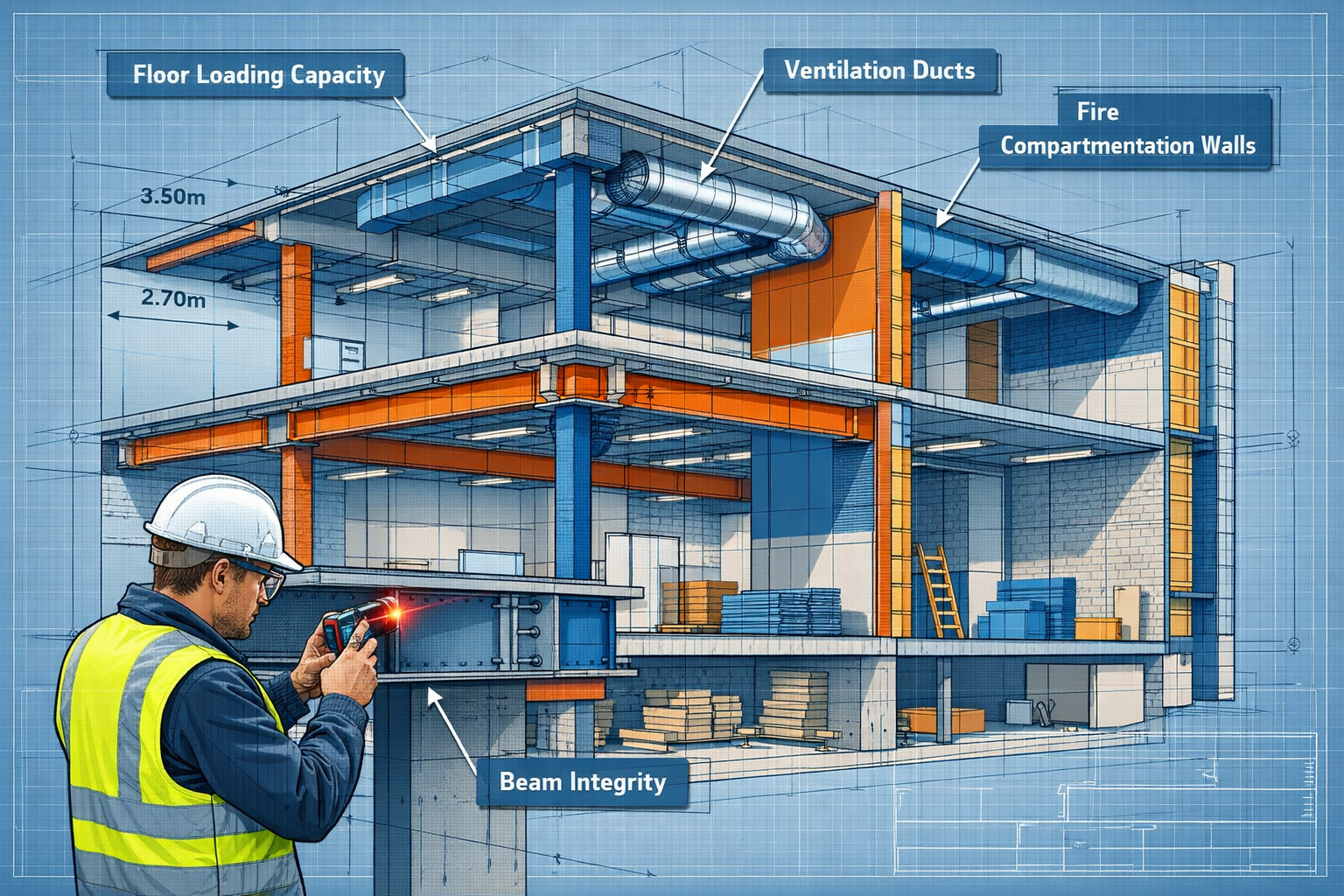
Foundation and Load-Bearing Capacity Assessment
Office buildings and residential properties impose vastly different structural demands. A thorough Level 3 full building survey must evaluate:
Floor Loading Calculations 📊
- Office design typically accommodates 2.5-4.0 kN/m² live loads
- Residential requirements vary: 1.5 kN/m² for bedrooms, 2.0 kN/m² for living areas
- Kitchen and bathroom installations add concentrated point loads
- Partition wall additions alter load distribution patterns
Structural Frame Integrity
- Column spacing compatibility with residential room layouts
- Beam deflection assessment under new loading scenarios
- Connection point corrosion or deterioration
- Previous modifications or unauthorized alterations
Foundation Suitability
- Subsidence or settlement evidence requiring remediation
- Groundwater impact on basement conversions
- Adjacent excavation effects on stability
- Soil bearing capacity for increased occupancy loads
A structural engineer's calculations must confirm existing foundations and frames can safely support residential use without costly reinforcement. Understanding which building survey you need helps developers commission appropriate technical assessments.
Fire Safety and Compartmentation
Fire safety represents the most critical regulatory hurdle in Office-to-Residential Conversion Building Surveys: Structural Due Diligence in 2026's Permitted Development Surge. Building Regulations Approved Document B sets stringent requirements:
Fire Compartmentation Walls 🔥
- 60-minute fire resistance minimum between dwellings
- Cavity barriers preventing fire spread through voids
- Penetration sealing around pipes, cables, and ducts
- Door sets meeting fire resistance standards
Means of Escape
- Travel distances from habitable rooms to protected stairways
- Alternative escape routes from upper floors
- Emergency lighting and signage
- Smoke ventilation systems for common corridors
Detection and Alarm Systems
- Interconnected smoke alarms in circulation spaces
- Heat detectors in kitchens
- Emergency alarm audibility throughout dwellings
- Integration with building management systems
Former office buildings often lack proper compartmentation between floors. Open-plan layouts require extensive modification to create protected escape routes. Surveyors must identify these deficiencies early, as remediation costs can exceed £150-£300 per square meter in complex buildings.
Cladding and External Envelope Assessment
Post-Grenfell scrutiny has intensified cladding safety requirements. Surveys must comprehensively evaluate:
Cladding Material Composition
- Combustibility testing for aluminum composite materials (ACM)
- High-pressure laminate (HPL) fire performance
- Insulation material flammability classification
- Cavity barrier presence and condition
Water Ingress and Weatherproofing
- Curtain wall seal integrity
- Window and door frame weathertightness
- Balcony waterproofing and drainage
- Roof membrane condition and remaining service life
Thermal Performance
- U-value calculations for compliance with Part L
- Thermal bridging at junctions and penetrations
- Condensation risk assessment
- Airtightness testing requirements
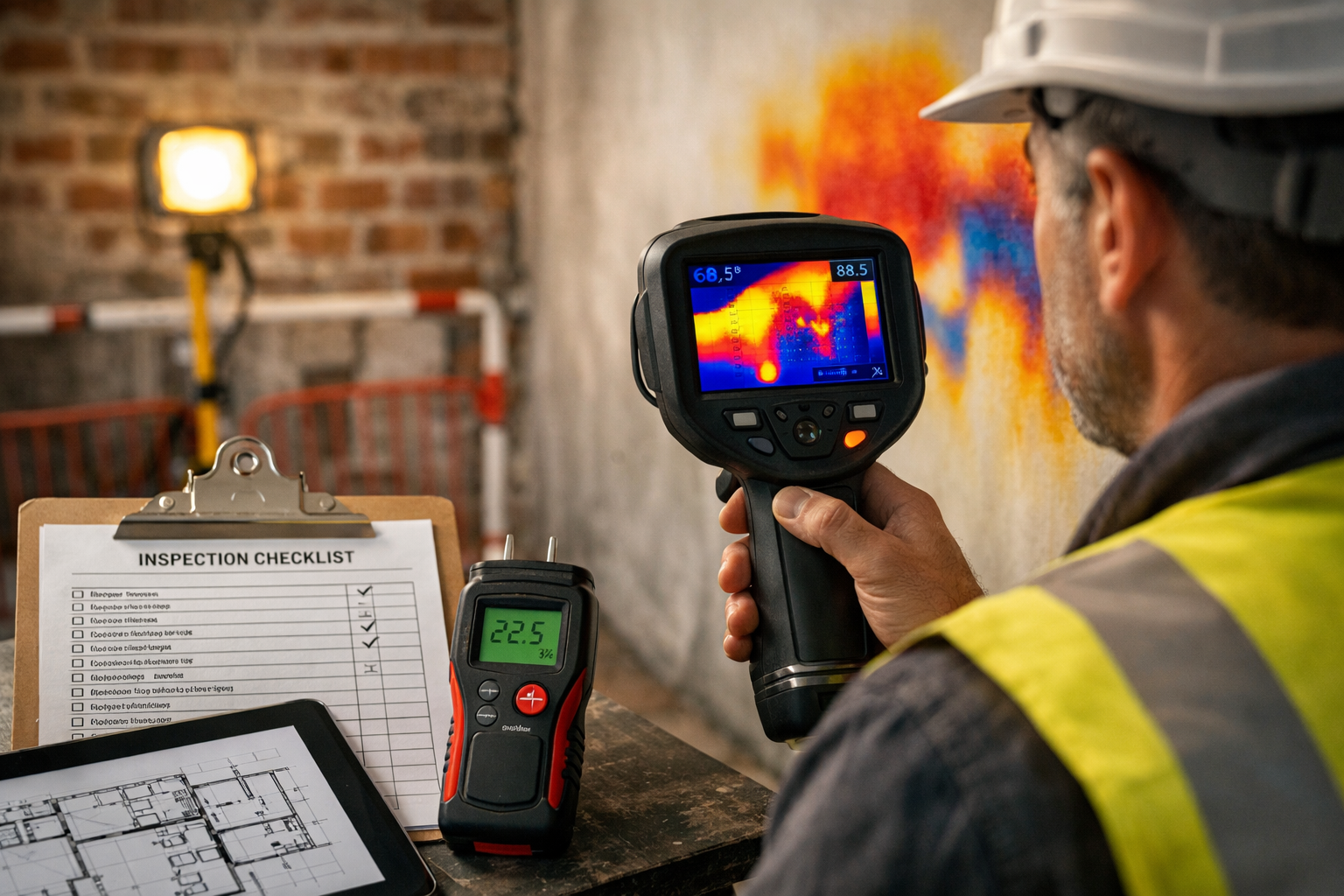
Drone surveys provide cost-effective inspection of high-level cladding without expensive scaffolding or access equipment. Thermal imaging identifies insulation gaps and moisture penetration invisible to visual inspection.
Mechanical and Electrical Systems Evaluation
Office HVAC systems rarely suit residential requirements. Survey assessments should cover:
Heating and Hot Water
- Boiler capacity for domestic hot water demand
- Distribution pipework routing to individual dwellings
- Heat interface unit locations and metering
- Radiator or underfloor heating installation feasibility
Ventilation and Indoor Air Quality
- Mechanical ventilation with heat recovery (MVHR) requirements
- Extract ventilation for bathrooms and kitchens
- Window opening areas for natural ventilation
- Overheating mitigation strategies
Electrical Infrastructure
- Incoming supply capacity for residential loads
- Individual metering for each dwelling
- Consumer unit locations and distribution
- EV charging infrastructure provision
The importance of mechanical ventilation in commercial buildings translates directly to conversion projects, where inadequate ventilation creates condensation, mold, and poor indoor air quality.
Regulatory Compliance Checklist for Office-to-Residential Conversion Building Surveys: Structural Due Diligence in 2026's Permitted Development Surge
Building Regulations Approval Process
While Permitted Development Rights streamline planning, Building Regulations approval remains mandatory for structural alterations and change of use. The process involves:
Pre-Commencement Submissions ✅
- Full Plans application detailing structural modifications
- Fire safety strategy demonstrating compliance with Approved Document B
- Energy performance calculations meeting Part L standards
- Acoustic separation specifications for Part E compliance
- Ventilation design satisfying Part F requirements
Inspection Stages
- Foundation and structural frame inspections
- Drainage and service installation checks
- Fire stopping and compartmentation verification
- Thermal envelope and airtightness testing
- Final completion inspection and certification
Documentation Requirements
- Structural engineer's calculations and drawings
- Fire engineer's assessment for complex buildings
- Energy Performance Certificate (EPC) achieving minimum C rating
- Sound insulation testing certificates
- Completion Certificate for mortgage and insurance purposes
Understanding how long a building survey takes helps developers schedule Building Control submissions appropriately, avoiding project delays.
Space Standards and Habitability Requirements
The Nationally Described Space Standard (NDSS) sets minimum floor areas, though enforcement varies by local authority:
| Dwelling Type | Minimum Gross Internal Area | Built-in Storage |
|---|---|---|
| 1 bed 2 person | 50 m² | 1.5 m² |
| 2 bed 3 person | 61 m² | 2.0 m² |
| 2 bed 4 person | 70 m² | 2.5 m² |
| 3 bed 4 person | 74 m² | 2.5 m² |
| 3 bed 5 person | 86 m² | 3.0 m² |
Additional Habitability Criteria:
- Ceiling heights minimum 2.3m over 75% of gross internal area
- Bedroom minimum width 2.75m for double rooms
- Natural light to habitable rooms (windows minimum 1/20th floor area)
- Private amenity space or communal facilities
- Accessible and adaptable dwellings (M4(2) standard) for percentage of units
Office floor-to-ceiling heights typically exceed residential requirements, but column grids may constrain efficient room layouts. Early spatial planning identifies whether target unit mixes achieve space standards without costly structural interventions.
Environmental Performance and Climate Resilience
The 2026 regulatory landscape increasingly emphasizes climate adaptation:
Overheating Mitigation Strategies 🌡️
- External shading devices (brise-soleil, louvres)
- High-performance glazing with solar control coatings
- Cross-ventilation design maximizing natural airflow
- Thermal mass exposure for night-time cooling
- Mechanical cooling where passive measures prove insufficient
Energy Efficiency Measures
- Enhanced insulation exceeding Part L minimum standards
- High-efficiency heating systems (heat pumps, district heating)
- LED lighting and energy-efficient appliances
- Renewable energy generation (solar PV, solar thermal)
- Smart building controls optimizing energy consumption
Water Management
- Sustainable drainage systems (SuDS) for surface water
- Rainwater harvesting for irrigation and toilet flushing
- Water-efficient fixtures meeting Building Regulations Part G
- Flood risk assessment and mitigation where applicable
Given projections that heat-related deaths will increase 250% by the 2050s [4], climate-resilient design isn't optional—it's essential for long-term asset value and occupant wellbeing.
Asbestos, Contamination, and Hazardous Materials
Pre-1999 office buildings frequently contain asbestos in:
- Ceiling tiles and suspended ceiling grids
- Floor tiles and adhesives
- Pipe and boiler insulation
- Textured coatings and sealants
- Electrical panel backboards
Asbestos Management Protocol:
- Refurbishment and Demolition Survey (R&D Survey) by licensed surveyor
- Asbestos Register documenting location, type, and condition
- Licensed removal by HSE-approved contractor
- Air monitoring and clearance certification
- Waste disposal documentation and consignment notes
Additional contamination concerns include:
- Lead paint on window frames and metalwork
- PCBs in electrical equipment and fluorescent light fittings
- Ground contamination from previous industrial uses
- Radon gas in specific geographic areas requiring mitigation
Remediation costs vary dramatically—from £5,000 for minor asbestos removal to £100,000+ for extensive contamination. Early identification through comprehensive surveys prevents budget overruns and program delays.
Practical Due Diligence Checklist for Investors and Developers
Pre-Acquisition Survey Scope
Before committing to a conversion purchase, commission surveys covering:
Structural and Building Fabric 🏗️
- Full structural survey by chartered building surveyor
- Structural engineer's appraisal of frame and foundations
- Cladding and external envelope condition assessment
- Roof condition survey including waterproofing membranes
- Drainage survey (CCTV inspection of below-ground systems)
Regulatory and Compliance
- Permitted Development Rights eligibility confirmation
- Building Regulations pre-application advice
- Fire safety strategy feasibility assessment
- Energy performance gap analysis
- Acoustic separation achievability review
Environmental and Hazardous Materials
- Asbestos Refurbishment and Demolition Survey
- Contaminated land assessment (Phase 1 Desk Study minimum)
- Flood risk evaluation and mitigation requirements
- Ecology survey for protected species (bats in roof voids)
Services and Infrastructure
- Electrical installation condition report
- Mechanical systems capacity assessment
- Water supply and drainage adequacy review
- Telecommunications and broadband connectivity
- Utility provider capacity confirmations
Knowing what questions to ask during a building survey ensures surveyors address conversion-specific concerns beyond standard property assessments.
Cost Estimation and Budget Contingency
Conversion costs vary enormously based on building condition and target specification:
Typical Cost Ranges (per m² GIA):
- Basic conversion (minimal structural work): £800-£1,200
- Standard conversion (moderate alterations): £1,200-£1,800
- High-specification conversion (extensive remodeling): £1,800-£2,500+
Major Cost Drivers:
- Structural reinforcement or new openings: £15,000-£50,000+ per intervention
- Fire compartmentation and protected stairways: £150-£300/m²
- New M&E services installation: £200-£400/m²
- Cladding replacement or remediation: £300-£600/m² of facade
- Asbestos removal: £5,000-£100,000+ depending on extent
Recommended Contingencies:
- 10-15% for buildings with comprehensive pre-acquisition surveys
- 20-25% for buildings with limited survey information
- 30%+ for buildings requiring extensive structural modification
The average price reduction after survey findings can significantly impact acquisition negotiations, making thorough due diligence a valuable bargaining tool.
Timeline Considerations and Critical Path Analysis
Realistic conversion program timelines include:
Pre-Construction Phase (3-6 months)
- Detailed design development: 6-10 weeks
- Building Regulations approval: 4-8 weeks
- Contractor procurement and tendering: 4-6 weeks
- Pre-commencement conditions discharge: 2-4 weeks
Construction Phase (6-18 months depending on scale)
- Enabling works and asbestos removal: 2-6 weeks
- Structural alterations and new openings: 8-16 weeks
- M&E installation and commissioning: 12-20 weeks
- Internal fit-out and finishes: 8-16 weeks
- External works and landscaping: 4-8 weeks
- Snagging and completion: 2-4 weeks
Post-Construction (1-2 months)
- Building Control final inspection: 1-2 weeks
- EPC and sound testing: 1 week
- Completion Certificate issuance: 2-4 weeks
- Marketing and initial lettings/sales: ongoing
Critical path activities typically involve structural works and Building Control approvals. Early surveyor engagement identifies potential delays, allowing program mitigation strategies.
Emerging Trends and Future Outlook for Conversion Surveys
Technology Integration in Survey Practice
Modern surveying increasingly employs advanced technologies:
Digital Survey Tools 📱
- Laser scanning creating accurate 3D building models
- Building Information Modeling (BIM) for design coordination
- Thermal imaging identifying insulation defects and moisture
- Drone photography accessing difficult roof and facade areas
- Moisture meters and electrical testing equipment
Data Analysis and Reporting
- Cloud-based survey platforms for real-time collaboration
- Automated defect categorization and prioritization
- Cost estimation software linking findings to remediation budgets
- Digital handover packages for contractor briefing
These technologies improve accuracy while reducing survey duration. What is a measured building survey explains how precise dimensional data supports efficient conversion design.
Market Bifurcation: Quality Versus Volume
The conversion market is splitting into distinct segments:
Premium Conversions
- Character buildings with architectural merit
- Prime urban locations with strong rental demand
- High-specification finishes targeting professional tenants
- Comprehensive amenity provision (gyms, lounges, roof terraces)
- Superior environmental performance and smart building technology
Volume Conversions
- Functional office blocks in secondary locations
- Cost-optimized specifications meeting minimum standards
- Institutional investor ownership for build-to-rent portfolios
- Standardized unit types maximizing efficiency
- Basic amenity provision focused on regulatory compliance
Survey requirements differ significantly between segments. Premium projects demand exhaustive investigation of architectural features worth preserving, while volume conversions prioritize cost-effective compliance pathways.
Regulatory Evolution and Future-Proofing
Anticipated regulatory changes include:
Tightening Energy Standards
- Future Homes Standard equivalent for conversions
- Embodied carbon assessments and whole-life carbon limits
- Enhanced overheating protection requirements
- Mandatory renewable energy provision
Enhanced Safety Requirements
- Extended fire safety regulations following Building Safety Act
- Mandatory sprinkler systems in buildings above 11m
- Second stairway requirements for tall residential buildings
- Enhanced structural inspection regimes
Improved Space and Quality Standards
- Wider adoption of Nationally Described Space Standard
- Minimum natural light and outlook requirements
- Mandatory external amenity space provision
- Accessibility standards for aging population
Forward-thinking developers commission surveys evaluating not just current compliance, but resilience to anticipated regulatory evolution. This future-proofing protects asset values and avoids costly retrospective upgrades.
Selecting the Right Survey Team for Your Conversion Project
Surveyor Qualifications and Specializations
Office-to-Residential Conversion Building Surveys: Structural Due Diligence in 2026's Permitted Development Surge requires multidisciplinary expertise:
Core Team Members:
Chartered Building Surveyor (MRICS/FRICS)
- Comprehensive building pathology knowledge
- Defect diagnosis and remediation specification
- Contract administration and project monitoring
- Building Regulations and construction standards expertise
Structural Engineer (CEng, MIStructE)
- Load-bearing capacity calculations
- Foundation and frame assessment
- Structural alteration design and approval
- Temporary works design for construction phase
Fire Safety Engineer
- Fire strategy development for complex buildings
- Means of escape design and optimization
- Compartmentation detailing and specification
- Regulatory approval negotiation with Building Control
M&E Consultant
- Heating, ventilation, and cooling system design
- Electrical infrastructure capacity assessment
- Renewable energy integration
- Building services coordination and commissioning
Environmental Consultant
- Asbestos survey and management planning
- Contaminated land assessment
- Ecology surveys and mitigation strategies
- Sustainability and energy modeling
Look for surveyors with demonstrable conversion project experience. Understanding what types of building surveys are available helps match survey scope to project complexity.
Questions to Ask Potential Survey Providers
Experience and Track Record 🎯
- How many office-to-residential conversions have you surveyed?
- Can you provide case studies of similar building types and scales?
- What percentage of your practice focuses on conversion projects?
- Do you have experience with our specific local authority?
Technical Capabilities
- What survey technologies do you employ (laser scanning, thermal imaging, drones)?
- How do you coordinate multidisciplinary survey teams?
- What level of detail do your reports provide for contractor tendering?
- Can you provide cost estimates linked to identified defects?
Regulatory Knowledge
- How do you stay current with evolving Building Regulations?
- Have you successfully navigated Permitted Development Rights applications?
- What relationships do you maintain with local Building Control?
- Can you provide Building Regulations consultancy alongside surveying?
Commercial Terms
- What is your fee structure and what does it include/exclude?
- What is your typical survey and reporting timeline?
- Do you offer fixed-price or time-charged arrangements?
- What professional indemnity insurance limits do you maintain?
Red Flags and Warning Signs
Avoid survey providers who:
- Offer suspiciously low fees suggesting inadequate scope
- Lack relevant professional qualifications and insurance
- Cannot provide conversion-specific references
- Use generic survey templates without customization
- Promise unrealistic timelines or guaranteed outcomes
- Discourage involvement of specialist consultants
- Provide vague scope descriptions without deliverables list
Quality surveys represent insurance against far costlier construction surprises. Investing in comprehensive due diligence protects both capital and reputation.
Conclusion
The 2026 Permitted Development Rights expansion has created unprecedented opportunities in the office-to-residential conversion market, with applications surging 63% and continuing to accelerate [2]. However, the removal of planning restrictions doesn't eliminate the fundamental need for rigorous structural due diligence. With over 89,500 homes already created through conversions [4], and quality concerns mounting around overheating, fire safety, and habitability standards, comprehensive building surveys have never been more critical.
Office-to-Residential Conversion Building Surveys: Structural Due Diligence in 2026's Permitted Development Surge must address multiple technical domains: structural capacity, fire compartmentation, cladding safety, environmental performance, and regulatory compliance. The difference between successful conversions and problem-plagued projects lies in early identification of defects, realistic cost estimation, and expert navigation of evolving regulations.
Actionable Next Steps
For developers and investors embarking on conversion projects:
- Commission comprehensive surveys before acquisition commitments, including structural, M&E, asbestos, and fire safety assessments
- Engage chartered surveyors with proven conversion experience and multidisciplinary coordination capabilities
- Budget realistic contingencies (20-30%) reflecting building complexity and survey findings
- Prioritize climate resilience features addressing overheating risks and future regulatory requirements
- Establish early dialogue with Building Control to identify compliance pathways and approval timelines
- Consider future-proofing measures beyond minimum standards to protect long-term asset value
The conversion boom presents significant opportunities, but success requires diligent structural investigation, regulatory expertise, and commitment to quality outcomes. By investing in thorough building surveys and specialist consultancy, developers can confidently navigate the 2026 permitted development landscape while creating homes that are safe, sustainable, and fit for purpose.
Don't let survey shortcuts compromise your conversion project. Contact experienced chartered surveyors who understand the unique challenges of office-to-residential transformation and can provide the comprehensive due diligence your investment deserves.
References
[1] Unlocking New Opportunities – cushmanwakefield.com
[2] directlinegroup.co.uk – directlinegroup.co.uk
[3] Demand Residential Property – buyassociationgroup.com
[4] 89500 Commercial Conversions Could Become Uninhabitable – zurich.co.uk
[5] Article Desc 11517 Office%20construction%20to%20maintain%20momentum%20in%202026 – ukconstructionweek.caboodleai.net