

{"cover":"Professional landscape format (1536×1024) hero image featuring bold text overlay 'Building Surveys Under Proposed 2026 Homebuying Reforms' in extra large 72pt white sans-serif font with dark shadow and semi-transparent navy overlay box, positioned in upper third. Background shows split composition: left side displays chartered surveyor with tablet inspecting Victorian property exterior with scaffolding and diagnostic equipment, right side shows modern digital interface with property condition report and regulatory compliance checkmarks. Color scheme: deep navy blue, white, professional green accents. High contrast, editorial magazine quality, professional photography style with shallow depth of field, representing transformation of UK property surveying industry under new government regulations.","content":["Detailed landscape format (1536×1024) infographic showing timeline roadmap of 2026 homebuying reform implementation phases across England and Wales. Visual elements include horizontal timeline with milestone markers, icons representing mandatory seller disclosures (structural reports, EPC certificates, lease documents, flood risk data), cost comparison chart showing £38 to £380 survey fee increase, RICS Level 3 survey checklist with tick boxes, and Scottish Home Report system reference badge. Color scheme: professional blue gradient background, white text, green progress indicators, gold accent highlights. Clean corporate design with data visualization elements, charts, and regulatory compliance symbols. Editorial quality suitable for government policy documentation.","Comprehensive landscape format (1536×1024) technical illustration demonstrating RICS-compliant building survey methodology for upfront condition assessments. Visual composition shows cutaway cross-section of traditional British property revealing common defect areas: roof structure with moisture detection, wall cavity inspection points, foundation assessment zones, electrical and plumbing systems, damp proof course evaluation. Overlay elements include surveyor annotations, risk severity color coding (red for urgent, amber for moderate, green for satisfactory), drone survey technology inset, thermal imaging camera display, and digital reporting tablet interface. Professional technical drawing style with architectural blueprint aesthetic, measurement callouts, and diagnostic equipment illustrations. High detail, educational quality.","Detailed landscape format (1536×1024) professional scene showing modern chartered surveyor conducting comprehensive property inspection under new 2026 regulations. Foreground features RICS-qualified surveyor in professional attire using advanced diagnostic equipment including thermal imaging camera, moisture meter, and tablet with digital survey software displaying real-time condition assessment data. Background shows period property with visible inspection areas marked, ladder access to roof level, and drone hovering for aerial survey. Supporting visual elements include checklist overlay showing mandatory assessment categories, building materials analysis samples, compliance certification badges, and digital reporting dashboard. Bright natural lighting, professional corporate photography style, sharp focus on technology and expertise, representing elevated standards and opportunities in reformed UK property market."]"}
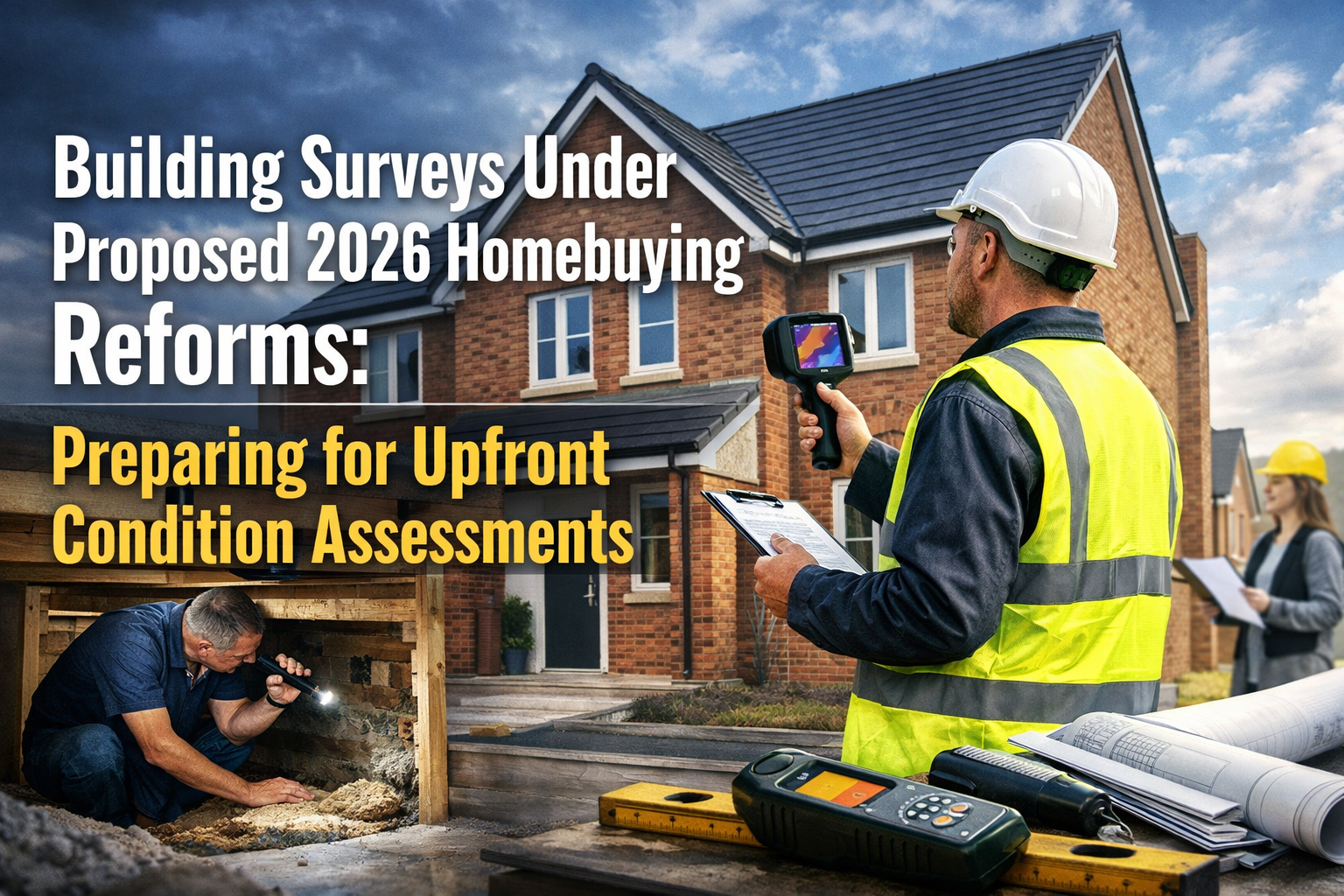
The UK property market stands on the brink of its most significant transformation in decades. As 2026 unfolds, proposed government reforms are set to revolutionize how homes are bought and sold across England and Wales. At the heart of these changes lies a fundamental shift: mandatory upfront condition assessments that will require sellers to commission comprehensive building surveys before their properties even hit the market. This departure from the traditional buyer-led survey model represents both a challenge and an unprecedented opportunity for chartered surveyors, estate agents, and the entire property industry.
For decades, British homebuyers have navigated a fragmented, document-heavy transaction process where critical property information often emerged late in the sale. With an estimated £1.5 billion lost annually to collapsed transactions, the government's proposed reforms aim to bring transparency, reduce fall-throughs, and create a more efficient marketplace. Understanding how Building Surveys Under Proposed 2026 Homebuying Reforms will reshape property assessments is essential for professionals and consumers alike.
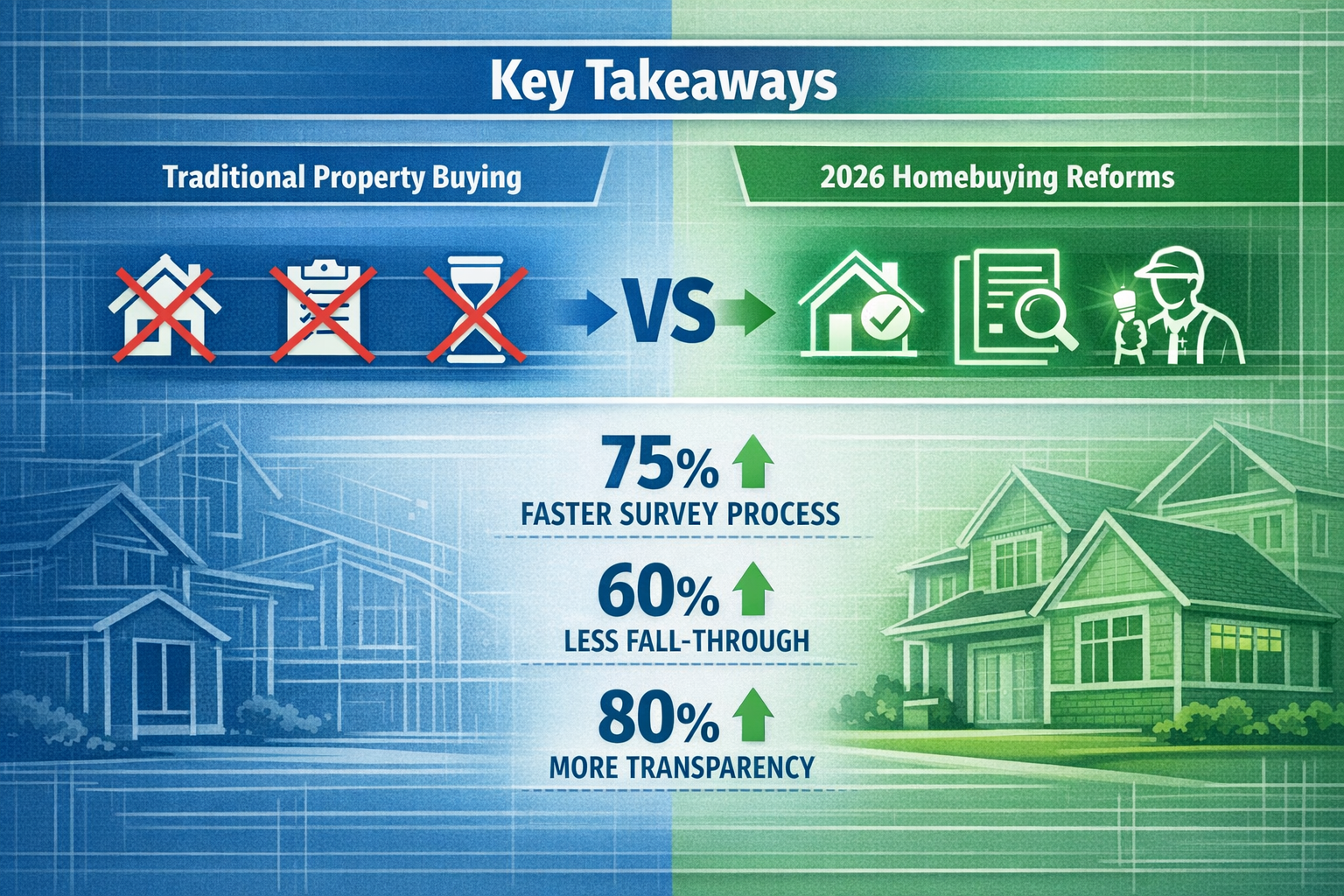
Key Takeaways
- 🏠 Mandatory upfront surveys will shift responsibility from buyers to sellers, requiring comprehensive condition assessments before marketing properties in England and Wales
- 💷 Survey costs are projected to increase from an average of £38 to £380 per property, representing a significant financial consideration for sellers
- 📋 Comprehensive disclosure requirements will mandate sellers provide structural reports, defect information, leasehold details, building safety data, and standardized searches
- ⚖️ Independent RICS surveys remain valuable for buyers despite seller-provided reports, offering impartial analysis focused solely on purchaser interests
- 🚀 Phased implementation throughout 2026 will gradually introduce digital systems, binding agreements, and professional qualification requirements across the industry
Understanding the Proposed 2026 Homebuying Reforms
The proposed 2026 reforms represent the most comprehensive overhaul of residential property transactions since the introduction of Home Information Packs (HIPs) in 2007. However, unlike the short-lived HIPs scheme, these reforms draw inspiration from Scotland's successful Home Report system, which has operated effectively since 2008.
The Core Components of Reform
The government's proposal encompasses several interconnected elements designed to create a more transparent, efficient property market:
Mandatory Upfront Information Package 📦
Sellers will be required to compile and provide a comprehensive information package before marketing their property. This package must include:
- Complete property condition assessment
- Structural survey findings and defect identification
- Energy Performance Certificate (EPC) rating and recommendations
- Local authority searches (planning, building control, environmental)
- Drainage and water searches
- Flood risk assessment data
- Title information and legal documentation
- Leasehold details (ground rent, service charges, key lease terms)
- Building safety information and compliance certificates
- Council tax band confirmation
- Planning permissions and building regulation approvals
- Property floor plans and measurements
- Chain status and transaction timeline
This represents a dramatic expansion from current practice, where much of this information is gathered piecemeal during the conveyancing process, often leading to delays and unexpected discoveries.
Early Binding Agreements 🤝
A significant innovation within the reforms is the introduction of optional early binding agreements. These will allow buyers and sellers to enter legally enforceable commitments earlier in the transaction process, providing greater certainty and reducing the risk of gazumping or late-stage withdrawals.
Professional Standards and Accountability ⭐
The reforms introduce mandatory codes of practice for estate agents and conveyancers, alongside new qualification requirements for property professionals. Government performance data will be published, enabling consumers to make informed choices about which professionals to engage.
Geographic Scope and Implementation Timeline
The reforms apply specifically to England and Wales, as property law operates under devolved powers across the UK. Scotland already operates under its mandatory Home Report system, while Northern Ireland maintains separate frameworks.
The phased implementation beginning in 2026 acknowledges the substantial infrastructure, training, and capacity building required across the industry. Early consultations have sought input on:
- Resource requirements for surveyors, conveyancers, and estate agents
- Digital infrastructure development and standardization
- Professional training and qualification pathways
- Consumer protection mechanisms
- Transition support for industry participants
Building Surveys Under Proposed 2026 Homebuying Reforms: What Changes for Property Assessments

The shift to mandatory upfront condition assessments fundamentally alters the role and timing of building surveys in property transactions. Understanding these changes is critical for both property professionals and consumers navigating the reformed market.
From Buyer-Led to Seller-Commissioned Surveys
Traditionally, UK homebuyers commissioned surveys after making an offer, using the findings to negotiate price reductions or identify deal-breaking defects. This approach meant:
- Surveys occurred late in the transaction timeline
- Multiple potential buyers might commission separate surveys on the same property
- Sellers remained unaware of property defects until buyer surveys revealed them
- Significant costs were incurred by buyers whose offers ultimately failed
Under the proposed reforms, sellers will commission comprehensive condition assessments before marketing begins. This represents a fundamental shift in responsibility and timing, with several important implications:
✅ Advantages of Seller-Commissioned Surveys:
- Single survey reduces duplication and overall market costs
- Early defect identification allows sellers to address issues or price accordingly
- Greater transparency reduces late-stage surprises and renegotiations
- Faster transaction timelines as information is available from the outset
- Reduced fall-through rates and associated economic waste
⚠️ Potential Challenges:
- Upfront cost burden on sellers (projected £380 average)
- Questions about survey independence and potential conflicts of interest
- Variability in survey quality and comprehensiveness
- Concerns about how survey costs impact vulnerable sellers
- Need for clear standards and accountability mechanisms
RICS Survey Levels and Upfront Assessments
The Royal Institution of Chartered Surveyors (RICS) defines three levels of residential survey, each offering different depths of investigation. Understanding which level will satisfy the proposed mandatory requirements remains subject to final government guidance, but industry consultations suggest substantial assessments will be required.
| Survey Type | Scope | Typical Cost | Suitability for Reforms |
|---|---|---|---|
| Level 1 (Condition Report) | Basic visual inspection, traffic light condition ratings | £250-£350 | Unlikely to meet requirements |
| Level 2 (HomeBuyer Report) | Detailed inspection of accessible areas, defect identification, maintenance advice | £400-£600 | Possible for standard properties |
| Level 3 (Building Survey) | Comprehensive investigation, detailed defect analysis, repair cost guidance | £600-£1,500+ | Likely required for older/complex properties |
For those seeking the most comprehensive understanding of property condition, a Level 3 full building survey provides the detailed analysis necessary for informed decision-making, particularly for period properties, listed buildings, or homes with known issues.
Key Elements of Compliant Condition Assessments
Regardless of the specific RICS level ultimately required, upfront condition assessments under the proposed reforms will need to address several critical areas:
Structural Integrity and Building Materials 🏗️
Comprehensive evaluation of the property's structural elements, including foundations, walls, roof structure, floors, and load-bearing components. Building materials assessments identify construction methods, material conditions, and potential concerns related to specific building techniques or historical construction practices.
Construction Quality and Condition 🔍
Detailed examination of construction quality, workmanship standards, and overall property condition. A thorough construction and condition survey evaluates how well the property has been maintained and identifies areas requiring attention.
Defects, Risks, and Further Investigation ⚠️
Identification of visible defects, potential hidden issues, and areas requiring further investigation by specialists. This might include structural engineers for subsidence concerns, damp specialists for moisture issues, or electrical contractors for outdated wiring systems.
Building Regulation Compliance ✅
Assessment of compliance with current building regulations, particularly important for properties with extensions, conversions, or significant alterations. Building regulation compliance testing ensures work has been completed to appropriate standards with necessary approvals.
Maintenance Requirements and Solutions 🔧
Clear guidance on ongoing maintenance needs, repair priorities, and potential solutions for identified problems. Understanding building problems and solutions helps both sellers and buyers plan appropriately for property upkeep.
Advanced Survey Technologies
Modern building surveys increasingly incorporate advanced diagnostic technologies that enhance accuracy and reveal hidden defects:
- Thermal imaging cameras detect heat loss, moisture ingress, and insulation deficiencies
- Moisture meters provide precise readings of dampness levels in building materials
- Drone surveys enable safe, detailed inspection of roofs, chimneys, and high-level elements without scaffolding
Premium drone surveys offer particular advantages for large properties, complex roof structures, or buildings where traditional access presents challenges.
Preparing for Building Surveys Under Proposed 2026 Homebuying Reforms: Practical Guidance

As the implementation of these reforms progresses throughout 2026, both property professionals and consumers need to prepare for the new landscape. Here's practical guidance for navigating Building Surveys Under Proposed 2026 Homebuying Reforms.
For Sellers: Planning Your Upfront Assessment
Budget Appropriately 💰
With survey costs projected to increase from £38 to £380 on average (and potentially higher for larger or more complex properties), sellers should factor these expenses into their sale planning. Consider:
- Obtaining quotes from multiple RICS-qualified surveyors
- Understanding what level of survey will be required for your property type
- Timing the survey to ensure it remains current throughout the marketing period
- Budgeting for any specialist investigations identified during the initial survey
Choose Qualified Professionals 🎓
Ensure your surveyor holds appropriate RICS qualifications and professional indemnity insurance. Look for:
- MRICS or FRICS designations (Member or Fellow of RICS)
- Specific experience with your property type and age
- Clear, comprehensive reporting standards
- Professional indemnity insurance coverage
- Positive reviews and verifiable track record
Address Issues Proactively 🔨
Once your survey identifies defects or maintenance needs, you have several options:
- Complete repairs before marketing – Demonstrates property is well-maintained and may justify higher asking price
- Obtain specialist reports and quotes – Provides buyers with clear information about repair costs and options
- Adjust asking price – Reflects the property's true condition and reduces likelihood of later renegotiation
- Provide transparent disclosure – Builds buyer confidence through honesty about known issues
Understanding how to negotiate house prices after surveys can help sellers price properties appropriately from the outset.
Understand Timing Considerations ⏰
Survey validity periods and building survey timeframes become more important when assessments must be completed before marketing. Consider:
- How long your survey will remain current (typically 3-6 months)
- Whether property conditions might change seasonally
- Timing of any planned maintenance or improvements
- Market conditions and anticipated time to sale
For Buyers: The Continued Value of Independent Surveys
Despite mandatory seller-provided condition assessments, independent buyer surveys remain highly advisable. Here's why:
Independence and Impartiality ⚖️
A seller-commissioned survey, while valuable, serves the seller's interests and disclosure obligations. An independent survey commissioned by you:
- Focuses exclusively on your interests and concerns
- Provides impartial analysis without potential conflicts
- Allows you to specify areas of particular concern
- Gives you direct access to the surveyor for questions
Lender Requirements 🏦
Mortgage lenders typically require their own valuation inspection to assess lending risk. This separate assessment:
- May identify issues not covered in the seller's survey
- Provides the lender with independent verification
- Protects your financing arrangements
- Remains a distinct requirement from seller disclosures
Additional Investigation 🔎
Your independent survey can:
- Verify findings from the seller's assessment
- Investigate specific concerns in greater detail
- Provide updated information if time has passed since the seller's survey
- Include specialist testing or investigations tailored to your priorities
For those buying a home, understanding the full picture of property condition remains essential regardless of seller-provided information.
For Property Professionals: Adapting to the New Framework
Surveyors: Capacity and Quality Assurance 📊
The shift to mandatory upfront assessments will significantly increase demand for building surveys. Chartered surveyors should:
- Assess capacity and resource requirements for increased workload
- Ensure robust quality assurance processes for seller-commissioned work
- Develop clear reporting templates that meet regulatory requirements
- Invest in continuing professional development and advanced diagnostic technologies
- Consider specialization in specific property types or geographic areas
- Establish transparent fee structures and service level agreements
Estate Agents: Information Management 📋
Estate agents will play a crucial role in ensuring seller compliance and managing upfront information packages:
- Develop systems for collecting, verifying, and presenting mandatory documentation
- Train staff on new regulatory requirements and professional standards
- Implement digital platforms for efficient information sharing
- Advise sellers on survey requirements and qualified surveyor selection
- Ensure marketing materials accurately reflect disclosed property conditions
- Maintain compliance with new codes of practice and accountability measures
Conveyancers: Streamlined Processes ⚡
Legal professionals will benefit from earlier information availability but must adapt processes:
- Integrate upfront information into initial due diligence
- Develop protocols for verifying seller-provided documentation
- Advise clients on the relationship between seller surveys and independent assessments
- Streamline conveyancing timelines to capitalize on earlier information availability
- Implement digital case management systems compatible with standardized formats
Common Property Issues Identified in Building Surveys
Understanding typical defects and concerns identified during building surveys helps both sellers and buyers prepare appropriately. Common issues include:
Structural Concerns
- Subsidence and settlement – Movement in foundations causing cracks and structural instability
- Wall tie failure – Corroded cavity wall ties in properties built 1920-1980
- Roof structure deterioration – Timber decay, inadequate support, or structural modifications
- Lintel failure – Cracked or inadequate support above windows and doors
Moisture and Dampness
- Rising damp – Moisture rising through walls due to failed or absent damp-proof courses
- Penetrating damp – Water ingress through walls, roofs, or around windows
- Condensation – Moisture buildup due to inadequate ventilation or insulation
- Timber decay – Wet rot or dry rot affecting structural timbers
For detailed information on moisture-related issues, see our guide on what causes moisture in buildings.
Building Services
- Outdated electrical systems – Installations requiring rewiring for safety and compliance
- Aging plumbing – Lead pipes, corroded systems, or inadequate water pressure
- Heating system deficiencies – Inefficient or failing boilers and radiators
- Drainage problems – Blocked, damaged, or inadequate drainage systems
Period Property Specific Issues
Older properties present unique challenges requiring specialist knowledge:
- Historic construction methods and materials
- Conservation area or listed building constraints
- Traditional timber frame or solid wall construction
- Original features requiring specialist repair or conservation
For those considering older properties, our article on what to look out for when buying an old house provides valuable guidance, while common defects in older homes offers detailed insights.
The Economic Impact of Building Surveys Under Proposed 2026 Homebuying Reforms
The reforms carry significant economic implications for the UK property market:
Cost-Benefit Analysis
Direct Costs:
- Increased upfront expenses for sellers (£380 average survey cost)
- Potential for higher-level surveys on complex properties (£600-£1,500+)
- Additional specialist investigations when required
- Digital infrastructure investment across the industry
Economic Benefits:
- Reduced transaction fall-throughs saving £1.5 billion annually
- Elimination of duplicate survey costs across multiple potential buyers
- Faster transaction timelines reducing holding costs and chain delays
- Greater market efficiency and consumer confidence
- Reduced legal disputes arising from undisclosed defects
Market Dynamics
The reforms may influence property market dynamics in several ways:
Pricing Transparency 📈
Early disclosure of property conditions should lead to more accurate initial pricing, reducing the gap between asking prices and eventual sale prices. This transparency benefits:
- Buyers with clearer expectations and reduced negotiation uncertainty
- Sellers with more realistic pricing from the outset
- The market overall through improved price discovery mechanisms
Transaction Velocity ⚡
With comprehensive information available from the beginning, transaction timelines should compress:
- Reduced time spent gathering information during conveyancing
- Earlier identification of deal-breaking issues
- Faster decision-making with complete information available
- Reduced chain delays and cascade failures
Market Access 🏠
The increased upfront costs may create challenges for some sellers:
- Vulnerable or cash-constrained sellers facing affordability barriers
- Potential need for survey cost financing or payment deferral schemes
- Consideration of exemptions or support for specific circumstances
- Impact on market liquidity and housing mobility
Frequently Asked Questions
Will I still need a survey if the seller provides one?
While seller-provided surveys offer valuable information, independent buyer surveys remain highly advisable. An independent assessment focuses solely on your interests, allows you to specify particular concerns, and provides impartial analysis. Lenders also typically require separate valuations for mortgage purposes.
How much will upfront surveys cost sellers?
Average costs are projected at £380, though this varies significantly based on property size, age, complexity, and location. Larger properties, period buildings, or those with known issues may require more comprehensive Level 3 surveys costing £600-£1,500 or more.
When will these reforms become mandatory?
The reforms are being phased in throughout 2026, with full implementation details subject to ongoing consultation. Early adopters may begin implementing aspects voluntarily before mandatory requirements take effect across England and Wales.
Do the reforms apply to Scotland and Northern Ireland?
No. Scotland already operates under its mandatory Home Report system introduced in 2008. Northern Ireland maintains separate property transaction frameworks. The proposed reforms apply specifically to England and Wales.
What happens if a survey reveals significant defects?
Sellers have several options: complete repairs before marketing, obtain specialist quotes and reports to inform buyers, adjust the asking price to reflect property condition, or provide transparent disclosure and allow buyers to make informed decisions.
Will surveys need to be updated if a property doesn't sell quickly?
Survey validity periods typically range from 3-6 months. Properties remaining on the market beyond this period may require updated assessments, particularly if property conditions have changed or seasonal factors affect accessibility.
Conclusion: Embracing the Future of Property Transactions
Building Surveys Under Proposed 2026 Homebuying Reforms represent a fundamental transformation of the UK property market. The shift to mandatory upfront condition assessments promises greater transparency, reduced transaction failures, and a more efficient marketplace. However, successful implementation requires careful preparation from all stakeholders.
For sellers, the key lies in budgeting appropriately, selecting qualified RICS surveyors, and addressing property issues proactively. The upfront investment in comprehensive condition assessments should be viewed as facilitating smoother, faster transactions with reduced risk of late-stage collapse.
For buyers, while seller-provided surveys offer valuable information, independent assessments remain essential for impartial analysis focused solely on your interests. Understanding that both seller and buyer surveys serve complementary purposes ensures comprehensive due diligence.
For property professionals, the reforms create both challenges and opportunities. Surveyors face increased demand requiring capacity planning and quality assurance. Estate agents must adapt to new information management requirements. Conveyancers can streamline processes with earlier information availability.
Next Steps for Stakeholders
✅ Sellers preparing to market properties:
- Research RICS-qualified surveyors in your area
- Budget for upfront survey costs in your sale planning
- Consider timing of surveys relative to planned marketing dates
- Review property maintenance needs proactively
✅ Buyers entering the market:
- Understand the value of independent surveys alongside seller disclosures
- Budget for both mortgage valuations and independent condition assessments
- Research qualified surveyors specializing in your target property type
- Review seller-provided information critically and verify independently
✅ Property professionals:
- Monitor ongoing consultations and implementation guidance
- Invest in training, technology, and capacity building
- Develop compliant processes and digital infrastructure
- Engage with industry bodies and regulatory authorities
The proposed 2026 reforms mark a new era for UK property transactions. By understanding Building Surveys Under Proposed 2026 Homebuying Reforms and preparing appropriately, all stakeholders can navigate this transformation successfully, contributing to a more transparent, efficient, and trustworthy property market.
For expert guidance on building surveys and comprehensive property assessments, consult with RICS-qualified chartered surveyors who can provide the detailed analysis necessary for informed property decisions in this evolving regulatory landscape.