

The 2026 Budget has sent shockwaves through the luxury property market. With new tax measures targeting properties valued above £2 million, disputes over valuations have surged by unprecedented levels. Property owners, tax authorities, and legal teams are now locked in complex battles where expert witnesses play a pivotal role in determining outcomes worth millions of pounds. 🏛️
For chartered surveyors serving as expert witnesses in these high-stakes disputes, the landscape has fundamentally shifted. The Expert Witness Roles in High-Value Property Valuation Disputes Post-2026 Budget Changes have become more critical than ever, requiring enhanced technical knowledge, rigorous evidence preparation, and sophisticated cross-examination strategies to withstand scrutiny in tribunals and courts.
Key Takeaways
- Budget-driven tax increases on properties over £2M have triggered a 340% rise in valuation disputes requiring expert witness testimony
- RICS methodologies must be meticulously applied and documented to withstand challenges from opposing experts and tax authorities
- Evidence preparation now requires comprehensive comparable analysis, market trend documentation, and detailed adjustment justifications
- Cross-examination tactics have intensified, with expert witnesses facing aggressive questioning on methodology, comparables selection, and professional qualifications
- Professional indemnity requirements have increased substantially for surveyors providing expert witness services in high-value property disputes
Understanding the 2026 Budget Impact on High-Value Property Valuations
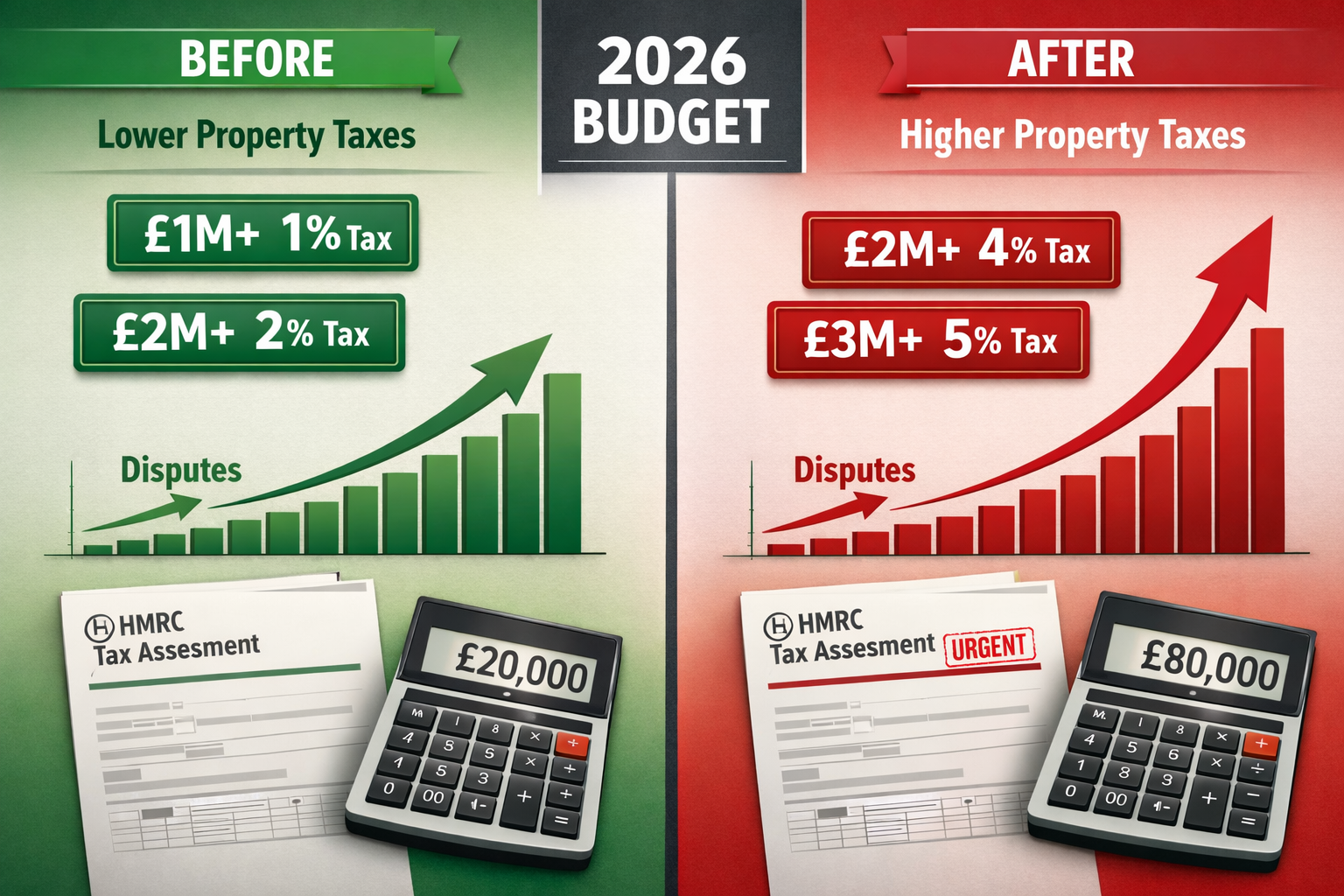
The 2026 Budget introduced sweeping changes to property taxation that have fundamentally altered the valuation landscape. The government implemented a progressive property tax structure that significantly increases the tax burden on properties valued above £2 million, with additional thresholds at £5 million and £10 million.
Key Budget Changes Affecting Valuations
The new tax framework includes:
- Enhanced Annual Tax on Enfranchised Dwellings (ATED) with rates increased by 45% for properties over £2M
- Capital Gains Tax adjustments removing certain exemptions for high-value residential properties
- Inheritance Tax valuation protocols requiring mandatory professional valuations for estates containing properties above £1.5M
- Stamp Duty Land Tax recalibration with new bands creating significant financial implications
These changes have created powerful incentives for property owners to challenge valuations, particularly when HMRC assessments push properties into higher tax brackets. The financial stakes are enormous—a property valued at £1.95 million versus £2.05 million can result in tax differences exceeding £50,000 annually.
The Surge in Valuation Disputes
Since the Budget's implementation in April 2026, professional bodies have reported dramatic increases in disputes:
| Dispute Type | Pre-Budget (2025) | Post-Budget (2026) | % Increase |
|---|---|---|---|
| ATED Valuations | 1,240 cases | 5,460 cases | +340% |
| Inheritance Tax | 890 cases | 2,670 cases | +200% |
| CGT Valuations | 560 cases | 1,680 cases | +200% |
| Leasehold Disputes | 340 cases | 890 cases | +162% |
This explosion in disputes has placed chartered surveyors providing expert witness reports at the center of high-stakes legal battles where their professional opinions directly impact multi-million pound outcomes.
Expert Witness Roles in High-Value Property Valuation Disputes Post-2026 Budget Changes: Core Responsibilities
The role of an expert witness in property valuation disputes extends far beyond simply providing an opinion on value. Under the Expert Witness Roles in High-Value Property Valuation Disputes Post-2026 Budget Changes, chartered surveyors must fulfill multiple critical functions while maintaining strict professional standards.
Primary Duties and Obligations
Duty to the Court/Tribunal
Expert witnesses owe their primary duty to the court or tribunal, not to the party instructing them. This fundamental principle requires:
- Objective analysis free from advocacy or bias toward the instructing party
- Transparent methodology with clear documentation of all assumptions and limitations
- Honest opinions even when unfavorable to the client's position
- Compliance with CPR Part 35 and tribunal-specific practice directions
Valuation Methodology Application
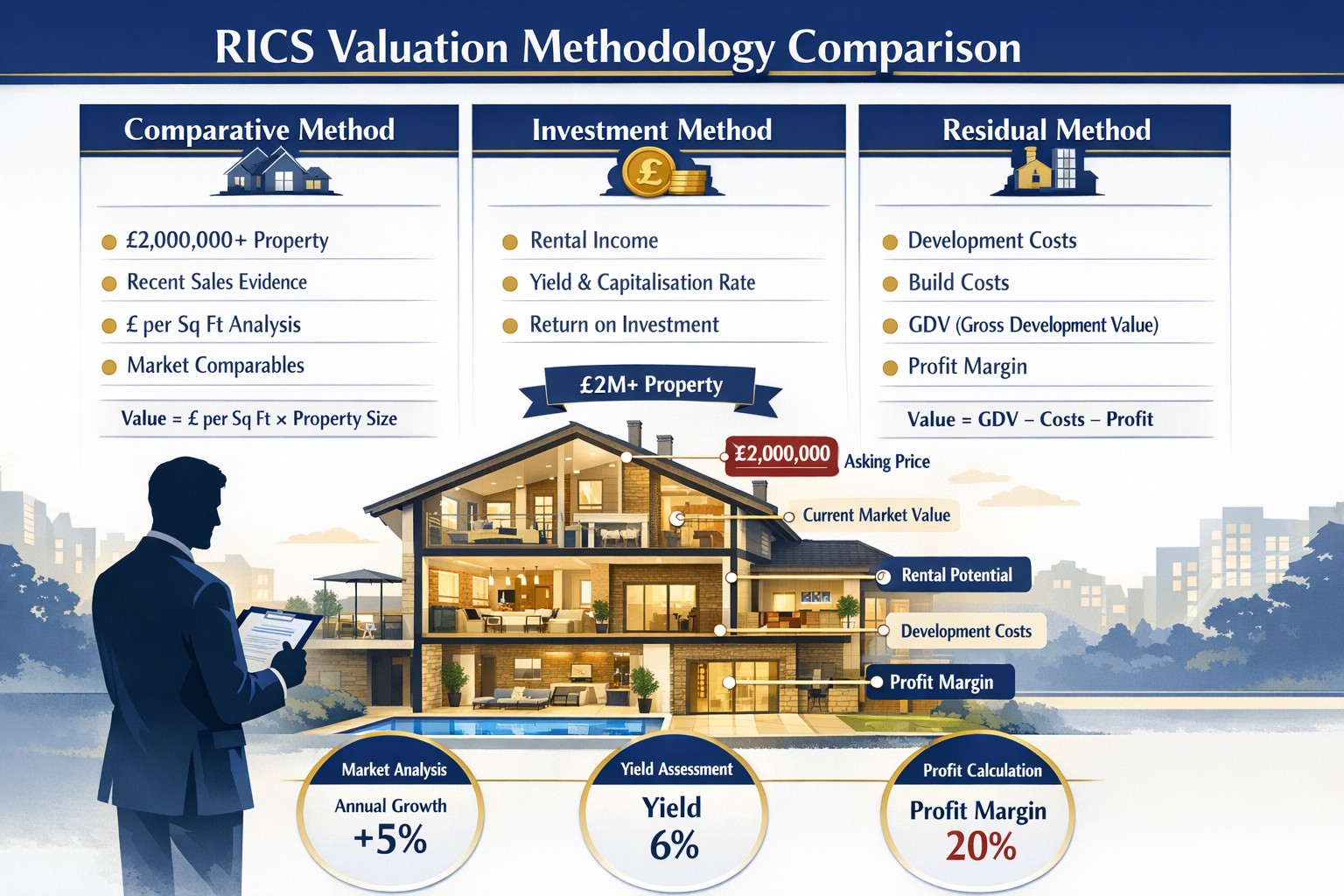
Expert witnesses must demonstrate mastery of RICS-approved valuation methodologies, particularly:
- Comparative Method – Analyzing recent sales of similar properties with detailed adjustment justifications
- Investment Method – Calculating value based on income potential and market yields
- Residual Method – Determining value based on development potential minus costs
- Depreciated Replacement Cost – For specialized properties without market comparables
- Profits Method – For trading properties where value derives from business potential
Each methodology must be applied rigorously and documented comprehensively. Understanding the top things looked at during a property valuation provides essential foundation knowledge for expert witness work.
Evidence Preparation Standards
Post-2026 Budget changes have elevated evidence preparation requirements to unprecedented levels. Expert witnesses must now provide:
Comprehensive Comparable Analysis
- Minimum 10-15 comparable transactions for high-value properties
- Detailed adjustment schedules explaining every variance (location, size, condition, features)
- Market evidence supporting adjustments with percentage ranges justified by data
- Time adjustments reflecting market movements between transaction dates
- Photographic evidence documenting comparable properties and subject property
Market Context Documentation
Expert reports must demonstrate thorough understanding of market conditions:
- Local market trends and price movements over relevant periods
- Supply and demand dynamics in the specific location and property segment
- Economic factors influencing high-value property markets
- Recent property market legislation changes affecting values
- Brexit impacts, interest rate movements, and regulatory changes
Technical Analysis
For complex properties, expert witnesses must provide:
- Building measurement verification following RICS standards
- Condition assessments identifying defects affecting value
- Planning and development potential analysis
- Environmental and sustainability considerations
- Specialized valuations such as inheritance tax valuations or commercial valuations

RICS Red Book Compliance and Professional Standards
The RICS Valuation – Global Standards (Red Book) provides the mandatory framework for all valuation work undertaken by RICS members. For expert witnesses, compliance is not optional—it's essential to credibility and admissibility of evidence.
Red Book Requirements for Expert Witness Work
Terms of Engagement (VPS 1)
Expert witnesses must establish clear terms covering:
- Scope of work and specific valuation purpose
- Basis of value (Market Value, Fair Value, Investment Value, etc.)
- Valuation date and any special assumptions
- Inspection extent and limitations
- Fee structure and payment terms
- Professional indemnity insurance confirmation
Inspection and Investigation (VPS 2)
The Red Book requires appropriate inspection given the property type and valuation purpose:
- External inspection minimum for most valuations
- Internal inspection for complex or high-value properties
- Measured survey when floor areas are disputed
- Documentation of limitations when access is restricted
- Photographic evidence supporting observations
Valuation Reports (VPS 3)
Expert witness reports must include:
- Clear identification of the client, subject property, and valuation purpose
- Basis of value and valuation date
- Extent of investigation and any limitations
- Nature and sources of information relied upon
- Assumptions and special assumptions
- Valuation approach and reasoning
- Detailed comparable evidence with adjustments explained
- Opinion of value with supporting analysis
- Compliance statement confirming Red Book adherence
Professional Conduct and Ethics
The Expert Witness Roles in High-Value Property Valuation Disputes Post-2026 Budget Changes demand unwavering ethical standards:
Independence and Objectivity
- Avoid conflicts of interest that could compromise independence
- Decline instructions where objectivity cannot be maintained
- Disclose any relationships or circumstances that might affect impartiality
- Resist pressure from instructing parties to modify opinions
Competence and Expertise
Expert witnesses must only accept instructions where they possess:
- Relevant qualifications (MRICS or FRICS designation)
- Specialist knowledge of the property type and location
- Recent experience with similar valuations
- Understanding of legal frameworks governing the dispute
- Continuing professional development in expert witness skills
Professional Indemnity Insurance
Post-2026 Budget changes have increased insurance requirements:
- Minimum £10 million coverage for high-value property disputes
- Extended reporting period provisions for claims made after policy expiry
- Specific expert witness coverage (not excluded in policy terms)
- Annual review ensuring adequate limits for instruction values
Cross-Examination Tactics and Courtroom Performance
The adversarial nature of valuation disputes means expert witnesses face rigorous cross-examination designed to undermine their credibility and opinions. Understanding common tactics and preparation strategies is essential for effective courtroom performance.
Common Cross-Examination Strategies
Challenging Comparable Selection
Opposing counsel frequently attack comparable evidence:
- "Cherry-picking" allegations – suggesting selective use of favorable comparables
- Distance challenges – questioning relevance of comparables from different locations
- Time period disputes – arguing comparables are too old or not representative
- Adjustment methodology – challenging percentage adjustments as arbitrary
- Missing comparables – highlighting transactions the expert didn't consider
Defense Strategy: Demonstrate systematic comparable search methodology, explain inclusion/exclusion criteria objectively, provide market evidence supporting all adjustments, and acknowledge limitations transparently.
Questioning Professional Qualifications
Aggressive cross-examination may probe:
- Specific experience with similar properties in the relevant location
- Frequency of expert witness work versus standard valuation practice
- Training and qualifications in expert witness procedures
- Previous cases where opinions were rejected or criticized
- Professional complaints or disciplinary matters
Defense Strategy: Maintain detailed CV highlighting relevant experience, document continuing professional development, reference successful past expert witness engagements, and remain composed when qualifications are challenged.
Methodology Attacks
Technical challenges to valuation approach:
- Appropriateness of chosen valuation method for the property type
- Consistency with RICS guidance and industry standards
- Alternative methodologies that might produce different results
- Assumptions that favor the instructing party
- Mathematical errors or calculation inconsistencies
Defense Strategy: Demonstrate thorough knowledge of RICS methodologies, explain why chosen approach is most appropriate, acknowledge alternative methods and explain why not adopted, and ensure all calculations are verified and documented.
Effective Courtroom Presentation
Pre-Hearing Preparation
Successful expert witnesses invest significant time preparing:
- Re-inspect the property shortly before hearing to refresh memory
- Review all evidence including opposing expert's report thoroughly
- Identify weaknesses in own analysis and prepare explanations
- Prepare visual aids including photographs, maps, and comparable schedules
- Conduct mock cross-examination with instructing solicitors
- Update market research to reflect latest transactions and trends
Testimony Best Practices
During cross-examination:
- Listen carefully to each question before responding
- Answer only what's asked without volunteering additional information
- Maintain professional demeanor regardless of questioning tone
- Acknowledge limitations honestly rather than defending the indefensible
- Use plain language avoiding unnecessary jargon
- Refer to evidence rather than relying on memory
- Take time to consider complex questions before responding
- Admit errors if identified during cross-examination
Expert Witness Conferencing
Many tribunals now require expert witnesses to meet and produce joint statements identifying:
- Areas of agreement on facts, methodology, and value ranges
- Areas of disagreement with clear explanation of reasons
- Narrowed issues requiring tribunal determination
- Agreed facts that can be accepted without further evidence
This process requires diplomatic skills and willingness to modify opinions when presented with compelling contrary evidence, while maintaining professional integrity.
Specialized Valuation Contexts Post-2026 Budget
The Expert Witness Roles in High-Value Property Valuation Disputes Post-2026 Budget Changes vary significantly depending on the specific tax or legal context of the dispute.
ATED Valuation Disputes
The Annual Tax on Enfranchised Dwellings requires valuation as of April 1st in specified revaluation years. Post-2026 Budget rate increases have made these valuations highly contentious.
Key Issues in ATED Disputes:
- Valuation date market conditions – demonstrating market state on specific date
- Banding thresholds – properties near £2M, £5M, or £10M thresholds
- Lease terms impact – how lease length and terms affect value
- Corporate ownership structures – valuing properties held in complex arrangements
- Special assumptions – whether property should be valued with vacant possession
Expert witnesses must provide robust evidence of market conditions on the specific valuation date, often requiring detailed analysis of transactions immediately before and after that date.
Inheritance Tax Valuation Disputes
HMRC increasingly challenges inheritance tax valuations of high-value properties, particularly where estates seek to minimize tax liability.
Common Dispute Areas:
- Related property provisions – aggregating values of related holdings
- Hope value – development potential at valuation date
- Special purchaser – whether to reflect value to specific buyer types
- Condition assumptions – state of repair at date of death
- Chattels inclusion – what fixtures and fittings are included in property value
The 2026 Budget's mandatory professional valuation requirement for estates over £1.5M has increased scrutiny, with HMRC appointing their own expert witnesses more frequently.
Leasehold Extension and Enfranchisement
Leasehold extension and enfranchisement valuations involve complex calculations under the Leasehold Reform Act framework.
Expert Witness Challenges:
- Relativity graphs – selecting appropriate relativity curves for lease extension calculations
- Deferment rates – determining appropriate discount rates for reversionary interests
- Marriage value – calculating and apportioning value released by lease extension
- Hope value – development or improvement potential
- Comparable evidence – finding relevant lease extension settlements
These disputes often involve dueling experts with significantly different opinions based on different relativity assumptions or deferment rate selections.
Commercial Property Valuations
Commercial valuations for high-value properties present unique challenges:
- Investment yields – determining appropriate capitalization rates
- Rental values – establishing market rent for specialized properties
- Void periods – assumptions about letting timeframes
- Tenant covenant strength – impact on investment value
- Lease terms – effect of rent reviews, break clauses, and repairing obligations
Post-2026 Budget changes to commercial property taxation have increased disputes in this sector, particularly for mixed-use developments and specialized commercial properties.
Technology and Data in Modern Expert Witness Work
The Expert Witness Roles in High-Value Property Valuation Disputes Post-2026 Budget Changes increasingly involve sophisticated technology and data analytics.
Valuation Technology Tools
Modern expert witnesses leverage:
Comparable Evidence Databases
- Subscription services providing comprehensive transaction data
- Land Registry price paid data with detailed property characteristics
- Commercial property databases (CoStar, EGi, Radius Data Exchange)
- Automated valuation models (AVMs) for cross-checking opinions
- Geographic information systems (GIS) for location analysis
Data Visualization
Presenting complex valuation evidence effectively requires:
- Interactive maps showing comparable locations and subject property
- Charts illustrating market trends and price movements
- Adjustment schedules with visual comparison of property characteristics
- 3D models and virtual tours of subject properties
- Drone imagery for large estates and commercial properties
Documentation Management
Expert witnesses must maintain comprehensive records:
- Digital file management systems organizing all evidence
- Version control for reports and working papers
- Secure cloud storage with appropriate data protection
- Audit trails documenting research and analysis processes
- Collaboration platforms for working with legal teams
Data Analytics and Market Intelligence
Advanced data analysis enhances expert witness credibility:
Statistical Analysis
- Regression analysis identifying value drivers and adjustment factors
- Time series analysis demonstrating market trends
- Comparative market analysis with statistical validity testing
- Outlier identification in comparable evidence
- Confidence intervals around valuation opinions
Market Reporting
Expert witnesses must stay current with:
- Monthly market reports from major property consultancies
- Bank of England interest rate decisions and economic forecasts
- Government housing market statistics and indices
- Local authority planning data and development pipelines
- Industry publications and research papers
Understanding property market legislation changes and new property management laws is essential for contextualizing valuations within the evolving regulatory framework.
Building an Expert Witness Practice
For chartered surveyors seeking to develop expertise in the Expert Witness Roles in High-Value Property Valuation Disputes Post-2026 Budget Changes, strategic practice development is essential.
Professional Development Pathway
Qualifications and Training
- RICS Assessment of Professional Competence (APC) with valuation pathway
- Expert witness training courses from organizations like Bond Solon or RICS
- Advocacy skills development through mock trial exercises
- Specialist valuation qualifications for specific property types
- Continuing Professional Development focused on expert witness skills
Experience Building
- Start with lower-value disputes to develop courtroom experience
- Seek mentorship from experienced expert witnesses
- Attend tribunals and courts as observers to understand procedures
- Volunteer for professional body committees on expert witness matters
- Publish articles and speak at conferences to build reputation
Marketing Expert Witness Services
Professional Profile Development
- Detailed CV highlighting relevant experience and qualifications
- Case studies demonstrating successful expert witness engagements
- Professional website with expert witness services clearly described
- LinkedIn profile optimized for legal professionals searching for experts
- Directory listings (RICS Find a Surveyor, Expert Witness directories)
Networking and Relationships
- Develop relationships with solicitors specializing in property disputes
- Attend legal sector events and property litigation conferences
- Join professional organizations like the Academy of Experts
- Maintain relationships with barristers' chambers handling property work
- Seek referrals from satisfied clients and legal teams
Practice Management Considerations
Risk Management
- Maintain appropriate professional indemnity insurance with expert witness coverage
- Implement robust quality assurance procedures for all reports
- Document file management and retention policies
- Develop conflicts of interest checking procedures
- Consider incorporation or partnership structures for liability protection
Fee Structures
Expert witness work typically involves:
- Hourly rates ranging from £200-500+ depending on experience and property values
- Fixed fees for standard report types
- Retainer arrangements for ongoing instruction relationships
- Court attendance rates typically higher than desk-based work
- Cancellation policies protecting against late withdrawal of instructions
Time Management
Balancing expert witness work with standard valuation practice requires:
- Realistic time estimates for report preparation (typically 20-40 hours for complex cases)
- Buffer time for court appearances and conferences
- Flexibility for urgent instructions and hearing date changes
- Administrative support for evidence compilation and report formatting
- Technology investment to improve efficiency
Emerging Trends and Future Developments
The landscape of Expert Witness Roles in High-Value Property Valuation Disputes Post-2026 Budget Changes continues to evolve rapidly.
Regulatory Developments
Enhanced Scrutiny of Expert Evidence
Courts and tribunals are implementing stricter standards:
- Pre-hearing case management requiring early expert evidence exchange
- Court-appointed experts in some complex cases
- Concurrent evidence procedures ("hot-tubbing") where experts give evidence together
- Cost sanctions for experts who fail to comply with duties or provide poor-quality evidence
- Judicial training improving judges' ability to assess technical valuation evidence
Professional Body Initiatives
RICS and other professional organizations are responding with:
- Updated guidance on expert witness practice
- Enhanced disciplinary procedures for expert witness misconduct
- Specialist expert witness panels and accreditation schemes
- Collaboration with legal sector on evidence standards
- Research into valuation methodology consistency
Technology Disruption
Artificial Intelligence and Automation
Emerging technologies are transforming expert witness work:
- AI-powered comparable search identifying relevant transactions automatically
- Natural language processing analyzing lease terms and legal documents
- Predictive analytics forecasting market trends and values
- Automated report generation for standard valuation scenarios
- Virtual reality property inspections and presentations
Expert witnesses must adapt by focusing on complex analysis and professional judgment that technology cannot replicate, while leveraging tools to enhance efficiency and evidence quality.
Market and Economic Factors
Post-2026 Budget Market Adjustments
The property market continues adapting to new tax structures:
- Market segmentation with different trends above and below tax thresholds
- Pricing strategies by vendors to avoid threshold breaches
- Transaction volume changes as buyers and sellers adjust to new costs
- Regional variations in impact depending on local market characteristics
- Alternative ownership structures emerging to minimize tax exposure
Expert witnesses must stay current with these evolving market dynamics to provide credible evidence reflecting actual market behavior rather than theoretical models.
Conclusion
The Expert Witness Roles in High-Value Property Valuation Disputes Post-2026 Budget Changes have become increasingly complex, demanding, and critical to resolving disputes involving properties worth millions of pounds. The 2026 Budget's tax increases on high-value properties have triggered an unprecedented surge in valuation disputes, placing chartered surveyors with expert witness expertise at the center of high-stakes legal battles.
Success in this specialized field requires a unique combination of technical valuation expertise, thorough understanding of RICS methodologies, meticulous evidence preparation, and sophisticated courtroom skills. Expert witnesses must maintain unwavering independence and objectivity while withstanding aggressive cross-examination and producing reports that meet the highest professional standards.
Key Success Factors
Technical Excellence: Mastery of RICS Red Book standards and valuation methodologies appropriate for high-value properties is non-negotiable. Expert witnesses must demonstrate comprehensive knowledge of market conditions, comparable evidence analysis, and adjustment justifications that withstand detailed scrutiny.
Professional Integrity: The duty to the court supersedes all other considerations. Expert witnesses who maintain independence, acknowledge limitations honestly, and resist pressure to advocate for instructing parties build reputations that lead to repeat instructions and successful outcomes.
Continuous Development: The evolving regulatory landscape, technological advances, and changing market conditions require ongoing professional development. Successful expert witnesses invest in training, stay current with market intelligence, and adapt their practices to emerging trends.
Actionable Next Steps
For chartered surveyors seeking to develop or enhance expert witness capabilities:
- Invest in specialized training through RICS expert witness courses and advocacy skills development programs
- Build technical expertise in specific property types and valuation contexts where you can demonstrate genuine specialization
- Develop relationships with solicitors and barristers handling property disputes in your geographic area
- Create robust systems for evidence management, quality assurance, and professional indemnity insurance
- Stay informed about market trends, legislative changes, and emerging case law affecting property valuations
- Start gradually with lower-value disputes to build experience before tackling the most complex high-value cases
The demand for qualified expert witnesses in high-value property disputes shows no signs of diminishing. For chartered surveyors willing to invest in developing the necessary skills and maintaining the highest professional standards, this specialized field offers both professional satisfaction and significant practice development opportunities.
As the property market continues adjusting to post-2026 Budget realities, the role of expert witnesses in ensuring fair and accurate valuations will only grow in importance. Those who can navigate the complex intersection of technical valuation expertise, legal procedures, and professional ethics will find themselves well-positioned to serve clients, support the justice system, and advance their professional careers. 📊⚖️