

{"cover":"Professional landscape format (1536x1024) editorial hero image showing a modern UK residential property cross-section with transparent walls revealing internal retrofit installations including wall insulation layers, solar panels on roof, heat pump system, and energy-efficient windows, overlaid with holographic EPC rating charts showing progression from D to A rating, RICS surveyor in high-visibility vest holding digital tablet displaying thermal imaging data in foreground, color scheme of deep navy blue, bright green energy efficiency indicators, and white architectural lines, photorealistic quality with technical blueprint aesthetic, no text overlays, magazine cover quality, professional lighting highlighting sustainable building features and modern survey technology integration","content":["Detailed landscape format (1536x1024) image depicting the interior of RICS headquarters conference room during the Quality in Retrofit Summit 2026, wide-angle view showing diverse group of industry professionals, academics, and government representatives seated in modern tiered seating arrangement, large presentation screens displaying retrofit quality standards documentation and energy performance graphs, attendees engaged in discussion with some taking notes on tablets and laptops, professional conference atmosphere with RICS branding visible on materials but not as text overlay, natural lighting through floor-to-ceiling windows, color palette of professional greys, blues, and warm wood tones, photojournalistic style capturing collaborative industry engagement, high detail showing technical documents and sustainable building diagrams on screens, no text overlays or labels","Comprehensive landscape format (1536x1024) technical illustration showing side-by-side comparison of traditional home survey inspection versus enhanced 2026 protocol survey, left side depicts surveyor with clipboard conducting visual inspection of property exterior, right side shows same property with advanced technology overlay including thermal imaging camera revealing heat loss patterns in false color spectrum from blue cold zones to red hot zones, drone hovering above capturing roof condition data, moisture meter readings displayed as digital overlays on walls, energy efficiency assessment equipment visible, split-screen composition with clear visual distinction between old and new methodologies, color scheme contrasting traditional browns and greys with modern tech blues and diagnostic color spectrums, highly detailed technical equipment and diagnostic outputs, professional survey documentation visible on digital devices, no text labels or annotations","Detailed landscape format (1536x1024) infographic-style visualization showing the financial impact of EPC ratings on UK residential property values, central image of attractive modern UK terraced house with transparent overlay showing internal energy efficiency features, surrounding the property are floating data visualization elements including bar graph comparing property values across EPC ratings A through G with A-rated properties elevated 2.9 percent higher, pie chart showing 15 percent of English dwellings failing Decent Homes Standard represented in contrasting red segment, upward trending line graph illustrating SAP rating improvements from 2014 to 2026, color-coded EPC rating badges from green A rating to red G rating positioned around property, professional financial aesthetic with clean data visualization design, color palette of investment green for positive metrics, warning amber for compliance concerns, and professional navy blue background, photorealistic property rendering combined with clean vector graphics for data elements, no text overlays beyond numerical data points integrated into charts"]
}

The landscape of residential property surveying in the United Kingdom has undergone a seismic shift. As homeowners, buyers, and industry professionals navigate an increasingly complex regulatory environment, energy efficiency has moved from a nice-to-have feature to a critical determinant of property value and marketability. The RICS Home Survey Updates Post-Retrofit Summit 2026: Enhanced Protocols for Energy Efficiency Compliance represent a watershed moment in how chartered surveyors assess, report, and advise on residential properties in an era defined by net-zero ambitions and stringent energy performance standards.
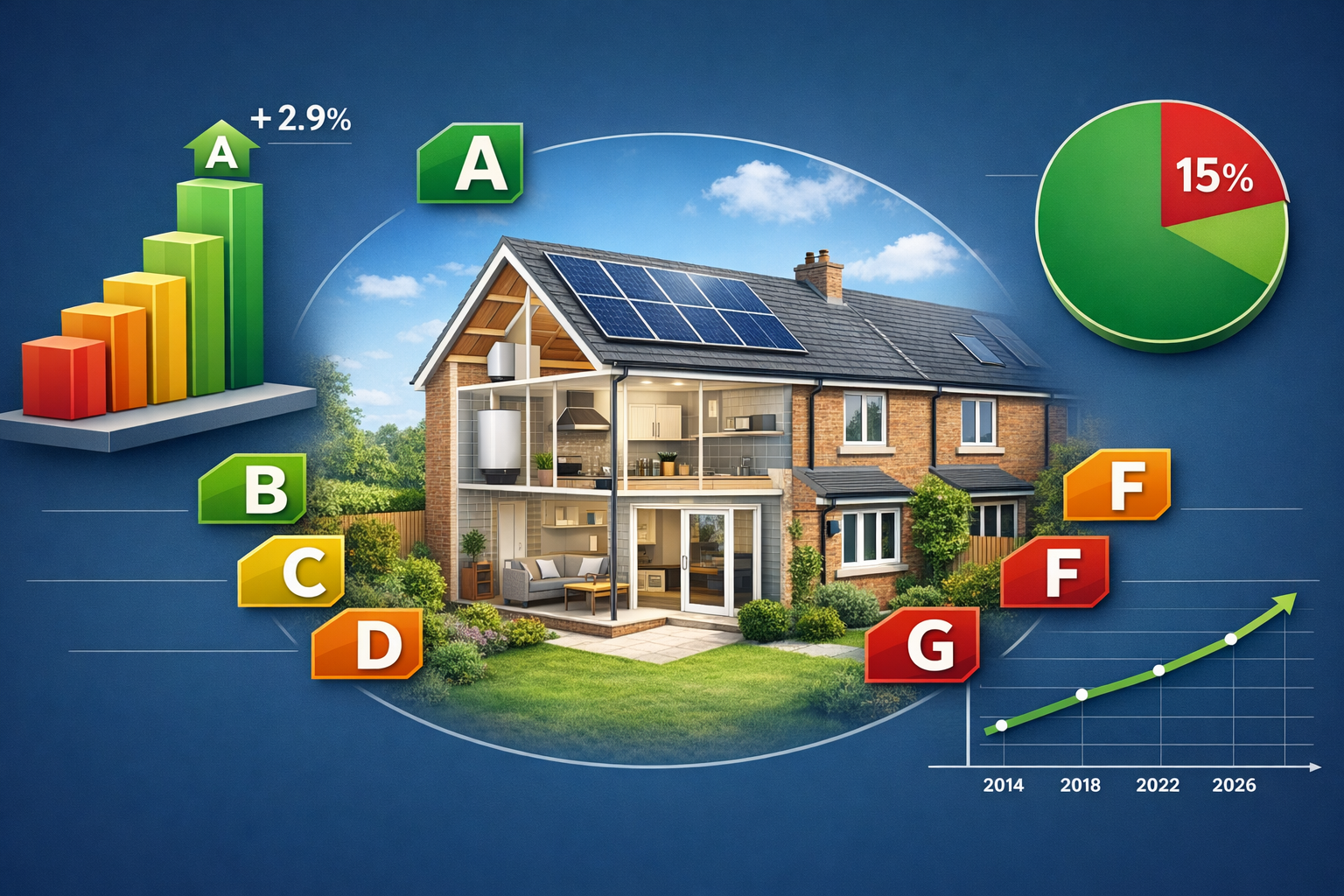
Following the Quality in Retrofit Summit held at RICS headquarters at the beginning of 2026, in partnership with the Retrofit Academy[2], the Royal Institution of Chartered Surveyors has introduced enhanced protocols that fundamentally reshape how home surveys incorporate energy efficiency compliance. These updates arrive at a crucial juncture, as approximately 4 million homes in England—15% of the total—failed to meet the Decent Homes Standard[1], and government initiatives like the Warm Homes Plan push the residential sector toward comprehensive energy transformation.
Key Takeaways
- 🏡 Enhanced Survey Protocols: RICS has strengthened home survey standards to integrate comprehensive energy efficiency assessments, reflecting technological advances and consumer insight gathered through extensive industry feedback[2][4]
- 📊 Energy Performance Drives Value: Properties with EPC A ratings now achieve an average 2.9% price premium per square meter compared to EPC D baseline properties, based on analysis of 6.8 million transactions[2]
- ⚖️ Regulatory Compliance Central: UK MEES regulations require rental properties to meet minimum EPC rating E, with non-compliance creating significant liquidity risks and valuation impacts[2]
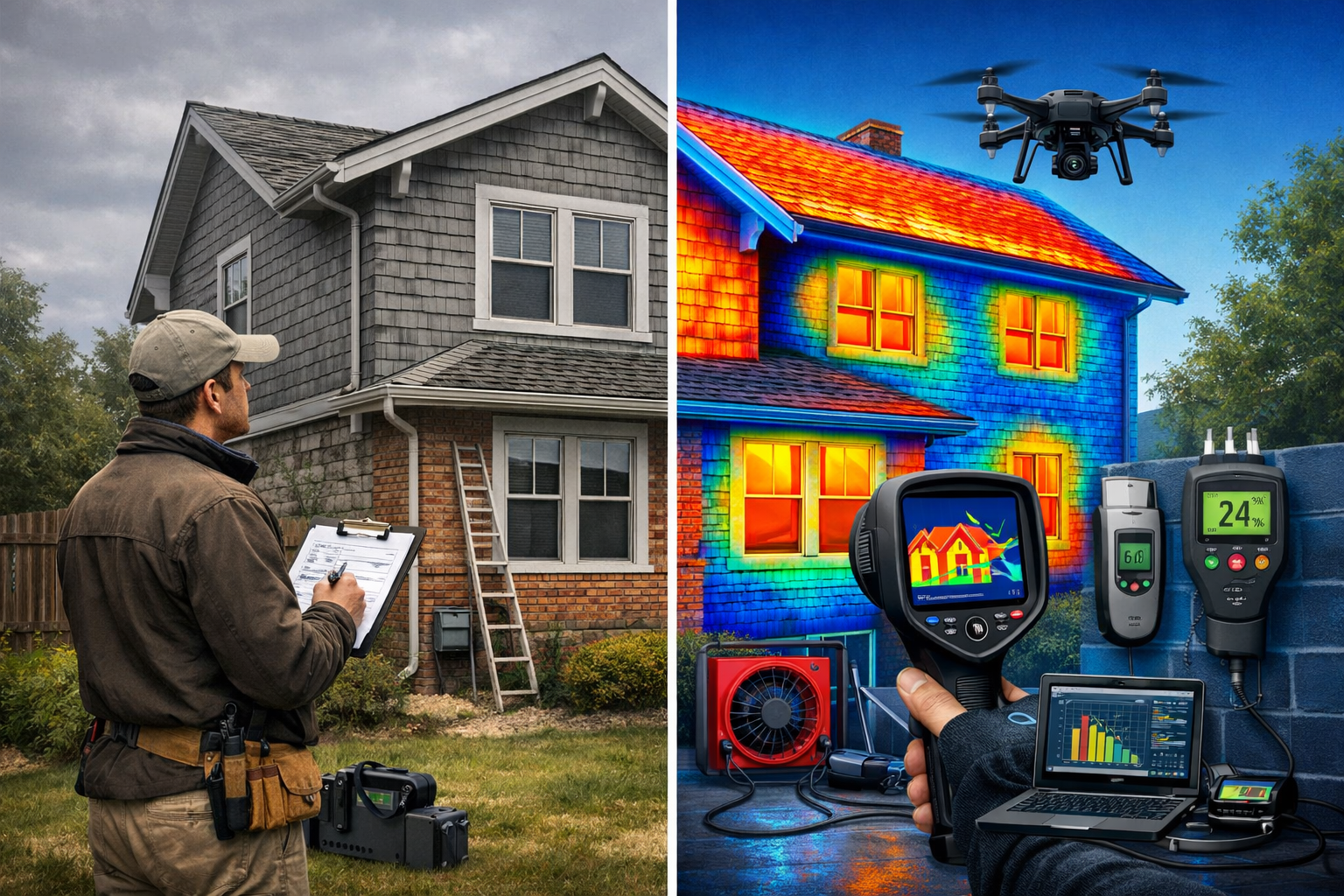
- 🔧 Technology Integration: New protocols incorporate thermal imaging, moisture detection, and digital assessment tools to provide more accurate energy performance evaluations
- 🎯 Net-Zero Alignment: Updated standards position surveyors as key facilitators in the UK's journey toward decarbonizing residential building stock through improved retrofit quality assurance
Understanding the RICS Home Survey Updates Post-Retrofit Summit 2026: Enhanced Protocols for Energy Efficiency Compliance
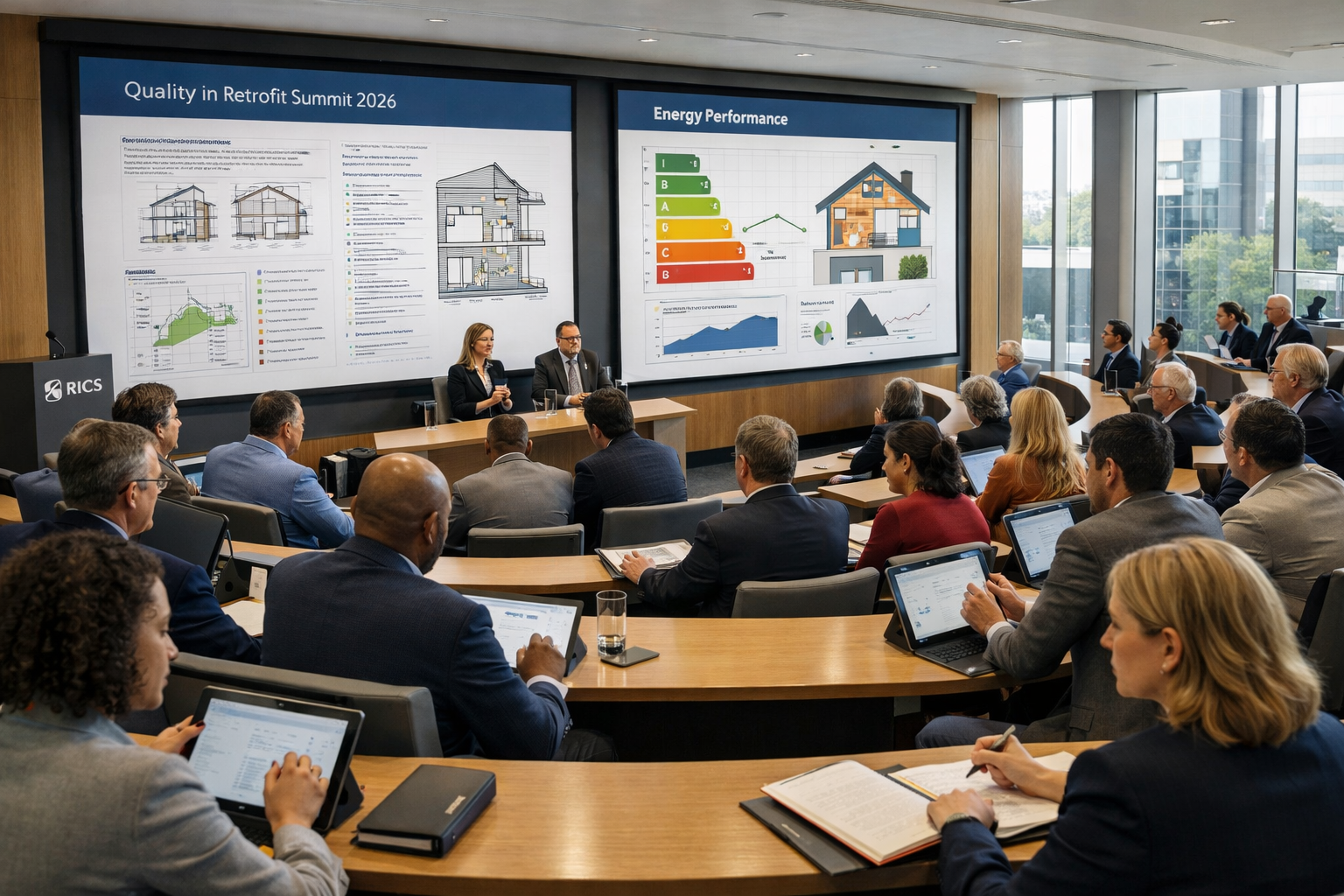
The Quality in Retrofit Summit 2026 brought together RICS members, industry stakeholders, academics, and government representatives to address the growing imperative for quality assurance in residential energy retrofits[2]. This collaborative forum identified critical gaps in existing survey methodologies and established a roadmap for integrating energy efficiency compliance into standard home survey practice.
The Evolution of Home Survey Standards
RICS published a progress update on its Home Survey Standard 2nd edition in February 2026[2][4], marking a significant evolution in surveying practice. The update reflects comprehensive feedback from RICS Regulation and members who highlighted the need to strengthen certain areas of home surveys and provide further clarification to reflect consumer insight and technological changes[2].
The enhanced protocols address several key areas:
- Energy performance assessment integration within standard survey levels
- Retrofit quality verification procedures for previously improved properties
- Technology-enabled inspection methodologies including thermal imaging and moisture analysis
- Regulatory compliance reporting aligned with MEES and future energy standards
- Consumer-focused communication of energy efficiency findings and recommendations
For homeowners and buyers seeking to understand these changes, our guide to RICS Homebuyers Reports provides essential context on how these updates affect standard survey products.
Why Energy Efficiency Now Dominates Property Valuation
The shift toward energy-centric valuation represents a fundamental market transformation. Energy performance and regulatory compliance are no longer peripheral considerations but are now central drivers of residential property value[2]. This paradigm shift stems from multiple converging factors:
Regulatory Pressure: Under UK MEES regulation, properties must meet at least an EPC rating of E to be eligible for rental, with non-compliance introducing liquidity risks and lowering property values[2]. This creates a regulatory floor that directly impacts marketability.
Financial Performance: Analysis of 6.8 million housing transactions in England and Wales (2014–2024) demonstrates that properties with EPC A ratings achieve an average 2.9% price premium per square meter relative to EPC D baseline properties[2]. This premium reflects both reduced operating costs and future-proofing against tightening regulations.
Market Sentiment: The RICS UK Residential Market Survey for January 2026 indicates the UK residential property market is showing tentative signs of recovery[2], with energy-efficient properties commanding disproportionate buyer interest.
Government Policy: The UK Government's Warm Homes Plan, designed to help people save money on energy bills and transform building stock into low-carbon homes fit for the future[2], signals long-term policy commitment to energy efficiency.
Key Components of Enhanced Energy Efficiency Protocols
The RICS Home Survey Updates Post-Retrofit Summit 2026: Enhanced Protocols for Energy Efficiency Compliance introduce several critical components that chartered surveyors must now incorporate into their assessment methodologies.
Comprehensive Energy Performance Assessment
Enhanced protocols require surveyors to conduct multi-layered energy performance evaluations that extend beyond simple EPC rating acknowledgment:
| Assessment Component | Traditional Approach | Enhanced 2026 Protocol |
|---|---|---|
| Insulation Evaluation | Visual inspection only | Thermal imaging verification of coverage and effectiveness |
| Heating System | Basic identification | Efficiency rating, age assessment, and replacement timeline |
| Window Performance | Frame type notation | U-value estimation and air-tightness indicators |
| Ventilation | Presence/absence | Heat recovery system identification and performance |
| Renewable Integration | Optional mention | Detailed assessment of solar, heat pump, and battery systems |
| Moisture Risk | Damp identification | Correlation with insulation retrofit and ventilation adequacy |
This comprehensive approach ensures that homeowners understand critical aspects of their property that directly impact both running costs and future value.
Retrofit Quality Verification Procedures
A central focus of the 2026 updates addresses the quality assurance gap in retrofit installations. With owner-occupied and private rented homes seeing the greatest gains in Standard Assessment Procedure (SAP) ratings, increasing seven points since 2014[1], ensuring retrofit work meets professional standards has become paramount.
Enhanced protocols require surveyors to:
✅ Verify Installation Quality: Assess whether retrofit measures (insulation, heating systems, glazing) have been installed according to manufacturer specifications and industry best practices
✅ Identify Unintended Consequences: Detect moisture accumulation, ventilation inadequacy, or thermal bridging resulting from poorly executed retrofits
✅ Document Certification: Confirm appropriate certification (TrustMark, MCS, etc.) for installed energy efficiency measures
✅ Assess Performance Gaps: Identify discrepancies between theoretical EPC ratings and likely actual performance based on installation quality
✅ Provide Remediation Guidance: Offer clear recommendations for addressing substandard retrofit work
This verification function positions surveyors as quality gatekeepers in the retrofit supply chain, protecting consumers from poor workmanship that undermines both energy savings and property value.
Technology Integration Requirements
The enhanced protocols embrace digital assessment tools that provide objective, verifiable data on energy performance:
Thermal Imaging Cameras: Mandatory for Level 2 and Level 3 surveys on properties with recent retrofit work or where energy efficiency concerns are identified. Thermal imaging reveals:
- Insulation gaps and thermal bridging
- Air leakage points
- Heating system distribution effectiveness
- Hidden moisture accumulation from condensation
Moisture Meters: Enhanced use of non-invasive moisture detection to identify issues arising from retrofit-induced changes to building breathability and ventilation patterns.
Digital Documentation: Requirement for photographic and thermal image documentation of energy-related findings, providing clear visual evidence for clients and creating audit trails for quality assurance.
Data Integration: Protocols for incorporating EPC data, previous survey findings, and building control certificates into comprehensive energy performance narratives.
For properties undergoing significant improvements, understanding how long building surveys take becomes more relevant as enhanced energy assessments add thoroughness to the inspection process.
Implementation Challenges and Industry Response
The RICS Home Survey Updates Post-Retrofit Summit 2026: Enhanced Protocols for Energy Efficiency Compliance present both opportunities and challenges for surveying professionals, property owners, and the broader residential market.
Surveyor Training and Competency Development
Implementing enhanced energy efficiency protocols requires significant upskilling of the surveying profession. Key training requirements include:
Technical Knowledge: Understanding of building physics, thermal performance, heating system technologies, renewable energy integration, and moisture dynamics in retrofitted properties.
Equipment Proficiency: Competent use of thermal imaging cameras, moisture meters, and digital documentation systems, including proper interpretation of readings and identification of anomalies.
Regulatory Awareness: Current knowledge of MEES requirements, Decent Homes Standard, Building Regulations Part L, and emerging energy performance mandates.
Retrofit Standards: Familiarity with PAS 2035 retrofit standards, TrustMark framework, and quality assurance protocols for various retrofit measures.
RICS has responded by developing specialized continuing professional development (CPD) modules focused on energy efficiency assessment, with mandatory completion requirements for surveyors conducting residential surveys in 2026 and beyond.
Market Impact and Property Value Implications
The enhanced protocols create transparency in energy performance that has significant market implications:
Valuation Differentiation: Properties with verified high-quality retrofits and strong energy performance increasingly command premiums, while those with poor energy ratings or substandard retrofit work face valuation penalties.
Transaction Velocity: Energy-efficient properties with clean survey reports experience faster transaction times, while properties flagged for energy compliance issues face extended marketing periods.
Negotiation Dynamics: Detailed energy efficiency findings provide buyers with concrete evidence for negotiating house prices down following surveys, particularly where retrofit remediation costs are identified.
Insurance Implications: Some insurers now adjust premiums based on energy efficiency and retrofit quality, making survey findings relevant to home insurance coverage considerations.
Addressing the Retrofit Quality Crisis
The English Housing Survey 2024–2025 revealed that approximately 4 million homes in England—15% of the total—failed to meet the Decent Homes Standard[1]. The enhanced RICS protocols directly address quality concerns in the retrofit sector by:
🔍 Creating Accountability: Surveyors now function as independent quality verifiers, creating market pressure for higher installation standards
📋 Documenting Deficiencies: Systematic identification and reporting of substandard retrofit work builds evidence base for consumer protection and installer accountability
💡 Informing Remediation: Clear guidance on addressing retrofit failures helps property owners make informed decisions about corrective work
🏆 Recognizing Quality: Properties with exemplary retrofit work receive professional validation that supports premium pricing
This quality assurance function becomes particularly important as the Warm Homes Plan drives increased retrofit activity across the residential sector[2].
Regional Considerations and Local Market Variations
Energy efficiency compliance and retrofit quality vary significantly across UK regions, influencing how enhanced RICS protocols are applied in local markets.
London and Southeast England
The capital and surrounding areas face unique challenges:
- Property Age: High concentration of Victorian and Edwardian properties requiring sensitive retrofit approaches
- Conservation Areas: Planning restrictions limiting external insulation and renewable installations
- Property Values: Higher absolute values mean energy efficiency premiums translate to larger monetary differences
- Rental Market: Significant private rental sector facing MEES compliance pressures
Chartered surveyors in London, North London, Fulham, Battersea, Barnes, Chiswick, and Islington report heightened client focus on energy efficiency due to high energy costs and strong environmental awareness among buyers.
Home Counties and Commuter Belt
Areas including Hertfordshire, Buckinghamshire, Watford, and Hemel Hempstead demonstrate:
- Mixed Housing Stock: Combination of period properties and modern developments with varying retrofit potential
- Commuter Priorities: Buyers balancing property size with energy running costs
- Retrofit Activity: High levels of owner-initiated improvements requiring quality verification
Broader Regional Markets
Markets in Sussex, East London, South East London, Ealing, Hounslow, and Bexley each present distinct characteristics influencing energy efficiency priorities and retrofit approaches.
Consumer Guidance: Navigating Energy Efficiency in Property Transactions
For buyers, sellers, and homeowners, the RICS Home Survey Updates Post-Retrofit Summit 2026: Enhanced Protocols for Energy Efficiency Compliance create both opportunities and considerations.
For Property Buyers
Request Enhanced Energy Assessment: When commissioning surveys, specifically request comprehensive energy efficiency evaluation including thermal imaging where appropriate.
Understand EPC Limitations: Recognize that EPC ratings provide theoretical performance estimates; enhanced survey protocols offer real-world verification of actual installation quality.
Factor Retrofit Costs: Properties with poor energy ratings may require significant investment to meet current or future regulatory standards. Use survey findings to estimate improvement costs and adjust offers accordingly.
Verify Retrofit Claims: If sellers claim recent energy efficiency improvements, ensure survey includes verification of installation quality and certification.
Consider Future Regulations: Properties meeting only minimum current standards may face compliance costs as regulations tighten; prioritize properties with strong energy performance.
Understanding what to look out for when buying an old house becomes particularly important when assessing retrofit potential and energy improvement pathways.
For Property Sellers
Pre-Sale Improvements: Consider strategic energy efficiency upgrades before marketing, as verified improvements through enhanced surveys can justify premium pricing.
Document Retrofit Work: Maintain comprehensive records of energy efficiency improvements, including certifications, warranties, and installer credentials.
Commission Pre-Sale Survey: Understanding energy-related issues before marketing allows proactive remediation and prevents transaction delays.
Transparent Disclosure: Provide buyers with existing EPC certificates, retrofit documentation, and any previous survey reports addressing energy performance.
For Current Homeowners
Proactive Assessment: Commission energy-focused surveys to identify improvement opportunities and prioritize investments for maximum value return.
Quality Over Speed: When undertaking retrofits, prioritize certified installers and quality assurance over lowest-cost options to ensure work adds value.
Integrated Approach: Consider whole-house retrofit strategies rather than piecemeal improvements to avoid unintended consequences like moisture accumulation.
Documentation Maintenance: Keep detailed records of all energy efficiency work for future sale or refinancing purposes.
Homeowners planning improvements should also review guidance on home extension cost considerations as energy efficiency can be integrated into broader renovation projects.
The Broader Context: UK Housing Stock and Energy Performance
The RICS protocol enhancements arrive against a backdrop of significant challenges and progress in UK residential energy performance.
Current State of UK Housing Stock
Recent data from the English Housing Survey 2024–2025 reveals:
Decent Homes Standard Compliance: Approximately 4 million homes in England—15% of the total—failed to meet the Decent Homes Standard[1], with energy efficiency often a contributing factor.
Energy Efficiency Improvements: Owner-occupied and private rented homes saw the greatest gains in Standard Assessment Procedure (SAP) ratings, increasing seven points since 2014[1], demonstrating market responsiveness to energy efficiency drivers.
New Build Performance: Median EPC scores for new dwellings rose from 82 to 84 in England and from 81 to 84 in Wales between the five-year periods ending March 2013 and March 2025[1], showing incremental improvement in new construction standards.
Overcrowding Pressures: Overcrowding increased from 6% to 9% in social rented sector and from 5% to 6% in private rented sector over the past decade[1], creating additional challenges for energy efficiency as more people occupy each dwelling.
Policy Drivers and Future Trajectory
The Warm Homes Plan announced by the UK Government represents a comprehensive approach to transforming building stock into low-carbon homes fit for the future[2]. This policy framework creates several implications for property surveys:
Regulatory Tightening: Future MEES requirements will likely increase minimum EPC standards beyond current E rating threshold, making today's marginal properties tomorrow's non-compliant stock.
Retrofit Acceleration: Government support for energy improvements will drive increased retrofit activity, amplifying the need for quality assurance through enhanced survey protocols.
Market Bifurcation: Growing gap between energy-efficient properties meeting future standards and inefficient stock requiring significant investment to remain marketable.
Professional Standards Evolution: Continued refinement of survey standards to keep pace with technological advances, regulatory changes, and market expectations.
Future Developments and Emerging Trends
The RICS Home Survey Updates Post-Retrofit Summit 2026: Enhanced Protocols for Energy Efficiency Compliance represent a milestone rather than an endpoint in the evolution of residential property assessment.
Anticipated Protocol Refinements
Artificial Intelligence Integration: Machine learning algorithms to analyze thermal imaging data, identify patterns, and predict energy performance with greater accuracy.
Blockchain Certification: Distributed ledger technology to create immutable records of retrofit work, certifications, and survey findings, enhancing transparency and reducing fraud.
Real-Time Monitoring: Integration of smart home energy monitoring data into survey assessments, providing actual consumption patterns rather than theoretical estimates.
Embodied Carbon Assessment: Expansion beyond operational energy to include embodied carbon in materials and construction methods, supporting whole-life carbon reduction.
Evolving Market Dynamics
Energy-as-a-Service: Emergence of business models where energy performance guarantees influence property transactions and valuations.
Green Mortgages: Increased lender differentiation based on energy performance, with preferential rates for high-efficiency properties verified through enhanced surveys.
Retrofit Warranties: Development of comprehensive warranty products for retrofit work, with survey verification as prerequisite for coverage.
Millennial Buyer Preferences: Younger buyers increasingly prioritize sustainability, as explored in research on how millennial homebuyers are changing home ownership, driving demand for verified energy efficiency.
Professional Practice Evolution
Chartered surveyors face ongoing adaptation requirements:
- Continuous Learning: Regular CPD to maintain currency with evolving technologies, standards, and regulations
- Specialization Opportunities: Emergence of energy efficiency survey specialists with advanced technical qualifications
- Collaborative Practice: Increased coordination with energy assessors, retrofit coordinators, and building performance evaluators
- Advisory Expansion: Evolution from pure assessment to strategic advisory on energy improvement pathways and value optimization
Conclusion
The RICS Home Survey Updates Post-Retrofit Summit 2026: Enhanced Protocols for Energy Efficiency Compliance mark a transformative moment in residential property assessment. By integrating comprehensive energy performance evaluation, retrofit quality verification, and technology-enabled inspection methodologies into standard surveying practice, RICS has positioned chartered surveyors as critical facilitators in the UK's journey toward net-zero residential building stock.
These enhanced protocols respond to clear market signals: energy performance now drives property value, with EPC A-rated properties achieving 2.9% price premiums[2], while regulatory requirements like MEES create compliance floors that directly impact marketability. With 4 million English homes failing Decent Homes Standard[1] and the Warm Homes Plan accelerating retrofit activity[2], the need for professional quality assurance has never been greater.
For property buyers, sellers, and homeowners, these developments create both opportunities and imperatives. Enhanced survey protocols provide unprecedented transparency into energy performance and retrofit quality, enabling informed decision-making and protecting against substandard work. However, they also highlight the growing divide between energy-efficient properties positioned for future regulatory compliance and inefficient stock requiring significant investment.
Actionable Next Steps
For Buyers: Commission enhanced energy assessments when purchasing properties, particularly those with recent retrofit work or poor EPC ratings. Use survey findings to negotiate fair prices reflecting true improvement costs.
For Sellers: Consider pre-sale energy improvements verified through professional surveys to justify premium pricing and accelerate transactions.
For Homeowners: Proactively assess energy performance and prioritize quality-assured retrofits that add genuine value and future-proof properties against tightening regulations.
For Industry Professionals: Invest in training, technology, and competency development to deliver enhanced protocols effectively and position practices for evolving market demands.
The integration of energy efficiency into core surveying practice represents more than regulatory compliance—it reflects fundamental market transformation toward sustainable, low-carbon residential property. As standards continue to evolve and technologies advance, chartered surveyors who embrace these changes will provide essential value to clients navigating the complex intersection of property value, energy performance, and regulatory compliance in 2026 and beyond.
References
[1] English Housing Survey Ehs Findings – ww3.rics.org
[2] Future Property Valuation Influence Esg Criteria Residential Buildings – rics.org
[3] Building Surveys For Energy Performance Certificates In 2026 Navigating Epc Upgrades And Retrofit Mandates For Uk Buyers – nottinghillsurveyors.com
[4] Home Survey Standards – rics.org