

The landscape of building surveying has undergone significant transformation following the Quality in Retrofit Summit held at RICS headquarters at the start of 2026. This landmark event, conducted in partnership with the Retrofit Academy, has set new benchmarks for Building Survey Quality Standards Post-RICS Retrofit Summit: What Surveyors Need to Know in 2026. As the industry navigates extensive regulatory updates, technological advancements, and heightened environmental responsibilities, chartered surveyors face both challenges and opportunities in delivering exceptional service to clients.
The summit addressed critical gaps in current practices while establishing clearer guidance for retrofit projects—a growing segment of the UK property market. With the Home Survey Standard 2nd edition currently in its analysis phase and over 1,000 consultation comments received from industry stakeholders, the profession stands at a pivotal moment.[3] Understanding these evolving standards isn't optional—it's essential for maintaining professional competence and meeting client expectations in 2026.
Key Takeaways
✅ The Home Survey Standard 2nd edition is undergoing extensive review with over 1,000 stakeholder comments received, focusing on clarity between mandatory requirements and recommended practices.[3]
✅ The Quality in Retrofit Summit established new frameworks for ESG considerations, fire safety compliance, and sustainable building assessment in partnership with the Retrofit Academy.[3]
✅ Level 3 surveys now represent the gold standard for comprehensive property examination, capable of identifying complex issues like interstitial condensation and building fabric defects.[2]
✅ Regulatory oversight has intensified with RICS Assessors ensuring only ethically compliant, technically competent professionals achieve qualification.[3]
✅ Building safety regulations have been redefined with mandatory fire safety strategies required for schools, commercial premises, and multi-occupancy residential buildings.[2]
Understanding the RICS Retrofit Summit and Its Impact on Survey Standards
The Quality in Retrofit Summit represented a watershed moment for the surveying profession in early 2026. Held at RICS headquarters in collaboration with the Retrofit Academy, this strategic gathering brought together industry leaders, regulatory bodies, and practicing surveyors to address the growing complexity of property retrofitting.[3]
Why Retrofit Quality Matters Now More Than Ever 🏗️
The UK's commitment to achieving net-zero carbon emissions by 2050 has placed retrofit projects at the forefront of the property sector. Existing buildings account for approximately 40% of the UK's total carbon emissions, making their upgrade and modernization critical to environmental goals. However, poorly executed retrofits can create serious problems:
- Interstitial condensation from inadequate vapor barrier installation
- Thermal bridging reducing energy efficiency gains
- Fire safety compromises from inappropriate material selection
- Structural integrity issues from improper load calculations
The summit addressed these concerns by establishing clearer quality benchmarks and assessment protocols. Surveyors attending the event gained insights into how Environmental, Social and Governance (ESG) factors should be integrated into valuation advice and inspection reports—a framework now being implemented worldwide.[3]
Key Outcomes from the Summit
The Retrofit Summit produced several actionable outcomes that directly impact how surveyors conduct building surveys in 2026:
| Outcome Area | Impact on Surveyors | Implementation Timeline |
|---|---|---|
| ESG Integration | Mandatory consideration in valuation reports | Immediate (2026) |
| Fire Safety Protocols | Enhanced inspection requirements for multi-occupancy buildings | Q2 2026 onwards |
| Retrofit Quality Metrics | Standardized assessment criteria for retrofit work | Under development |
| Technology Standards | Guidance on thermal imaging and drone survey integration | Current best practice |
| Professional Competency | Updated CPD requirements for retrofit assessment | Rolling implementation |
These developments complement the ongoing revision of the Home Survey Standard, creating a comprehensive framework for modern surveying practice.
Building Survey Quality Standards Post-RICS Retrofit Summit: The Home Survey Standard 2nd Edition Update
The Home Survey Standard 2nd edition represents one of the most significant updates to surveying guidance in recent years. Currently in its analysis phase, this revised standard reflects extensive consultation with industry professionals and addresses emerging challenges in property assessment.[3]
The Consultation Process and Industry Engagement
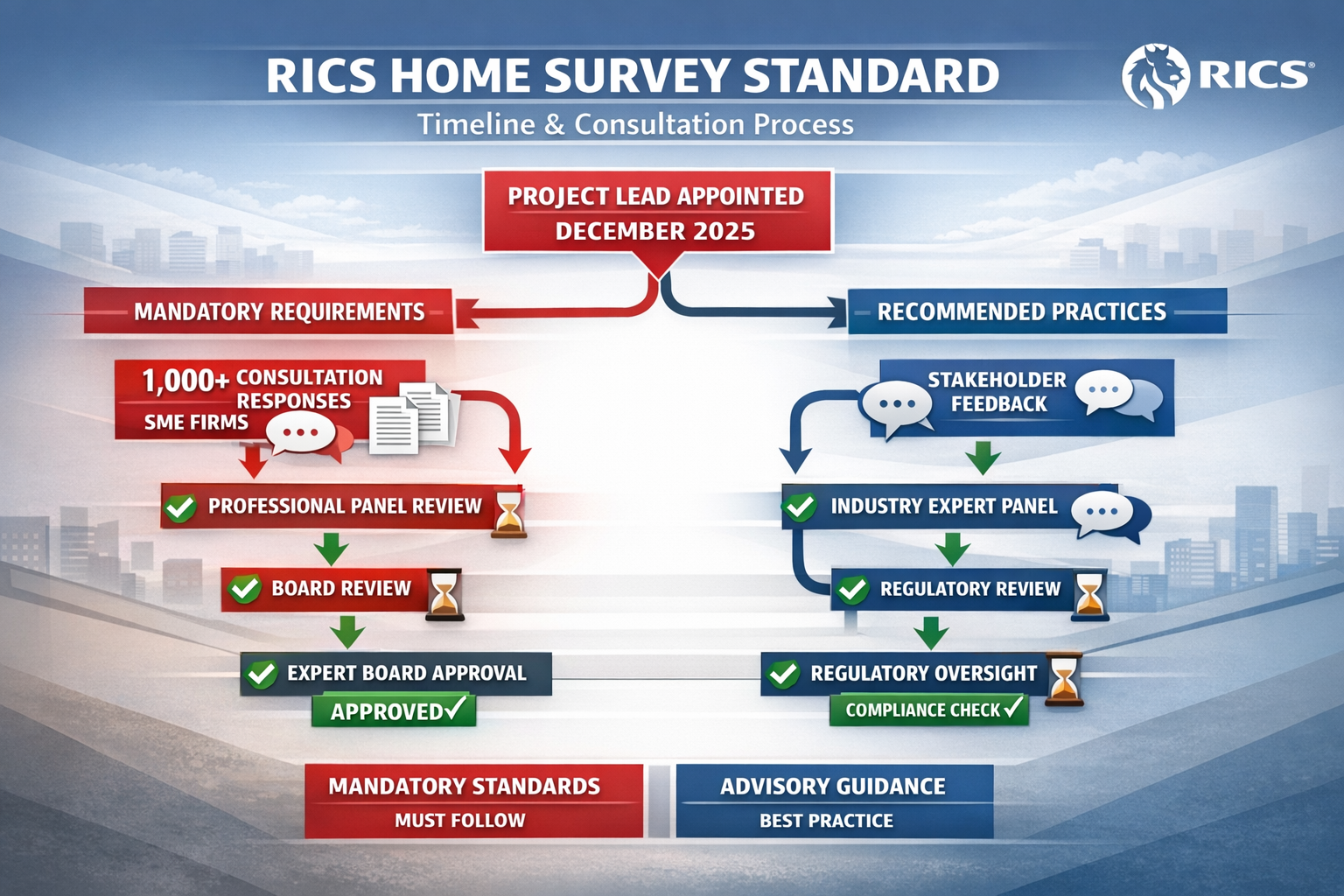
The consultation phase revealed unprecedented industry engagement, with over 1,000 comments received from members and stakeholders.[3] Particularly notable was the strong participation from SME (Small and Medium Enterprise) surveying firms, demonstrating the significant investment smaller practices are making in shaping future standards.
"The consultation responses have provided invaluable insights into how surveyors work in practice. We've received consistent feedback requesting clearer distinction between mandatory requirements and recommended practices." – RICS Standards Development Team
In December 2025, RICS appointed a dedicated project lead with 20 years of experience as a Chartered Surveyor to guide the standard through its critical review phase.[3] This appointment signals the organization's commitment to producing a practical, implementable standard that serves both surveyors and their clients.
Key Themes Emerging from Consultation Feedback
Analysis of the consultation responses has identified several recurring themes that will shape the final standard:
1. Clarity and Conciseness 📋
Stakeholders consistently requested clearer language distinguishing between:
- "Must" requirements – Mandatory obligations for compliance
- "Should" recommendations – Best practice guidance
This distinction helps surveyors understand their absolute obligations versus areas where professional judgment applies.
2. Technology Integration
The standard will address how modern surveying technologies should be incorporated, including:
- Thermal imaging cameras for energy efficiency assessment
- Drone surveys for roof and chimney inspection
- Moisture meters and environmental monitoring equipment
- Digital reporting platforms for enhanced client communication
3. Retrofit-Specific Guidance
Given the summit's focus on retrofit quality, the updated standard will include specific guidance on assessing:
- Previous retrofit work quality and compliance
- Potential for future energy efficiency improvements
- Risks associated with incompatible retrofit interventions
- ESG considerations in property valuation
The Review and Approval Process
Before finalization, the Home Survey Standard must navigate multiple review stages:[3]
- Member-led professional panel groups review technical accuracy and practical applicability
- Expert boards assess alignment with broader RICS standards and regulatory requirements
- Independent regulatory approval ensures consumer protection and professional accountability
- Final publication with accompanying Basis for Conclusions document
Each stage may result in refinements, ensuring the final standard represents genuine consensus and practical wisdom. The Basis for Conclusions document will summarize consultation responses and explain how RICS addressed each concern—providing transparency and educational value for the profession.[3]
What Surveyors Need to Know in 2026: Practical Implementation of New Standards
Understanding new standards is one thing; implementing them effectively in daily practice is another. Here's what surveyors need to know about applying Building Survey Quality Standards Post-RICS Retrofit Summit requirements in 2026.
Enhanced Level 3 Survey Requirements
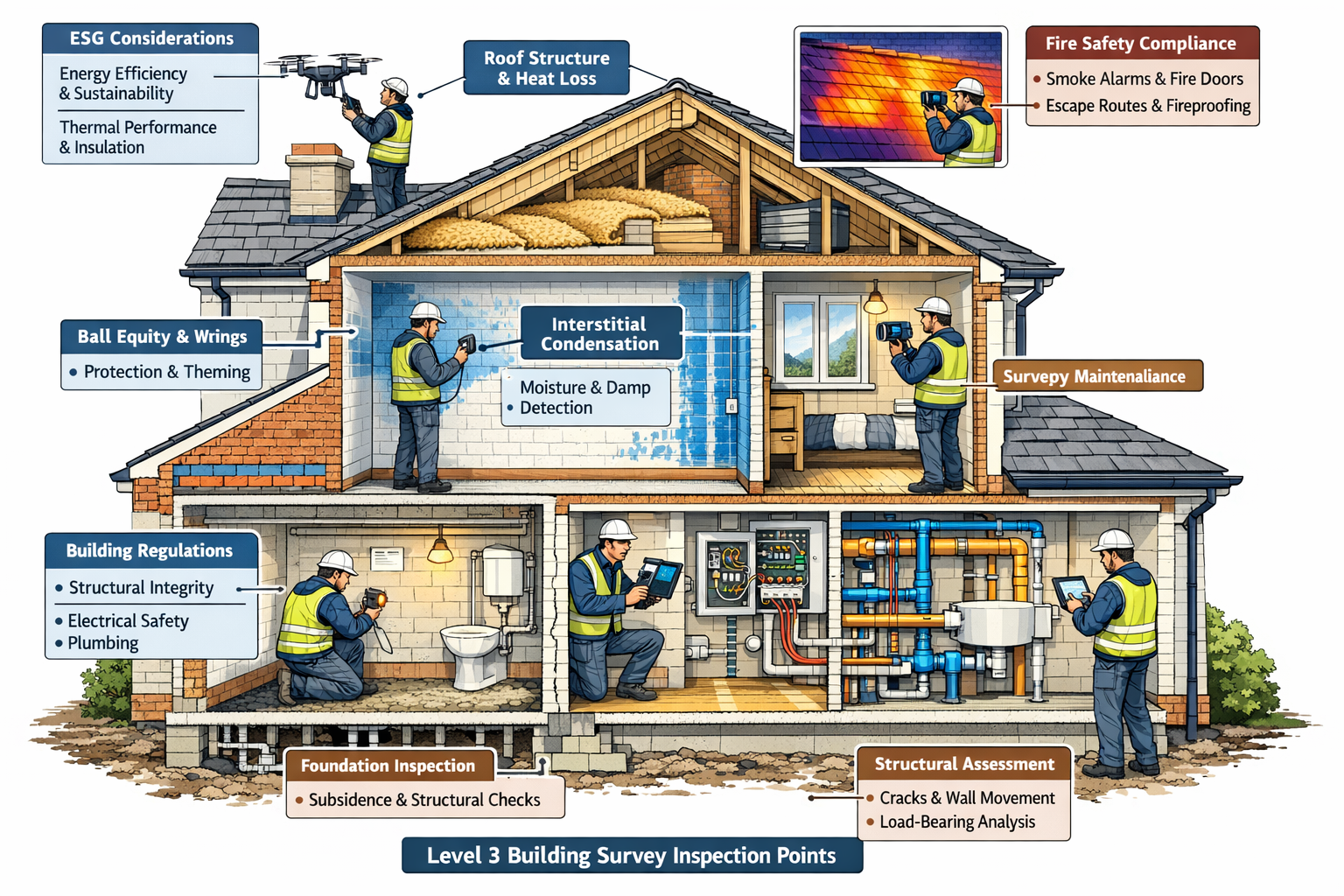
Level 3 surveys have always represented the most comprehensive property examination available. In 2026, these surveys have evolved to address contemporary challenges while maintaining their core purpose of uncovering hidden defects.[2]
What Makes a Level 3 Survey Different in 2026?
Modern Level 3 surveys now routinely include:
- ✅ Comprehensive building fabric examination identifying structural defects, dampness, and deterioration
- ✅ Thermal performance assessment using infrared technology to detect heat loss and insulation deficiencies
- ✅ Interstitial condensation risk evaluation particularly in properties with cavity wall insulation or loft conversions
- ✅ Fire safety compliance review especially for multi-occupancy residential buildings
- ✅ ESG considerations including energy efficiency potential and sustainability factors
- ✅ Retrofit work assessment evaluating quality and compliance of previous improvement works
These enhanced requirements reflect the reality that clients expect surveyors to be strategic advisers rather than purely technical inspectors.[2] When conducting a full building survey versus homebuyer survey, this distinction becomes particularly important.
Building Safety Regulations: What's Changed
Building safety regulations have been significantly redefined in 2026, with direct implications for surveying practice:[2]
Higher-Risk Building Classifications
The definition of higher-risk buildings has been refined to include:
- Residential buildings over 18 meters or seven stories
- Buildings with vulnerable occupants (care homes, hospitals)
- Mixed-use buildings with residential components
- Historic buildings undergoing significant alteration
Mandatory Fire Safety Strategies
Fire safety strategies are now mandatory for:
- 🔥 Schools and educational facilities
- 🔥 Commercial premises with public access
- 🔥 Multi-occupancy residential buildings
- 🔥 Buildings with complex evacuation requirements
Surveyors must be competent to identify urgent or dangerous building issues related to fire safety and recommend appropriate specialist assessment when necessary.
Professional Competency and Ethical Standards
RICS has reinforced professional standards emphasizing both technical competence and ethical conduct.[2] The role of RICS Assessors has become increasingly important in ensuring only qualified, ethical professionals achieve chartered status.[3]
Updated CPD Requirements for 2026
Surveyors must demonstrate ongoing competency in:
- Retrofit assessment techniques – Understanding modern insulation, heating, and ventilation systems
- ESG integration – Incorporating environmental and social factors into valuation and advice
- Building safety legislation – Staying current with evolving regulatory requirements
- Technology proficiency – Competent use of thermal imaging, moisture detection, and digital reporting tools
- Client communication – Translating technical findings into actionable advice
Understanding what questions should be asked during a building survey helps surveyors engage clients effectively and manage expectations.
Technology and Innovation in Survey Practice
The integration of technology into surveying practice is no longer optional—it's expected. In 2026, clients anticipate surveyors will utilize modern tools to provide comprehensive, accurate assessments.
Essential Technologies for Modern Surveyors
| Technology | Application | Benefits |
|---|---|---|
| Thermal Imaging Cameras | Heat loss detection, insulation assessment | Identifies invisible defects, supports ESG recommendations |
| Drones | Roof inspection, chimney assessment | Safer access, detailed photography, cost-effective |
| Moisture Meters | Dampness detection, leak identification | Quantifiable data, trend monitoring capability |
| Digital Reporting Platforms | Client communication, photo documentation | Enhanced clarity, professional presentation |
| 3D Scanning | Measured surveys, spatial documentation | Accurate measurements, virtual property tours |
When determining which building survey you need, understanding the technology deployed can help clients appreciate the value delivered.
ESG Considerations in Valuation and Survey Reports
Environmental, Social and Governance factors have moved from peripheral considerations to central elements of property assessment. The RICS framework for ESG integration requires surveyors to:[3]
Environmental Factors:
- Energy Performance Certificate (EPC) ratings and improvement potential
- Carbon footprint and emissions reduction opportunities
- Flood risk and climate resilience
- Sustainable material use and waste management
Social Factors:
- Community impact and local amenities
- Accessibility and inclusive design
- Health and wellbeing considerations
- Affordable housing contributions
Governance Factors:
- Building regulation compliance
- Planning permission adherence
- Professional certification and warranties
- Management company effectiveness (for leasehold properties)
These considerations should be woven throughout survey reports rather than treated as separate sections, providing clients with holistic property assessment.
Common Retrofit Issues Surveyors Must Identify
Given the summit's emphasis on retrofit quality, surveyors must be particularly vigilant when assessing properties with improvement works. Common issues include:
Insulation Problems:
- Cavity wall insulation causing dampness in solid-wall properties
- Inadequate ventilation following loft insulation installation
- Thermal bridging at junctions and penetrations
- Interstitial condensation within wall cavities
Heating System Concerns:
- Undersized heat pumps failing to maintain comfort
- Incompatible radiators with lower-temperature systems
- Poorly designed heating controls and zoning
- Inadequate hot water cylinder capacity
Ventilation Deficiencies:
- Insufficient background ventilation causing condensation
- Poorly installed mechanical ventilation with heat recovery (MVHR)
- Blocked or inadequate extract ventilation
- Inappropriate sealing without compensatory ventilation
Identifying these issues requires understanding both building physics and modern retrofit techniques—competencies that should be developed through targeted CPD.
Preparing for the Future: What Comes Next
As the Home Survey Standard 2nd edition moves toward finalization and the industry absorbs lessons from the Retrofit Summit, surveyors must position themselves for continued evolution in professional practice.
Anticipated Timeline for Standard Implementation
While exact dates remain subject to regulatory approval, the anticipated timeline includes:[3]
- Q2 2026: Final professional panel reviews and expert board assessments
- Q3 2026: Independent regulatory approval process
- Q4 2026: Publication of final standard with Basis for Conclusions document
- Q1 2027: Implementation period with guidance and training resources
- Q2 2027: Full compliance expected for all RICS members
This timeline allows surveyors adequate preparation time while ensuring standards remain current and relevant.
Building Your Competency Portfolio
Successful surveyors in 2026 and beyond will demonstrate competency across multiple domains:
Technical Excellence 🔧
- Advanced understanding of building pathology
- Retrofit assessment expertise
- Technology proficiency
- Building safety knowledge
Professional Judgment ⚖️
- Risk assessment and prioritization
- Appropriate specialist referral
- Proportionate investigation depth
- Cost-benefit analysis for clients
Communication Skills 💬
- Clear, jargon-free reporting
- Visual communication through photography and diagrams
- Client education and expectation management
- Collaborative working with other professionals
Business Acumen 📊
- Efficient survey processes
- Appropriate fee structures reflecting value delivered
- Professional indemnity insurance understanding
- Marketing and client relationship management
Surveyors who invest in developing these competencies will thrive as standards evolve and client expectations increase.
Staying Informed and Engaged
The surveying profession continues to evolve rapidly. Staying informed requires:
- Regular RICS engagement – Monitoring standards updates and guidance publications
- Professional networking – Participating in local and national surveying associations
- Technical reading – Following building science research and case studies
- Client feedback – Learning from client experiences and expectations
- Peer discussion – Sharing challenges and solutions with fellow professionals
Understanding building defects and their implications requires continuous learning and professional curiosity.
Conclusion
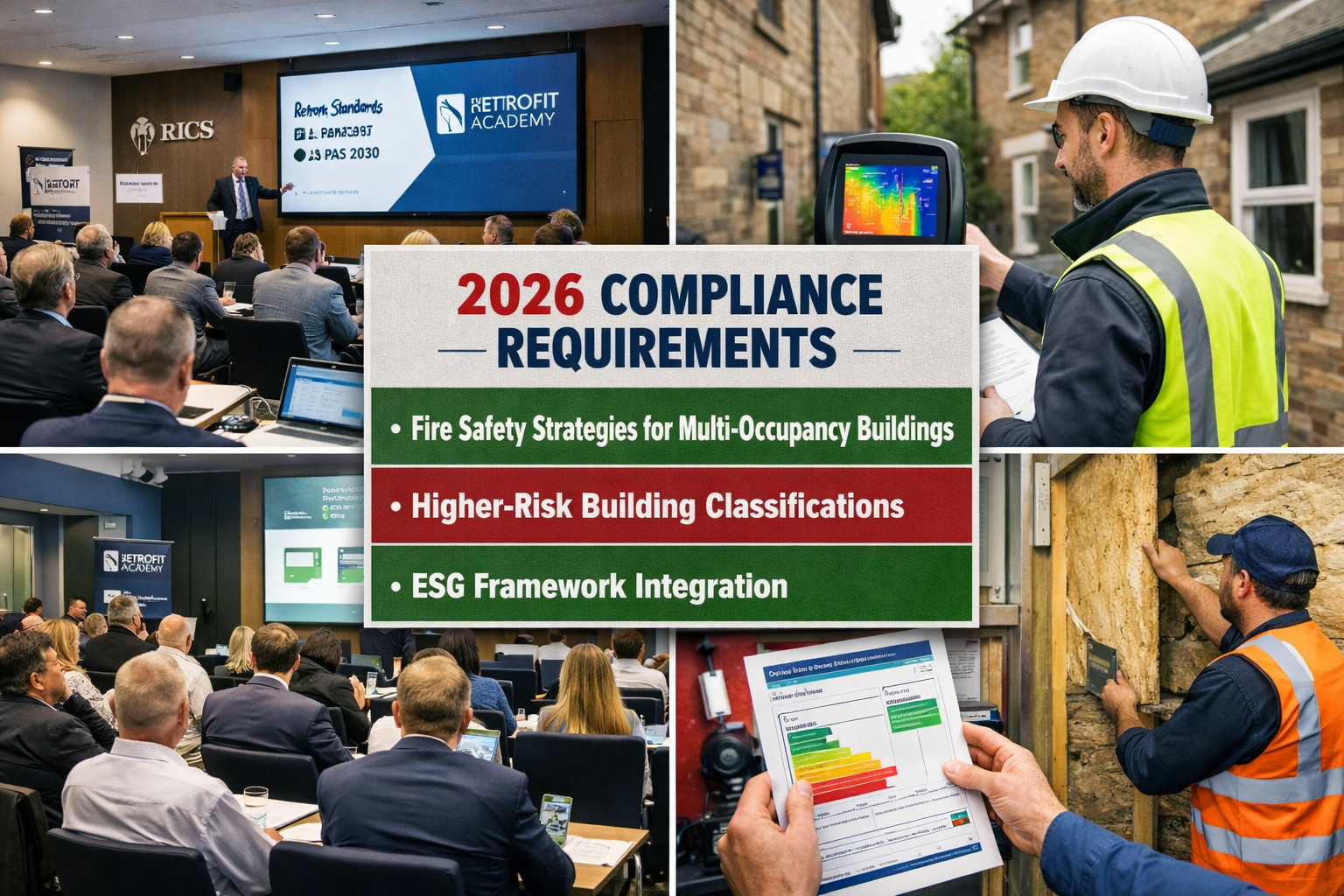
The Building Survey Quality Standards Post-RICS Retrofit Summit: What Surveyors Need to Know in 2026 represents a comprehensive evolution in professional practice. The Quality in Retrofit Summit, held in partnership with the Retrofit Academy at the start of 2026, has established new benchmarks for quality, sustainability, and professional competence.[3]
With the Home Survey Standard 2nd edition progressing through extensive consultation and review—having received over 1,000 stakeholder comments—the profession is actively shaping its future.[3] The appointment of an experienced project lead in December 2025 demonstrates RICS's commitment to producing practical, implementable guidance that serves both surveyors and their clients.
Key Actions for Surveyors in 2026
✅ Review and understand the emerging Home Survey Standard requirements, particularly distinctions between mandatory and recommended practices
✅ Invest in technology including thermal imaging, drone capabilities, and digital reporting platforms to meet modern client expectations
✅ Develop retrofit competency through targeted CPD focusing on building physics, energy efficiency, and sustainable construction
✅ Integrate ESG considerations into all valuation and survey reports, positioning yourself as a strategic adviser
✅ Maintain professional standards ensuring ethical conduct and technical competence in all client engagements
✅ Stay engaged with RICS updates, professional networks, and industry developments
The surveying profession in 2026 offers tremendous opportunities for those who embrace change, invest in competency development, and commit to delivering exceptional client value. By understanding and implementing the standards emerging from the Retrofit Summit and Home Survey Standard revision, surveyors can position themselves as trusted advisers navigating clients through increasingly complex property decisions.
The future of surveying is not just about identifying defects—it's about providing strategic guidance that considers environmental sustainability, building safety, long-term value, and client objectives. Those who master this broader advisory role will thrive in the evolving landscape of professional practice.
References
[1] The New Rics Home Survey Standard Explained – surveymerchant.com
[2] Things About Building Surveying You Need To Know In 2026 – mcessex.co.uk
[3] Home Survey Standard 2nd Edition A Progress Update – rics.org
[4] Building Survey Quality Standards 2026 Navigating Rics Updates And Enhanced Home Inspection Requirements 2 – nottinghillsurveyors.com
[5] Home Survey Standards – rics.org