

The commercial real estate landscape is experiencing a dramatic transformation. With 55% of investors now viewing office buildings as the most underpriced asset class, a unique opportunity has emerged for savvy property investors. Building Surveys for Office-to-Residential Conversions: Capturing 2026's Investment Opportunity in Undervalued Stock represents more than just a trend—it's a strategic response to changing urban dynamics and housing shortages across major cities.
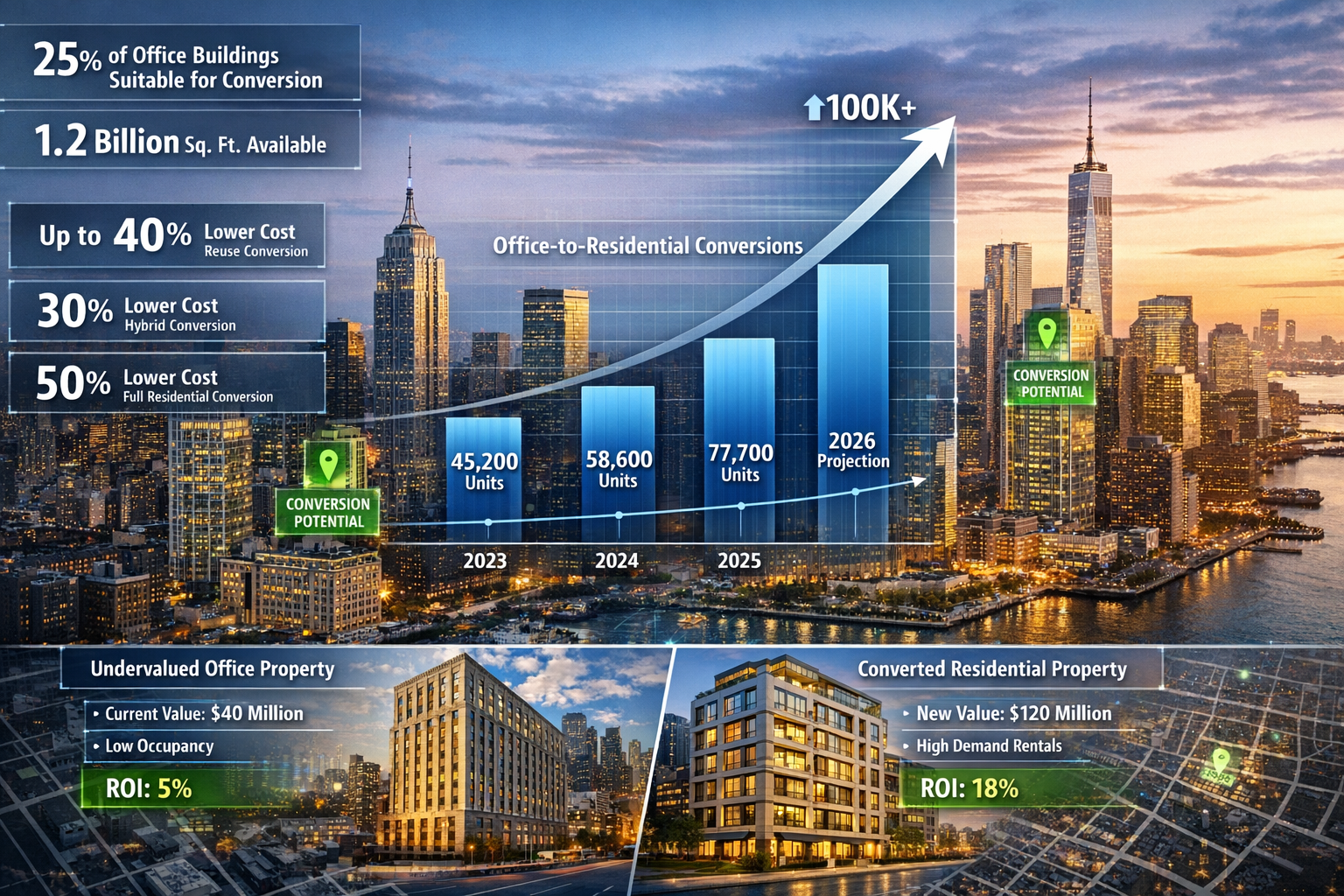
As remote work continues to reshape office demand, empty commercial buildings are being reimagined as residential spaces. The pipeline for office-to-residential conversions reached an impressive 77,700 units in 2025, compared to 55,300 completed units in 2024 and 45,200 in 2023[2]. This consistent year-over-year growth signals a fundamental shift in how cities address housing needs while repurposing underutilized assets.
For investors and developers, the critical first step involves comprehensive building surveys that assess conversion feasibility. These surveys determine whether an office building can successfully transform into residential units—and at what cost. Understanding the structural, regulatory, and financial implications through proper surveying can mean the difference between a profitable conversion and a costly mistake.
Key Takeaways
- 77,700 office-to-residential conversion units are in the 2025 pipeline, representing significant investment opportunities in undervalued commercial properties[2]
- Approximately 25% of office buildings nationally are architecturally suitable for conversion, with 1.2 billion square feet identified as prime candidates[1][3]
- Comprehensive building surveys are essential for assessing structural capacity, regulatory compliance, and conversion costs before investment
- Dormitory-style conversions can reduce construction costs by 25-35% compared to conventional apartment conversions, improving project economics[3]
- Major cities like New York, Washington D.C., and Los Angeles lead conversion activity, with New York metro area scheduling 8,310 units for conversion[1]
Understanding the Office-to-Residential Conversion Market in 2026
The Scale of the Opportunity 📊
The numbers tell a compelling story. From 2016 to late 2024, office-to-multifamily conversions added 28,000 units to U.S. multifamily supply, with another 38,000 units projected if all projects currently in development reach completion[1]. This represents a massive redistribution of commercial real estate value.
Developers completed 73 conversions in late 2024 alone—the highest number since tracking began in 2016[1]. This acceleration reflects growing investor confidence in conversion projects as viable alternatives to ground-up residential development.
The geographic concentration is notable. Cities with the most vacant older office stock include New York City, Los Angeles, Chicago, San Francisco, Austin, Seattle, and Dallas[1]. These markets present the greatest opportunities for investors seeking undervalued office properties with conversion potential.
Why Office Buildings Are Undervalued
Several factors contribute to the current undervaluation of office properties:
- Persistent remote work trends reducing demand for traditional office space
- Class B and C office buildings struggling to compete with newer, amenity-rich properties
- Financing challenges as lenders reassess commercial real estate values
- Market uncertainty creating hesitation among traditional office investors
This perfect storm has created pricing inefficiencies. Smart investors recognize that while these buildings may be undervalued as offices, they hold significant potential as residential properties—especially in housing-constrained markets.
Market Conditions Favoring Conversions
Research indicates that 22 of 27 metros heavily impacted by the pandemic have market conditions making conversions feasible[5]. These conditions primarily exist in Class B office buildings where apartment rents exceed office market rents, creating favorable economics for conversion.
An estimated 43,500 housing units can be created if just 20% of vacant office square footage is converted to apartments averaging 1,000 square feet per unit[5]. This represents a substantial opportunity to address housing shortages while revitalizing urban cores.
The Critical Role of Building Surveys in Conversion Projects
Why Building Surveys Are Non-Negotiable
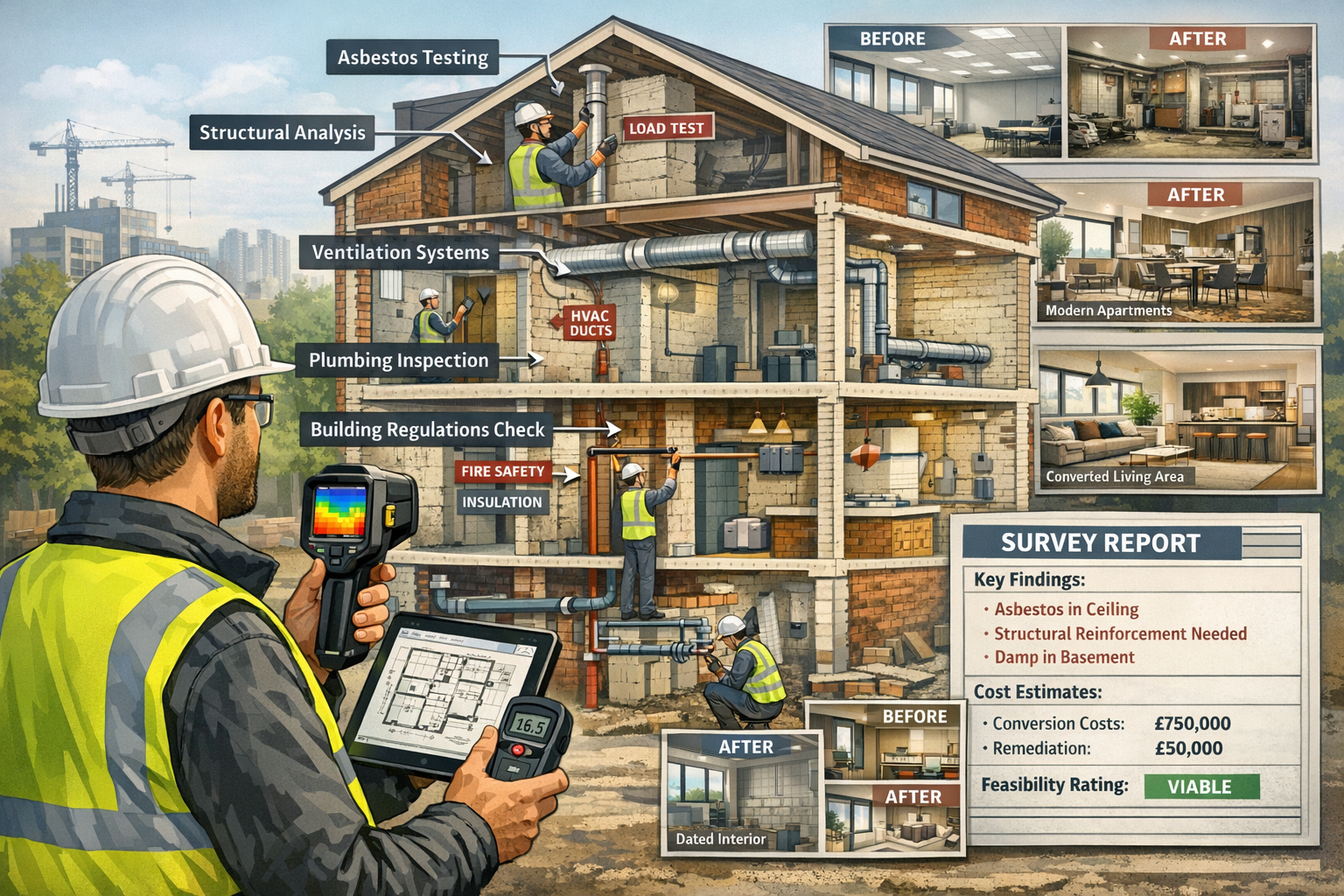
Before investing in any office-to-residential conversion, a comprehensive building survey is essential. These surveys provide the foundation for understanding:
- Structural capacity to support residential loads and layouts
- Building envelope condition and weatherproofing requirements
- Mechanical, electrical, and plumbing (MEP) systems adequacy
- Code compliance gaps requiring remediation
- Hazardous materials like asbestos requiring removal
- Cost implications for conversion work
Without this detailed assessment, investors risk significant cost overruns and project delays. A thorough survey conducted by qualified chartered surveyors can identify deal-breakers early or confirm a building's suitability for conversion.
Key Survey Components for Conversion Assessment
Structural Evaluation
The structural assessment forms the cornerstone of conversion feasibility. Surveyors must evaluate:
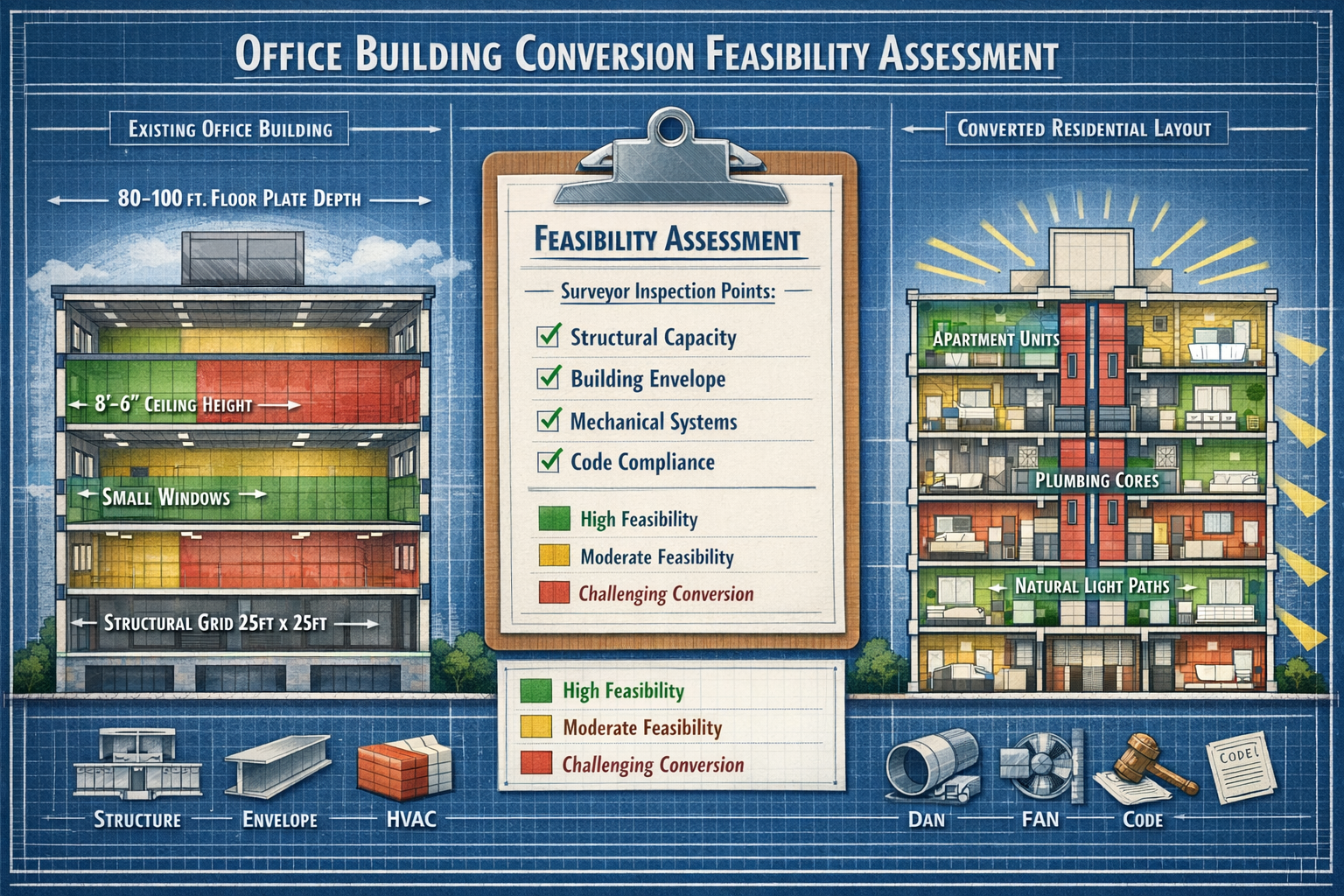
Floor Plate Depth: Buildings with floor plates deeper than 40-45 feet often struggle with natural light penetration to interior spaces. Analysis of over 1,300 buildings by Gensler found that approximately 25% of office buildings nationally are suitable for conversion[3], with floor plate dimensions being a primary determining factor.
Load-Bearing Capacity: Residential uses typically require different loading than offices. Surveyors assess whether existing structural systems can accommodate residential floor loads, particularly in areas designated for kitchens and bathrooms.
Column Spacing: The structural grid affects unit layouts. Buildings with column spacing that aligns well with residential room dimensions offer more efficient conversions.
Ceiling Heights: Adequate ceiling heights (typically 9+ feet) are crucial for residential appeal. Some conversions can create mezzanine levels if ceiling heights exceed 12-14 feet.
Building Envelope Assessment
The exterior envelope requires careful evaluation through building materials assessments to determine:
- Window-to-wall ratios and natural light availability
- Thermal performance and insulation requirements
- Waterproofing integrity and weather resistance
- Facade condition and repair needs
Office buildings often have different envelope performance requirements than residential buildings. Upgrading to meet residential energy codes can represent significant costs.
MEP Systems Analysis
Mechanical, electrical, and plumbing systems designed for office use rarely meet residential needs without substantial modification. Surveyors evaluate:
Plumbing Infrastructure: Residential conversions require extensive plumbing for individual unit kitchens and bathrooms. Surveyors assess whether existing vertical chases and floor structures can accommodate new plumbing runs. Mechanical ventilation requirements differ significantly between commercial and residential applications.
Electrical Capacity: Individual metering, increased outlet density, and appliance loads require electrical system upgrades. The survey identifies panel capacity and distribution infrastructure needs.
HVAC Systems: Office HVAC systems designed for large open spaces must be reconfigured for individual unit control and efficiency.
Hazardous Materials Screening
Older office buildings frequently contain hazardous materials requiring remediation. Asbestos building surveys identify:
- Asbestos-containing materials in insulation, flooring, and ceiling tiles
- Lead-based paint on surfaces
- Other environmental hazards requiring abatement
The costs of hazardous material removal can significantly impact project economics and must be identified during due diligence.
Questions to Ask During Your Building Survey
When commissioning a building survey for conversion assessment, investors should ensure surveyors address specific conversion-related concerns. Our guide on what questions to ask during a building survey provides a comprehensive framework, but conversion projects require additional focus on:
- What percentage of units will have adequate natural light?
- Can the structural system support residential plumbing cores?
- What are the estimated costs for MEP system upgrades?
- Does the building meet current residential building codes?
- What areas require further investigation before finalizing feasibility?
Identifying Prime Conversion Candidates Through Survey Data
Building Characteristics That Signal Opportunity
Research has identified 6,206 buildings across 10 U.S. cities as well-suited for conversion—typically built before 1990 with floor sizes smaller than 15,000 square feet[1]. These characteristics emerged from detailed analysis and align with successful conversion projects.
Age and Construction Type: Pre-1990 buildings often feature:
- Narrower floor plates more conducive to residential layouts
- Operable windows providing natural ventilation
- Simpler mechanical systems easier to modify
- Lower acquisition costs due to functional obsolescence as offices
Size Considerations: Smaller buildings (under 150,000 square feet) typically offer:
- More manageable conversion scopes
- Faster project timelines
- Lower total capital requirements
- Easier financing arrangements
Location Factors: Conversion success depends heavily on location. Surveyors should assess transport links and neighborhood amenities that support residential use.
The Conversion Feasibility Index
An estimated 1.2 billion square feet of U.S. office space (14.8% of total inventory) is considered suitable for conversion according to the Conversion Feasibility Index[1]. This index evaluates buildings based on:
| Feasibility Factor | High Suitability | Moderate Suitability | Low Suitability |
|---|---|---|---|
| Floor Plate Depth | <40 feet | 40-50 feet | >50 feet |
| Building Age | Pre-1990 | 1990-2010 | Post-2010 |
| Ceiling Height | >10 feet | 9-10 feet | <9 feet |
| Window Ratio | >30% | 20-30% | <20% |
| Vacancy Rate | >50% | 25-50% | <25% |
Buildings scoring high across multiple factors represent the best investment opportunities for conversion projects.
Cost-Effective Conversion Approaches
Different conversion strategies offer varying cost profiles. Understanding these options during the survey phase helps investors model project economics accurately.
Dormitory-Style Conversions: These reduce construction costs by 25-35% compared to conventional apartment conversions[3]. This approach creates smaller units with shared amenities, particularly effective for:
- Student housing near universities
- Workforce housing in expensive markets
- Co-living spaces for young professionals
Conventional Apartment Conversions: Creating traditional apartments with full kitchens and bathrooms represents the highest-cost approach but typically achieves premium rents and broader market appeal.
Mixed-Use Conversions: Retaining ground-floor commercial space while converting upper floors to residential can preserve building character and create additional revenue streams.
Financial Analysis and Investment Returns for Building Surveys for Office-to-Residential Conversions
Acquisition Strategies for Undervalued Office Stock
The current market presents unique acquisition opportunities. Office buildings trading at significant discounts to replacement cost can be acquired and converted for less than ground-up residential development costs in many markets.
Valuation Approaches: Investors should employ multiple valuation methods:
- Income approach based on current office rents (often depressed)
- Cost approach considering land value plus conversion costs
- Comparable sales of both office properties and residential conversions
- Residual land value working backward from completed residential values
Using a land value calculator can help determine whether the underlying land value alone justifies acquisition, providing downside protection.
Budgeting for Conversion Costs
Accurate budgeting for repairs and restoration is critical for conversion project success. Typical conversion costs range from $150-$350 per square foot, depending on:
Hard Costs:
- Structural modifications: $25-$50/sf
- MEP system installation: $40-$80/sf
- Interior finishes: $50-$100/sf
- Building envelope upgrades: $20-$40/sf
- Hazardous material abatement: $5-$25/sf
Soft Costs:
- Architecture and engineering: 8-12% of hard costs
- Permitting and approvals: 2-5% of hard costs
- Financing costs: Variable based on project duration
- Contingency: 10-15% of total project costs
Incentive Programs Improving Returns
Many cities offer incentives to encourage office-to-residential conversions, significantly improving project economics.
New York City offers up to 90% tax exemptions for converted buildings with at least 25% affordable apartments[1]. This dramatically improves long-term cash flows and makes projects feasible that wouldn't otherwise pencil.
Other common incentives include:
- 🏗️ Expedited permitting processes
- 💰 Property tax abatements (10-25 years)
- 📋 Reduced parking requirements
- 🏛️ Historic preservation tax credits
- 💵 Low-interest financing programs
Investors should research available incentives early in the due diligence process, as they can transform marginal projects into attractive investments.
Market Leaders and Geographic Hotspots
The New York metro area leads with 8,310 units scheduled for conversion, followed by Washington, D.C., and Los Angeles with 4,388 units[1]. These markets offer:
- Strong rental demand supporting residential conversion economics
- Established regulatory frameworks for conversions
- Proven track records of successful projects
- Professional service providers experienced in conversions
Secondary markets are emerging as well, particularly cities with:
- Strong population growth
- Housing affordability challenges
- Significant Class B office vacancy
- Progressive municipal governments supporting conversions
Regulatory Compliance and Planning Considerations
Navigating Building Code Requirements
Converting office buildings to residential use triggers comprehensive building regulation compliance requirements. Key code considerations include:
Fire Safety Systems: Residential buildings require different fire protection than offices:
- Sprinkler system modifications for residential occupancy
- Fire-rated separations between units
- Emergency egress meeting residential codes
- Smoke detection and alarm systems in individual units
Accessibility Requirements: While office buildings must be accessible, residential conversions face additional requirements:
- Accessible units (typically 5-10% of total)
- Accessible routes to all common areas
- Adaptable features in standard units
Energy Codes: Modern residential energy codes often exceed office building standards, requiring:
- Enhanced insulation and air sealing
- High-efficiency windows and doors
- Energy-efficient HVAC and water heating
- Renewable energy systems in some jurisdictions
Planning and Zoning Approvals
Planning considerations can make or break conversion projects. Surveyors should identify potential planning issues early:
Zoning Compliance: Many office buildings exist in zones that don't permit residential use. Successful conversions require:
- Zoning variances or special permits
- Comprehensive plan amendments
- Conditional use permits
- As-of-right conversions in mixed-use zones
Parking Requirements: Residential developments typically require more parking than offices. Strategies to address this include:
- Reduced parking ratios near transit
- Shared parking arrangements
- Parking waivers in urban cores
- Unbundled parking pricing
Community Engagement: Converting office buildings to residential use can face community opposition. Proactive engagement addressing concerns about density, traffic, and neighborhood character improves approval prospects.
Due Diligence Best Practices for Conversion Investments
Assembling Your Professional Team
Successful conversion projects require experienced professionals who understand the unique challenges. Your team should include:
Chartered Surveyors: Specialists in building inspections and surveys who can assess conversion feasibility comprehensively.
Conversion Architects: Architects with proven track records in adaptive reuse projects who understand both design and regulatory requirements.
Structural Engineers: Engineers experienced in evaluating existing buildings and designing cost-effective structural modifications.
MEP Engineers: Specialists who can assess existing systems and design efficient residential infrastructure.
Zoning Attorneys: Legal professionals who navigate complex zoning and land use approvals.
Common Building Problems and Solutions
Understanding typical building problems and solutions in conversion projects helps investors anticipate challenges:
Problem: Inadequate natural light in deep floor plates
Solution: Light wells, interior courtyards, or dormitory-style layouts with smaller units
Problem: Insufficient plumbing infrastructure
Solution: Clustered bathroom layouts, prefabricated plumbing cores, or vertical plumbing chases
Problem: Asbestos in ceiling tiles and flooring
Solution: Professional abatement during demolition phase, factored into project budget
Problem: Inadequate electrical capacity
Solution: Service upgrades, individual unit subpanels, and efficient appliances
Problem: HVAC systems unsuitable for residential use
Solution: Ductless mini-split systems, individual unit HVAC, or repurposed central systems
Timeline and Project Milestones
Realistic project timelines help investors model returns accurately:
- Due Diligence Phase (2-4 months): Building survey, feasibility analysis, preliminary design
- Design Development (4-6 months): Architectural plans, engineering, permitting applications
- Approvals Process (3-12 months): Zoning approvals, building permits, variance hearings
- Construction (12-24 months): Demolition, conversion work, interior finishes
- Lease-Up (6-12 months): Marketing, tenant placement, stabilization
Total project timelines typically range from 24-48 months from acquisition to stabilization, requiring patient capital and careful planning.
Conclusion: Seizing the 2026 Conversion Opportunity
Building Surveys for Office-to-Residential Conversions: Capturing 2026's Investment Opportunity in Undervalued Stock represents a compelling strategy for investors seeking value in today's commercial real estate market. With 77,700 units in the conversion pipeline and consistent year-over-year growth, the trend shows no signs of slowing[2].
The foundation of successful conversion investing is comprehensive due diligence anchored by professional building surveys. These surveys identify feasibility, quantify costs, and reveal risks before capital commitments. With approximately 25% of office buildings nationally suitable for conversion and 1.2 billion square feet of potential inventory[1][3], the opportunity set is substantial.
Smart investors recognize that today's undervalued office buildings may be tomorrow's thriving residential communities. The key is rigorous analysis, experienced professional support, and realistic financial modeling.
Next Steps for Investors
For those ready to explore office-to-residential conversion opportunities:
- ✅ Identify target markets with strong residential demand and office vacancy
- ✅ Commission comprehensive building surveys from qualified chartered surveyors
- ✅ Analyze local incentive programs that improve project economics
- ✅ Assemble an experienced conversion team with proven track records
- ✅ Model multiple scenarios including different conversion approaches and cost structures
- ✅ Engage with municipal planning departments early to understand regulatory pathways
The office-to-residential conversion opportunity of 2026 rewards those who combine strategic vision with rigorous technical analysis. Building surveys provide the critical foundation for identifying which undervalued office properties can successfully transform into profitable residential investments—and which should be avoided.
As cities continue addressing housing shortages and office markets adjust to new realities, conversion projects will play an increasingly important role in urban revitalization. Investors who master the due diligence process and understand the technical requirements will be well-positioned to capture value in this emerging asset class.
References
[1] Rising Trend Of Office Space Conversion To Multifamily Residential Units – caliberco.com
[2] Office To Residential Conversions – northspyre.com
[3] Office Conversion – mrsc.org
[5] Analysis And Case Studies On Office To Housing Conversions – nar.realtor