

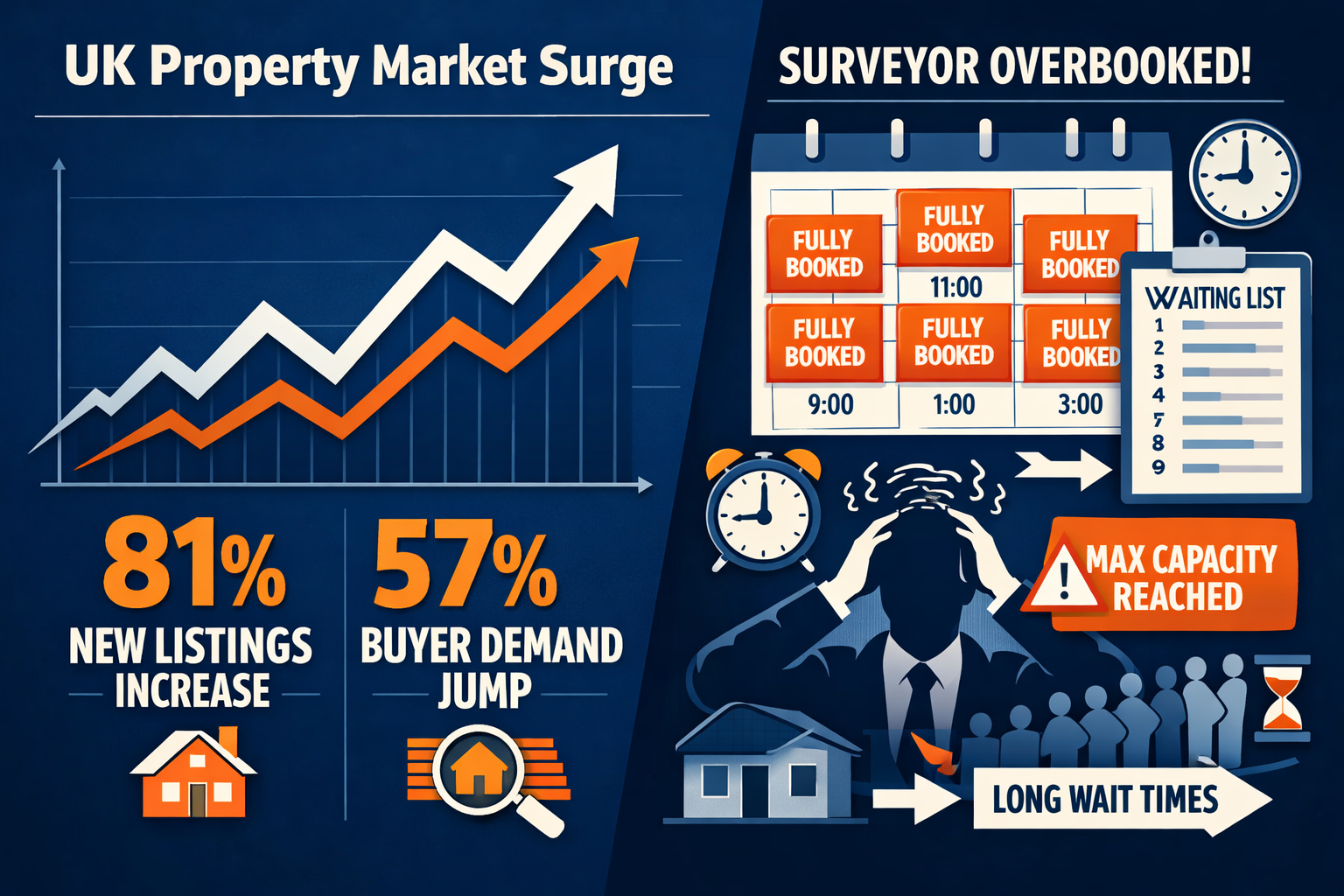
The UK property market is experiencing an unprecedented surge. Recent data reveals an 81% increase in new property listings alongside a remarkable 57% jump in buyer demand. For chartered surveying firms, this dramatic market shift presents both opportunity and challenge. As property transactions accelerate, Chartered Surveyor Workload Management in 2026: Scaling Building Survey Operations as Market Demand Surges has become the critical focus for firms seeking to capitalize on growth while maintaining the quality standards that define professional surveying practice.
The pressure is mounting. With nine in 10 surveyors reporting their work area is affected by skills shortages—nearly one-third describing the situation as "critical"[1]—surveying practices must implement strategic workload management solutions immediately. The question is no longer whether to scale, but how to do so effectively.
Key Takeaways
- Market demand has surged dramatically with an 81% increase in new listings and 57% rise in buyer demand, creating unprecedented capacity challenges for surveying firms
- 87% of RICS survey respondents confirm the skills gap is impacting the profession, with Building Surveying facing the most acute shortages[5]
- Digital transformation and workflow automation are essential strategies for managing increased workload without proportional staff increases
- Flexible staffing models including associate surveyors and specialist contractors enable firms to scale operations while controlling costs
- Standardization and quality assurance protocols become even more critical when managing high-volume operations to maintain professional standards
Understanding the Current Market Pressures Facing Chartered Surveyors
The Perfect Storm: Demand Surge Meets Skills Shortage
The chartered surveying sector faces a unique convergence of challenges in 2026. While property market activity accelerates, the profession simultaneously grapples with severe workforce constraints. 87% of RICS survey respondents confirmed the skills gap is having an impact on the profession, with 27% believing the impact is already critical and affecting cost, capacity, and innovation[5].
Building Surveying and Quantity Surveying face the most acute shortages—precisely the disciplines central to delivering the building survey services that buyers and lenders require[1]. This creates a bottleneck effect where increased transaction volumes meet limited surveyor availability.
Quantifying the Capacity Challenge
The numbers paint a stark picture:
- More than half of respondents reported that the shortage is reducing work capacity and output[1]
- Two-fifths reported rising costs as firms compete for limited talent[1]
- Over a quarter highlighted slower innovation across the built environment sector[1]
- Nearly one-quarter of the current construction workforce is set to retire within the next decade[3][7]
For surveying practices across regions from chartered surveyors in South West London to chartered surveyors in Surrey, these constraints directly impact the ability to accept new instructions and serve clients promptly.
The Demographic Time Bomb ⏰
Two-thirds of surveyors cite an ageing workforce and high retirement rates as key causes of the skills shortage, noting that new entrants are not arriving fast enough to replace retirees[1]. The construction sector needs approximately 500,000 new workers in 2026 to keep pace with demand[3][7], creating fierce competition for qualified professionals.
Construction wages increased 4.2% year-over-year as of August 2025[2], indicating the competitive pressure to attract and retain talent. For surveying firms, this translates to increased operational costs precisely when workload management efficiency becomes paramount.
Strategic Approaches to Chartered Surveyor Workload Management in 2026
Digital Transformation as a Force Multiplier
Technology adoption represents the most significant opportunity for scaling operations without proportional increases in headcount. Modern surveying practices are implementing:
Workflow Management Systems 📊
- Automated scheduling and calendar management
- Client communication platforms with templated responses
- Digital instruction intake and triage systems
- Real-time capacity monitoring dashboards
Survey Technology Enhancements
- Mobile inspection apps that streamline on-site data collection
- Cloud-based reporting platforms enabling remote collaboration
- Digital photography and annotation tools
- Automated report generation for standard survey elements
Firms that embrace digital tools can increase surveyor productivity by 20-30%, effectively expanding capacity without adding staff. For practices offering Level 3 Full Building Surveys, this technology integration maintains thoroughness while reducing turnaround times.
Implementing Tiered Service Models
Not every property requires the same level of scrutiny. Strategic workload management in 2026 involves creating clear service tiers:
| Service Level | Property Type | Surveyor Assignment | Turnaround Time |
|---|---|---|---|
| Comprehensive | Pre-1900, complex, high-value | Senior Chartered Surveyor | 7-10 days |
| Standard | Modern construction, straightforward | Qualified Surveyor | 5-7 days |
| Express | New-build, warranty-backed | Junior Surveyor with review | 3-5 days |
This tiered approach allows firms to allocate senior expertise where it's most needed while developing junior staff on less complex instructions. Understanding which building survey clients need helps streamline the initial consultation process.
Flexible Staffing Solutions 👥
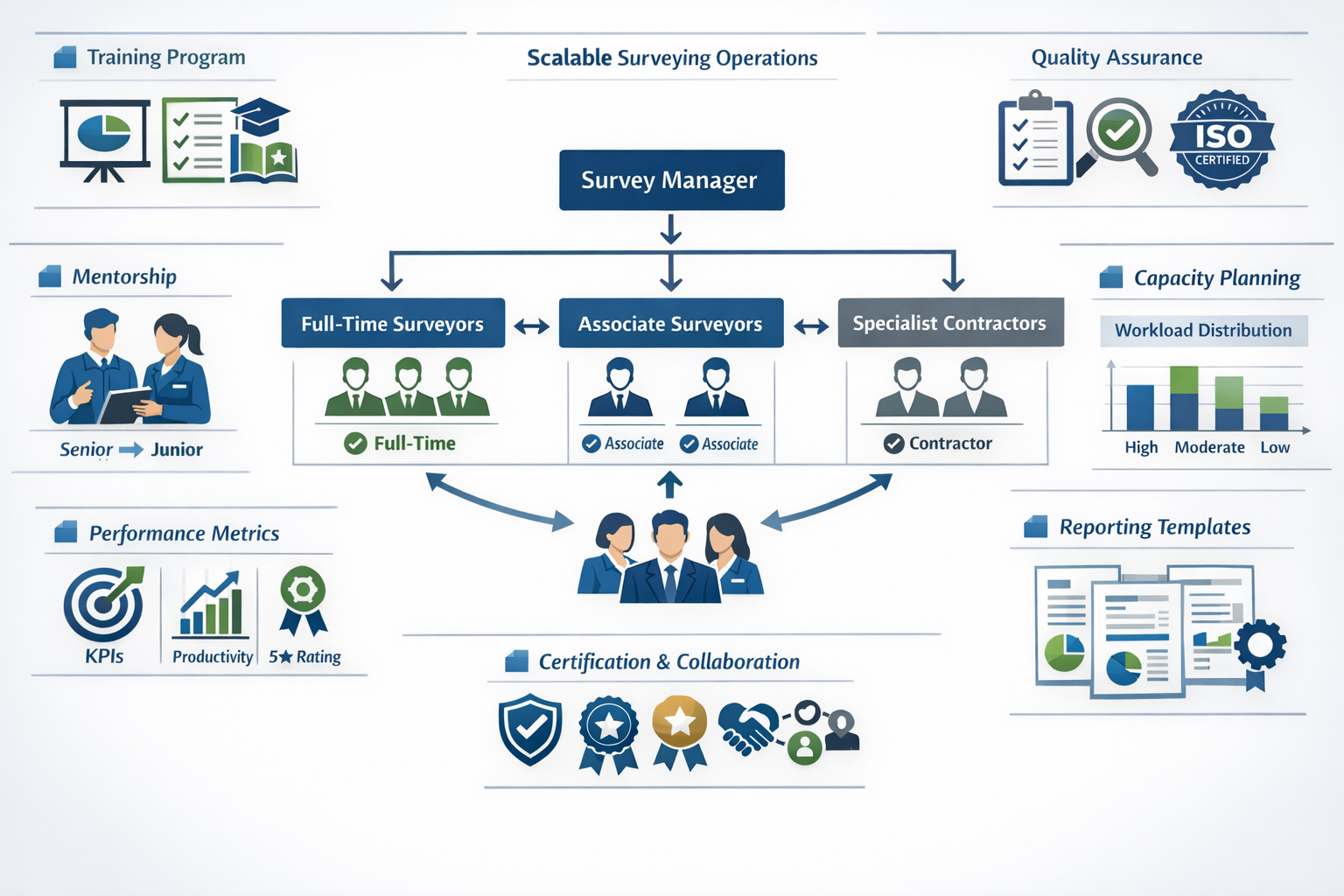
Chartered Surveyor Workload Management in 2026: Scaling Building Survey Operations as Market Demand Surges requires innovative staffing approaches:
Associate Surveyor Networks
- Maintain a roster of qualified associate surveyors for overflow work
- Establish clear quality standards and reporting templates
- Create efficient onboarding processes for associates
- Implement peer review systems to maintain consistency
Specialist Contractors
- Partner with specialists for specific survey elements (e.g., building pathology)
- Develop relationships with drone operators for roof inspections
- Collaborate with structural engineers for complex assessments
- Utilize specialist consultants for niche property types
Apprenticeship and Training Programs
- Invest in developing junior surveyors to build long-term capacity
- Create structured mentorship programs pairing seniors with trainees
- Implement competency-based progression frameworks
- Offer APC support to accelerate qualification timelines
Operational Excellence: Managing Quality at Scale
Standardization Without Sacrificing Thoroughness
As workload increases, standardization becomes essential. However, maintaining the professional standards expected in building survey operations requires careful balance:
Template Development 📋
- Create comprehensive inspection checklists for different property types
- Develop standardized report sections for common building elements
- Establish photo documentation protocols
- Design client communication templates for various scenarios
Quality Assurance Protocols
- Implement mandatory peer review for all reports
- Create technical review checklists
- Establish random audit procedures
- Monitor client feedback systematically
Knowledge Management Systems
- Build searchable databases of common defects and solutions
- Document precedent reports for reference
- Create technical guidance libraries
- Share learning from complex cases across the team
Streamlining Client Interactions
Efficient client management reduces administrative burden on surveyors:
- Automated booking systems that capture essential information upfront
- Clear service descriptions that set appropriate expectations
- Digital payment processing to eliminate invoicing delays
- Client portals for document delivery and follow-up questions
- FAQ resources addressing common post-survey queries
For practices serving multiple locations—from chartered surveyors in West London to chartered surveyors in Hampshire—centralized client management systems create consistency and efficiency.
Time Management and Scheduling Optimization ⏱️
Strategic scheduling maximizes surveyor productivity:
Geographic Clustering
- Group appointments by location to minimize travel time
- Create regional schedules for multi-location practices
- Utilize local surveyors for area-specific knowledge
- Plan routes efficiently using mapping technology
Capacity Planning
- Monitor booking pipelines 2-3 weeks ahead
- Balance workload across team members
- Reserve capacity for urgent instructions
- Track seasonal demand patterns
Buffer Management
- Build report-writing time into schedules
- Allow flexibility for complex properties requiring extended inspections
- Schedule administrative tasks during quieter periods
- Create contingency capacity for weather delays
Technology Integration for Scalable Survey Operations

Cloud-Based Collaboration Platforms
Modern surveying practices leverage cloud technology to enable flexible working:
- Centralized file storage ensuring all team members access current information
- Collaborative editing allowing multiple contributors to reports
- Version control maintaining audit trails and preventing errors
- Mobile accessibility enabling surveyors to work from site or home
Data Analytics for Business Intelligence 📈
Understanding workload patterns enables proactive management:
Key Performance Indicators to Monitor:
- Average turnaround time by survey type
- Surveyor utilization rates
- Client satisfaction scores
- Revenue per surveyor
- Repeat client percentages
- Instruction-to-completion ratios
Predictive Analytics:
- Forecast demand based on market indicators
- Identify capacity constraints before they impact service
- Optimize pricing based on demand and capacity
- Plan recruitment and training needs
Automation Opportunities
Strategic automation reduces administrative burden:
- Automated appointment confirmations and reminders
- Template-based report generation for standard elements
- Digital signature collection for terms of engagement
- Automated quality checks flagging incomplete sections
- Client feedback surveys triggered post-completion
When conducting measured building surveys or addressing building surveyor access challenges, these automated systems free surveyors to focus on professional judgment rather than administrative tasks.
Building Resilient Teams in a Competitive Market
Retention Strategies for Existing Staff 💼
With construction wages increasing 4.2% year-over-year[2], retaining qualified surveyors requires deliberate effort:
Professional Development
- Fund continuing professional development (CPD)
- Support specialization in niche areas
- Provide clear career progression pathways
- Offer mentorship opportunities
Work-Life Balance
- Implement flexible working arrangements
- Avoid chronic overwork despite demand pressures
- Provide adequate administrative support
- Recognize and reward exceptional performance
Competitive Compensation
- Benchmark salaries against market rates
- Offer performance-based bonuses
- Provide comprehensive benefits packages
- Consider equity participation for senior staff
Accelerating Junior Surveyor Development
Developing internal talent addresses long-term capacity needs:
Structured Training Programs
- Create competency frameworks aligned with APC requirements
- Assign specific development objectives for each instruction
- Provide regular feedback and counseling sessions
- Rotate junior surveyors through different property types
Supervised Autonomy
- Gradually increase responsibility as competence develops
- Implement review processes that provide learning opportunities
- Encourage questioning and technical discussion
- Celebrate learning from mistakes in a supportive environment
Creating a Culture of Efficiency
Organizational culture significantly impacts workload management effectiveness:
"The most successful surveying practices in 2026 combine technological efficiency with human expertise, creating systems that amplify professional judgment rather than replace it."
Efficiency Mindsets:
- Encourage continuous improvement suggestions
- Reward innovations that save time without compromising quality
- Share best practices across the team
- Celebrate successful completion of challenging workloads
Regional Considerations and Market-Specific Strategies
Adapting to Local Market Conditions
Property markets vary significantly across regions, requiring tailored approaches. Practices operating in areas from chartered surveyors in Central London to chartered surveyors in Berkshire must understand local dynamics:
Urban Markets (London, major cities)
- Higher volume, faster turnaround expectations
- Greater proportion of leasehold properties
- More complex building pathology in older stock
- Premium pricing supports higher staffing levels
Suburban Markets
- Balanced mix of property types and ages
- Family-focused buyers requiring comprehensive surveys
- Moderate pricing pressure
- Opportunity for geographic clustering
Rural Markets
- Unique property types requiring specialist knowledge
- Longer travel times impacting scheduling
- Seasonal demand fluctuations
- Potential for premium specialist services
Multi-Location Practice Management
For firms operating across multiple regions, coordination becomes critical:
- Centralized scheduling with local delivery
- Standardized processes with regional flexibility
- Knowledge sharing across locations
- Resource pooling for overflow management
- Consistent branding with local market understanding
Practices serving areas like chartered surveyors in Epsom, chartered surveyors in Richmond, and chartered surveyors in St Albans benefit from shared resources while maintaining local expertise.
Future-Proofing Your Surveying Practice
Preparing for Continued Market Evolution
Chartered Surveyor Workload Management in 2026: Scaling Building Survey Operations as Market Demand Surges requires forward-thinking strategies:
Emerging Trends to Monitor:
- Increased focus on energy efficiency and sustainability assessments
- Growing demand for specialist surveys on modern construction methods
- Rising client expectations for digital service delivery
- Regulatory changes impacting survey requirements
- Climate change considerations in property assessment
Investment Priorities for Sustainable Growth 🚀
Strategic investments position practices for long-term success:
Technology Infrastructure
- Modern survey equipment and measurement tools
- Robust IT systems supporting remote working
- Cybersecurity measures protecting client data
- Customer relationship management (CRM) platforms
Human Capital
- Recruitment of trainee surveyors
- Ongoing professional development for existing staff
- Specialist expertise in emerging property types
- Leadership development for practice growth
Process Optimization
- Continuous improvement initiatives
- Quality management systems
- Client feedback mechanisms
- Performance monitoring tools
Building Strategic Partnerships
Collaboration extends capacity beyond internal resources:
- Referral networks with complementary professionals
- Technology partnerships with software providers
- Educational institutions for talent pipeline development
- Industry associations for knowledge sharing and advocacy
Measuring Success: KPIs for Workload Management
Operational Metrics 📊
Track these indicators to assess workload management effectiveness:
Efficiency Metrics:
- Average days from instruction to report delivery
- Surveyor utilization percentage
- Administrative time vs. billable time ratio
- Cost per survey completed
Quality Metrics:
- Client satisfaction scores
- Complaint rates and resolution times
- Peer review findings
- Professional indemnity claims
Growth Metrics:
- Month-over-month instruction volume
- Revenue per surveyor
- New client acquisition rates
- Repeat business percentage
Continuous Improvement Cycles
Implement regular review processes:
- Monthly team reviews discussing workload and challenges
- Quarterly performance analysis against KPIs
- Annual strategic planning incorporating market trends
- Client feedback integration into process improvements
Conclusion
The dramatic surge in property market activity presents both unprecedented opportunity and significant operational challenges for chartered surveying practices. Chartered Surveyor Workload Management in 2026: Scaling Building Survey Operations as Market Demand Surges requires a multifaceted approach combining technology adoption, flexible staffing models, process standardization, and strategic workforce development.
With 87% of RICS survey respondents confirming the skills gap is impacting the profession[5], and nearly one-quarter of the construction workforce set to retire within the next decade[3][7], practices cannot rely solely on traditional recruitment to meet demand. Instead, successful firms are implementing digital transformation initiatives, creating tiered service models, developing associate networks, and investing heavily in training and development.
The key to sustainable scaling lies in maintaining the professional standards that define quality surveying practice while implementing efficiency measures that expand capacity. Standardization, automation, and technology integration amplify surveyor expertise rather than replace professional judgment.
Actionable Next Steps 🎯
For surveying practices seeking to manage increased workload effectively:
- Conduct a capacity audit to understand current utilization and constraints
- Implement workflow management technology to identify efficiency opportunities
- Develop a tiered service model matching surveyor expertise to instruction complexity
- Build an associate surveyor network for flexible capacity expansion
- Invest in junior surveyor development to address long-term workforce needs
- Standardize processes while maintaining quality through robust review protocols
- Monitor key performance indicators to track improvement and identify issues early
The practices that thrive in this high-demand environment will be those that view workload management not as a temporary challenge but as a strategic capability requiring ongoing investment and refinement. By combining professional excellence with operational efficiency, chartered surveying firms can capitalize on market opportunities while building sustainable, scalable businesses positioned for long-term success.
Whether operating as chartered surveyors in Chelsea, chartered surveyors in Fulham, or any other location, the principles of strategic workload management remain consistent: leverage technology, develop talent, standardize processes, and never compromise on the quality that defines professional surveying practice.
References
[1] Rics Survey Reveals Significant And Widening Skills Shortages In Surveying Sector – fmj.co.uk
[2] Engineering And Construction Industry Outlook – deloitte.com
[3] Future Construction Technology Trends Contractor Survey – trimble.com
[5] Rics Skills Report – rics.org
[7] Doubling Down On Digital Top 6 Surveying Trends Shaping 2026 From Trimble Experts – nottinghillsurveyors.com