

The landscape of property compliance has shifted dramatically in 2026. With the government's confirmation that domestic Energy Performance Certificates (EPCs) will transition to four separate metrics this October, property owners and landlords face unprecedented scrutiny of their buildings' energy efficiency and safety standards. Essential Building Survey Checklists for 2026 EPC Retrofit Mandates and Fire Safety Compliance have become critical tools for identifying defects, planning upgrades, and avoiding costly penalties.
The convergence of stricter EPC requirements, ongoing fire safety reforms following the Grenfell tragedy, and the removal of exemptions for heritage properties means that comprehensive building surveys are no longer optional—they're essential risk management tools. Whether preparing for mandatory retrofits or ensuring cladding systems meet current safety standards, property stakeholders need systematic approaches to identify issues before they become compliance failures.
Key Takeaways
✅ Four-metric EPC system launches October 2026, requiring separate assessments of fabric performance, heating systems, energy costs, and smart readiness—making pre-retrofit surveys essential for targeted improvements[1]
🔥 Fire safety compliance now demands detailed cladding and compartmentation assessments, particularly for buildings with external wall systems installed before current regulations
📋 Heritage property exemptions removed—listed buildings now require valid EPCs when marketed, sold, or let, necessitating specialist survey approaches[1][4]
🏘️ HMOs and holiday lets face expanded EPC requirements, with entire building assessments needed even when single rooms are rented[1]
⚡ Pre-existing defects like damp, structural issues, and poor ventilation can undermine retrofit effectiveness and must be identified before energy upgrade works commence
Understanding the 2026 EPC Reform and Its Survey Implications
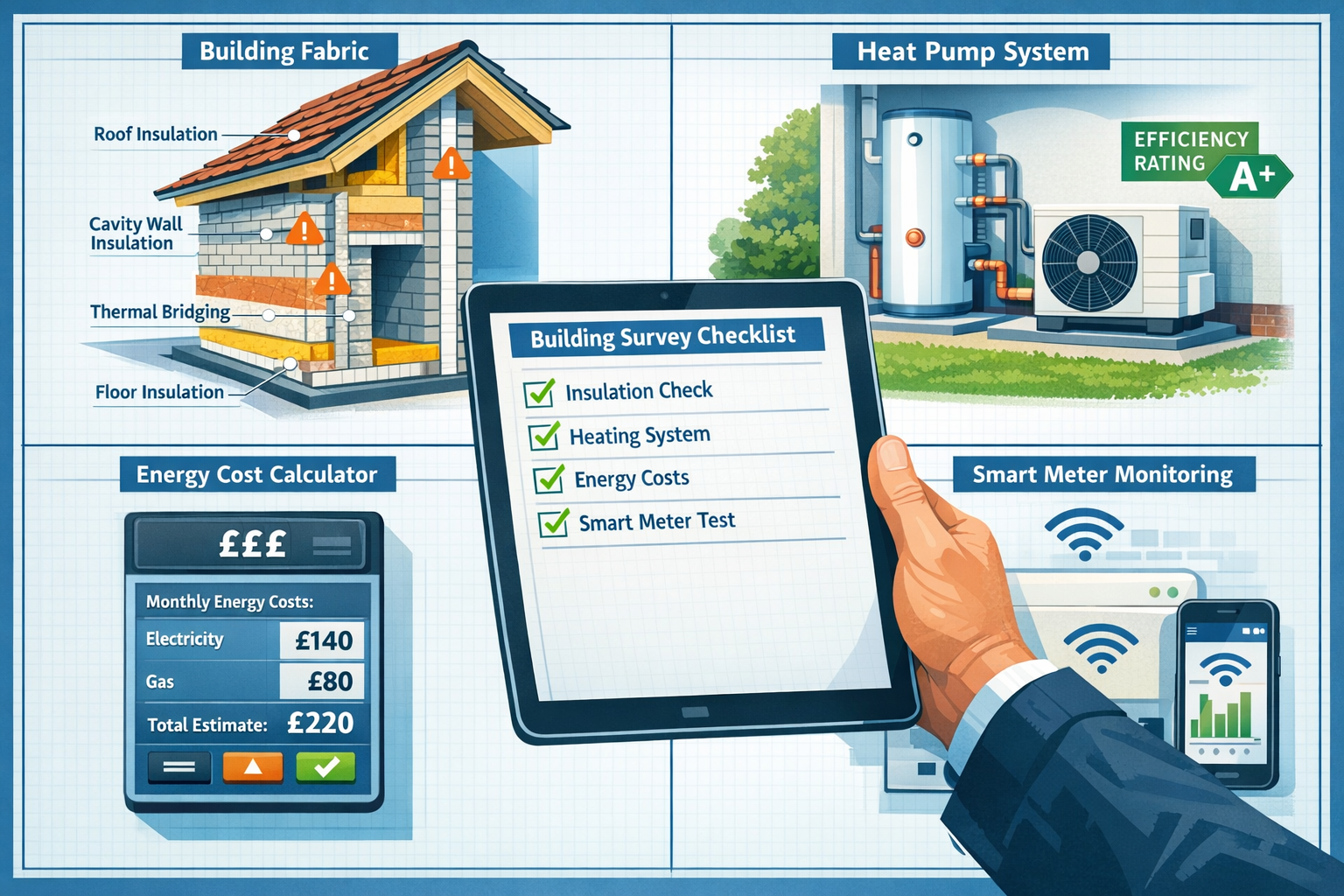
The government's announcement on 21 January 2026 fundamentally changed how building energy performance is assessed and reported. Instead of a single headline rating (A-G), the new system evaluates properties across four distinct dimensions[1].
The Four-Metric EPC Framework
Fabric Performance measures the building envelope's efficiency independent of heating systems. This metric focuses exclusively on insulation quality, wall construction, roof performance, window specifications, and floor insulation[1]. For surveyors, this means detailed assessments of:
- Wall construction types and insulation thickness
- Thermal bridging at junctions and penetrations
- Air leakage points around windows, doors, and service entries
- Roof insulation depth and condition
- Floor insulation presence and effectiveness
Heating System ratings evaluate the efficiency and carbon intensity of heat sources separately from the building fabric[1]. This distinction allows property owners to understand whether poor performance stems from inadequate insulation or inefficient heating equipment.
Energy Cost metrics provide occupiers with realistic running cost estimates, making the financial impact of energy efficiency immediately visible[1]. Survey checklists must now capture data on current energy consumption patterns and identify cost-reduction opportunities.
Smart Readiness assesses buildings' capacity to integrate with smart meters, flexible energy tariffs, and demand-response systems[1]. This forward-looking metric requires surveyors to evaluate electrical infrastructure, metering capabilities, and control system compatibility.
Understanding these four metrics is crucial when developing comprehensive building survey strategies that identify specific improvement opportunities rather than generic upgrade recommendations.
Expanded Property Coverage
The 2026 reforms eliminate previous exemptions and expand EPC requirements significantly[1][4]:
| Property Type | Previous Status | 2026 Requirement |
|---|---|---|
| Heritage/Listed Buildings | Often exempt | Valid EPC required when marketed, sold, or let |
| Houses in Multiple Occupation | Individual room basis | Entire building assessment required |
| Holiday/Short-term Lets | Limited requirements | Valid EPC mandatory regardless of bill payer |
| Properties at Marketing | EPC before completion | EPC required at point of marketing |
These changes mean that building survey approaches must adapt to accommodate sensitive heritage features while still identifying feasible energy improvements.
Essential Building Survey Checklists for 2026 EPC Retrofit Mandates: Pre-Retrofit Assessment
Before undertaking any energy efficiency retrofit, identifying pre-existing defects is critical. Retrofitting over existing problems can exacerbate issues, void warranties, and create health hazards. A systematic pre-retrofit survey checklist should cover these essential areas:
Structural Integrity and Moisture Management
Foundation and Structural Assessment
- Inspect foundations for settlement, cracking, or movement
- Check load-bearing walls for structural adequacy to support additional insulation weight
- Assess floor joists and roof timbers for decay or insect infestation
- Evaluate structural capacity for potential heat pump equipment loads
Damp and Water Ingress
- Conduct moisture meter surveys of all external walls
- Identify rising damp through visual inspection and testing
- Check for penetrating damp around windows, doors, and roof junctions
- Assess condensation risk areas, particularly in bathrooms and kitchens
- Inspect cavity walls for debris, bridging, or existing insulation condition
- Test drainage systems and guttering for proper function
Moisture issues must be resolved before adding insulation, as trapped moisture can cause timber decay, mould growth, and insulation failure. Properties with cavity wall insulation installed decades ago may have settlement or water ingress that compromises performance.
Ventilation and Air Quality
Current Ventilation Provision
- Map all existing ventilation paths (trickle vents, airbricks, extractors)
- Assess natural ventilation adequacy in habitable rooms
- Check mechanical extraction systems in wet rooms
- Identify passive stack ventilation systems
- Evaluate background ventilation rates
Post-Retrofit Ventilation Requirements
- Calculate ventilation needs after air-tightness improvements
- Assess suitability for mechanical ventilation with heat recovery (MVHR)
- Identify locations for new ventilation installations
- Check loft spaces for adequate ventilation to prevent condensation
Improving air-tightness without adequate ventilation creates condensation problems and poor indoor air quality. The survey must identify whether existing ventilation will suffice or if upgrades are necessary.
Building Fabric Condition
External Walls
- Identify wall construction type (solid, cavity, timber frame)
- Assess external render or cladding condition
- Check for existing insulation and its condition
- Identify thermal bridging at structural elements
- Evaluate suitability for external or internal wall insulation
Roof and Loft Spaces
- Measure existing insulation depth and coverage
- Check for roof leaks, missing tiles, or felt deterioration
- Assess loft ventilation adequacy
- Identify services that may require protection during insulation
- Evaluate structural capacity for additional insulation weight
Windows and Doors
- Record glazing types (single, double, triple)
- Assess frame condition and air-tightness
- Check for failed double-glazing units (condensation between panes)
- Evaluate thermal performance and replacement requirements
- Identify heritage windows requiring specialist solutions
Floors
- Determine floor construction (suspended timber, solid concrete)
- Assess underfloor void ventilation (suspended floors)
- Check for existing floor insulation
- Evaluate suitability for insulation installation
This detailed fabric assessment feeds directly into the new Fabric Performance metric and identifies where improvements will have the greatest impact on overall EPC ratings.
Heating and Hot Water Systems
Current System Assessment
- Record boiler age, type, and efficiency rating
- Assess heating controls (thermostats, timers, zone valves)
- Check radiator sizing and distribution
- Evaluate hot water cylinder insulation and controls
- Identify pipework insulation gaps
Retrofit Compatibility
- Assess electrical supply capacity for heat pumps
- Evaluate space for heat pump outdoor units
- Check radiator sizing adequacy for lower-temperature systems
- Identify cylinder replacement requirements for heat pumps
- Assess noise impact considerations for neighbours
The separate Heating System metric means that heating upgrades can be prioritized independently from fabric improvements, allowing phased retrofit approaches[1].
Electrical Infrastructure and Smart Readiness
Current Electrical Installation
- Check consumer unit age and capacity
- Assess earthing and bonding adequacy
- Identify circuit capacity for new loads (heat pumps, EV chargers)
- Evaluate meter location and type
Smart Technology Compatibility
- Check smart meter installation status
- Assess WiFi coverage throughout property
- Evaluate compatibility with smart heating controls
- Identify opportunities for energy monitoring systems
The new Smart Readiness metric rewards properties with infrastructure supporting flexible energy use and demand response[1].
Hazardous Materials
Before any intrusive retrofit work, identifying hazardous materials is essential:
- Commission asbestos survey for properties built before 2000
- Identify lead paint on windows and woodwork
- Check for urea-formaldehyde foam insulation (UFFI)
- Assess any existing spray foam insulation
Disturbing asbestos during retrofit works creates serious health risks and legal liabilities. Professional asbestos surveys should precede any invasive works.
Fire Safety Compliance Checklists for Building Surveys in 2026
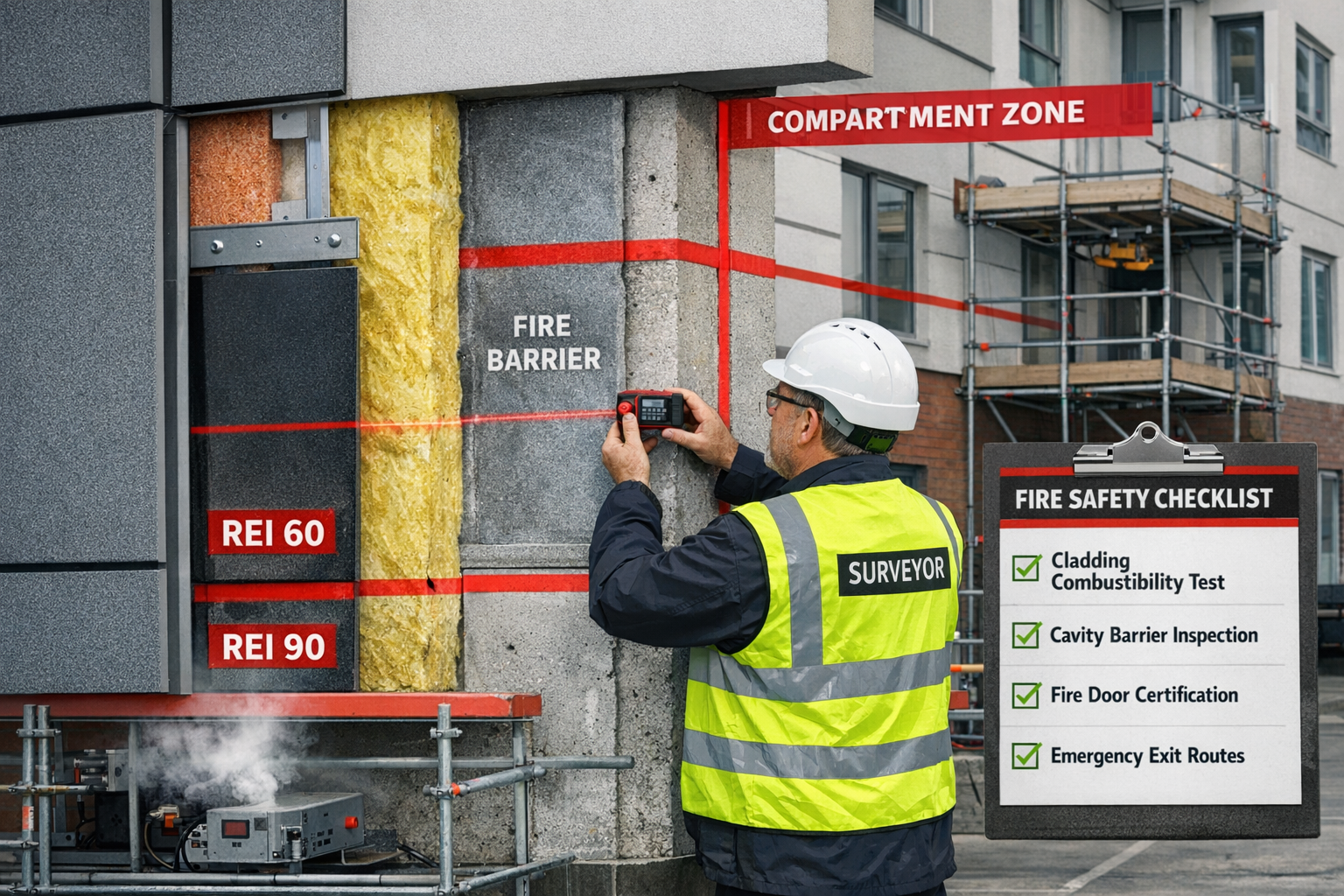
The ongoing response to the Grenfell Tower tragedy continues to drive fire safety reforms in 2026. Building surveys must now incorporate comprehensive fire safety assessments, particularly for properties with external wall systems, multi-occupancy buildings, and those undergoing retrofit works.
External Wall System Assessment
Cladding Material Identification
- Identify all external wall system materials and manufacturers
- Determine cladding combustibility classification (A1, A2-s1 d0, etc.)
- Check for aluminium composite material (ACM) panels
- Assess high-pressure laminate (HPL) cladding presence
- Identify expanded polystyrene (EPS) insulation
Cladding System Construction
- Evaluate cavity barrier presence and condition
- Check fire stopping at compartment boundaries
- Assess fixings and support systems integrity
- Identify ventilated vs. non-ventilated rainscreen systems
- Check for combustible insulation materials
Building Height and Risk Assessment
- Record building height (18m threshold for regulatory action)
- Assess number of storeys and occupancy levels
- Evaluate evacuation strategy (stay-put vs. simultaneous evacuation)
- Check for vulnerable occupants (care facilities, student accommodation)
Properties over 18 metres with combustible cladding face immediate remediation requirements. However, buildings under this threshold should still be assessed for fire safety adequacy, particularly when planning energy efficiency retrofits that may involve external wall insulation.
Compartmentation and Fire Resistance
Structural Fire Protection
- Assess compartment wall fire resistance ratings
- Check fire door specifications and certification
- Evaluate fire stopping around service penetrations
- Inspect cavity barriers in roof and floor voids
- Check protected escape route integrity
Fire Door Compliance
- Verify fire door certification (FD30, FD60, FD90)
- Check intumescent strip presence and condition
- Assess door closer functionality
- Evaluate smoke seal adequacy
- Inspect glazing fire resistance
Service Penetrations
- Identify all service penetrations through fire-rated elements
- Check fire stopping materials and installation quality
- Assess ductwork fire damper presence
- Evaluate electrical and plumbing penetration protection
Retrofit works often create new penetrations through fire-rated elements. Pre-retrofit surveys must map existing fire compartmentation to ensure retrofit contractors maintain fire resistance.
Means of Escape and Fire Safety Equipment
Escape Route Assessment
- Measure travel distances to nearest exit
- Check escape route width and obstruction-free status
- Assess emergency lighting provision and functionality
- Evaluate signage adequacy and visibility
- Check final exit accessibility
Fire Detection and Alarm Systems
- Verify smoke alarm presence in required locations
- Check heat detector provision in kitchens
- Assess alarm system type (LD1, LD2, LD3 categories)
- Test alarm functionality and battery condition
- Evaluate need for system upgrade
Fire Fighting Equipment
- Check fire extinguisher provision and servicing dates
- Assess fire blanket presence in kitchens
- Evaluate sprinkler system presence (high-rise buildings)
- Check dry riser or wet riser systems (tall buildings)
Retrofit-Specific Fire Safety Considerations
When planning energy efficiency retrofits, additional fire safety considerations arise:
External Wall Insulation (EWI) Systems
- Specify non-combustible insulation materials (mineral wool)
- Ensure cavity barriers installed at appropriate intervals
- Check render system fire performance
- Assess impact on existing fire safety features (vents, access panels)
Internal Wall Insulation (IWI) Systems
- Verify insulation material fire classification
- Assess impact on escape route widths
- Check electrical installation protection during installation
- Ensure fire stopping maintained around services
Loft and Roof Insulation
- Maintain fire separation between properties (semi-detached, terraced)
- Protect electrical cables from overheating
- Ensure adequate ventilation to prevent condensation
- Check impact on loft hatch fire resistance
Understanding fire safety requirements before retrofit planning prevents costly remedial works and ensures compliance with building regulations.
Implementing Essential Building Survey Checklists for 2026 EPC Retrofit Mandates and Fire Safety Compliance
Translating checklist requirements into practical survey execution requires systematic approaches, appropriate tools, and clear documentation.
Survey Methodology and Sequencing
Desktop Research Phase
- Obtain previous EPC certificates and identify current rating
- Review planning history for extensions or alterations
- Check building control records for compliance certificates
- Research property age and typical construction methods
- Identify conservation area or listed building constraints
- Review fire risk assessments (if available for multi-occupancy buildings)
Visual Inspection Phase
- Conduct external inspection of all elevations
- Assess roof condition from ground level and (if safe) close inspection
- Inspect loft spaces for insulation, ventilation, and structure
- Examine all habitable rooms for damp, ventilation, and heating
- Check service installations (boiler, consumer unit, hot water cylinder)
- Inspect external wall construction (where visible)
- Assess fire safety provisions throughout property
Intrusive Investigation Phase
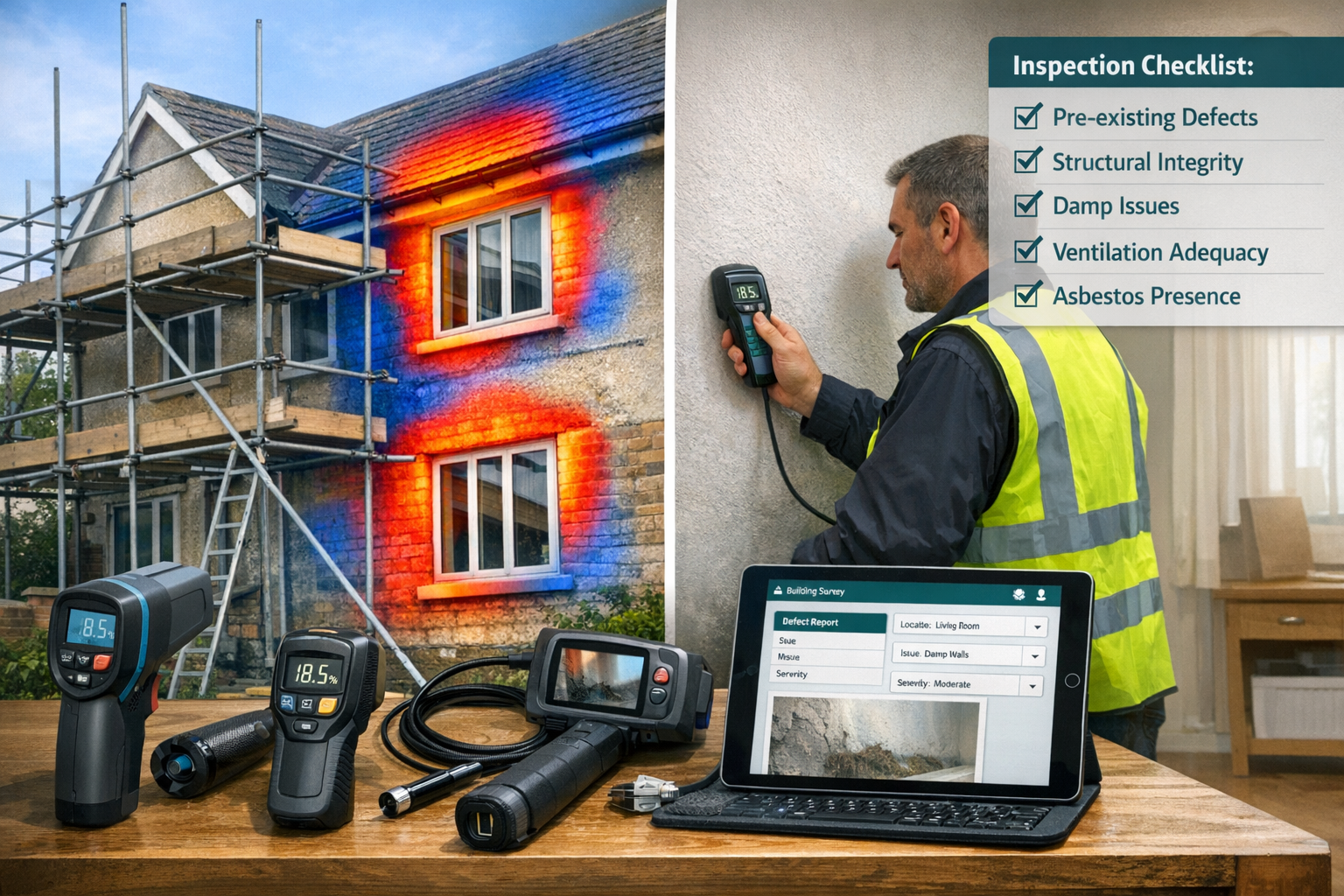
- Use thermal imaging camera to identify heat loss and thermal bridging
- Conduct moisture meter surveys of suspect areas
- Perform borescope inspections of cavity walls
- Test heating system operation and controls
- Assess air-tightness (if specialist equipment available)
Documentation and Reporting Phase
- Photograph all defects and areas requiring attention
- Create annotated floor plans showing problem areas
- Compile prioritized recommendations with cost estimates
- Provide specific guidance on areas requiring further investigation
- Link findings to specific EPC metrics for targeted improvements
Essential Survey Equipment
Basic Tools
- Digital moisture meter with deep-wall probes
- Laser distance measurer for room dimensions
- Spirit level for checking structural alignment
- Binoculars for high-level inspection
- Torch for loft and underfloor inspections
- Screwdriver set for removing access panels
Advanced Diagnostic Equipment
- Thermal imaging camera (essential for fabric performance assessment)
- Borescope camera for cavity wall inspection
- Combustible gas detector for heating system safety
- Electrical socket tester for basic electrical safety checks
- Sound level meter (for heat pump noise assessment)
Documentation Tools
- Digital camera with wide-angle lens
- Tablet or laptop for on-site report drafting
- Survey software for floor plan creation
- Voice recorder for detailed observations
Reporting Standards and Actionable Recommendations
Effective survey reports must translate technical findings into actionable recommendations aligned with 2026 compliance requirements:
Defect Prioritization Framework
- Critical (Immediate Action): Fire safety deficiencies, structural instability, active water ingress
- Urgent (Within 6 Months): Failed heating systems, severe damp, hazardous materials requiring removal
- Important (Within 1-2 Years): Fabric improvements for EPC compliance, ventilation upgrades
- Desirable (Long-term Planning): Smart technology integration, renewable energy systems
EPC Improvement Pathway
For each property, the report should provide a clear pathway from current performance to target rating:
| Current Rating | Fabric Priority Actions | Heating Priority Actions | Quick Wins |
|---|---|---|---|
| F or G | Loft insulation to 270mm, draught-proofing | Boiler replacement with modern condensing model | Hot water cylinder jacket, pipe insulation |
| E | Cavity wall insulation, window upgrades | Heating controls upgrade, TRVs | LED lighting, smart thermostat |
| D | Solid wall insulation, floor insulation | Heat pump feasibility assessment | Smart meter, energy monitoring |
| C | Thermal bridging reduction, triple glazing | Heat pump installation, solar thermal | Battery storage, EV charger |
This approach aligns recommendations with the four-metric system, allowing property owners to prioritize improvements based on budget and urgency[1].
Specialist Assessments and Further Investigation
Survey checklists should identify when specialist input is required:
Structural Engineering Input
- Significant cracking or movement requiring load calculations
- Proposed removal of walls for open-plan layouts
- Assessment of structural capacity for heavy insulation systems
- Evaluation of foundation adequacy for heat pump equipment
Asbestos Surveying
- Any property built before 2000 requiring intrusive works
- Suspected asbestos-containing materials identified
- Pre-demolition or major refurbishment projects
Electrical Engineering Assessment
- Consumer unit replacement requirements
- Electrical capacity upgrades for heat pumps or EV chargers
- Smart home integration planning
- Renewable energy system integration
Fire Engineering Consultation
- Complex buildings with multiple occupancies
- Properties requiring alternative fire safety strategies
- Cladding remediation design
- Compartmentation restoration in altered buildings
Knowing when to recommend specialist investigations prevents inadequate survey scope and ensures property owners receive comprehensive guidance.
Cost Estimation and Budget Planning
Survey reports should include realistic cost estimates for identified works:
Typical Retrofit Cost Ranges (2026)
- Loft insulation (270mm): £400-£800 for typical semi-detached house
- Cavity wall insulation: £800-£1,500 for typical semi-detached house
- External wall insulation: £8,000-£15,000 for typical semi-detached house
- Internal wall insulation: £6,000-£12,000 for typical semi-detached house
- Air source heat pump installation: £8,000-£14,000 including radiator upgrades
- Window replacement (double to triple glazing): £1,000-£1,500 per window
- Fire door replacement: £400-£800 per door including installation
- Cladding remediation: £20,000-£100,000+ depending on building size
These estimates help property owners develop realistic budgets for repairs and restoration aligned with compliance timelines.
Legal and Compliance Considerations
Survey reports must highlight legal obligations and potential consequences of failing to act:
EPC Compliance Deadlines
- Private rented sector: Minimum EPC C rating expected by 2030[5][7]
- Social housing: EPC C rating by 2030 under Warm Homes Plan[7]
- Owner-occupied: No current minimum, but affects saleability and mortgage availability
Fire Safety Legal Requirements
- Building Safety Act 2022 obligations for responsible persons
- Fire risk assessment requirements for multi-occupancy buildings
- Cladding remediation timelines for high-risk buildings
- Fire door certification and maintenance obligations
Planning and Building Control
- Listed building consent requirements for alterations
- Conservation area restrictions on external changes
- Building regulation approval for structural alterations
- Party wall agreements for work affecting adjoining properties
Highlighting these legal contexts helps property owners understand urgency and prioritize actions appropriately. For complex legal situations, recommending construction law advice ensures proper compliance.
Case Studies: Survey Checklists in Practice
Case Study 1: Victorian Terrace Retrofit Assessment
Property: 1890s mid-terrace house, solid brick walls, suspended timber floors, single-glazed sash windows, current EPC rating E
Survey Findings:
- No loft insulation present
- Solid 9-inch brick walls with no insulation
- Original sash windows with poor air-tightness
- Old boiler with basic controls (15+ years old)
- Rising damp in front reception room
- Inadequate ventilation causing condensation in bathroom
Prioritized Recommendations:
- Immediate: Address rising damp through improved external drainage and DPC injection (£2,500)
- Phase 1 (Year 1): Install loft insulation to 270mm (£600), upgrade boiler and heating controls (£3,500), improve ventilation (£800)
- Phase 2 (Years 2-3): Internal wall insulation to habitable rooms (£8,000), secondary glazing to preserve sash windows (£4,000)
- Phase 3 (Years 4-5): Heat pump installation after fabric improvements (£10,000)
Projected EPC Improvement: E to C rating after all phases, with Phase 1 alone achieving D rating
Fire Safety Considerations: Maintain compartmentation to adjoining properties during internal wall insulation, ensure fire doors to kitchen meet FD30 standard
Case Study 2: 1960s Purpose-Built Flat with Cladding Concerns
Property: Fourth-floor flat in 8-storey block, cavity wall construction with external cladding system, current EPC rating D
Survey Findings:
- External cladding system includes combustible insulation panels
- Cavity barriers missing at several floor levels
- Fire doors to flat entrance and internal rooms lack certification
- Communal escape routes cluttered with storage
- Electric storage heaters inefficient and costly to run
- Cavity wall insulation present but settled in places
Prioritized Recommendations:
- Critical: Report cladding concerns to building owner/management company for fire risk assessment and potential remediation
- Urgent: Replace flat entrance door with certified FD30S fire door (£600), clear escape routes
- Important: Install heat pump or upgrade to modern electric heating (£5,000-£8,000), top-up cavity wall insulation (£800)
- Desirable: Triple glazing replacement (£6,000), smart heating controls (£400)
Projected EPC Improvement: D to C rating after heating and insulation upgrades
Fire Safety Considerations: External cladding remediation responsibility lies with building owner; flat owner should ensure internal fire safety measures are compliant while awaiting building-wide works
Case Study 3: Listed Georgian Property Requiring Sensitive Retrofit
Property: Grade II listed 1820s townhouse, solid stone walls, original sash windows, current EPC rating F (previously exempt)
Survey Findings:
- Minimal loft insulation (50mm)
- Solid stone walls (600mm thick) with no insulation
- Original single-glazed sash windows in good condition
- Oil-fired boiler nearing end of life
- No damp-proof course (typical for period)
- Heritage features including decorative plasterwork and panelling
Prioritized Recommendations:
- Phase 1: Loft insulation using breathable materials to 200mm (conservation officer approval) (£1,200), secondary glazing sympathetic to heritage character (£8,000)
- Phase 2: Internal wall insulation using breathable systems in non-heritage rooms only (£6,000), improve ventilation (£1,000)
- Phase 3: Replace oil boiler with air source heat pump (planning permission and listed building consent required) (£12,000)
Projected EPC Improvement: F to D rating after Phase 1, D to C after all phases
Fire Safety Considerations: Maintain fire separation between floors, ensure any insulation materials are non-combustible, preserve historic escape routes
Heritage Considerations: All works require listed building consent; survey report should identify which improvements are feasible within heritage constraints and recommend specialist conservation architect input
Conclusion
The convergence of 2026 EPC reforms and ongoing fire safety regulations has fundamentally changed the building survey landscape. Essential Building Survey Checklists for 2026 EPC Retrofit Mandates and Fire Safety Compliance are no longer optional extras—they're critical tools for property owners, landlords, and buyers navigating an increasingly complex regulatory environment.
The transition to four-metric EPCs in October 2026 demands more sophisticated survey approaches that separately assess fabric performance, heating systems, energy costs, and smart readiness[1]. This granular evaluation enables targeted improvements rather than generic upgrade recommendations, helping property owners optimize their retrofit investments.
Simultaneously, fire safety compliance requires detailed assessment of cladding systems, compartmentation, and means of escape—particularly for properties undergoing energy efficiency retrofits that may impact existing fire safety provisions. Identifying pre-existing defects before retrofit works prevents exacerbating problems and ensures compliance with both energy efficiency and fire safety regulations.
Actionable Next Steps
For Property Owners Planning Retrofits:
- Commission a comprehensive Level 3 building survey before planning any energy efficiency works
- Obtain current EPC certificate and understand performance across all four new metrics
- Address pre-existing defects (damp, structural issues, ventilation) before adding insulation
- Develop phased retrofit plan aligned with budget and compliance timelines
- Engage specialists for asbestos surveys, fire risk assessments, and heritage considerations where applicable
For Landlords Facing 2030 EPC C Deadline:
- Survey entire portfolio to identify properties requiring upgrades
- Prioritize properties with current F or G ratings for immediate action
- Develop multi-year investment plan for systematic portfolio improvement
- Consider EPC and MEES implications for property values and rental income
- Monitor government grant schemes and financing options for retrofit works
For Property Buyers:
- Request detailed building surveys that assess both energy efficiency potential and fire safety compliance
- Factor retrofit costs into purchase negotiations and budget planning
- Prioritize properties with higher EPC ratings or clear improvement pathways
- Understand building materials and construction methods that facilitate or hinder retrofitting
- Seek professional advice on common building problems and solutions
The regulatory landscape will continue evolving, but thorough building surveys using comprehensive checklists provide the foundation for compliant, cost-effective property improvement. By identifying defects, assessing retrofit suitability, and evaluating fire safety provisions before commencing works, property stakeholders can navigate 2026's regulatory requirements with confidence and avoid costly mistakes.
References
[1] 2026 Epc Reform Technical Update – buildingenergyexperts.co.uk
[2] Government Release Partial Outcome On Epc Reform For England And Wales – elmhurstenergy.co.uk
[3] Reforms To The Energy Performance Of Buildings Regime – gov.uk
[4] Epc Reform What We Know – energy-trust.co.uk
[5] Landlords Forced Upgrade Epc C Warm Homes Plan 2030 – propertyportfolioinvestor.co.uk
[6] Building Surveys For Energy Performance Certificates In 2026 Navigating Epc Upgrades And Retrofit Mandates For Uk Buyers – nottinghillsurveyors.com
[7] Warm Homes Plan 2026 What It Means For The Housing Sector – carbonliteracy.com
[8] Your Key Legislation Updates 2026 – nrla.org.uk
[9] Prs Homes Energy Performance Government Response – assets.publishing.service.gov.uk
[10] Epcs And Mees Is 2026 The Year For Reform – reedsmith.com