

The buy-to-let market is experiencing a dramatic transformation in 2026. As institutional investors and professional landlords dominate the landscape, building surveys for institutional buy-to-let surge: risk assessment in 2026's professional landlord market has become the cornerstone of successful portfolio expansion. With over 400,000 BTL limited companies now registered and two-thirds of landlords planning portfolio growth, the stakes have never been higher for comprehensive due diligence[1].
This surge comes at a critical juncture. While 24% of traditional landlords plan to exit the market due to regulatory pressures, sophisticated investors are seizing opportunities created by this supply-side shift[1]. The difference between profitable acquisitions and costly mistakes? Rigorous structural assessments that identify yield-impacting defects before they erode returns.
Key Takeaways
✅ Professional landlord structures now dominate the BTL market, with limited companies becoming the single largest business type in 2025, demanding institutional-grade risk assessment protocols[1].
✅ Comprehensive building surveys identify critical defects that can reduce rental yields by 15-30%, including structural issues, damp problems, and energy inefficiency that impact both tenant retention and regulatory compliance.
✅ Capital growth forecasts predict 22.2% average UK property appreciation by 2030, but only properties with sound structural foundations and minimal deferred maintenance will capture this upside[3].
✅ Regulatory compliance risks are escalating, with EPC requirements and safety standards creating significant exposure for landlords who skip thorough pre-acquisition surveys.
✅ Strategic due diligence separates successful institutional investors from those facing unexpected repair costs, tenant disputes, and diminished portfolio performance in the competitive 2026 market.
The Institutional Shift: Why Building Surveys for Institutional Buy-to-Let Surge Matter More Than Ever
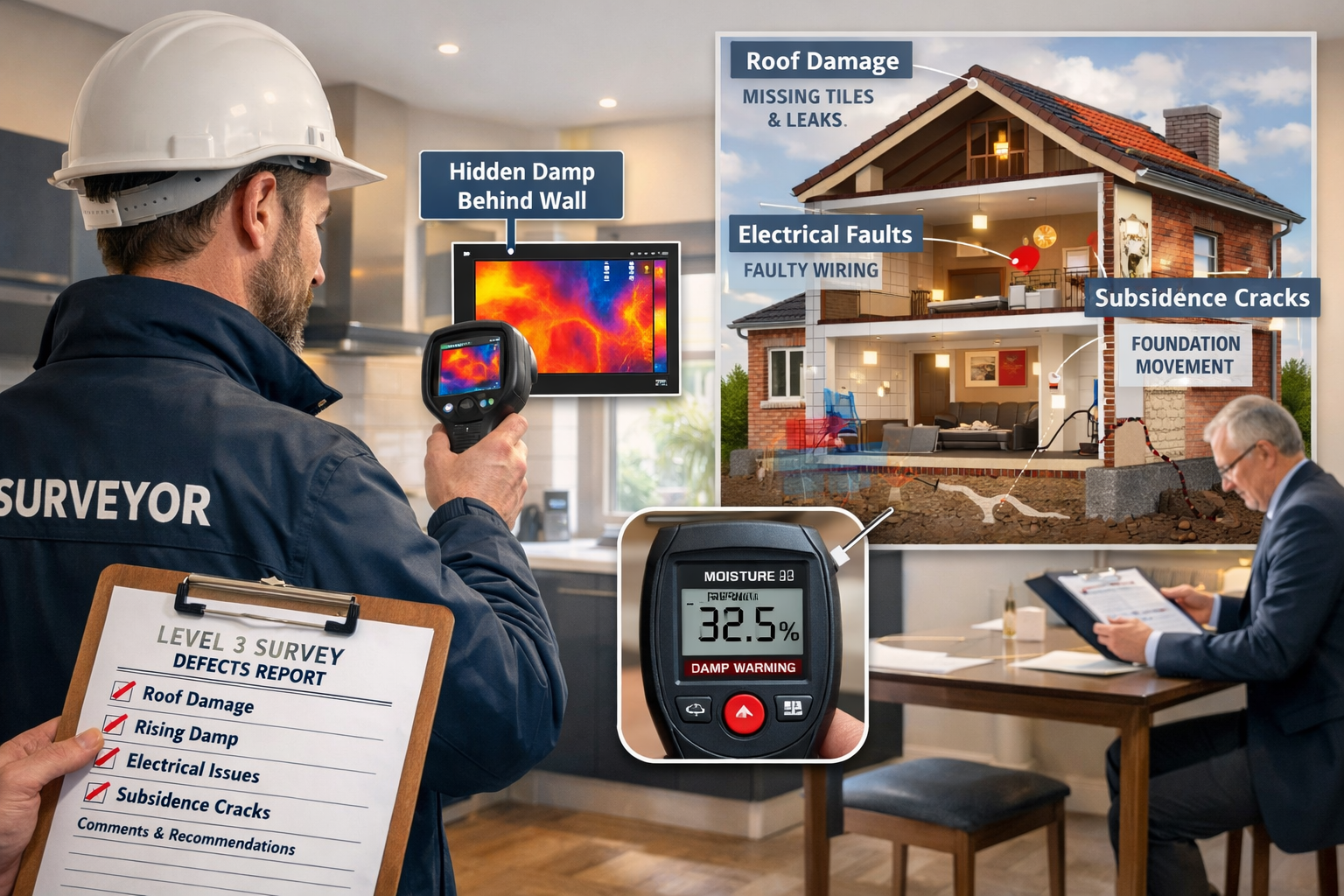
The Professional Landlord Revolution
The buy-to-let sector has undergone a fundamental restructuring. BTL limited companies surpassed all other business types in 2025, signaling a permanent shift toward institutional and professional portfolio management[1]. This transition brings heightened expectations for risk assessment in 2026's professional landlord market.
Unlike individual landlords who might accept property quirks, institutional investors demand:
- Quantified risk exposure across entire portfolios
- Standardized assessment protocols for comparing acquisition opportunities
- Detailed maintenance forecasting for accurate financial modeling
- Regulatory compliance verification to avoid costly penalties
The sophistication gap is widening. Professional landlords increasingly use specialist BTL products and advanced risk management strategies, while traditional landlords struggle with rising costs and tightened lending criteria[1].
Market Dynamics Driving Survey Demand
Several converging factors make comprehensive building surveys non-negotiable for serious investors:
📊 Renewed Investment Activity: Transaction volumes reached £19 billion in Q4 2025—a 20% improvement over Q4 2024 and the strongest quarter since mid-2022[2]. This competitive environment means investors cannot afford acquisition mistakes.
💰 Capital Appreciation Potential: With Savills forecasting 22.2% average property value increases by 2030, identifying structurally sound properties becomes critical for capturing growth[3]. Regional markets like Yorkshire and the North West are projected to see gains of +28.8%[3].
📈 Rental Growth Outlook: Average UK rental growth of 12% is forecast for 2026-2030, with London values rising 11.5%[3]. However, properties with significant defects struggle to achieve market rents and experience higher tenant turnover.
🏦 Improving Lending Environment: The Bank of England's base rate cuts in late 2025, with more reductions expected in 2026, are easing borrowing costs[1]. This creates acquisition opportunities—but only for properties that pass rigorous lender surveys.
Critical Risk Assessment Components in Building Surveys for Institutional Buy-to-Let Portfolios
Structural Integrity and Yield-Impacting Defects
The foundation of effective building surveys for institutional buy-to-let surge: risk assessment in 2026's professional landlord market lies in identifying defects that directly impact rental yields and capital values.
High-Priority Structural Issues
Professional surveys must thoroughly examine:
Foundation and Subsidence Risks 🏗️
- Settlement cracks indicating ongoing movement
- Proximity to trees with aggressive root systems
- Historical subsidence claims in the area
- Soil type and drainage conditions
Properties with active subsidence can see rental values drop 20-40% and become virtually unsaleable without expensive underpinning work costing £10,000-£50,000.
Roof Condition and Water Ingress 🌧️
- Remaining lifespan of roof coverings
- Valley gutter deterioration
- Chimney stack stability
- Flat roof membrane condition
A failing roof requiring replacement (£5,000-£15,000 for typical BTL properties) creates immediate void periods and emergency repair costs that devastate cash flow projections.
Damp and Moisture Problems 💧
- Rising damp from failed damp-proof courses
- Penetrating damp through defective pointing
- Condensation issues from poor ventilation
- Hidden mold growth behind finishes
Understanding building materials assessments helps identify materials prone to moisture retention that create ongoing maintenance burdens.
Load-Bearing Wall Alterations ⚠️
- Unauthorized structural modifications
- Missing or inadequate structural support
- Open-plan conversions without proper calculations
- Loft conversions with insufficient strengthening
Discovering urgent or dangerous building issues during surveys prevents catastrophic liability exposure and allows for accurate repair budgeting.
Energy Performance and Regulatory Compliance
The regulatory landscape for BTL properties has intensified dramatically. Risk assessment in 2026's professional landlord market must prioritize compliance verification.
EPC Requirements and MEES Compliance
Current regulations prohibit letting properties with EPC ratings below E. However, forward-thinking institutional investors recognize that:
- EPC rating C or above is becoming the de facto market standard
- Properties rated D or E face diminishing tenant demand
- Upgrade costs for improving ratings can range from £3,000-£15,000
Comprehensive EPC and MEES building survey assessments identify specific improvements needed and their cost-benefit ratios. Common upgrades include:
| Improvement | Typical Cost | EPC Impact | ROI Timeline |
|---|---|---|---|
| Loft insulation (270mm) | £300-£500 | +5-8 points | 2-3 years |
| Cavity wall insulation | £500-£1,200 | +8-12 points | 3-5 years |
| Boiler replacement (A-rated) | £2,000-£3,500 | +10-15 points | 5-7 years |
| Double glazing (full property) | £5,000-£8,000 | +8-12 points | 8-12 years |
| Solar PV panels (4kW) | £5,000-£7,000 | +15-20 points | 10-15 years |
Safety Compliance Verification
Professional landlords face extensive safety obligations:
- Electrical Installation Condition Reports (required every 5 years)
- Gas Safety Certificates (annual requirement)
- Fire safety measures including smoke and CO alarms
- Legionella risk assessments for water systems
- Asbestos surveys for pre-2000 properties
Building surveys should flag non-compliant installations and estimate remediation costs. The consequences of failing to act on identified safety issues include unlimited fines and potential criminal liability.
Maintenance Forecasting and Lifecycle Budgeting
Sophisticated institutional investors use building surveys for accurate maintenance planning and lifecycle cost modeling.
Component Replacement Scheduling
Professional surveys should provide:
Immediate Repairs (0-12 months) 🔴
- Critical safety issues
- Weather-tightness failures
- Compliance violations
- Tenant-impacting defects
Short-term Maintenance (1-5 years) 🟡
- Boiler replacements
- Kitchen and bathroom renewals
- External redecoration
- Minor structural repairs
Long-term Capital Expenditure (5-15 years) 🟢
- Roof replacements
- Window renewals
- Driveway resurfacing
- Major system upgrades
This forecasting enables accurate budgeting for repairs and restoration that protects yield projections and prevents unexpected capital calls.
Advanced Due Diligence Strategies for Building Surveys in 2026's Professional Market
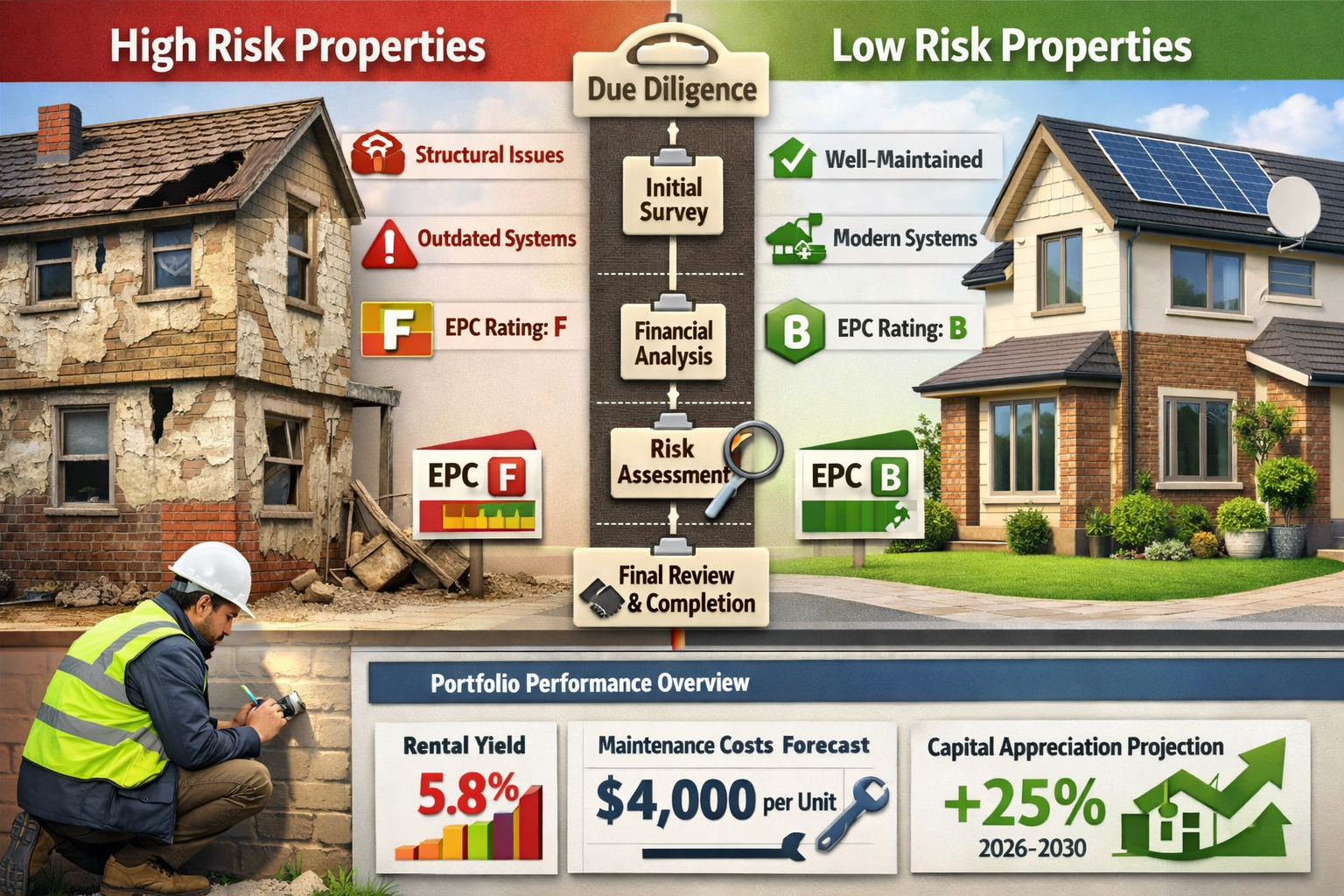
Portfolio-Level Risk Assessment Frameworks
Institutional investors managing multiple properties require standardized assessment protocols that enable cross-property comparison and portfolio-level risk aggregation.
Defect Severity Classification Systems
Professional building surveys should categorize findings using consistent severity ratings:
Category 1: Urgent Attention Required ⚠️
- Immediate safety hazards
- Progressive structural deterioration
- Regulatory compliance failures
- Significant tenant health risks
Category 2: Significant Defects 🔶
- Repairs needed within 12-24 months
- Accelerated wear requiring monitoring
- Efficiency improvements with strong ROI
- Tenant amenity impacts
Category 3: Minor Issues 🔷
- Cosmetic imperfections
- Normal wear and tear
- Future monitoring recommended
- Optional improvements
This classification enables investors to quickly assess whether properties meet acquisition criteria and compare opportunities objectively.
Specialist Survey Technologies and Methodologies
Modern building surveys for institutional buy-to-let surge: risk assessment in 2026's professional landlord market leverage advanced diagnostic tools:
Thermal Imaging and Moisture Detection
Infrared thermography reveals:
- Hidden water leaks and moisture ingress
- Insulation gaps and thermal bridging
- Heating system inefficiencies
- Structural thermal performance
These non-invasive techniques identify problems invisible to visual inspection, preventing costly post-acquisition surprises.
Drone Surveys for Multi-Unit Properties
Premium drone surveys provide:
- Detailed roof condition assessment without scaffolding
- Chimney and high-level masonry inspection
- Gutter and rainwater goods examination
- Overall building envelope documentation
For institutional portfolios with multiple properties, drone technology dramatically reduces survey costs while improving coverage.
Specialist Investigations
Comprehensive due diligence may require sourcing extra advice from:
- Structural engineers for significant defects or alterations
- Drainage specialists for persistent water problems
- Electrical contractors for distribution board assessments
- Asbestos consultants for pre-2000 properties
- Arboricultural experts for tree-related subsidence risks
Location-Specific Risk Factors
Building condition represents only one component of comprehensive risk assessment. Professional investors also evaluate:
Transport Links and Tenant Demand
Properties near excellent transport links command premium rents and experience lower void periods. Survey reports should contextualize findings within location-specific market dynamics.
Regional Market Variations
The 2026 market shows significant regional divergence:
- Yorkshire and North West: Forecast +28.8% capital growth by 2030, offering strong value opportunities[3]
- London: 11.5% rental growth projected, but higher acquisition costs require pristine property condition[3]
- Regional cities: Strong tenant demand from young professionals supports premium rents for well-maintained properties
Understanding these dynamics helps investors calibrate acceptable defect levels against market positioning.
Implementing Effective Risk Mitigation Strategies Post-Survey
Adaptive Risk Management in Response to Market Reforms
The 2026 professional landlord market demands proactive risk mitigation. Research shows landlords are already adapting strategies in anticipation of regulatory changes[1]:
Tenant Selection Enhancements 👥
- 27% implemented stricter referencing criteria
- 7% increased use of guarantors
- Enhanced affordability assessments
Financial Protection Measures 💼
- 11% took out rent guarantee insurance
- Increased deposit amounts where permitted
- Diversified tenant mix across portfolios
Building surveys inform these strategies by identifying properties that may attract higher-risk tenant profiles due to location or condition issues.
Negotiation Leverage and Price Adjustments
Comprehensive survey findings provide powerful negotiation tools. Professional investors use building defects surveys to:
Quantify Repair Costs 📊
- Obtain contractor quotes for major works
- Calculate holding costs during renovation periods
- Factor in rental income lost during repairs
- Account for project management fees
Renegotiate Purchase Terms 💰
- Request price reductions reflecting defect severity
- Negotiate retention amounts for post-completion repairs
- Secure vendor contributions toward specific works
- Adjust completion timelines for remediation
Properties requiring £20,000+ in repairs typically justify 10-15% price reductions, significantly improving acquisition yields.
Portfolio Optimization Through Strategic Refurbishment
Two-thirds of landlords plan to expand or refurbish portfolios in 2026[1]. Building surveys guide strategic improvement decisions:
High-ROI Improvement Priorities
Focus refurbishment budgets on:
- EPC rating improvements to C or above
- Modern kitchens and bathrooms commanding 10-15% rental premiums
- Energy-efficient heating systems reducing tenant bills
- Smart home technology appealing to professional tenants
- Outdoor space enhancement increasingly valued post-pandemic
Avoiding Over-Improvement
Survey context prevents costly over-specification. Properties in mid-market areas rarely justify premium finishes that won't achieve corresponding rent increases.
The Future Landscape: Building Surveys for Institutional Buy-to-Let Growth Beyond 2026

Emerging Regulatory Pressures
Professional landlords must anticipate evolving compliance requirements:
Stricter EPC Standards 🌱
- Potential future requirement for EPC rating C minimum
- Possible bans on new gas boiler installations
- Increasing focus on whole-building energy performance
Enhanced Safety Regulations 🔒
- Expanded electrical safety requirements
- Strengthened fire safety standards
- Potential licensing scheme expansions
Forward-thinking building surveys assess properties' capacity to meet anticipated future standards, not just current minimums.
Technology Integration in Survey Processes
The survey industry itself is evolving:
Digital Survey Platforms 📱
- Real-time reporting with photographic evidence
- Cloud-based document management
- Automated defect tracking and remediation monitoring
- Portfolio-wide analytics and trend identification
Predictive Maintenance AI 🤖
- Machine learning algorithms predicting component failures
- Automated maintenance scheduling
- Cost optimization through preventive interventions
- Portfolio-level risk scoring
Institutional investors should partner with surveyors offering these capabilities for competitive advantage.
Market Opportunity Identification
Despite challenges, multiple factors support continued BTL investment[1][3]:
✅ Interest rate relief as base rate cuts continue through 2026
✅ Strong capital appreciation forecasts averaging 22.2% by 2030
✅ Robust rental growth of 12% projected over five years
✅ Supply-side constraints as 24% of landlords exit the market
✅ Professional investor advantages through scale and sophistication
Building surveys enable investors to capitalize on these opportunities while avoiding properties that would undermine portfolio performance.
Conclusion: Building Survey Excellence as Competitive Advantage
The institutional buy-to-let surge of 2026 represents a watershed moment for professional landlords. As the market consolidates around sophisticated investors managing substantial portfolios, building surveys for institutional buy-to-let surge: risk assessment in 2026's professional landlord market has evolved from optional due diligence to essential competitive infrastructure.
The data is compelling: with 400,000+ BTL limited companies now operating, capital growth forecasts of 22.2% through 2030, and rental appreciation of 12% over five years, the opportunity is substantial[1][3]. However, these returns accrue only to investors who systematically identify and avoid yield-destroying defects through rigorous pre-acquisition assessment.
Key Success Factors
Professional landlords thriving in 2026's market share common characteristics:
🎯 Comprehensive due diligence protocols using Level 3 building surveys as standard for all acquisitions
🎯 Quantified risk assessment enabling objective comparison across acquisition opportunities
🎯 Proactive compliance management anticipating regulatory evolution rather than reacting to changes
🎯 Lifecycle cost modeling that captures total ownership costs beyond purchase price
🎯 Strategic refurbishment planning focusing capital on high-ROI improvements
Actionable Next Steps
For institutional investors and professional landlords seeking to capitalize on the 2026 BTL surge:
1. Establish Survey Standards 📋
Define minimum survey requirements for all portfolio acquisitions. Consider which building survey you need based on property type, age, and intended use.
2. Build Surveyor Relationships 🤝
Partner with chartered surveyors experienced in BTL portfolios who understand investor priorities and can provide consistent, comparable reporting across multiple properties.
3. Integrate Survey Findings 📊
Develop systems for incorporating survey data into financial models, risk registers, and portfolio management platforms. Survey insights should directly inform acquisition decisions and pricing negotiations.
4. Plan Proactive Maintenance 🔧
Use survey-identified maintenance schedules to budget accurately for capital expenditure and prevent emergency repairs that disrupt cash flow and tenant relationships.
5. Monitor Regulatory Evolution ⚖️
Stay informed about property market legislation changes and ensure acquisition criteria account for anticipated compliance requirements.
6. Leverage Technology 💻
Adopt digital survey platforms and advanced diagnostic techniques that provide deeper insights while reducing assessment costs across growing portfolios.
The institutional buy-to-let market of 2026 rewards professional, systematic approaches to risk assessment. Building surveys are no longer administrative formalities—they're strategic intelligence that separates profitable portfolio growth from costly acquisition mistakes. As the market continues consolidating around sophisticated investors, comprehensive due diligence becomes the foundation of sustainable competitive advantage.
References
[1] Booming Buy To Let Changes You Need To Know – https://www.mfsuk.com/blog/booming-buy-to-let-changes-you-need-to-know/
[2] Uk Real Estate Market Commentary January 2026 – schroders.com
[3] Why Buy To Let Is Still Worth It In 2026 – propertynotify.co.uk