

The property landscape across the United Kingdom is experiencing a dramatic geographical shift that demands urgent attention from surveying professionals. While traditional southern strongholds face stagnation, eight of the top ten growth areas are now concentrated in northern and central England and Scotland. This seismic shift means that surveying strategies for Northern Powerhouse properties have become essential knowledge for valuers who want to capitalize on the most dynamic markets in 2026 and beyond.
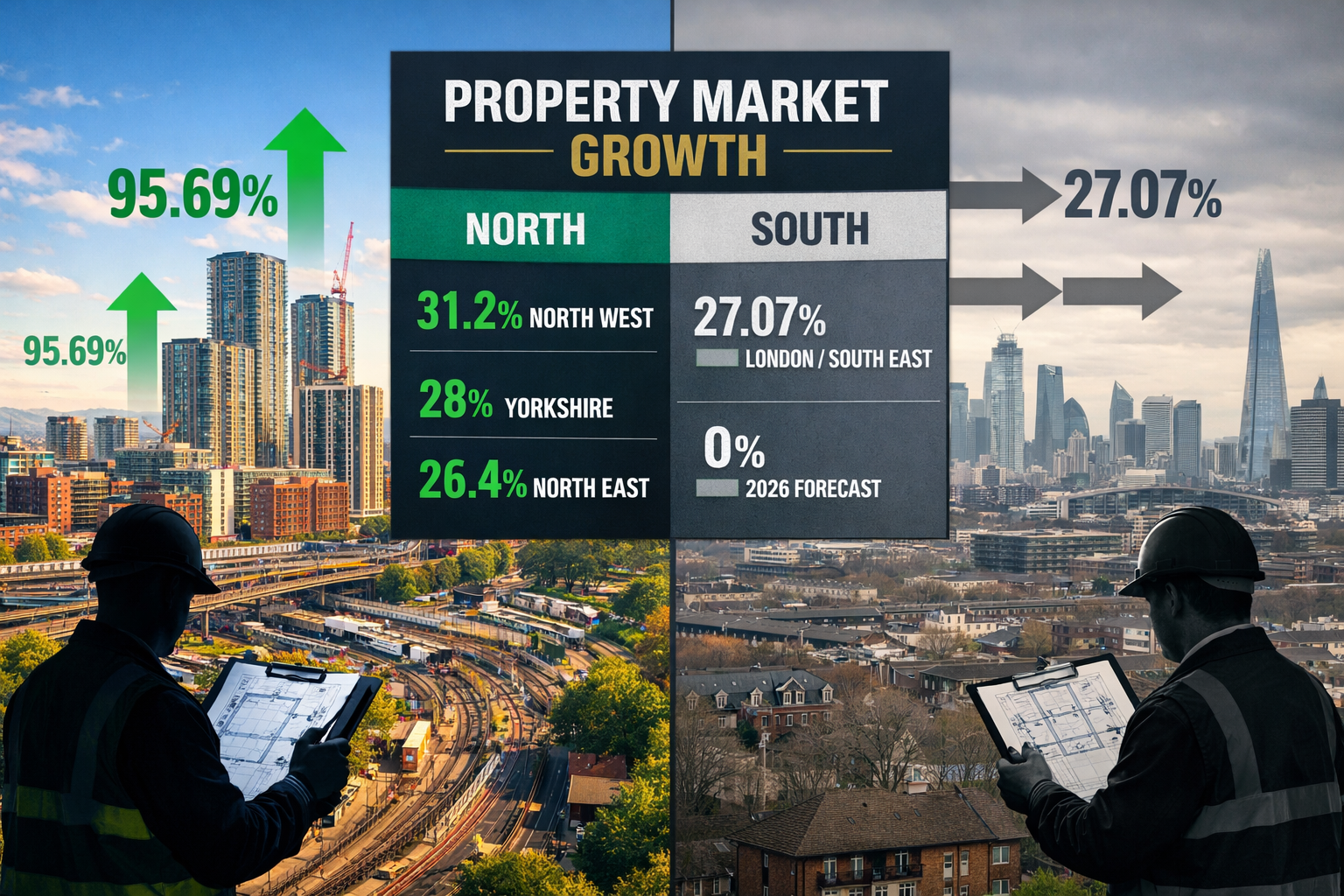
The numbers tell a compelling story: the North West is forecast to deliver over £10,000 appreciation per property in 2026 alone, with cumulative five-year growth projections reaching an extraordinary 31.2%[1]. Meanwhile, London and the South East face 0% growth forecasts for the same period[1]. For chartered surveyors and property valuers, this represents not just a market trend but a fundamental restructuring of where expertise, resources, and specialization efforts should be directed.
Understanding why valuers should specialize in high-growth northern markets requires examining the unique characteristics, challenges, and opportunities these regions present—from Victorian terraced housing stock requiring specialized inspection techniques to innovative urban regeneration projects demanding forward-thinking valuation approaches.
Key Takeaways
- 🎯 Geographic concentration: Eight of the UK's top ten property growth areas are in northern and central regions, with the North West leading at 31.2% projected five-year growth[1]
- 📊 Performance gap: Northern powerhouses like Manchester have achieved 95.69% price growth over the past decade, compared to just 27.07% in London[2]
- 💰 Rental yield advantage: North West postcodes are delivering up to 9% rental yields—returns impossible to achieve in saturated southern markets[1]
- 🏗️ Infrastructure catalysts: Multi-billion pound regeneration projects in Manchester, Leeds, and Newcastle are creating sustained valuation complexity requiring specialized surveying knowledge
- 🔍 Specialization imperative: Regional building stock variations, local market dynamics, and buyer psychology differences demand targeted expertise rather than generic valuation approaches
Understanding the Northern Powerhouse Property Phenomenon
The Data Behind the Northern Surge
The transformation of northern England into the UK's property growth engine represents one of the most significant regional economic shifts in modern British history. The North West region stands as the undisputed leader, with property prices in key cities experiencing unprecedented appreciation that has fundamentally altered the investment landscape[2].
Manchester exemplifies this transformation with staggering clarity. Over the past decade, average property prices have surged from £131,114 to £256,579—a remarkable 95.69% increase[2]. This isn't an isolated phenomenon. Neighboring Salford has witnessed even more dramatic growth, with prices doubling from £112,914 to £225,790, representing a 100% increase[2]. Oldham rounds out the top performers with 92.25% growth over the same period[2].
| City | 10-Year Price Growth | Starting Price | Current Average |
|---|---|---|---|
| Salford | 100% | £112,914 | £225,790 |
| Manchester | 95.69% | £131,114 | £256,579 |
| Oldham | 92.25% | – | – |
| North West Region | 61.19% | – | – |
| London (comparison) | 27.07% | – | – |
The Yorkshire and Humber region follows closely behind, with a 4.5% growth forecast for 2026 and 28% cumulative growth projected over five years[1]. Leeds, as the anchor city of the Innovation Arc economic corridor, is driving much of this appreciation through substantial infrastructure investment and commercial development.
The North East, often overlooked in property discussions, is experiencing its own renaissance. With a 4.5% growth forecast for 2026 and 26.4% cumulative five-year growth, Newcastle has emerged as a primary investment hub[1]. This represents a dramatic reversal from historical patterns where northeastern cities struggled with post-industrial decline.
Why the North Is Outperforming the South
The divergence between northern and southern property markets stems from multiple converging factors that surveyors must understand to provide accurate valuations and strategic advice.
Affordability and value proposition remains the fundamental driver. While London's average property price has become prohibitively expensive for most buyers, northern cities offer genuine home ownership opportunities for young professionals, families, and first-time buyers. This demographic accessibility creates sustained demand that supports consistent price appreciation.
Infrastructure investment has catalyzed transformation across northern cities. Manchester's Victoria North masterplan represents a £4 billion commitment to develop 15,000 homes alongside commercial and recreational facilities[1]. The Leeds Innovation Arc is attracting technology companies and high-skilled employment, creating housing demand from well-compensated professionals[1]. Newcastle's urban regeneration initiatives are revitalizing formerly neglected areas into desirable residential neighborhoods[1].
Rental yield dynamics further distinguish northern markets. Postcodes like M14 in Manchester are delivering 9% rental yields—returns that are simply unavailable in southern markets where property prices have outpaced rental income growth[1]. For investors and buy-to-let landlords, this yield advantage makes northern properties financially superior investments.
Economic diversification has reduced northern cities' historical dependence on manufacturing. Manchester has become a fintech and digital hub, Leeds dominates legal and financial services outside London, and Newcastle has developed strengths in education and healthcare sectors. This economic resilience supports sustained property demand.
"The North West is forecast to deliver over £10,000 appreciation per property in 2026 alone, with 31.2% cumulative growth over five years—the strongest regional performance by a considerable margin."[1]
For surveyors, these market dynamics create both opportunities and obligations. Properties in rapidly appreciating areas require more frequent revaluation, development sites need sophisticated feasibility assessments, and clients expect expert guidance on timing, location selection, and risk management.
Surveying Strategies for Northern Powerhouse Properties: Regional Specialization Requirements
Building Stock Characteristics Unique to Northern Markets
Northern England's property portfolio differs fundamentally from southern counterparts in age, construction methods, and architectural styles. These differences demand specialized surveying knowledge that generic approaches cannot adequately address.
Victorian and Edwardian terraced housing dominates many northern city centers and inner suburbs. These properties, typically constructed between 1850 and 1914, present specific structural considerations:
- Solid wall construction without cavity insulation, creating thermal efficiency challenges and potential damp issues
- Shared party walls requiring careful assessment under the Party Wall Act for renovation projects
- Original slate roofing that may be approaching end-of-life after 100+ years
- Suspended timber ground floors vulnerable to rot, subsidence, and ventilation problems
- Single-glazed sash windows requiring replacement or upgrade for energy efficiency
Surveyors conducting Level 3 building surveys in these properties must possess deep knowledge of period construction techniques, common defect patterns, and appropriate remediation approaches. Understanding what questions should be asked during a building survey becomes particularly crucial when examining older northern housing stock.
Post-war social housing conversions represent another significant category. Many northern cities contain substantial stocks of former council housing from the 1950s-1970s that have been sold into private ownership. These properties often feature:
- Non-traditional construction methods including concrete panel systems, steel frames, or timber frames
- Flat roof designs prone to water ingress and requiring specialized inspection
- Communal heating systems that may have been decommissioned or require assessment
- Shared ownership complications affecting valuation and marketability
Modern urban regeneration developments are transforming northern city centers. Former industrial buildings converted into apartments, new-build high-rises, and mixed-use developments require different surveying approaches:
- Building regulation compliance for conversions and new construction
- Cladding safety assessments following post-Grenfell building safety legislation
- Service charge implications for apartment buildings affecting long-term value
- Planning permission compliance for change-of-use developments
Understanding building defects specific to surveys in these varied property types requires region-specific experience that generalist surveyors may lack.
Local Market Knowledge and Valuation Benchmarks
Accurate property valuation in northern markets demands granular understanding of micro-location factors that significantly impact value. Two properties separated by a single street may command vastly different prices based on subtle local factors.
Neighborhood trajectory assessment requires monitoring:
- Regeneration zone proximity – properties near major development projects like Victoria North in Manchester command premium pricing
- Transport infrastructure improvements – new tram lines, rail connections, or motorway access points create value uplift
- School catchment areas – highly-rated primary and secondary schools drive family buyer demand
- Crime statistics and safety perceptions – hyperlocal variations affect desirability and insurance costs
- Gentrification indicators – coffee shop openings, independent retailers, and demographic shifts signal appreciation potential
When determining whether clients need a Level 2 or Level 3 survey, understanding these local factors helps surveyors provide tailored recommendations.
Comparable sales analysis in northern markets presents unique challenges. The rapid appreciation in many areas means that sales from even six months ago may not accurately reflect current values. Surveyors must:
- Weight recent transactions more heavily than historical comparables
- Adjust for property condition variations more precisely given renovation activity
- Account for micro-location premiums within the same postal district
- Consider off-market transactions and developer sales that may not appear in public records
Rental market dynamics influence valuation approaches, particularly for investment properties. Understanding local rental yields, tenant demand patterns, and landlord legislation impacts helps surveyors provide comprehensive valuation context. The property market legislation changes affecting landlords require constant monitoring.
Infrastructure and Development Pipeline Analysis
Northern cities' transformation relies heavily on infrastructure investment that creates both opportunities and risks for property valuers. Surveyors specializing in these markets must maintain detailed knowledge of planned developments and their likely impact on property values.
Transport infrastructure projects significantly influence property valuations:
- HS2 rail connections (despite recent modifications) continue to affect Manchester and Leeds property markets
- Local tram and metro expansions create value uplift along new routes
- Cycling infrastructure and pedestrianization projects affect city center property desirability
- Motorway improvements impact commuter belt property values
Understanding transport links and their valuation impact requires ongoing research and local market monitoring.
Commercial and mixed-use developments reshape neighborhoods rapidly:
- Office-to-residential conversions change area character and demographics
- Retail regeneration projects affect footfall and local amenity quality
- Student accommodation developments impact rental markets and property types in demand
- Hotel and hospitality projects signal confidence in area growth trajectory
Public sector investment in northern cities often precedes private sector development:
- Council-led regeneration initiatives provide advance signals of area improvement
- Public realm improvements (parks, squares, street furniture) enhance desirability
- Social infrastructure (libraries, community centers, healthcare facilities) supports long-term sustainability
Surveyors who maintain detailed knowledge of development pipelines can provide clients with forward-looking valuations that account for planned improvements. This requires regular consultation of planning applications and local authority development frameworks.
Why Valuers Should Specialize in High-Growth Northern Markets
Competitive Advantage and Market Positioning
The concentration of property growth in northern regions creates a strategic imperative for surveying firms to develop specialized expertise. Generalist approaches that treat all UK markets identically will increasingly fail to serve client needs effectively.
Client acquisition advantages flow naturally to specialists:
- Investor confidence – clients investing significant capital in unfamiliar markets seek surveyors with demonstrable local expertise
- Referral networks – estate agents, mortgage brokers, and solicitors preferentially recommend specialists who understand regional nuances
- Premium pricing justification – specialized knowledge commands higher fees than commodity surveying services
- Reduced liability exposure – accurate valuations based on regional expertise minimize professional indemnity claims
Operational efficiency improvements emerge from market focus:
- Streamlined comparable databases – maintaining detailed records of local transactions improves valuation accuracy and speed
- Established contractor networks – relationships with local builders, specialists, and trades support comprehensive survey recommendations
- Reduced travel time – geographic concentration allows surveyors to complete more inspections per day
- Cumulative knowledge benefits – each survey in a region builds expertise applicable to future assignments
Marketing differentiation becomes more effective with clear specialization:
- Content marketing opportunities – regional market reports and analysis demonstrate expertise and attract clients
- Local media engagement – journalists seek expert commentary on northern property markets from recognized specialists
- Professional recognition – industry awards and speaking opportunities favor demonstrated expertise over generalist practices
- Digital visibility – SEO and local search optimization perform better with focused geographic targeting
Revenue Growth Opportunities
The northern property boom creates multiple revenue streams for specialized surveyors beyond traditional residential valuation work.
Investment property services represent substantial growth opportunities:
- Portfolio acquisition due diligence – investors purchasing multiple properties require comprehensive survey programs
- Rental yield optimization assessments – landlords seek advice on renovation priorities to maximize returns
- Exit strategy valuations – determining optimal selling timing and pricing for investment properties
- Development feasibility studies – assessing conversion and renovation project viability
Commercial property crossover emerges naturally from residential specialization:
- Mixed-use property valuations – increasingly common in regenerated urban areas
- Retail-to-residential conversion assessments – evaluating structural and planning feasibility
- Commercial lease advisory – understanding how commercial tenancies affect mixed-use property values
- Development site valuations – assessing land and property suitable for redevelopment
Specialist survey services command premium pricing:
- Heritage property surveys – Victorian and Edwardian properties requiring conservation expertise
- Energy efficiency assessments – EPC and MEES compliance becoming increasingly important
- Building regulation compliance testing – ensuring properties meet current standards
- Environmental issue assessments – contamination, flooding, and ground conditions
Ongoing client relationships generate recurring revenue:
- Annual revaluations for insurance and portfolio management purposes
- Renovation project management – supporting clients through improvement works
- Maintenance planning services – scheduled inspection and maintenance programs
- Market update consultations – regular briefings on local market conditions and investment opportunities
Professional Development and Expertise Building
Specializing in high-growth northern markets provides surveyors with professional development opportunities that enhance both current practice and long-term career prospects.
Technical skill advancement occurs through repeated exposure to regional property types:
- Period property expertise – developing deep knowledge of Victorian, Edwardian, and Georgian construction
- Modern methods of construction – understanding contemporary building techniques in new developments
- Renovation and conversion assessment – evaluating structural, planning, and financial feasibility
- Defect diagnosis proficiency – recognizing regional building defect patterns and appropriate remediation
Understanding the difference between Level 2 and Level 3 surveys becomes more nuanced with regional specialization, allowing surveyors to provide better client guidance.
Market analysis capabilities develop through continuous engagement:
- Economic trend interpretation – connecting regional economic indicators to property market performance
- Demographic analysis – understanding how population movements affect housing demand
- Policy impact assessment – evaluating how government initiatives affect local markets
- Comparative market analysis – benchmarking northern markets against national and international comparators
Professional networking benefits emerge from geographic focus:
- Local authority relationships – building contacts with planning departments and building control
- Professional association involvement – participating in RICS regional branches and specialist groups
- Industry collaboration – partnering with architects, engineers, and developers on complex projects
- Academic connections – engaging with university research on urban regeneration and housing markets
Thought leadership opportunities position specialists as market authorities:
- Published research – contributing to industry journals and publications on northern property markets
- Conference speaking – presenting at property investment and surveying industry events
- Media commentary – providing expert analysis for property press and broadcast media
- Educational roles – teaching and mentoring emerging surveyors in regional specialization
Implementing Surveying Strategies for Northern Powerhouse Properties

Building Regional Expertise Systematically
Developing genuine specialization in northern markets requires deliberate, structured effort beyond simply accepting assignments in these regions. Surveyors should implement systematic approaches to expertise development.
Market immersion activities build foundational knowledge:
- Regular site visits – spending time in target neighborhoods beyond specific survey assignments
- Local property viewings – attending open houses and estate agent tours to understand market offerings
- Regeneration project tours – visiting major development sites to understand transformation scope
- Community engagement – attending local planning meetings and community forums to understand resident perspectives
Formal education and certification demonstrates commitment:
- RICS specialist qualifications – pursuing advanced certifications in relevant specializations
- Local market courses – attending seminars and workshops focused on northern property markets
- Building pathology training – developing expertise in defect diagnosis for regional building types
- Valuation methodology updates – staying current with evolving best practices for high-growth markets
Database and systems development supports consistent quality:
- Comparable sales database – maintaining detailed records of local transactions with property characteristics
- Contractor and specialist directory – compiling vetted professionals for survey recommendations
- Defect pattern documentation – recording common issues by property type, age, and location
- Valuation adjustment matrices – developing systematic approaches to comparable property adjustments
When conducting surveys, understanding how long a building survey takes in different property types helps with scheduling and client communication.
Client Communication and Value Demonstration
Specialized knowledge only creates competitive advantage when effectively communicated to clients. Surveyors must develop strategies to demonstrate regional expertise throughout client interactions.
Initial consultation approaches should establish expertise:
- Market context provision – sharing recent local transaction data and growth trends
- Neighborhood-specific insights – discussing micro-location factors affecting the target property
- Comparable property examples – referencing similar properties recently surveyed in the area
- Infrastructure impact analysis – explaining how planned developments may affect future value
Survey report enhancements that showcase regional knowledge:
- Local market commentary sections – providing context on area growth trajectory and investment potential
- Neighborhood amenity analysis – detailing schools, transport, retail, and recreational facilities
- Comparable sales analysis – presenting detailed justification for valuation conclusions
- Future development notifications – alerting clients to planned infrastructure or regeneration projects
Understanding what's included in a Level 3 survey helps surveyors communicate comprehensive value to clients.
Post-survey value-added services strengthen relationships:
- Renovation prioritization guidance – advising on which improvements offer best return on investment
- Contractor recommendations – connecting clients with trusted local professionals
- Market update communications – periodic emails sharing relevant local property market news
- Negotiation support – helping clients negotiate house prices based on survey findings
Educational content creation positions surveyors as market authorities:
- Blog posts and articles – publishing insights on northern property market trends and opportunities
- Video content – creating neighborhood tours and property type guides
- Market reports – quarterly or annual analysis of target regions with data and forecasts
- Social media engagement – sharing local market news and survey insights regularly
Technology and Data Integration
Modern surveying practice in high-growth markets requires sophisticated technology integration to maintain competitive advantage and service quality.
Valuation software and databases enhance accuracy:
- Automated valuation models (AVMs) – using technology-driven valuations as cross-checks
- Comparable sales platforms – accessing comprehensive transaction databases with filtering capabilities
- Market trend analytics – tracking price movements, time-on-market, and demand indicators
- Geographic information systems (GIS) – mapping property locations against infrastructure, amenities, and development zones
Survey technology improvements increase efficiency:
- Digital measurement tools – laser measures and digital floor plan creation
- Thermal imaging cameras – identifying insulation deficiencies and moisture issues
- Drone photography – assessing roofs and external elevations safely
- Cloud-based reporting systems – creating and delivering reports efficiently
Client relationship management (CRM) systems support business growth:
- Contact database management – tracking client interactions and follow-up requirements
- Automated communication workflows – sending market updates and anniversary messages
- Referral source tracking – understanding which marketing channels generate business
- Performance analytics – monitoring business metrics and growth trends
Market intelligence platforms inform strategic decisions:
- Property portal data – analyzing listing trends, pricing patterns, and market activity
- Planning application databases – monitoring development pipeline and regeneration projects
- Economic indicators – tracking employment, migration, and investment data for target regions
- Media monitoring – staying informed about news affecting local property markets
Navigating Challenges in Northern Property Surveying
Addressing Market Volatility and Risk Assessment
Rapid growth markets present unique challenges that surveyors must navigate carefully to protect both clients and professional reputation.
Price volatility management requires careful approach:
- Conservative valuation principles – avoiding over-optimistic assumptions about continued appreciation
- Market cycle awareness – recognizing that rapid growth may not continue indefinitely
- Comparable recency weighting – prioritizing very recent transactions over older data
- Risk disclosure – clearly communicating market uncertainties to clients
Speculation versus fundamentals distinction protects clients:
- Sustainable value drivers – differentiating between genuine economic growth and speculative bubbles
- Rental yield reality checks – ensuring investment properties can generate positive cash flow
- Exit strategy viability – confirming clients can sell properties if circumstances change
- Affordability constraints – monitoring whether local incomes support continued price growth
Surveyors should be prepared to discuss urgent or dangerous building issues that might affect value and safety.
Development risk assessment for regeneration areas:
- Completion risk – evaluating whether planned infrastructure projects will actually be delivered
- Timing uncertainty – acknowledging that development timelines often extend beyond initial projections
- Gentrification displacement – considering whether rapid area improvement may create social tensions
- Over-supply potential – monitoring whether new housing supply may exceed demand
Building Stock Condition and Renovation Complexity
Northern England's older housing stock presents condition assessment challenges requiring specialized knowledge and careful client communication.
Common defect patterns in Victorian and Edwardian properties:
- Rising damp and moisture issues – solid wall construction without damp-proof courses
- Structural movement – settlement and subsidence in properties over 100 years old
- Roof deterioration – original slate roofs approaching or exceeding design life
- Timber decay – rot in suspended floors, roof timbers, and window frames
- Electrical and plumbing obsolescence – outdated systems requiring complete replacement
Understanding building problems and solutions helps surveyors provide actionable recommendations.
Renovation cost estimation challenges:
- Hidden defect discovery – additional problems often emerge during renovation work
- Material sourcing difficulties – matching period features may require specialist suppliers
- Planning and conservation constraints – listed buildings and conservation areas limit renovation options
- Contractor availability – skilled tradespeople experienced in period properties command premium rates
Clients should understand what order to renovate a property to maximize value and minimize disruption.
Energy efficiency improvement complexity:
- Solid wall insulation – internal or external insulation significantly impacts space and appearance
- Window replacement – balancing heritage preservation with thermal performance
- Heating system upgrades – replacing inefficient systems while maintaining period character
- Ventilation requirements – preventing condensation when improving airtightness
Structural alteration considerations:
- Party wall implications – terraced properties require neighbor consultation for many works
- Load-bearing wall removal – open-plan conversions need structural engineering input
- Loft conversions – assessing structural feasibility and planning permission requirements
- Basement conversions – evaluating waterproofing, underpinning, and access challenges
Regulatory and Compliance Considerations
Northern property markets face evolving regulatory requirements that surveyors must monitor and communicate to clients.
Building safety legislation following Grenfell:
- Cladding assessments – identifying potentially dangerous external wall systems
- Fire safety evaluations – assessing compartmentation, escape routes, and alarm systems
- Building safety certificates – understanding new requirements for higher-risk buildings
- Remediation cost implications – valuing properties with known safety defects
Energy performance requirements:
- Minimum EPC ratings for rental properties affecting investment viability
- Future standards trajectory – anticipating stricter requirements in coming years
- Improvement cost-benefit analysis – evaluating whether energy upgrades justify investment
- Grant and incentive programs – advising clients on available financial support
Planning and permitted development:
- Local plan policies – understanding area-specific planning frameworks
- Conservation area restrictions – recognizing limitations on external alterations
- Article 4 directions – identifying where permitted development rights are withdrawn
- Change of use regulations – evaluating conversion feasibility for different property types
Landlord and tenant legislation:
- Selective licensing schemes – additional requirements in some northern local authorities
- Tenant fee restrictions – impact on landlord costs and investment returns
- Electrical safety regulations – mandatory inspections for rental properties
- Right to rent compliance – documentation requirements affecting rental market
Surveyors should maintain awareness of property market legislation changes affecting valuations and client advice.
Future Outlook: Northern Markets Through 2026 and Beyond
Sustained Growth Drivers and Long-Term Fundamentals
The northern property boom appears built on sustainable foundations rather than speculative excess, suggesting continued outperformance versus southern markets.
Economic diversification supports long-term resilience:
- Technology sector growth – Manchester, Leeds, and Newcastle attracting fintech, software, and digital companies
- Professional services expansion – legal, accounting, and consulting firms establishing northern operations
- Higher education strength – major universities driving innovation, employment, and housing demand
- Healthcare and life sciences – medical research and biotechnology clusters emerging
Demographic trends favor northern cities:
- Graduate retention – increasing proportions of university graduates remaining in northern cities
- London exodus – professionals relocating from expensive southern markets for affordability
- International migration – northern cities attracting diverse populations supporting cultural vibrancy
- Age profile advantages – younger populations supporting housing demand and economic dynamism
Infrastructure investment commitments extend beyond current projects:
- Northern Powerhouse Rail – proposed high-speed connections between major cities
- Local transport improvements – continued investment in metro, tram, and bus networks
- Digital infrastructure – fiber broadband and 5G rollout supporting remote work
- Green infrastructure – parks, cycling routes, and environmental improvements
Policy support from government and local authorities:
- Leveling Up agenda – continued focus on reducing regional disparities
- Devolution settlements – greater local control over economic development
- Freeport designations – tax and customs benefits in designated zones
- Innovation funding – research and development support for emerging sectors
Emerging Opportunities for Specialized Surveyors
The evolution of northern markets will create new service demands that forward-thinking surveyors can capture.
Sustainability and retrofit services:
- Net-zero pathway assessments – evaluating routes to carbon-neutral properties
- Retrofit feasibility studies – assessing technical and financial viability of deep energy retrofits
- Green mortgage valuations – supporting financing linked to energy performance
- Climate resilience assessments – evaluating flood risk, overheating, and adaptation requirements
Technology-enabled property services:
- Digital twin creation – comprehensive 3D models supporting renovation planning
- Remote inspection capabilities – video surveys and virtual consultations
- Predictive maintenance modeling – using data to forecast repair and replacement needs
- Blockchain-based property records – participating in digital property transaction systems
Portfolio and institutional services:
- Build-to-rent developments – valuing purpose-built rental properties
- Co-living and alternative housing – assessing emerging property types
- Institutional investment advisory – supporting pension funds and REITs entering northern markets
- Portfolio optimization – advising multi-property owners on acquisition and disposal strategies
Community and social value assessment:
- Social impact measurement – evaluating regeneration projects' community benefits
- Affordable housing viability – assessing mixed-tenure development feasibility
- Community land trust advisory – supporting alternative ownership models
- Heritage preservation valuation – balancing conservation with economic viability
Potential Risks and Mitigation Strategies
Prudent surveyors must also consider potential headwinds that could affect northern market performance.
Economic uncertainty factors:
- National economic performance – recession or stagnation affecting employment and demand
- Interest rate trajectory – mortgage affordability impact from rate increases
- Inflation persistence – construction cost increases affecting development viability
- Global economic conditions – international investment flows and currency fluctuations
Supply response risks:
- Over-development potential – excessive new housing supply in some submarkets
- Quality concerns – rapid development potentially compromising construction standards
- Infrastructure capacity – transport and services struggling to accommodate growth
- Amenity saturation – schools, healthcare, and recreational facilities reaching capacity
Policy and political risks:
- Government priority shifts – reduced focus on regional rebalancing
- Local authority capacity – planning departments struggling with application volumes
- Tax and regulatory changes – stamp duty, capital gains, or landlord taxation modifications
- Brexit aftermath – ongoing economic adjustments affecting regional economies
Mitigation strategies for surveyors and clients:
- Diversification – avoiding over-concentration in single locations or property types
- Conservative assumptions – building safety margins into valuations and investment cases
- Ongoing monitoring – regular market review and strategy adjustment
- Professional networks – maintaining connections to identify emerging risks early
Conclusion

The transformation of northern England into the UK's property growth powerhouse represents a generational opportunity for surveying professionals willing to develop specialized expertise. With eight of the top ten growth areas concentrated in northern and central regions, and the North West alone forecast to deliver 31.2% cumulative growth over five years[1], the strategic imperative for specialization has never been clearer.
Surveying strategies for Northern Powerhouse properties must account for unique regional characteristics—from Victorian terraced housing stock requiring specialized inspection techniques to innovative urban regeneration projects demanding sophisticated valuation approaches. The performance gap between northern markets like Manchester (95.69% growth over a decade) and traditional southern strongholds like London (27.07% over the same period)[2] demonstrates that generic, nationally-focused surveying approaches no longer serve client needs effectively.
Why valuers should specialize in high-growth northern markets extends beyond simple growth statistics. Regional expertise creates competitive advantages through enhanced client confidence, premium pricing justification, operational efficiency, and marketing differentiation. The revenue opportunities span traditional residential valuation, investment property services, commercial crossover work, and specialist assessments commanding premium fees.
Actionable Next Steps for Surveyors
For surveying professionals ready to capitalize on northern market opportunities, consider implementing these strategic actions:
- Conduct market assessment – Identify specific northern cities or regions aligning with your current capabilities and growth objectives
- Develop knowledge systematically – Invest in market immersion, formal education, and database development for target regions
- Build local networks – Establish relationships with estate agents, mortgage brokers, contractors, and local authorities
- Enhance service offerings – Develop specialized capabilities in period properties, energy efficiency, or investment property assessment
- Implement technology – Adopt valuation software, survey technology, and market intelligence platforms supporting regional specialization
- Create marketing content – Publish insights demonstrating regional expertise to attract clients and establish thought leadership
- Monitor regulatory changes – Stay informed about building safety, energy performance, and planning legislation affecting northern markets
The northern property boom is not a temporary phenomenon but a fundamental restructuring of the UK property landscape driven by sustainable economic, demographic, and infrastructure factors. Surveyors who recognize this shift and develop genuine regional specialization will position themselves for sustained competitive advantage and business growth through 2026 and beyond.
The question is not whether to specialize in high-growth northern markets, but how quickly surveying professionals can develop the expertise, systems, and positioning to capture these exceptional opportunities. 🏘️📈
References
[1] Why The North Will Be The Property Powerhouse Success In 2026 – propertysoup.co.uk
[2] Property Prices In Northern Powerhouses Have Surged In Last Ten Years As Traditional Markets Lag – buyassociationgroup.com