

Dilapidation Surveys: A Comprehensive Guide to Protecting Property Assets
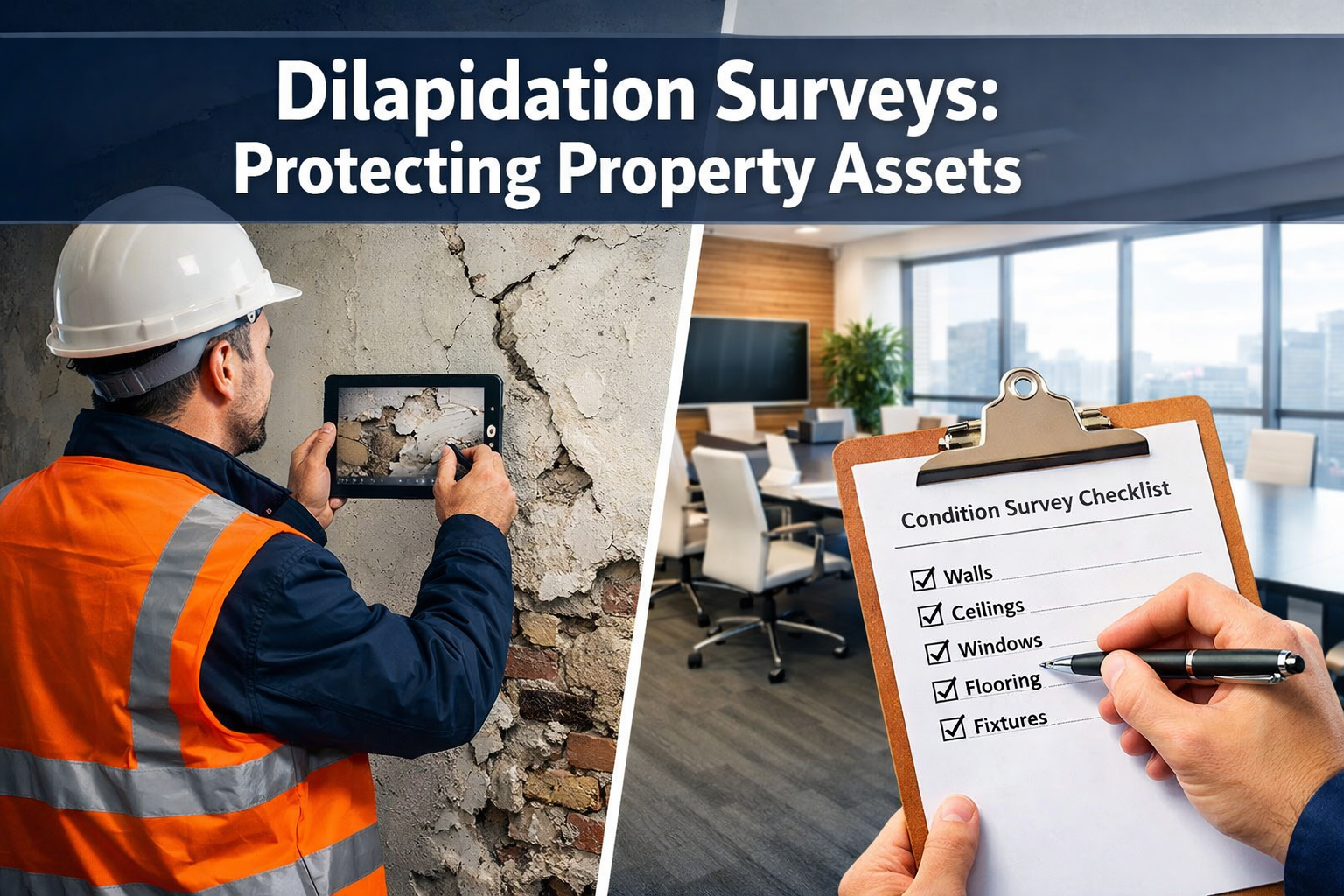
When a construction project begins next to your property or a commercial lease comes to an end, how can you prove what damage existed before and what occurred after? Without proper documentation, property owners, landlords, and tenants often find themselves in costly disputes over responsibility for repairs. This is where dilapidation surveys become essential—providing an objective, detailed record of a property’s condition at critical moments in its lifecycle.
In 2026, as construction activity intensifies and commercial property markets evolve, understanding dilapidation surveys has never been more important for protecting your investment and avoiding expensive legal battles.
Key Takeaways
- Dilapidation surveys provide detailed documentation of a property’s condition at specific points in time, establishing a baseline for comparison and protecting all parties from unfair damage claims
- These surveys are essential before and after construction projects, at the start and end of leases, and whenever establishing clear liability for property damage is necessary
- Professional surveyors examine structural elements, plumbing, roofing, exterior features, and document findings with photographs, measurements, and comprehensive notes
- Modern technology including 360° cameras, drones, and geolocated photography platforms has revolutionized how dilapidation surveys are conducted and presented
- Proper dilapidation documentation prevents disputes, ensures accurate repair cost calculations, and protects both property owners and tenants from inflated or unfair claims
What Are Dilapidation Surveys?
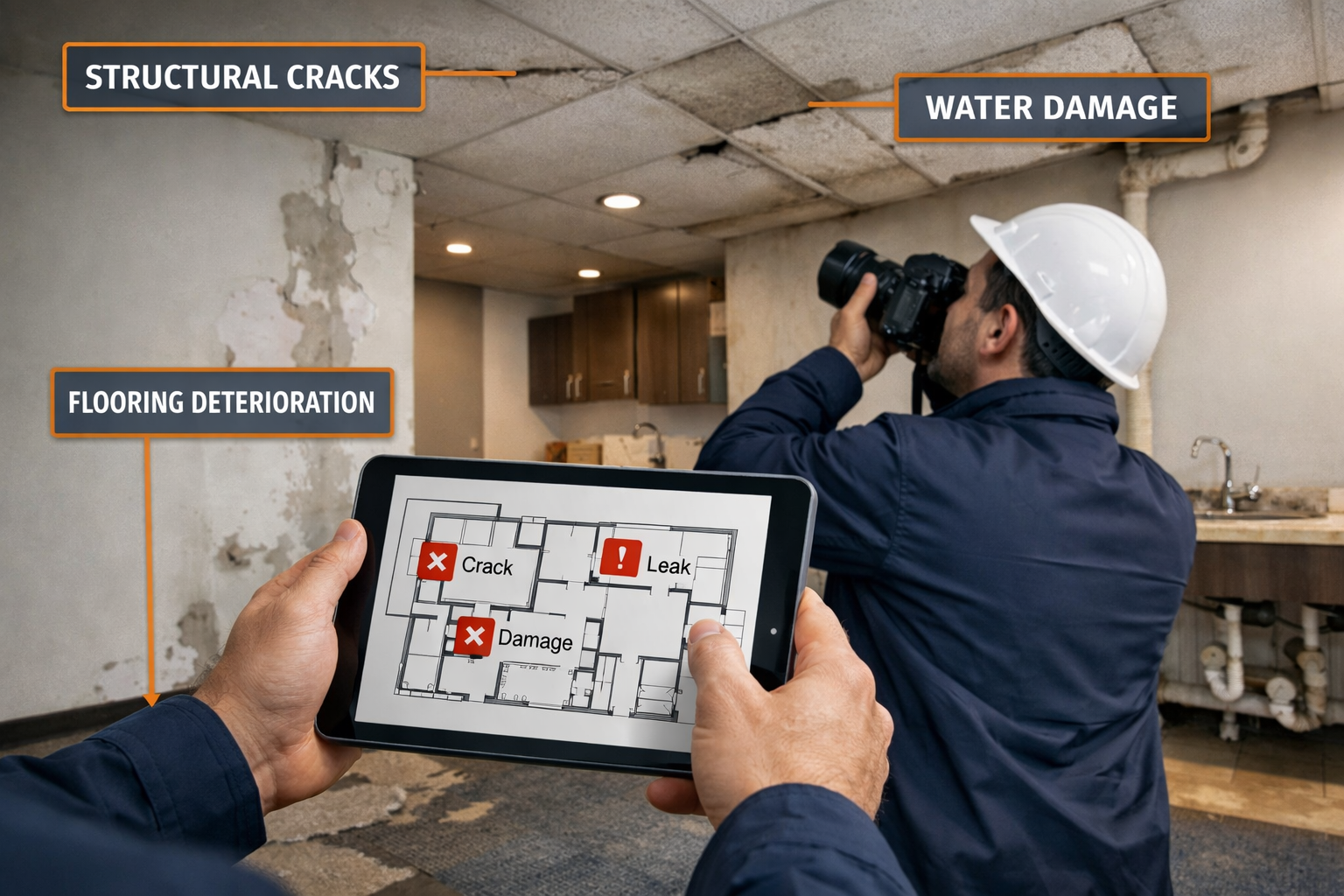
A dilapidation survey is a detailed examination and professional record of a property’s physical condition at a specific point in time. These specialized assessments create a comprehensive baseline that can be compared against future inspections to determine whether damage is pre-existing or newly caused[1][3].
Unlike standard building inspections and surveys for homeowners, dilapidation surveys focus specifically on documenting the current state of a property to establish clear liability for any deterioration or damage that may occur in the future.
Core Components of a Dilapidation Survey
Professional dilapidation surveys typically include:
✅ Photographic Evidence: High-quality images of all areas, defects, and existing damage
✅ Detailed Written Descriptions: Comprehensive notes on the condition of each element
✅ Measurements and Specifications: Precise documentation of cracks, damage extent, and structural issues
✅ Location Mapping: Clear identification of where each defect or feature is located
✅ Timestamped Records: Date-stamped documentation proving when the survey was conducted
The survey creates an irrefutable record that protects all parties involved—whether you’re a property owner, landlord, tenant, or construction company working nearby[1].
Who Needs Dilapidation Surveys?
Several groups benefit significantly from professional dilapidation surveys:
🏢 Commercial Property Landlords: Document property condition before new tenants move in and establish repair expectations at lease end[2]
👔 Commercial Tenants: Protect against unfair claims for pre-existing damage when vacating premises
🏗️ Construction Companies: Establish baseline conditions before commencing work that might affect neighboring properties[1]
🏘️ Property Owners Near Construction Sites: Create evidence of property condition before nearby excavation, demolition, or building work begins
💼 Property Developers: Document existing conditions before renovation or redevelopment projects
Understanding which building survey you need depends on your specific circumstances, but dilapidation surveys serve a distinct purpose focused on liability and damage attribution.
When Should Dilapidation Surveys Be Conducted?
Timing is critical when it comes to dilapidation surveys. Conducting these assessments at the right moments ensures maximum protection and evidential value.
Before and After Construction Projects
One of the most common applications for dilapidation surveys occurs when construction, demolition, or excavation work is planned near a property[1][3].
Before Construction Begins:
- Document the current condition of all nearby properties
- Record any existing cracks, structural issues, or defects
- Establish a clear baseline for comparison
- Protect builders from claims for pre-existing damage
- Provide property owners with evidence if new damage occurs
After Construction Completes:
- Conduct a follow-up survey of the same properties
- Compare findings against the original baseline survey
- Identify any new damage or deterioration
- Establish clear liability for repairs
- Support insurance claims or legal proceedings if necessary
This before-and-after approach creates an objective record that can resolve disputes quickly and fairly, protecting relationships between builders, contractors, and property owners[3].
At Lease Commencement and Termination
For commercial properties, dilapidation surveys play a crucial role in the landlord-tenant relationship[2][5].
At Lease Start:
Landlords can arrange comprehensive surveys to:
- Document the property’s initial condition
- Create a list of expected remedial works at lease end
- Establish fair expectations for property maintenance
- Protect against tenant disputes about pre-existing issues
At Lease End:
Both landlords and tenants benefit from terminal dilapidation surveys that:
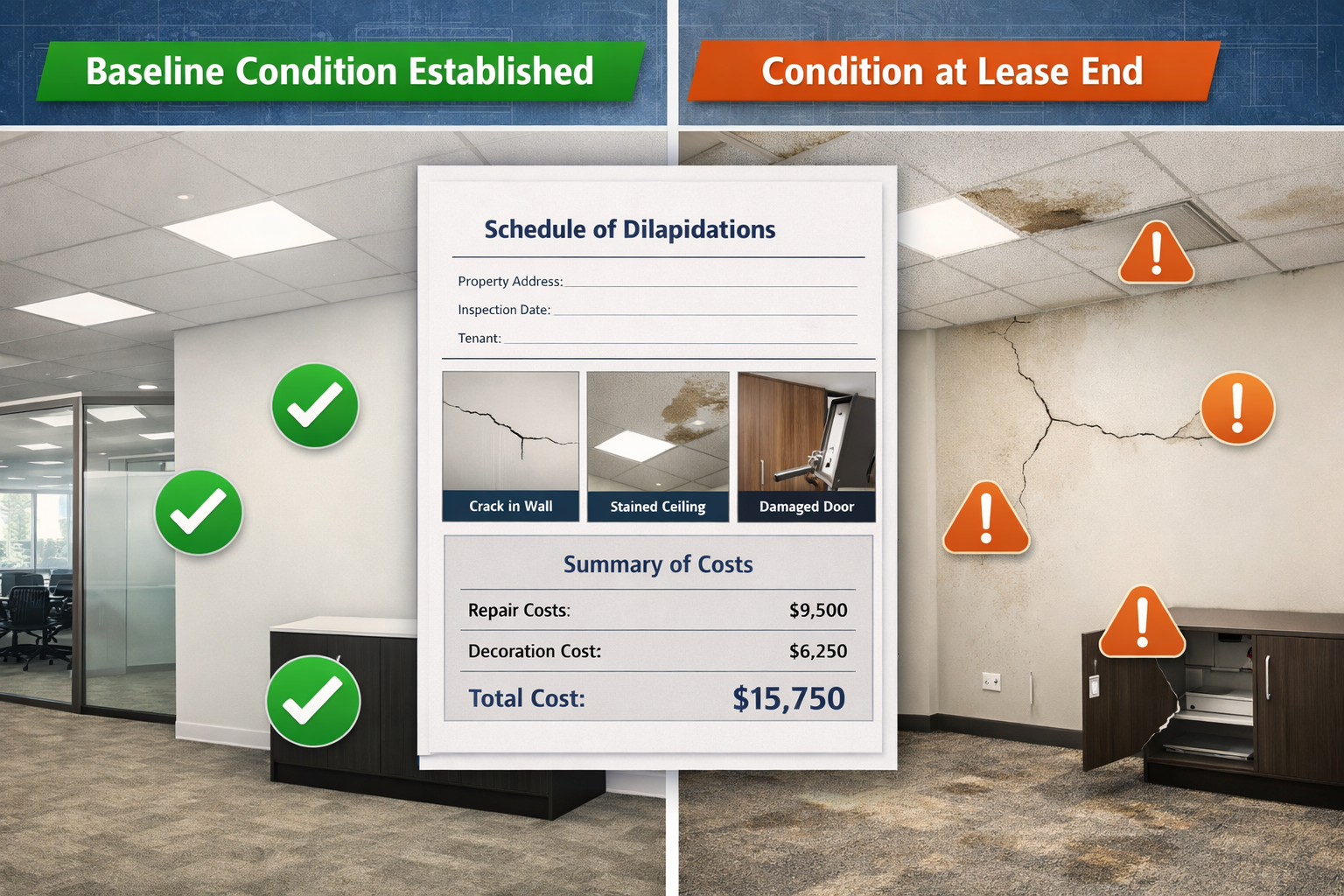
- Compare current condition against the initial baseline
- Identify breaches of repair covenants
- Calculate accurate costs for necessary repairs
- Prevent landlords from overclaiming
- Protect tenants from inflated repair bills[5]
Understanding the dilapidations process and associated dilapidation protocols ensures both parties approach lease termination with clear expectations and fair treatment.
Other Critical Timing Scenarios
Property Acquisition: Before purchasing a property, particularly commercial real estate, to understand existing conditions and future liabilities
Insurance Claims: Following events like floods, earthquakes, or storms to document damage for claims purposes
Boundary Disputes: When disagreements arise about responsibility for shared structures or boundary walls
Major Renovation Projects: Before significant alterations to establish pre-work conditions
What Do Dilapidation Surveys Examine?
Professional dilapidation surveys involve comprehensive inspection of all property elements that could be affected by construction work, tenant occupation, or natural deterioration.
Standard Inspection Elements
Experienced surveyors systematically examine and document[1]:
| Property Element | What Surveyors Look For |
|---|---|
| Structural Components | Wall cracks, foundation movement, structural integrity, load-bearing elements |
| Roofing Systems | Missing or damaged shingles, tiles, flashing, guttering, roof structure |
| Exterior Walls | Brickwork condition, rendering, cladding, pointing, weatherproofing |
| Windows and Doors | Frame condition, glazing, seals, operation, security features |
| Plumbing Fixtures | Taps, pipes, drainage, water damage, leaks, functionality |
| Flooring | Concrete damage, surface wear, structural integrity, levelness |
| Ceilings | Cracks, water stains, sagging, plaster condition |
| Ground Conditions | Settlement, subsidence, ground movement, drainage |
This comprehensive approach ensures nothing is overlooked that could later become a source of dispute.
Advanced Documentation Methods
Modern dilapidation surveys in 2026 utilize cutting-edge technology to enhance accuracy and accessibility[3]:
📸 360° Photography: Immersive imaging that captures entire rooms and spaces in a single shot
🚁 Drone Surveys: Aerial inspection of roofs, chimneys, and hard-to-reach areas without scaffolding
📱 Web-Based Platforms: Cloud-hosted survey results with geolocated photographs allowing remote site exploration
🗺️ Digital Mapping: Precise defect location using GPS coordinates and digital floor plans
📊 Detailed Reporting Software: Professional reports with integrated photographs, annotations, and cost estimates
These technological advances make dilapidation surveys more thorough, accessible, and defensible than ever before. Similar technology is also employed in Level 3 full building surveys for comprehensive property assessments.
Depth of Inspection
The level of detail in a dilapidation survey depends on several factors:
- Property type and size: Larger commercial properties require more extensive documentation
- Proximity to construction: Properties immediately adjacent to major works need more detailed baseline records
- Lease terms: Commercial lease obligations dictate the scope of required documentation
- Risk level: High-value properties or complex construction projects warrant more comprehensive surveys
Professional surveyors tailor their approach to match the specific risk profile and requirements of each situation[1].
The Dilapidation Survey Process
Understanding what happens during a professional dilapidation survey helps property owners, landlords, and tenants prepare appropriately and maximize the value of the assessment.
Step 1: Initial Consultation and Scope Definition
The process begins with a detailed discussion between the surveyor and client to establish:
- The purpose of the survey (pre-construction, lease-related, etc.)
- The property boundaries and areas to be inspected
- Any specific concerns or areas requiring particular attention
- Access arrangements and timing
- Expected deliverables and reporting format
This planning phase ensures the survey addresses all relevant concerns and complies with any contractual or legal requirements.
Step 2: Site Inspection
Professional surveyors conduct a methodical inspection of the property, typically taking several hours depending on size and complexity[1][3].
During the inspection, surveyors:
- Systematically examine all accessible areas following a structured checklist
- Photograph every room, feature, and defect from multiple angles
- Take detailed measurements of cracks, damage, and structural issues
- Record observations using digital devices or detailed written notes
- Mark locations on floor plans or site maps
- Identify pre-existing damage that could be confused with future deterioration
Access to all areas is essential—locked rooms, inaccessible spaces, or restricted areas should be opened and made available to ensure comprehensive coverage.
Step 3: Analysis and Report Preparation
Following the site visit, surveyors compile their findings into a comprehensive report that includes[2][4]:
📋 Executive Summary: Overview of property condition and key findings
📸 Photographic Schedule: Organized images with captions and location references
📝 Detailed Descriptions: Room-by-room or element-by-element condition reports
🗺️ Annotated Plans: Floor plans or site maps showing defect locations
💰 Cost Estimates: Where applicable, estimates for remedying identified issues
⚖️ Legal Commentary: Professional opinion on lease compliance or liability issues
For commercial lease situations, the report may include formal documents such as Schedules of Dilapidations, Diminution Valuations, and Response documents used in negotiations[4].
Step 4: Delivery and Review
The completed report is delivered to the client, typically within 5-10 business days depending on complexity. Clients should:
- Review the report thoroughly to ensure all areas of concern are addressed
- Ask questions about any unclear findings or recommendations
- Store the report securely for future reference and comparison
- Share with relevant parties such as solicitors, insurers, or contractors as appropriate
This documentation becomes a critical reference point for any future disputes or comparisons.
Benefits and Importance of Dilapidation Surveys
Professional dilapidation surveys deliver substantial value that far exceeds their cost, providing protection, clarity, and peace of mind for all parties involved.
1. Dispute Prevention and Resolution 🛡️
The primary benefit of dilapidation surveys is their power to prevent costly disputes before they arise[1][2].
Without a dilapidation survey:
- Property owners may claim construction work caused pre-existing damage
- Landlords may demand payment for repairs that were needed before the tenant moved in
- Contractors face unfounded allegations and reputational damage
- Legal costs escalate as parties argue over responsibility
With a professional dilapidation survey:
- Clear evidence establishes what damage existed when
- Liability is objectively determined based on documented facts
- Disputes are resolved quickly and fairly
- Relationships between parties remain intact
This dispute resolution function saves thousands of pounds in legal fees and protects professional reputations[3].
2. Accurate Cost Calculations 💷
Dilapidation surveys ensure repair costs are calculated fairly and accurately[5].
For landlords, professional surveys:
- Prevent underestimating repair costs and financial losses
- Provide defensible evidence for cost claims
- Support negotiations with departing tenants
For tenants, surveys:
- Prevent landlords from overclaiming repair costs
- Protect against inflated bills for pre-existing damage
- Provide objective evidence for negotiations
Professional surveyors with extensive experience can provide realistic cost estimates that reflect current market rates and necessary scope of work.
3. Risk Mitigation for Construction Projects 🏗️
For builders, contractors, and developers, dilapidation surveys function as powerful risk mitigation tools[3].
Protection includes:
- Evidence against unfounded damage claims from neighboring properties
- Documentation supporting insurance claims if damage does occur
- Baseline records for quality assurance and project management
- Reputation protection through objective evidence
Construction projects particularly benefit when working in:
- Densely populated urban areas with adjacent properties
- Historic districts with sensitive structures
- Areas with known ground instability or subsidence issues
- Projects involving excavation, piling, or vibration-heavy work
Understanding building defects and their causes helps surveyors identify which issues might be exacerbated by construction activity.
4. Lease Obligation Clarity 📄
For commercial properties, dilapidation surveys create transparency around lease obligations[2][4].
Benefits for lease relationships:
- Clear expectations established from day one
- Fair treatment of both landlords and tenants
- Reduced likelihood of terminal dilapidation disputes
- Professional documentation supporting negotiations
- Compliance with lease repair covenants
Many commercial leases include specific clauses about dilapidations, making professional surveys not just beneficial but often contractually required.
5. Supporting Maintenance Programs 🔧
Beyond dispute resolution, dilapidation surveys support proactive property management[3].
Maintenance benefits:
- Identification of issues requiring attention
- Prioritization of repair work based on severity
- Baseline for tracking property condition over time
- Evidence supporting capital expenditure decisions
- Documentation for asset management and valuation purposes
Regular condition surveys help property owners maintain their assets effectively and plan for future expenditure. This aligns with broader maintenance strategies for property preservation.
6. Tax Relief Opportunities 💼
In some circumstances, dilapidation costs may qualify for tax relief, making professional documentation even more valuable.
Understanding whether dilapidations present an opportunity for tax relief requires professional advice, but proper survey documentation is essential for any potential claims.
Choosing a Professional Dilapidation Surveyor
The quality and defensibility of a dilapidation survey depends entirely on the expertise and professionalism of the surveyor conducting it.
Essential Qualifications and Experience
When selecting a surveyor for dilapidation work, look for:
🎓 Professional Qualifications:
- RICS (Royal Institution of Chartered Surveyors) membership
- Specialized training in building pathology and defect analysis
- Professional indemnity insurance
- Continuing professional development in current standards
📚 Relevant Experience:
- Proven track record with dilapidation surveys
- Experience with your specific property type (commercial, residential, industrial)
- Knowledge of construction methods and building defects
- Understanding of lease law and dilapidation protocols
🔍 Technical Capabilities:
- Access to modern survey technology (drones, 360° cameras, etc.)
- Professional reporting software and systems
- Ability to provide expert witness testimony if disputes arise
- Network of specialist consultants for complex issues
Experienced surveyors understand the nuances of property inspection adjacent to major construction projects and can provide comprehensive protection[1].
Questions to Ask Potential Surveyors
Before engaging a surveyor, ask:
- How many dilapidation surveys have you conducted in the past year?
- Do you have experience with properties similar to mine?
- What technology do you use for documentation?
- What will be included in the final report?
- How quickly can you complete the survey and deliver the report?
- Have you provided expert witness testimony in dilapidation disputes?
- What are your fees and what do they include?
Professional surveyors should answer these questions confidently and provide references or examples of previous work.
Red Flags to Avoid
Be cautious of surveyors who:
❌ Lack professional qualifications or insurance
❌ Cannot provide references or examples of previous surveys
❌ Offer suspiciously low fees that seem too good to be true
❌ Rush the inspection or skip areas without valid reasons
❌ Provide vague or incomplete reports
❌ Show bias toward one party in lease-related surveys
Quality dilapidation surveys require time, expertise, and thoroughness—shortcuts inevitably lead to problems later.
Dilapidation Surveys vs. Other Property Assessments
Understanding how dilapidation surveys differ from other types of property inspections helps ensure you commission the right assessment for your needs.
Dilapidation Surveys vs. Building Surveys
While both involve detailed property inspection, they serve different purposes:
Dilapidation Surveys:
- Focus on documenting current condition at a specific point in time
- Create baseline for future comparison
- Primarily concerned with establishing liability for damage
- Conducted before/after construction or at lease start/end
- Emphasize photographic evidence and detailed defect recording
- Assess overall condition and identify defects requiring repair
- Provide advice on maintenance and remedial work
- Help buyers understand property condition before purchase
- Include recommendations and cost estimates for repairs
- Focus on informing purchase decisions and future planning
Some elements overlap, but the purpose and timing differ significantly. Learn more about what types of building surveys are available to understand the full range of options.
Dilapidation Surveys vs. Condition Surveys
Condition Surveys provide periodic assessments of property condition for asset management purposes, while dilapidation surveys specifically establish baseline conditions for liability purposes[2].
Condition surveys might be conducted annually or every few years to track deterioration and plan maintenance, whereas dilapidation surveys occur at critical transition points (lease start/end, before/after construction).
For more information, see our guide to condition survey reports.
Dilapidation Surveys vs. Schedule of Condition
A Schedule of Condition is often attached to a commercial lease to limit a tenant’s repairing obligations to maintaining the property in no worse condition than documented.
While similar to a dilapidation survey, a Schedule of Condition:
- Forms part of the lease agreement
- Limits tenant liability to documented condition
- May be less detailed than a full dilapidation survey
- Serves a specific legal function within the lease
Both documents involve detailed property inspection and documentation, but serve slightly different legal purposes.
Common Dilapidation Survey Scenarios
Real-world examples illustrate when and why dilapidation surveys prove invaluable.
Scenario 1: Major Construction Project
Situation: A property developer plans to demolish an old building and construct a new residential tower. The site is surrounded by Victorian terraced houses with existing cracks and settlement issues.
Solution: Before commencing work, the developer commissions comprehensive dilapidation surveys of all adjacent properties within 50 meters of the site[1].
Outcome: During construction, a neighboring property owner claims the piling work caused new cracks in their walls. The pre-construction survey clearly shows the cracks existed before work began, protecting the developer from an unfounded £15,000 claim.
Scenario 2: Commercial Lease Termination
Situation: A retail tenant vacates a high street shop after a 10-year lease. The landlord claims £45,000 for various repairs including redecorating, replacing flooring, and fixing structural issues.
Solution: The tenant had commissioned a dilapidation survey at lease commencement documenting existing damage and wear[2].
Outcome: Comparison with the terminal survey shows many claimed repairs relate to pre-existing conditions. The final settlement reduces to £18,000, saving the tenant £27,000.
Scenario 3: Neighboring Excavation Work
Situation: A homeowner’s property sits adjacent to a site where deep basement excavation is planned for a new development.
Solution: The homeowner arranges an independent dilapidation survey before work begins, documenting existing minor cracks and the property’s overall condition[3].
Outcome: After excavation, new cracks appear. The before-and-after surveys clearly distinguish pre-existing from new damage, supporting a successful insurance claim and settlement with the developer.
The Future of Dilapidation Surveys in 2026
The dilapidation survey industry continues to evolve with advancing technology and changing market demands.
Technological Innovations
Emerging technologies transforming dilapidation surveys include:
🤖 Artificial Intelligence: AI-powered defect detection analyzing photographs to identify cracks, damage, and deterioration with increasing accuracy
📱 Mobile Applications: Field survey apps allowing real-time data capture, annotation, and cloud synchronization
🎮 Virtual Reality: VR presentations of survey findings allowing clients to “walk through” properties remotely
📡 IoT Sensors: Continuous monitoring systems tracking movement, moisture, and structural changes over time
🔬 Advanced Imaging: Thermal imaging, moisture meters, and other diagnostic tools providing deeper insights
These innovations make surveys more thorough, accessible, and defensible while reducing costs and timeframes[3].
Regulatory and Market Trends
The RICS Dilapidations Conference in 2026 addresses evolving pressures influencing dilapidations practice, reflecting the dynamic nature of this field[6].
Key trends include:
- Increased focus on environmental considerations and sustainability
- Greater emphasis on alternative dispute resolution to avoid costly litigation
- Standardization of reporting formats and methodologies
- Growing awareness among property owners and tenants of their rights
- Integration with broader property management and asset tracking systems
Professional Development
As the industry evolves, surveyors must maintain current knowledge through:
- Regular training on new technologies and methods
- Understanding of updated legal frameworks and case law
- Awareness of construction techniques and materials
- Expertise in specialist areas like building pathology
The most effective dilapidation surveyors combine traditional expertise with modern tools and continuing education.
Cost Considerations for Dilapidation Surveys
Understanding the investment required for professional dilapidation surveys helps property owners, landlords, and tenants budget appropriately.
Typical Fee Structures
Dilapidation survey costs vary based on several factors:
Property Size and Complexity:
- Small commercial unit: £500-£1,200
- Medium commercial property: £1,200-£3,000
- Large commercial building: £3,000-£8,000+
- Residential property: £400-£1,500
Scope of Work:
- Basic photographic survey: Lower end of range
- Comprehensive survey with detailed reporting: Higher end of range
- Multiple properties (construction project): Volume discounts may apply
- Rush services: Premium fees typically apply
Location and Access:
- Urban locations with easy access: Standard fees
- Remote locations: Travel costs may increase fees
- Difficult access requiring specialized equipment: Additional charges
While costs may seem significant, they represent excellent value compared to potential dispute costs, which can easily reach tens of thousands of pounds in legal fees alone.
Return on Investment
Consider the financial protection dilapidation surveys provide:
For a £2,000 survey investment:
- Prevents £20,000+ in unfounded damage claims
- Avoids £10,000+ in legal fees for dispute resolution
- Protects against inflated repair cost demands
- Preserves business relationships and reputation
- Provides peace of mind and risk mitigation
The return on investment typically exceeds 10:1 when disputes arise, making dilapidation surveys one of the most cost-effective forms of property protection available.
Budgeting for Dilapidation Work
When planning construction projects or commercial leases, include dilapidation survey costs in your budget:
Construction Projects:
- Pre-construction surveys of neighboring properties
- Post-construction follow-up surveys
- Contingency for addressing any identified damage
Commercial Leases:
- Initial survey at lease commencement
- Terminal survey at lease end
- Professional advice on Schedule of Dilapidations
- Potential repair costs based on survey findings
Understanding these costs from the outset prevents unwelcome surprises and ensures adequate financial planning. For broader context on survey costs, see our guide on the cost of measured building surveys.
Conclusion
Dilapidation surveys serve as essential protection mechanisms in an increasingly complex property landscape. Whether you’re a landlord documenting property condition before a new lease, a tenant protecting yourself against unfair claims, or a construction company working near existing structures, professional dilapidation surveys provide objective evidence that prevents disputes and establishes clear liability.
In 2026, advancing technology has made these surveys more comprehensive, accessible, and defensible than ever before. From 360° photography to drone inspections and AI-powered defect detection, modern dilapidation surveys deliver unprecedented detail and clarity[3].
The investment in a professional survey—typically ranging from a few hundred to several thousand pounds—represents exceptional value when compared to the tens of thousands in potential legal fees, unfounded claims, and reputational damage that can arise without proper documentation.
Next Steps: Protecting Your Property Interests
If you’re planning construction work:
- Commission dilapidation surveys of all neighboring properties before commencing work
- Engage a RICS-qualified surveyor with construction project experience
- Store survey reports securely and share with your insurance provider
- Conduct follow-up surveys after project completion
If you’re entering a commercial lease:
- Arrange a comprehensive survey before taking possession (tenants) or before granting a lease (landlords)
- Ensure the survey is thorough and professionally documented
- Reference the survey in lease negotiations and agreements
- Plan for a terminal survey when the lease approaches its end
If you’re concerned about neighboring construction:
- Contact a professional surveyor as soon as you become aware of planned work
- Commission a survey before any construction begins
- Monitor the property during construction for any changes
- Arrange a follow-up survey if you notice new damage
For all scenarios:
- Choose qualified, experienced surveyors with relevant expertise
- Ensure comprehensive documentation including photographs and detailed descriptions
- Store reports securely for future reference
- Seek professional advice on any survey findings or concerns
Don’t wait until disputes arise to wish you had proper documentation. Professional dilapidation services provide the evidence and protection you need to safeguard your property interests and financial position.
By investing in a thorough dilapidation survey at the right time, you protect yourself from unfair claims, ensure accurate cost calculations, and maintain positive relationships with all parties involved—making it one of the smartest property decisions you can make in 2026.
References
[1] Dilapidation Survey – asseteconomics.com.au
[2] Surveys – dilapsolutions.com
[3] Watch – youtube.com
[4] 5 Reasons Why Dilapidation Surveys Are Important – giromax.co.uk
[5] Dilapidation Assessment Reports – horde.group
[6] Dilapidations Conference – rics.org