

Town Planning Surveyor: Your Complete Guide to This Essential Property Development Role
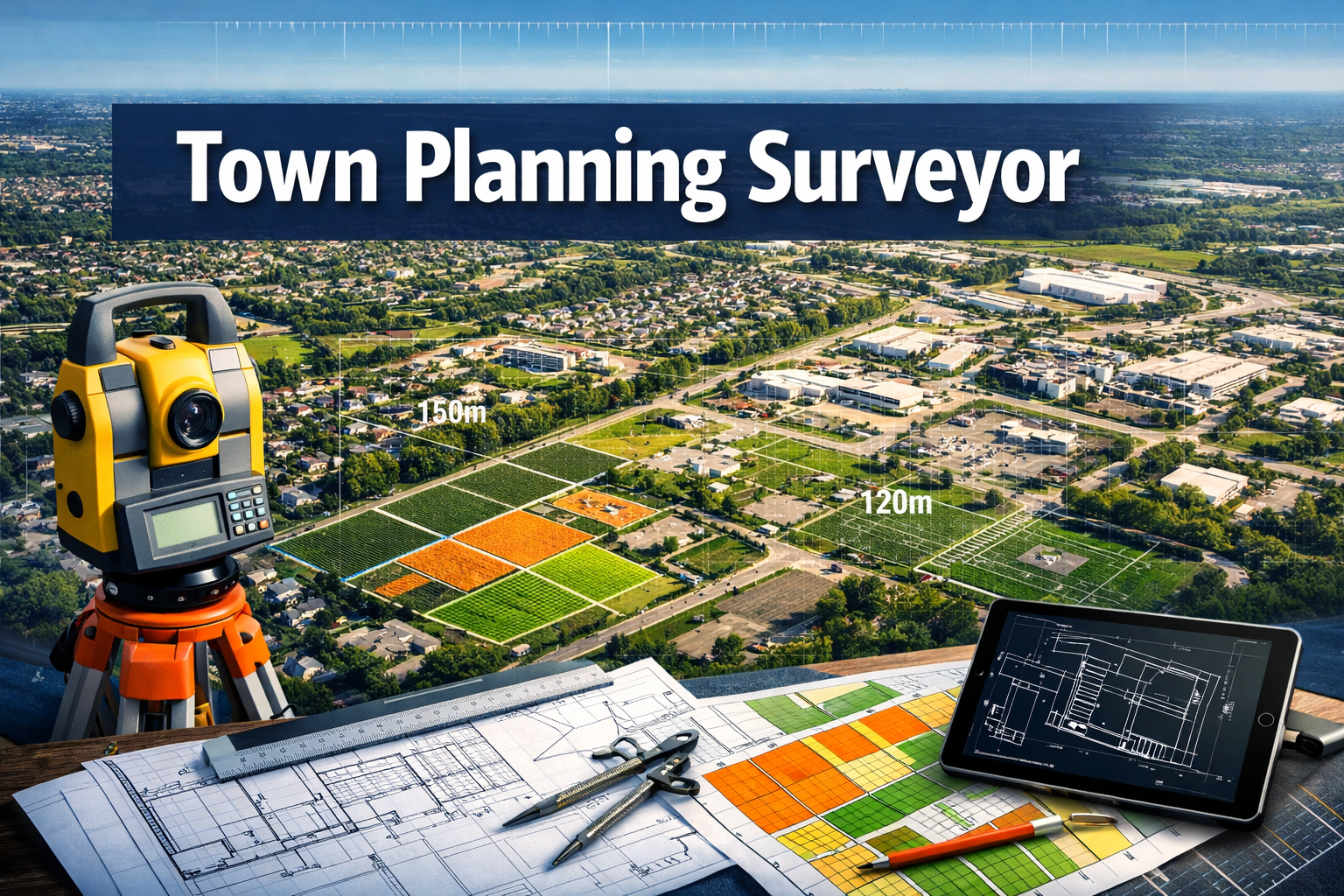
Imagine standing at the intersection where property dreams meet regulatory reality. Every new housing development, commercial complex, or infrastructure project requires someone who can navigate the complex maze of planning regulations, land use policies, and development standards. That person is a town planning surveyor—a professional who transforms ambitious development visions into legally compliant, sustainable realities. In 2026’s rapidly evolving property landscape, these specialists have become indispensable gatekeepers of responsible urban growth.
Key Takeaways
- Town planning surveyors combine technical surveying expertise with comprehensive knowledge of planning regulations to facilitate property development projects
- These professionals play a crucial role in ensuring developments comply with local, regional, and national planning policies while balancing environmental and community concerns
- Career opportunities in town planning surveying are expanding in 2026, with salaries ranging from £28,000 for entry-level positions to over £65,000 for experienced professionals
- Successful town planning surveyors require a blend of technical skills, regulatory knowledge, communication abilities, and problem-solving capabilities
- The profession offers diverse specialization paths including residential development, commercial projects, infrastructure planning, and environmental assessment
What Is a Town Planning Surveyor? 🏗️
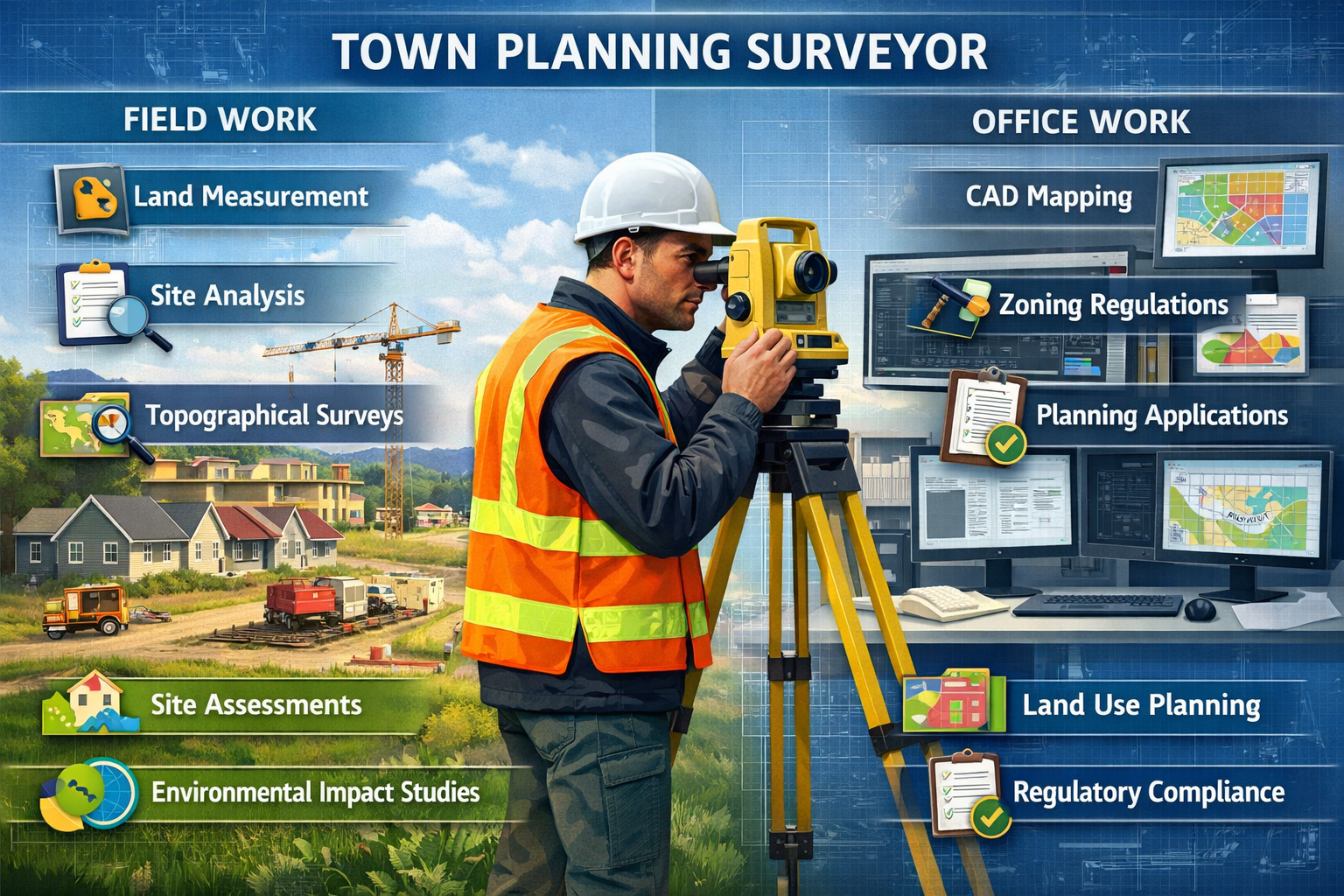
A town planning surveyor is a specialized property professional who bridges the gap between development aspirations and planning compliance. Unlike traditional surveyors who focus primarily on measurements and structural assessments, town planning surveyors possess deep expertise in land use regulations, zoning laws, and development control processes.
These professionals work at the critical junction of property development, ensuring that proposed projects align with statutory planning frameworks while meeting the needs of developers, communities, and environmental standards. Their work encompasses everything from initial site feasibility studies to securing planning permissions and managing ongoing compliance throughout construction phases.
Core Responsibilities
Town planning surveyors handle a diverse range of responsibilities that require both technical precision and strategic thinking:
- Planning Application Preparation: Compiling comprehensive documentation to support development proposals
- Regulatory Compliance Assessment: Evaluating projects against local development plans and national planning policies
- Site Analysis and Feasibility Studies: Assessing land parcels for development potential and constraints
- Stakeholder Liaison: Coordinating with local planning authorities, developers, architects, and community groups
- Policy Interpretation: Translating complex planning legislation into practical development guidance
- Environmental Impact Assessment: Evaluating how proposed developments affect surrounding ecosystems and communities
Understanding why property owners hire surveyors provides valuable context for appreciating the broader surveying profession within which town planning specialists operate.
The Role of a Town Planning Surveyor in Property Development
The contribution of town planning surveyors extends far beyond simple regulatory box-ticking. These professionals serve as strategic advisors who can make or break development projects through their expertise and guidance.
Pre-Development Phase
During the earliest stages of any property development, town planning surveyors conduct critical groundwork:
Site Selection and Viability Analysis: They assess potential development sites against planning policy frameworks, identifying opportunities and red flags before significant investment occurs. This includes analyzing:
- Current zoning designations and permitted uses
- Historical planning decisions for the area
- Infrastructure capacity and access considerations
- Environmental constraints and protected designations
- Community planning priorities and local development plans
Development Strategy Formulation: Town planning surveyors help shape project proposals to maximize approval chances while meeting developer objectives. They advise on optimal building heights, densities, land use mixes, and design approaches that align with planning policies.
Application and Approval Process
Once development concepts solidify, town planning surveyors manage the complex approval journey:
Documentation and Submission: They prepare detailed planning applications including:
| Document Type | Purpose | Key Components |
|---|---|---|
| Planning Statement | Justifies proposal against policy | Site context, development description, policy compliance analysis |
| Design and Access Statement | Explains design rationale | Layout principles, scale, appearance, accessibility measures |
| Supporting Surveys | Provides technical evidence | Topographical surveys, ecological assessments, transport studies |
| Community Consultation Records | Demonstrates stakeholder engagement | Meeting notes, feedback summaries, response strategies |
Negotiation and Amendments: Town planning surveyors serve as intermediaries between developers and planning authorities, addressing concerns, proposing modifications, and finding creative solutions to overcome objections.
Similar to how structural engineers provide essential technical expertise for building projects, town planning surveyors offer indispensable regulatory and strategic guidance.
Post-Approval Compliance
The town planning surveyor’s work doesn’t end with planning permission approval:
- Condition Discharge: Managing the fulfillment of planning conditions attached to approvals
- Construction Monitoring: Ensuring built development matches approved plans
- Variation Applications: Handling necessary modifications during construction phases
- Completion Certification: Confirming final compliance with planning requirements
Essential Skills and Qualifications for Town Planning Surveyors
Becoming a successful town planning surveyor requires a specific combination of educational credentials, technical abilities, and personal attributes.
Educational Pathways 🎓
Academic Foundations: Most town planning surveyors hold degrees in:
- Town and Country Planning
- Urban Planning and Design
- Surveying with Planning Specialization
- Geography with Planning Focus
- Environmental Planning
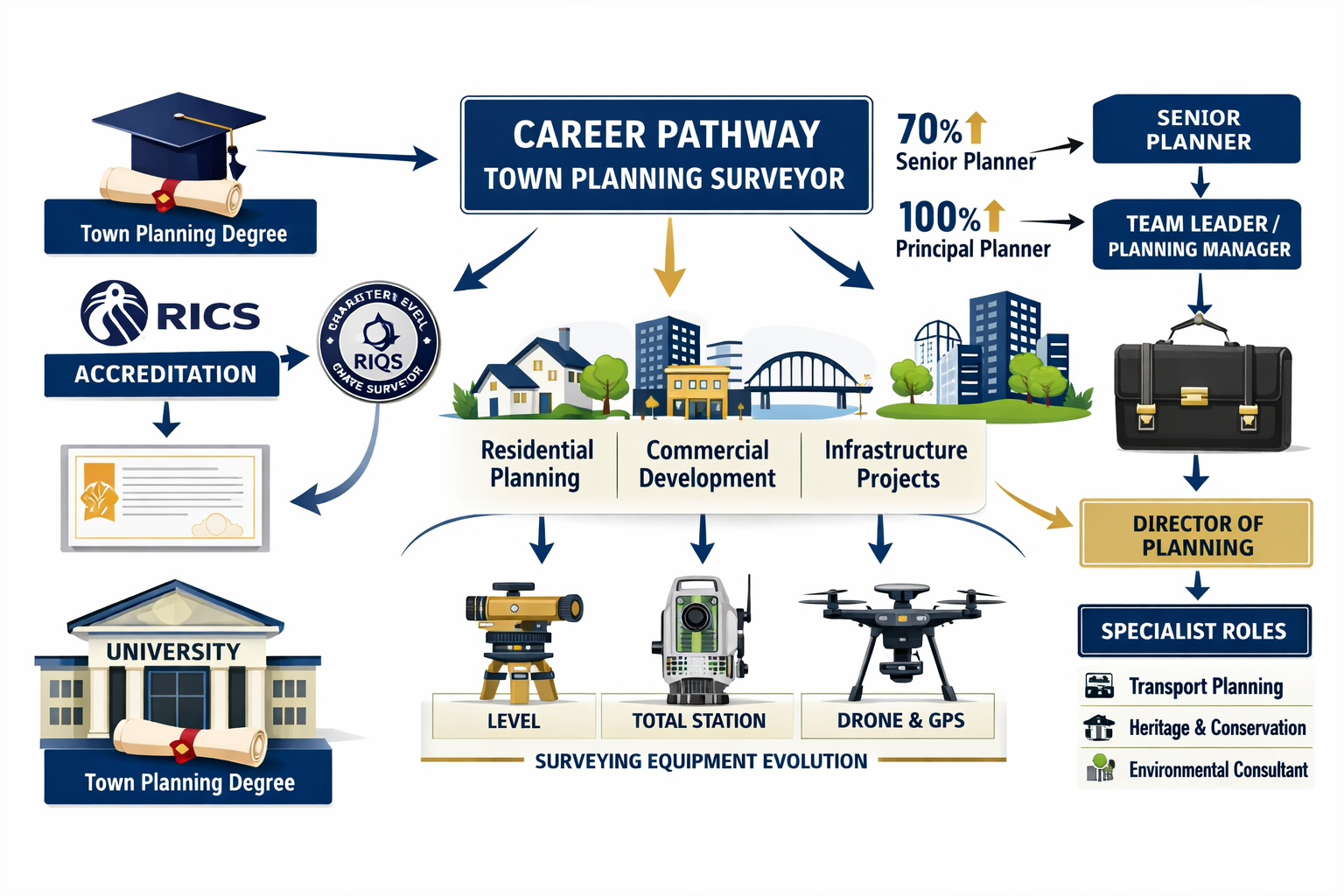
Professional Accreditation: The Royal Institution of Chartered Surveyors (RICS) and the Royal Town Planning Institute (RTPI) offer professional qualifications that significantly enhance career prospects. Achieving chartered status typically requires:
- An accredited degree program
- Minimum two years of structured professional experience
- Assessment of Professional Competence (APC) examination
- Commitment to continuing professional development
Technical Competencies
Modern town planning surveyors must master various technical skills:
Regulatory Knowledge: Comprehensive understanding of:
- National Planning Policy Framework (NPPF)
- Local development plan policies
- Conservation and heritage legislation
- Environmental protection regulations
- Building regulations and standards
Analytical Capabilities: Ability to interpret complex data, assess development impacts, and evaluate policy compliance through systematic analysis.
Technology Proficiency: Familiarity with Geographic Information Systems (GIS), Computer-Aided Design (CAD) software, and digital planning portals that streamline modern planning processes.
Interpersonal and Communication Skills
Beyond technical expertise, successful town planning surveyors excel at:
- Written Communication: Producing clear, persuasive planning documents and reports
- Verbal Presentation: Articulating complex planning arguments to diverse audiences
- Negotiation: Finding mutually acceptable solutions among competing interests
- Relationship Building: Establishing trust with planning officers, developers, and community stakeholders
Those interested in property development should also consider essential items every homeowner should have to maintain and protect their investments.
Career Opportunities and Salary Expectations in 2026
The town planning surveying profession offers diverse career pathways with competitive compensation reflecting the specialized expertise required.
Employment Sectors
Private Consultancies: Many town planning surveyors work for specialist planning consultancies, advising developers, landowners, and businesses on securing planning permissions. These roles offer variety, exposure to different project types, and often higher earning potential.
Local Government: Planning authorities employ town planning surveyors to assess applications, develop planning policies, and enforce development control. These positions provide job security, pension benefits, and the satisfaction of shaping community development.
Property Development Companies: Larger developers maintain in-house planning teams to manage their project pipelines, offering surveyors direct involvement in bringing developments to fruition.
Infrastructure and Utilities: Organizations managing major infrastructure projects—transport networks, energy facilities, telecommunications—require planning expertise to navigate complex approval processes.
Salary Ranges 💰
Town planning surveyor compensation in 2026 varies based on experience, location, and sector:
| Experience Level | Typical Salary Range | Key Responsibilities |
|---|---|---|
| Graduate/Junior | £28,000 – £35,000 | Application support, research, basic assessments |
| Mid-Level | £35,000 – £48,000 | Application management, client liaison, policy analysis |
| Senior | £48,000 – £65,000 | Complex projects, team supervision, strategic advice |
| Principal/Director | £65,000 – £90,000+ | Business development, major projects, expert witness |
London and Southeast England typically command 15-25% salary premiums reflecting higher living costs and market demand.
Career Progression
Town planning surveyors can advance through several pathways:
Specialization Routes: Developing expertise in specific sectors (residential, commercial, retail, industrial) or planning areas (heritage, environmental, transport, energy).
Management Progression: Moving from technical roles into team leadership, departmental management, and eventually directorship positions.
Independent Practice: Establishing consultancy practices after building sufficient experience and professional networks.
For those exploring various property-related careers, understanding building surveyor roles provides useful comparative context.
How Town Planning Surveyors Add Value to Development Projects
The expertise of a town planning surveyor delivers tangible benefits that justify their involvement in property development ventures.
Risk Mitigation 🛡️
Planning refusals represent significant financial setbacks for developers. Town planning surveyors minimize this risk by:
- Identifying potential obstacles before substantial investment
- Crafting applications that address planning concerns proactively
- Anticipating objections and preparing robust responses
- Advising on appeal prospects and alternative strategies
Cost Efficiency: While engaging a town planning surveyor involves fees, their expertise typically saves money by:
- Reducing application revision cycles
- Accelerating approval timelines
- Avoiding costly design changes late in the process
- Identifying optimal development densities that maximize value
- Preventing enforcement actions and retrospective modifications
Strategic Advantage
Experienced town planning surveyors bring market intelligence and strategic insights:
Policy Awareness: They track emerging planning policies, local plan reviews, and regulatory changes that create development opportunities or constraints.
Precedent Knowledge: Familiarity with planning decisions across their operating areas helps them predict likely outcomes and craft persuasive arguments.
Relationship Capital: Established relationships with planning officers facilitate productive dialogue and problem-solving during application processes.
Community and Environmental Stewardship
Quality town planning surveyors balance development objectives with broader responsibilities:
- Ensuring developments contribute positively to community character
- Protecting environmental assets and biodiversity
- Promoting sustainable development principles
- Facilitating appropriate community consultation
Understanding common defects in older homes helps town planning surveyors assess redevelopment opportunities for aging building stock.
Challenges Facing Town Planning Surveyors in 2026
The town planning profession faces several contemporary challenges that shape daily practice:
Regulatory Complexity
Planning frameworks continue growing more intricate, with town planning surveyors navigating:
- Overlapping national, regional, and local policies
- Evolving environmental and climate change requirements
- Heritage and conservation designations
- Affordable housing obligations
- Infrastructure contribution calculations
Keeping Current: The regulatory landscape shifts continuously, requiring dedicated professional development to maintain expertise.
Balancing Competing Interests ⚖️
Town planning surveyors often mediate between conflicting priorities:
- Developer profit objectives versus community concerns
- Housing delivery targets versus environmental protection
- Economic growth versus infrastructure capacity
- Modern design versus heritage preservation
Ethical Navigation: Maintaining professional integrity while serving client interests demands careful judgment and transparent communication.
Resource and Timeline Pressures
Planning authorities face staffing constraints that create:
- Extended application determination periods
- Limited pre-application advice availability
- Inconsistent decision-making quality
- Backlogged appeal processes
Town planning surveyors must manage client expectations while working within these system limitations.
Technology Adaptation
Digital transformation reshapes planning processes through:
- Online planning portals and submission systems
- Building Information Modeling (BIM) integration
- Data analytics for evidence-based planning
- Virtual consultation and presentation methods
Successful town planning surveyors embrace technological change while maintaining the human judgment central to their value.
For property owners considering renovations, understanding what requires permits helps avoid planning complications.
Working with a Town Planning Surveyor: What to Expect
For developers, landowners, and businesses engaging a town planning surveyor, understanding the collaboration process ensures productive relationships.
Initial Consultation and Instruction
The engagement typically begins with:
Project Briefing: Clients explain their development objectives, timelines, and constraints while the surveyor asks clarifying questions about:
- Site characteristics and ownership
- Development vision and requirements
- Budget parameters
- Timeframe expectations
- Previous planning history
Fee Proposals: Town planning surveyors outline their services and fees, which may be structured as:
- Fixed fees for defined scopes (straightforward applications)
- Hourly rates for open-ended advisory work
- Percentage-based fees tied to project values (larger developments)
- Retainer arrangements for ongoing planning support
The Planning Process Timeline
A typical planning application journey involves:
- Pre-Application Phase (4-8 weeks): Site assessment, policy review, initial authority consultation
- Application Preparation (6-12 weeks): Document compilation, supporting studies, stakeholder engagement
- Submission and Validation (1-2 weeks): Portal submission, authority checks, additional information requests
- Determination Period (8-13 weeks for minor applications, 13+ weeks for major developments): Authority assessment, consultation responses, officer evaluation
- Decision and Post-Approval (ongoing): Permission issuance, condition discharge, compliance monitoring
Communication Expectations: Professional town planning surveyors provide regular updates, explain developments in accessible language, and respond promptly to client queries.
Maximizing Success
Clients can support favorable outcomes by:
- Providing complete, accurate information promptly
- Remaining flexible about design details while protecting core objectives
- Supporting pre-application consultation investments
- Trusting professional advice even when it challenges initial assumptions
- Maintaining realistic expectations about approval certainty and timelines
Those interested in broader property matters might explore essential knowledge every homeowner should have about their properties.
The Future of Town Planning Surveying
Looking ahead, several trends will shape the town planning surveying profession:
Sustainability and Climate Priorities 🌱
Environmental considerations increasingly dominate planning decisions:
- Net Zero Requirements: Developments must demonstrate carbon reduction strategies and energy efficiency
- Biodiversity Net Gain: Projects must deliver measurable ecological improvements
- Climate Resilience: Planning assessments consider flood risk, overheating, and adaptation measures
- Circular Economy Principles: Material reuse and waste reduction feature in planning evaluations
Town planning surveyors must develop environmental expertise to navigate these evolving requirements effectively.
Digital Planning Transformation
Technology continues reshaping planning processes:
- Automated Validation: AI-assisted application checking accelerates processing
- Digital Twins: Virtual city models enable sophisticated impact assessment
- Open Data: Transparent planning information improves public engagement
- Remote Collaboration: Virtual meetings and presentations become standard practice
Housing Delivery Pressure
The ongoing housing crisis ensures planning remains politically prominent:
- Streamlined approval processes for certain development types
- Permitted development rights expansion
- Development corporation models for strategic sites
- Infrastructure funding mechanisms evolution
Town planning surveyors must balance accelerated delivery expectations with quality outcomes.
Specialization Opportunities
As planning grows more complex, niche expertise becomes increasingly valuable:
- Heritage and Conservation: Navigating listed building and conservation area constraints
- Renewable Energy: Wind, solar, and battery storage project planning
- Telecommunications: 5G and digital infrastructure deployment
- Later Living: Age-restricted and care facility developments
For comprehensive property guidance, explore the resources available through Prince Surveyors.
Conclusion: The Indispensable Role of Town Planning Surveyors
In 2026’s complex property development landscape, town planning surveyors serve as essential navigators who transform development ambitions into planning-compliant realities. Their unique combination of regulatory expertise, technical knowledge, and strategic thinking delivers value that extends far beyond simple application submission.
Whether you’re a developer seeking to maximize site potential, a landowner exploring development options, or a business requiring planning permissions for operational changes, engaging a qualified town planning surveyor significantly improves your prospects for success. These professionals don’t simply process paperwork—they provide strategic counsel that shapes project viability, manages risk, and accelerates approval timelines.
Next Steps for Your Planning Journey
For Aspiring Town Planning Surveyors: Pursue accredited education, seek diverse work experience, commit to professional qualification, and develop both technical and interpersonal skills that distinguish exceptional practitioners.
For Development Clients: Engage town planning surveyors early in your project conception, provide complete information, remain open to professional advice, and view planning expertise as investment rather than expense.
For Property Owners: Before undertaking significant property alterations or development, consult a town planning surveyor to understand planning implications and requirements. Early professional advice prevents costly mistakes and project delays.
The built environment surrounding us reflects countless planning decisions—each influenced by professionals who balance development needs with community interests and environmental stewardship. Town planning surveyors occupy a privileged position at this intersection, shaping the places where we live, work, and gather for generations to come.
Ready to explore how professional surveying expertise can support your property objectives? Visit Prince Surveyors to discover comprehensive surveying services and access valuable property insights through their informative blog.
How Prince Surveyors can help: explore our Level 3 building surveys or learn about our Level 2 vs Level 3 guide.