

Average Price Reduction After Survey: What UK Homebuyers Can Expect in 2025

Imagine finding your dream home, making an offer, and then discovering through a professional survey that it needs £15,000 worth of repairs. This scenario plays out thousands of times across the UK property market every year, leaving buyers wondering: how much can they realistically negotiate off the asking price? Understanding the average price reduction after survey can mean the difference between overpaying for a property and securing a fair deal that accounts for necessary repairs and renovations.
The property survey represents one of the most critical stages in the homebuying process, often revealing hidden defects that weren’t apparent during initial viewings. When issues surface, buyers gain valuable negotiating power—but knowing how to leverage survey findings effectively requires understanding typical reduction amounts and market expectations.
Key Takeaways
- Average price reductions after survey typically range from 2.5% to 10% of the property value, depending on the severity and cost of identified defects
- Minor cosmetic issues generally result in 1-3% reductions, while major structural problems can justify 5-10% or more off the asking price
- The type of survey conducted significantly impacts negotiation leverage, with Level 3 Building Surveys providing the most comprehensive defect information
- Market conditions play a crucial role in determining negotiation success, with buyer’s markets offering more reduction opportunities
- Professional documentation and repair cost estimates strengthen negotiation positions, making it essential to obtain detailed quotes from qualified contractors
Understanding Property Surveys and Their Impact on Price Negotiations
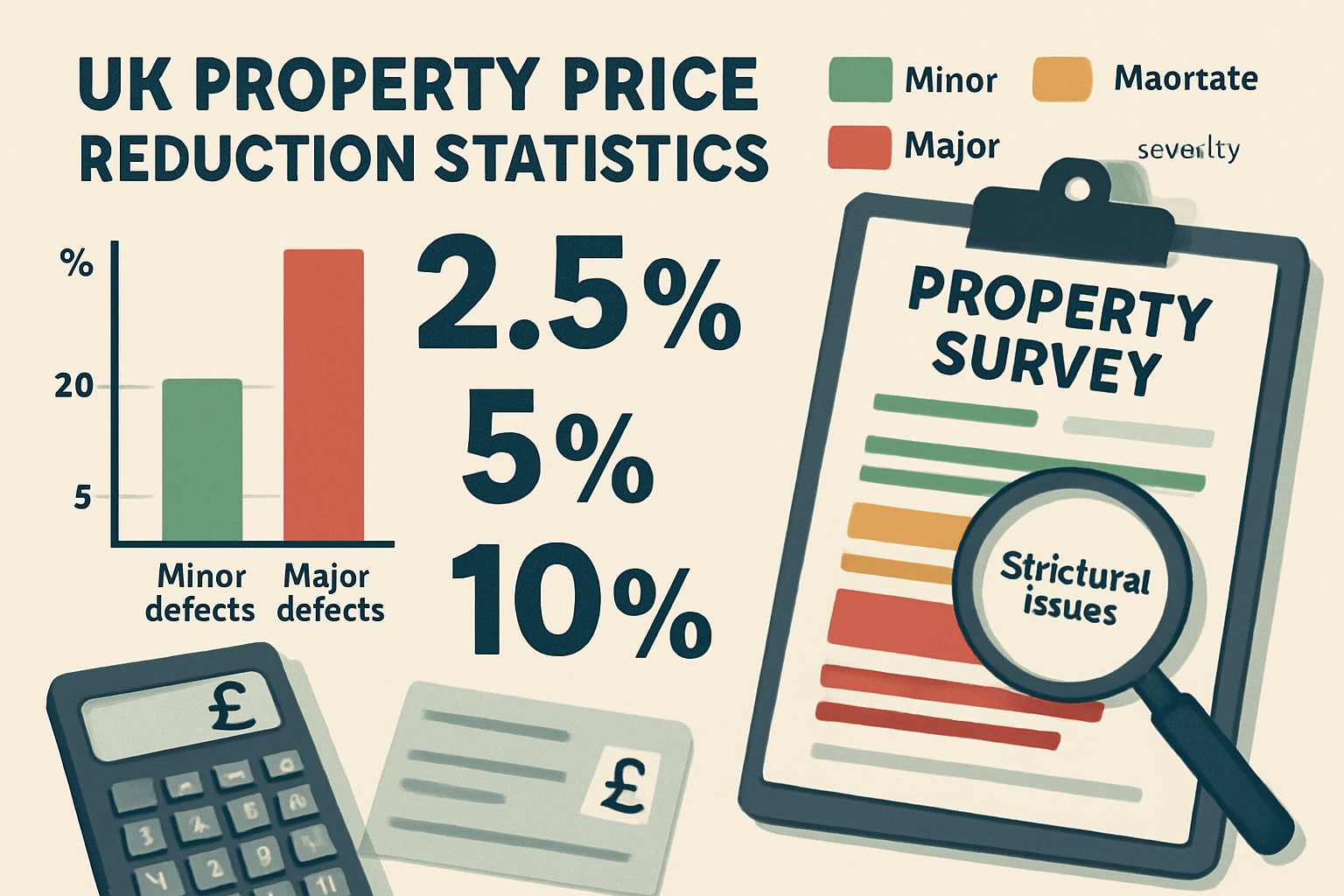
Property surveys serve as the buyer’s primary tool for uncovering hidden defects, structural issues, and maintenance concerns that could affect a home’s value. When professional surveyors conduct thorough inspections, they document everything from minor cosmetic imperfections to serious structural deficiencies.
Types of Property Surveys
The UK property market recognizes three main survey types, each offering different levels of detail:
Level 1 (Condition Report): A basic visual inspection suitable for newer properties in good condition. This survey type rarely uncovers issues significant enough to warrant substantial price reductions.
Level 2 (HomeBuyer Report): The most popular option for conventional properties in reasonable condition. This survey identifies visible defects and provides advice on repairs and ongoing maintenance.
Level 3 (Building Survey): The most comprehensive inspection, recommended for older properties, unusual constructions, or homes requiring renovation. This detailed examination often reveals issues that justify the average price reduction after survey negotiations.
Understanding which survey level meets specific property needs ensures buyers receive appropriate information for negotiation purposes.
How Surveys Influence Property Values 💷
Survey findings directly impact property valuations by:
- Revealing hidden repair costs that weren’t factored into the original asking price
- Identifying safety hazards that require immediate attention
- Uncovering maintenance issues that will demand future investment
- Highlighting structural concerns that could affect long-term property stability
- Documenting building regulation violations that need rectification
When surveyors discover significant defects, buyers gain legitimate grounds for renegotiating the purchase price. The key lies in understanding which issues justify reductions and by how much.
Average Price Reduction After Survey: Statistical Breakdown
Research from property market analysts and surveying professionals reveals that the average price reduction after survey varies considerably based on defect severity, property type, and market conditions. However, clear patterns emerge when examining thousands of property transactions across the UK.
Typical Reduction Percentages by Issue Severity
| Issue Severity | Average Reduction | Common Examples |
|---|---|---|
| Minor cosmetic | 1-2% | Decorative repairs, minor plumbing fixes, garden maintenance |
| Moderate maintenance | 2-5% | Roof repairs, outdated electrical systems, damp issues |
| Significant structural | 5-10% | Subsidence, major roof replacement, extensive rewiring |
| Critical safety concerns | 10-15%+ | Severe structural damage, hazardous materials, foundation issues |
These percentages represent typical negotiation outcomes, though actual results depend on numerous factors including property location, market competition, and buyer-seller dynamics.
Real-World Price Reduction Examples
Example 1: Victorian Terrace in London
- Original asking price: £650,000
- Survey findings: Damp issues, outdated electrical system, minor roof repairs needed
- Estimated repair costs: £18,000
- Negotiated reduction: £25,000 (3.8%)
Example 2: 1960s Semi-Detached in Manchester
- Original asking price: £280,000
- Survey findings: Subsidence evidence, cavity wall tie failure
- Estimated repair costs: £35,000
- Negotiated reduction: £28,000 (10%)
Example 3: Modern Apartment in Birmingham
- Original asking price: £195,000
- Survey findings: Minor cosmetic issues only
- Estimated repair costs: £3,000
- Negotiated reduction: £2,500 (1.3%)
These examples demonstrate how repair costs influence but don’t solely determine the average price reduction after survey outcomes. Negotiation skills, market conditions, and seller motivation all play significant roles.
Factors That Influence Price Reduction Amounts
While survey findings provide the foundation for negotiations, several additional factors determine whether buyers can successfully secure price reductions and how substantial those reductions might be.
Market Conditions and Timing 📊
The broader property market environment significantly impacts negotiation leverage:
Buyer’s Market Characteristics:
- High property inventory with limited buyers
- Properties remaining on market for extended periods
- Sellers more willing to negotiate
- Average reductions tend toward higher percentages (5-10%)
Seller’s Market Characteristics:
- Limited property availability with multiple interested buyers
- Quick sales with competitive offers
- Sellers less motivated to reduce prices
- Average reductions typically lower (1-3%)
Balanced Market Characteristics:
- Moderate inventory levels
- Reasonable time to sale
- Standard negotiation dynamics
- Average reductions fall in middle range (3-5%)
Property Type and Age Considerations
Different property categories experience varying reduction patterns:
Older Properties (Pre-1900): Common defects in older homes are often expected by buyers, potentially reducing negotiation leverage unless issues are particularly severe. Average reductions: 3-7%.
Mid-Century Properties (1900-1980): These homes frequently require updating and modernization. Buyers often anticipate some issues, but unexpected problems provide strong negotiation grounds. Average reductions: 4-8%.
Modern Properties (Post-1980): Buyers expect fewer issues with newer construction, so discovered defects carry more negotiation weight. Average reductions: 2-5%.
New Builds: While surveys on new builds are less common, snagging issues can still justify price adjustments. Average reductions: 1-3%.
Seller Motivation and Circumstances
Understanding seller circumstances helps predict negotiation success:
- Motivated sellers (relocating for work, financial pressures, chain dependencies) typically accept larger reductions
- Emotional sellers attached to their property may resist reductions despite valid survey findings
- Investment sellers often take pragmatic approaches, accepting reasonable reduction requests
- Estate sales may offer more flexibility depending on executor circumstances
Documentation Quality and Professional Estimates 📋
The strength of negotiation arguments depends heavily on documentation quality:
Strong Negotiation Position Includes:
- Detailed survey report from qualified surveyors
- Multiple contractor quotes for identified repairs
- Photographic evidence of defects
- Specialist reports for specific issues (structural engineer assessments, damp surveys)
- Clear cost breakdowns showing repair necessity
Weak Negotiation Position Includes:
- Vague survey descriptions without cost implications
- Single estimates without competitive quotes
- Mixing essential repairs with desired improvements
- Emotional rather than factual arguments
How to Negotiate Price Reductions After Survey Results
Successfully negotiating house price reductions after survey requires strategic approach, professional presentation, and realistic expectations. The following framework helps buyers maximize their negotiation outcomes while maintaining positive relationships with sellers.
Step 1: Analyze Survey Findings Thoroughly
Before initiating negotiations, buyers should:
- Categorize issues by urgency: Separate immediate safety concerns from cosmetic preferences
- Obtain professional repair quotes: Get at least two estimates from qualified contractors for major issues
- Calculate total repair costs: Sum all necessary repairs, excluding desired improvements
- Assess structural versus cosmetic issues: Understand which problems carry more negotiation weight
- Consider long-term implications: Factor in issues that may worsen over time
Step 2: Determine Your Negotiation Strategy
Buyers can pursue several negotiation approaches:
Full Price Reduction: Request the entire repair cost be deducted from the purchase price. This approach works best when:
- Multiple serious defects are identified
- Repair costs are substantial (£10,000+)
- Market conditions favor buyers
- Sellers are motivated
Partial Price Reduction: Negotiate a reduction that splits repair costs between buyer and seller. This compromise approach often succeeds when:
- Issues are moderate in severity
- Market conditions are balanced
- Maintaining good buyer-seller relations matters
- Some defects were reasonably foreseeable
Repair Completion: Request sellers complete repairs before completion. This option suits situations where:
- Specific repairs are easily definable
- Costs are moderate
- Sellers have capacity to manage contractors
- Buyers want guaranteed repair quality
Hybrid Approach: Combine price reduction with seller-completed repairs for optimal outcomes
Step 3: Present Your Case Professionally
Effective negotiation presentations include:
Written Summary: Prepare a clear document outlining:
- Survey findings with page references
- Repair cost estimates with contractor quotes
- Proposed reduction amount with justification
- Alternative solutions if full reduction isn’t acceptable
Professional Tone: Maintain respectful, factual communication avoiding:
- Emotional language or accusations
- Unreasonable demands without justification
- Threats to withdraw unless necessary
- Personal criticism of property maintenance
Evidence-Based Arguments: Support requests with:
- Official survey reports
- Multiple contractor estimates
- Structural engineer assessments for serious issues
- Photographs documenting problems
- Building regulation guidance where relevant
Step 4: Understand Realistic Expectations
Setting appropriate expectations improves negotiation success:
Reasonable Reduction Requests:
- Match reduction to actual repair costs (not inflated estimates)
- Focus on necessary repairs rather than desired improvements
- Consider market conditions and property competition
- Account for seller circumstances and motivation
Unreasonable Reduction Requests:
- Demanding reductions for normal wear and tear
- Requesting price cuts for issues clearly visible during viewings
- Combining essential repairs with wish-list renovations
- Seeking reductions exceeding repair costs significantly
“The most successful negotiations balance legitimate repair concerns with market realities. Buyers who present well-documented cases with reasonable requests typically achieve 60-80% of their requested reductions.” – Property Negotiation Specialist
Common Survey Issues and Expected Price Reductions
Understanding typical defects and their associated reduction amounts helps buyers set realistic negotiation targets. The following breakdown examines frequent survey findings and their market impact on the average price reduction after survey.
Structural Issues (Highest Impact) 🏗️
Subsidence and Foundation Problems
- Average repair cost: £10,000-£50,000+
- Typical reduction: 8-15% of property value
- Negotiation leverage: Very high – represents serious structural concern
- Additional considerations: May affect insurance and future saleability
Roof Structure Defects
- Average repair cost: £5,000-£25,000
- Typical reduction: 4-8% of property value
- Negotiation leverage: High – essential weatherproofing component
- Additional considerations: Age and remaining lifespan factor into negotiations
Wall Tie Failure
- Average repair cost: £3,000-£12,000
- Typical reduction: 3-6% of property value
- Negotiation leverage: Moderate to high – affects structural integrity
- Additional considerations: Common in properties built 1920s-1980s
Damp and Water Ingress (Moderate to High Impact) 💧
Rising Damp
- Average repair cost: £2,000-£8,000
- Typical reduction: 2-5% of property value
- Negotiation leverage: Moderate – common issue with established solutions
- Additional considerations: May indicate broader drainage problems
Penetrating Damp
- Average repair cost: £1,500-£6,000
- Typical reduction: 2-4% of property value
- Negotiation leverage: Moderate – varies by severity and location
- Additional considerations: Source identification crucial for accurate costing
Condensation and Mould
- Average repair cost: £500-£3,000
- Typical reduction: 1-2% of property value
- Negotiation leverage: Low to moderate – often lifestyle-related
- Additional considerations: May require ventilation improvements
For comprehensive guidance on preventing and removing damp and mould, professional assessment proves invaluable.
Electrical and Plumbing Systems (Moderate Impact) ⚡
Outdated Electrical Systems
- Average repair cost: £3,000-£8,000
- Typical reduction: 2-4% of property value
- Negotiation leverage: Moderate – safety concern with defined solution
- Additional considerations: Age of installation and compliance with current regulations
Plumbing Issues
- Average repair cost: £1,000-£5,000
- Typical reduction: 1-3% of property value
- Negotiation leverage: Low to moderate – depends on extent
- Additional considerations: Lead pipes may require full replacement
Boiler and Heating System Problems
- Average repair cost: £2,000-£6,000
- Typical reduction: 1-3% of property value
- Negotiation leverage: Moderate – essential system with clear replacement costs
- Additional considerations: Energy efficiency improvements may add value
Cosmetic and Minor Issues (Lower Impact) 🎨
Decorative Repairs
- Average repair cost: £500-£3,000
- Typical reduction: 0.5-1.5% of property value
- Negotiation leverage: Low – often considered buyer preference
- Additional considerations: Rarely justify significant reductions alone
Minor Joinery Repairs
- Average repair cost: £300-£2,000
- Typical reduction: 0.5-1% of property value
- Negotiation leverage: Very low – normal maintenance items
- Additional considerations: May strengthen case when combined with other issues
Garden and External Works
- Average repair cost: £500-£5,000
- Typical reduction: 0.5-2% of property value
- Negotiation leverage: Low – often viewed as enhancement rather than repair
- Additional considerations: Boundary issues carry more weight than aesthetics
Regional Variations in Price Reductions Across the UK
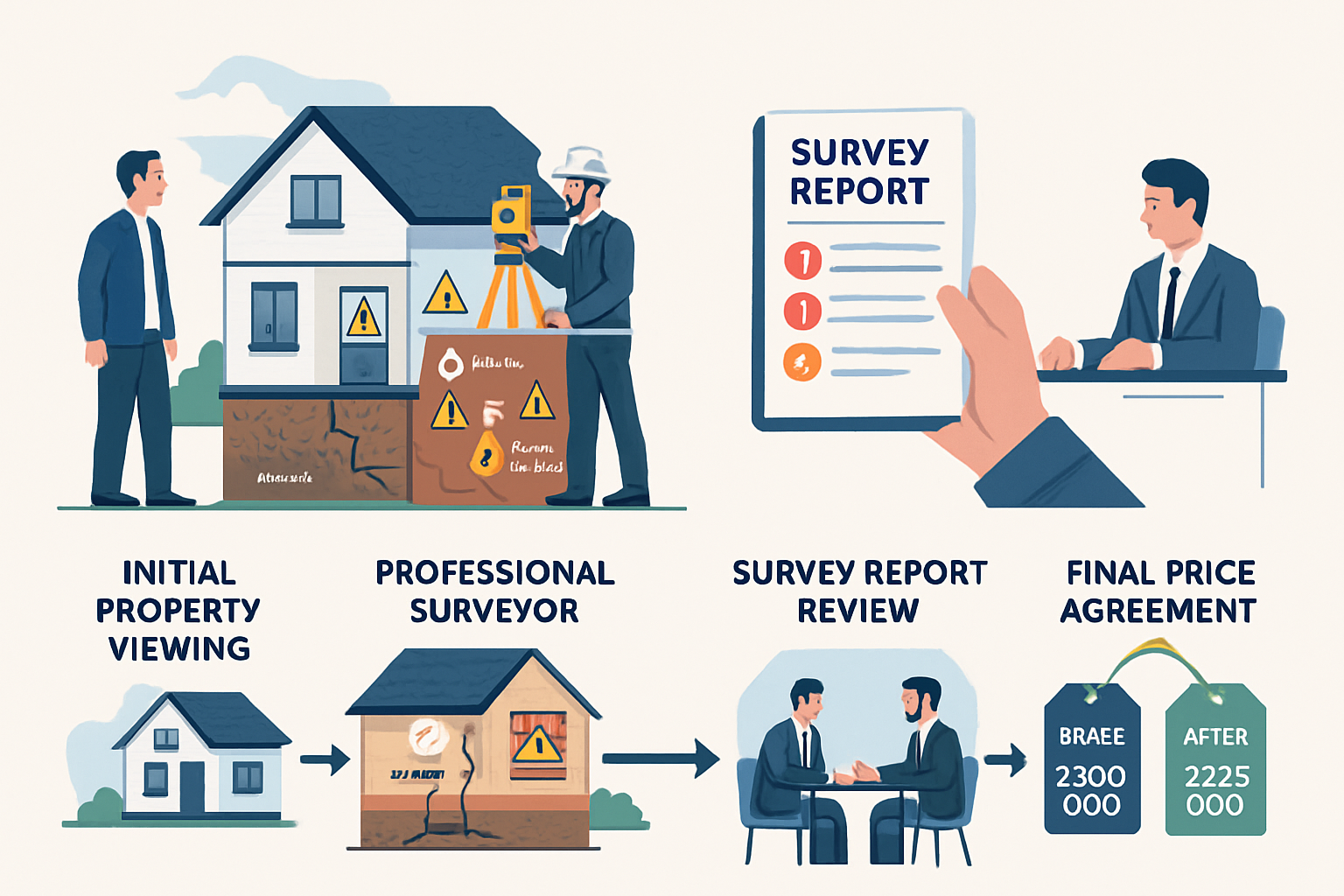
The average price reduction after survey varies significantly across different UK regions, influenced by local market dynamics, property types, and regional economic conditions. Understanding these geographical differences helps buyers set appropriate negotiation expectations.
London and Southeast England
Market Characteristics:
- High property values with competitive markets
- Buyers often face multiple-offer situations
- Sellers typically less willing to negotiate
Average Reduction Patterns:
- Minor issues: 1-2% (£5,000-£15,000 on average properties)
- Moderate issues: 2-4% (£15,000-£30,000)
- Major issues: 4-7% (£30,000-£60,000+)
Regional Factors:
- Property scarcity reduces negotiation leverage
- High demand maintains seller confidence
- Investment buyers may accept issues more readily
Midlands and Northern England
Market Characteristics:
- More balanced buyer-seller dynamics
- Reasonable property inventory levels
- Moderate competition for quality properties
Average Reduction Patterns:
- Minor issues: 1-3% (£2,000-£8,000 on average properties)
- Moderate issues: 3-6% (£8,000-£18,000)
- Major issues: 6-10% (£18,000-£35,000)
Regional Factors:
- Buyers generally have stronger negotiation positions
- Sellers more accommodating to reasonable requests
- Market conditions favor documented reduction requests
Scotland, Wales, and Northern Ireland
Market Characteristics:
- Varying market conditions by specific location
- Different legal frameworks (particularly Scotland)
- Generally lower property values than Southeast England
Average Reduction Patterns:
- Minor issues: 1-2.5% (£1,500-£5,000 on average properties)
- Moderate issues: 2.5-5% (£5,000-£12,000)
- Major issues: 5-9% (£12,000-£25,000)
Regional Factors:
- Scottish system includes Home Report, reducing survey surprises
- Rural areas may see higher reduction percentages
- Local market knowledge particularly important
Maximizing Your Negotiation Success: Expert Tips
Achieving optimal average price reduction after survey outcomes requires strategic preparation, professional presentation, and tactical flexibility. The following expert recommendations help buyers navigate negotiations effectively.
Timing Your Negotiation Approach ⏰
Optimal Timing Strategies:
- Act Promptly: Present reduction requests within 5-7 days of receiving survey results
- Consider Seller Timeline: Understand their completion pressures and deadlines
- Avoid Last-Minute Demands: Late negotiations damage trust and reduce success rates
- Allow Reasonable Response Time: Give sellers 3-5 days to consider proposals
Timing Mistakes to Avoid:
- Delaying negotiations until exchange approaches
- Rushing sellers without adequate consideration time
- Making demands during seller stress periods (moving day proximity)
- Presenting multiple revised requests repeatedly
Building Strong Negotiation Leverage
Leverage Enhancement Techniques:
Professional Documentation: Ensure all claims are supported by:
- Official survey reports from qualified building surveyors
- Multiple contractor estimates (minimum two for major works)
- Specialist assessments for complex issues
- Photographic evidence where applicable
Market Research: Demonstrate awareness of:
- Recent comparable sales in the area
- Average time properties spend on market
- Current buyer demand levels
- Seasonal market trends
Financial Readiness: Strengthen position by:
- Having mortgage approval in place
- Demonstrating chain-free status if applicable
- Showing ability to proceed quickly
- Maintaining deposit security
Presenting Alternative Solutions
Flexible negotiation approaches often achieve better outcomes than rigid demands:
Option 1: Price Reduction Only
- Cleanest solution for both parties
- Buyer manages all repairs post-completion
- Seller avoids contractor coordination
Option 2: Seller Completes Repairs
- Ensures work completion before purchase
- Seller may achieve better contractor rates
- Requires clear specification and quality standards
Option 3: Retention Scheme
- Solicitor holds agreed amount until repairs complete
- Protects both parties’ interests
- Suitable for moderate-cost repairs
Option 4: Hybrid Approach
- Seller completes urgent repairs
- Price reduction covers remaining issues
- Balances both parties’ preferences
Communication Best Practices
Effective Communication Includes:
- Clear, written proposals with supporting documentation
- Professional tone avoiding emotional language
- Specific reduction amounts with detailed justification
- Alternative solutions demonstrating flexibility
- Reasonable timelines for response and completion
Communication Pitfalls to Avoid:
- Verbal-only negotiations without written confirmation
- Aggressive or threatening language
- Unrealistic ultimatums
- Frequent position changes
- Going directly to sellers (bypassing estate agents)
“Buyers who approach negotiations with professional documentation, realistic expectations, and flexible solutions achieve successful outcomes in approximately 75% of cases, compared to only 40% success rates for poorly prepared negotiations.” – Property Transaction Research, 2025
When to Walk Away: Recognizing Deal-Breakers
While negotiating the average price reduction after survey often leads to successful outcomes, some situations warrant reconsidering the purchase entirely. Understanding when survey findings indicate fundamental problems helps buyers avoid costly mistakes.
Critical Issues That May Justify Withdrawal
Structural Catastrophes:
- Severe subsidence requiring underpinning across multiple walls
- Major foundation failures with uncertain repair outcomes
- Extensive structural movement indicating ongoing instability
- Repair costs exceeding 15-20% of property value
Safety Hazards:
- Hazardous materials (asbestos, lead) requiring extensive remediation
- Dangerous electrical installations posing immediate fire risks
- Severe structural defects creating collapse risks
- Contaminated land or environmental hazards
Financial Impossibilities:
- Repair costs making property unaffordable even with maximum reduction
- Issues affecting mortgage lender willingness to proceed
- Problems rendering property uninsurable at reasonable cost
- Defects likely to worsen rapidly, multiplying future costs
Legal Complications:
- Building regulation violations requiring retrospective approval
- Unauthorized alterations affecting structural integrity
- Boundary disputes or access issues
- Planning permission problems for essential repairs
Calculating Your Walk-Away Point
Before entering negotiations, establish clear parameters:
Financial Threshold Calculation:
- Maximum affordable purchase price (including repairs)
- Essential repair costs from survey
- Desired renovation budget
- Emergency contingency fund (10-15% of repair costs)
Example Calculation:
- Original offer: £300,000
- Maximum affordable total: £320,000
- Essential repairs identified: £35,000
- Contingency (15%): £5,250
- Walk-away price: £279,750 or less
If sellers won’t reduce to this level, proceeding risks financial overextension.
Alternative Approaches Before Withdrawal
Final Negotiation Attempts:
- Request seller contribution to specific high-cost repairs
- Propose extended completion timeline allowing seller to arrange repairs
- Suggest retention scheme for disputed items
- Explore creative solutions like furniture inclusion or fee coverage
Professional Mediation:
- Engage estate agents to facilitate compromise
- Request surveyor clarification on ambiguous findings
- Obtain second opinions on repair cost estimates
- Consult solicitors regarding legal implications
Only after exhausting reasonable alternatives should buyers withdraw from purchases based on survey findings.
The Long-Term Value of Survey-Based Negotiations
Successfully negotiating the average price reduction after survey provides benefits extending far beyond immediate financial savings. Understanding these long-term advantages helps buyers appreciate the survey process’s true value.
Financial Benefits Over Property Ownership 💰
Immediate Savings:
- Direct purchase price reduction
- Improved mortgage loan-to-value ratio
- Reduced stamp duty liability (on lower purchase price)
- Lower deposit requirements
Medium-Term Advantages:
- Funds available for quality repairs using preferred contractors
- Ability to address issues systematically rather than urgently
- Budget for improvements beyond essential repairs
- Financial cushion for unexpected additional issues
Long-Term Value:
- Proper repairs maintain or increase property value
- Well-documented repair history aids future sales
- Avoided problems that could have worsened significantly
- Reduced ongoing maintenance costs
Risk Mitigation and Peace of Mind
Knowledge Benefits:
- Complete understanding of property condition
- Informed decision-making about purchase
- Realistic budgeting for ownership costs
- Awareness of future maintenance priorities
Risk Reduction:
- Avoided purchasing properties with catastrophic defects
- Negotiated fair prices reflecting true property condition
- Secured funds for essential safety repairs
- Protected against hidden liability surprises
Emotional Advantages:
- Confidence in purchase decision
- Reduced stress about unknown problems
- Satisfaction with fair negotiation outcome
- Positive start to property ownership
Market Positioning for Future Sales
Properties purchased with thorough surveys and proper repairs offer advantages when selling:
Documentation Value:
- Complete repair history demonstrating responsible ownership
- Survey reports showing issues were addressed
- Contractor guarantees for completed works
- Maintenance records supporting asking price
Competitive Advantages:
- Well-maintained properties command premium prices
- Fewer issues discovered in buyers’ surveys
- Reduced negotiation leverage for future buyers
- Faster sales with fewer completion complications
Understanding how to prepare properties for market includes maintaining comprehensive documentation from purchase through ownership.
Conclusion: Securing Fair Value Through Informed Negotiation
The average price reduction after survey represents more than simple numbers on a negotiation sheet—it reflects the fundamental principle that buyers deserve to pay fair prices for properties in their true condition. Throughout 2025’s dynamic UK property market, survey-based negotiations remain essential tools for protecting buyer interests and ensuring successful property transactions.
Key Success Factors
Achieving optimal negotiation outcomes requires:
✅ Professional Survey Selection: Choosing appropriate survey levels for specific properties ensures comprehensive defect identification
✅ Thorough Documentation: Supporting reduction requests with detailed reports, multiple contractor quotes, and photographic evidence strengthens negotiation positions
✅ Realistic Expectations: Understanding typical reduction percentages (1-3% for minor issues, 5-10% for major problems) helps set achievable goals
✅ Market Awareness: Recognizing current market conditions and regional variations informs strategic approaches
✅ Flexible Solutions: Presenting alternative options beyond simple price reductions often achieves better outcomes
✅ Professional Communication: Maintaining respectful, evidence-based dialogue facilitates productive negotiations
Actionable Next Steps
For buyers currently navigating property purchases:
- Schedule Comprehensive Surveys: Engage qualified surveyors to conduct thorough property inspections appropriate to property type and age
- Obtain Multiple Repair Quotes: Contact at least two contractors for estimates on identified defects to establish accurate repair costs
- Calculate Realistic Reductions: Use survey findings and repair estimates to determine fair reduction amounts based on issue severity
- Prepare Professional Documentation: Compile survey reports, contractor quotes, and supporting evidence into clear negotiation presentations
- Present Proposals Promptly: Submit reduction requests within one week of receiving survey results to maintain transaction momentum
- Remain Flexible: Consider alternative solutions including seller-completed repairs, retention schemes, or hybrid approaches
- Know Your Limits: Establish clear walk-away points before negotiations begin to avoid emotional decision-making
- Consult Professionals: Engage solicitors, surveyors, and estate agents for guidance on complex negotiations
Final Thoughts
The property survey process, while sometimes revealing unwelcome surprises, ultimately protects buyers from costly mistakes and ensures fair value for their investments. Whether negotiations result in 2% reductions for minor issues or 10% adjustments for major defects, the survey-based negotiation process provides essential protection in one of life’s largest financial transactions.
By understanding typical reduction amounts, preparing professional documentation, and approaching negotiations strategically, buyers can confidently navigate survey findings and secure properties at prices reflecting their true condition. The investment in comprehensive surveys and thoughtful negotiations pays dividends throughout property ownership, from immediate financial savings through long-term value protection.
For additional guidance on property surveys, negotiations, and homeownership, explore the comprehensive resources available through Prince Surveyors’ blog, where expert insights help buyers make informed decisions throughout their property journeys.
How Prince Surveyors can help: explore our property valuations or learn about our which survey you need.