

What do Roof Surveyors Do? A Complete Guide to Roof Inspection Professionals
When a property changes hands, suffers storm damage, or simply ages over decades, one critical question arises: what’s the true condition of the roof? This is where roof surveyors step in—the unsung heroes who climb heights, navigate hazards, and provide the essential intelligence that protects homeowners, buyers, and insurance companies from costly surprises. What do roof surveyors do? They serve as the eyes and expertise that stand between structural security and potential disaster.
In 2025, the role of roof surveyors has evolved beyond simple visual inspections. These specialized professionals combine traditional craftsmanship knowledge with cutting-edge technology to assess one of the most critical components of any building. Their work influences major financial decisions, ensures safety compliance, and can save property owners thousands of dollars in preventable repairs.
Key Takeaways
- 🏠 Roof surveyors are specialized professionals who conduct comprehensive inspections of roofing systems to assess condition, identify defects, and estimate remaining lifespan
- 📋 Their assessments influence major decisions including property purchases, insurance claims, maintenance planning, and legal disputes
- 🔧 Modern roof surveying combines traditional expertise with advanced technology like thermal imaging, drones, and moisture detection equipment
- 💰 Professional roof surveys typically cost between $200-$800 depending on property size and complexity, potentially saving thousands in unexpected repairs
- ⚡ Roof surveyors require specialized training in construction, safety protocols, building codes, and material science to provide accurate assessments
Understanding the Role: What Do Roof Surveyors Do?
Roof surveyors are specialized construction professionals who perform detailed examinations of roofing systems to determine their current condition, identify existing or potential problems, and provide expert recommendations. Their primary responsibility is to deliver accurate, unbiased assessments that inform critical decisions about roof maintenance, repair, or replacement.
Core Responsibilities of Roof Surveyors
The work of a roof surveyor extends far beyond simply looking at shingles. Their comprehensive duties include:
Structural Assessment
- Examining the roof’s structural integrity and load-bearing capacity
- Identifying sagging, deflection, or other structural concerns
- Assessing the condition of rafters, trusses, and decking materials
- Evaluating ventilation systems and their effectiveness
Material Evaluation
- Determining the type, age, and quality of roofing materials
- Assessing the condition of shingles, tiles, metal panels, or membrane systems
- Examining flashing, gutters, downspouts, and drainage components
- Identifying signs of weathering, deterioration, or premature aging
Defect Identification
- Locating current leaks and potential leak sources
- Detecting moisture intrusion and water damage
- Identifying improper installation or workmanship issues
- Spotting code violations or safety hazards
Documentation and Reporting
- Creating detailed written reports with findings and recommendations
- Taking photographs and videos to document conditions
- Providing cost estimates for repairs or replacement
- Offering maintenance recommendations to extend roof lifespan
The Roof Survey Process: What Do Roof Surveyors Do During an Inspection?
Understanding what happens during a professional roof survey helps property owners appreciate the value these experts provide. The inspection process follows a systematic approach designed to capture every critical detail.
Pre-Inspection Preparation
Before setting foot on a roof, professional surveyors gather essential information:
- Property history: Age of the roof, previous repairs, insurance claims
- Weather records: Recent storms, hail events, or extreme conditions
- Building plans: Original construction documents when available
- Client concerns: Specific issues or areas requiring attention
The Physical Inspection
The hands-on examination typically includes multiple vantage points and methods:
| Inspection Area | What Surveyors Examine | Tools Used |
|---|---|---|
| Exterior Surface | Shingle condition, granule loss, curling, missing pieces | Visual inspection, camera, drone |
| Flashing & Penetrations | Chimney flashing, vent boots, skylights, valleys | Moisture meter, sealant tester |
| Drainage System | Gutters, downspouts, scuppers, water flow patterns | Level, water test |
| Structural Components | Decking, rafters, trusses, sagging areas | Moisture meter, infrared camera |
| Interior Inspection | Attic ventilation, insulation, water stains, mold | Flashlight, moisture meter, thermometer |
| Safety Features | Fall protection anchors, walkways, proper access | Safety equipment verification |
Advanced Technology Integration
Modern roof surveyors in 2025 employ sophisticated tools that previous generations couldn’t imagine:
Drone Technology 🚁
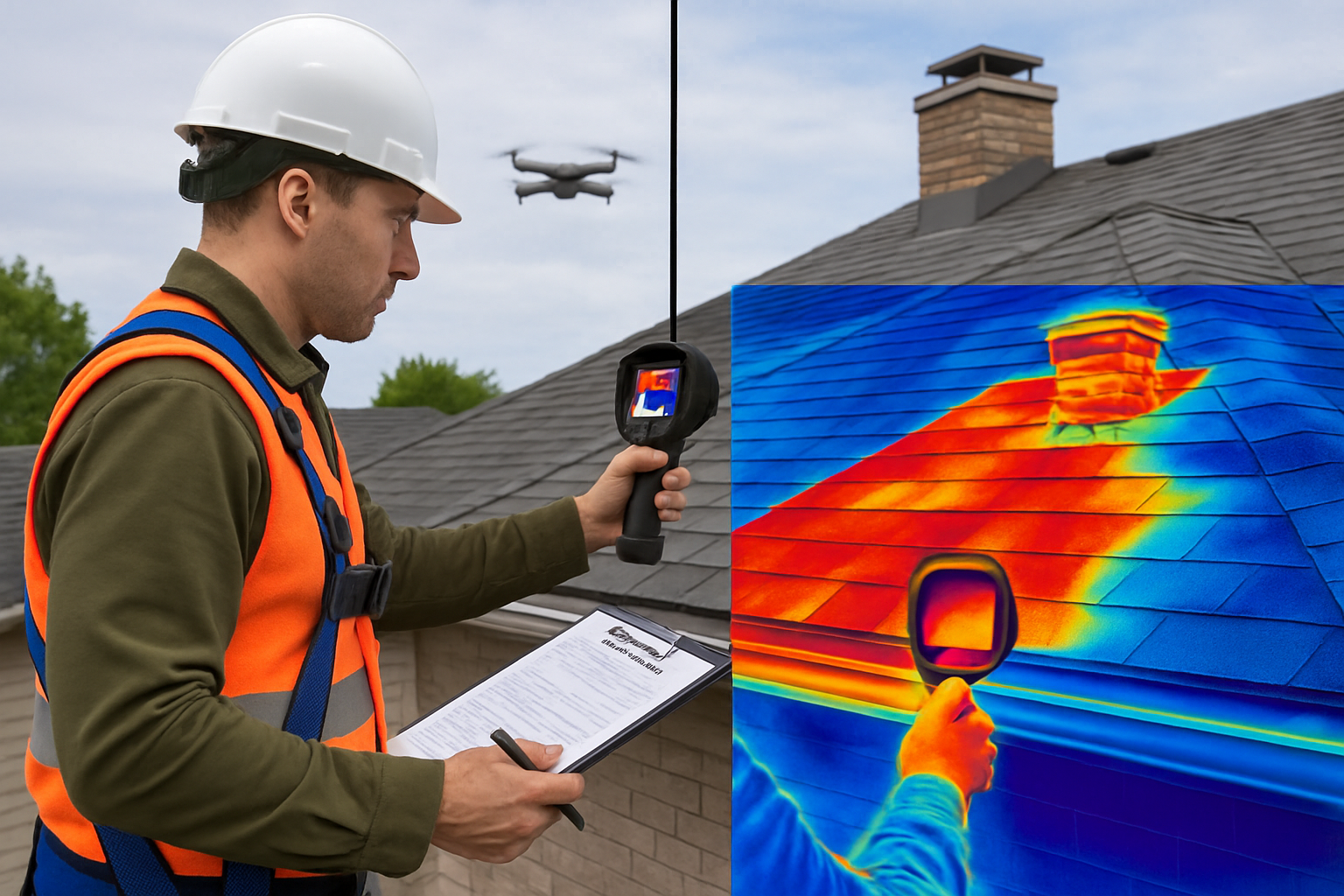
Unmanned aerial vehicles allow surveyors to safely inspect steep, high, or dangerous roof sections without physical access. High-resolution cameras capture detailed imagery that can be analyzed repeatedly.
Thermal Imaging Cameras 🌡️
Infrared technology reveals temperature variations that indicate moisture intrusion, missing insulation, or air leaks invisible to the naked eye[1].
Moisture Detection Equipment
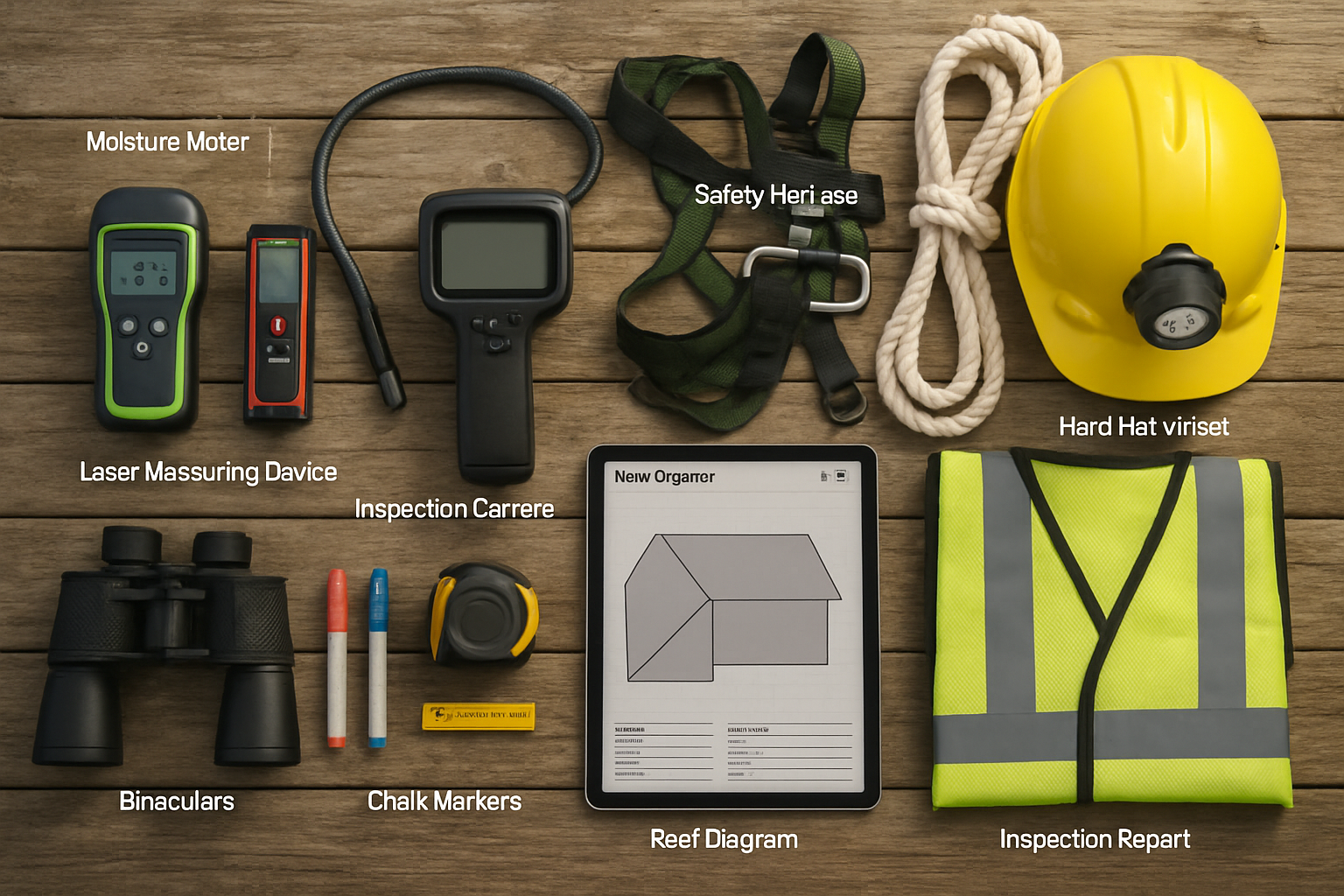
Advanced meters measure moisture content in roofing materials, identifying hidden water damage before it becomes visible.
Digital Measurement Tools
Laser measuring devices and photogrammetry software create precise roof dimensions and calculations without manual measurements.
Types of Roof Surveys and What Roof Surveyors Do for Each
Not all roof inspections serve the same purpose. Roof surveyors tailor their approach based on the specific needs of their clients.
Pre-Purchase Surveys
When buying property, prospective owners hire roof surveyors to:
- Assess the roof’s current condition and remaining lifespan
- Identify defects that could affect property value
- Provide negotiating leverage for price adjustments
- Estimate future replacement or repair costs
- Verify seller disclosures about roof condition
“A comprehensive pre-purchase roof survey can save buyers $10,000-$50,000 by identifying major defects before closing. It’s one of the smartest investments in the home-buying process.” — National Association of Roofing Contractors
Insurance Claim Inspections
Following storm damage, roof surveyors work with property owners and insurance companies to:
- Document storm-related damage (hail, wind, debris impact)
- Differentiate between storm damage and pre-existing conditions
- Provide detailed reports supporting insurance claims
- Estimate repair or replacement costs
- Testify as expert witnesses when disputes arise
Maintenance and Condition Surveys
Property owners schedule regular surveys to:
- Establish baseline condition documentation
- Identify minor issues before they become major problems
- Plan and budget for future maintenance or replacement
- Maintain warranty compliance
- Extend roof lifespan through preventive care
Legal and Dispute Surveys
In construction defect litigation or warranty disputes, roof surveyors provide:
- Expert analysis of installation quality and workmanship
- Code compliance verification
- Determination of defect causes (design, materials, installation, maintenance)
- Professional testimony in legal proceedings
- Damage quantification and repair specifications
Essential Skills: What Do Roof Surveyors Do to Qualify for This Work?
Becoming a competent roof surveyor requires a unique combination of technical knowledge, physical capability, and professional judgment.
Educational Background
Most professional roof surveyors possess:
- Construction or architectural education: Formal training in building science, construction technology, or architecture
- Roofing industry experience: Years of hands-on work installing, repairing, or maintaining roofs
- Continuing education: Regular training on new materials, technologies, and building codes
- Specialized certifications: Credentials from organizations like Haag Engineering, NRCIA, or RCI
Technical Competencies
Successful roof surveyors master:
Material Science Knowledge
Understanding how different roofing materials perform, age, and fail under various conditions—from asphalt shingles to metal panels, slate, tile, and membrane systems.
Building Code Expertise
Comprehensive knowledge of local, state, and national building codes, including fire ratings, wind resistance requirements, and installation standards[2].
Construction Principles
Deep understanding of structural systems, water management, thermal dynamics, and building envelope science.
Diagnostic Skills
The ability to identify subtle signs of problems, trace leak sources, and distinguish between different types of damage or deterioration.
Physical and Safety Requirements
The job demands:
- Physical fitness: Ability to climb ladders, walk on sloped surfaces, and work in confined spaces
- Balance and coordination: Safe navigation of potentially dangerous roof surfaces
- Safety training: OSHA compliance, fall protection certification, and hazard recognition
- Weather tolerance: Working in heat, cold, and varying conditions
- Height comfort: No fear of working at significant elevations
Professional Attributes
Beyond technical skills, effective roof surveyors demonstrate:
- Attention to detail: Spotting small issues that indicate larger problems
- Objectivity: Providing unbiased assessments regardless of client preferences
- Communication skills: Explaining technical findings to non-technical audiences
- Integrity: Maintaining professional ethics and avoiding conflicts of interest
- Problem-solving ability: Recommending practical, cost-effective solutions
The Value Proposition: Why What Roof Surveyors Do Matters
The work of professional roof surveyors delivers tangible benefits across multiple stakeholder groups.
For Property Buyers
Risk Mitigation 🛡️
Roof surveys reveal hidden defects that could cost tens of thousands in unexpected repairs shortly after purchase.
Negotiating Power
Documented roof issues provide concrete evidence for price reductions or seller-funded repairs before closing.
Financial Planning
Accurate assessments of remaining roof life help buyers budget for future replacement costs.
For Property Owners
Preventive Maintenance
Early identification of minor issues prevents expensive emergency repairs and extends roof lifespan by years[3].
Insurance Optimization
Proper documentation supports claims and may qualify properties for insurance discounts through proactive maintenance programs.
Property Value Protection
Well-maintained roofs documented through regular surveys preserve and enhance property values.
For Insurance Companies
Claim Verification
Independent roof surveys provide objective assessments that prevent fraudulent claims while ensuring legitimate damage receives proper compensation.
Risk Assessment
Pre-policy surveys help insurers accurately price coverage based on actual roof condition rather than assumptions.
Dispute Resolution
Expert surveyor reports reduce litigation costs by providing credible third-party evidence.
For Real Estate Professionals
Transaction Facilitation
Professional roof surveys smooth transactions by providing clear, objective information that builds buyer confidence.
Liability Protection
Documented roof assessments protect agents from future disputes about property condition disclosures.
Market Differentiation
Listings with recent professional roof surveys attract serious buyers and may command premium prices.
Common Issues Roof Surveyors Identify
Through their inspections, roof surveyors frequently encounter specific problems that require attention:
Weather-Related Damage
- Hail impact: Dents, bruising, and granule loss on shingles
- Wind damage: Lifted, torn, or missing shingles and compromised seals
- Ice dam damage: Water infiltration from ice backup at eaves
- UV degradation: Premature aging from sun exposure in hot climates
Installation Defects
- Improper flashing: Inadequate sealing around chimneys, vents, and valleys
- Insufficient fasteners: Under-nailed shingles that fail prematurely
- Poor ventilation: Inadequate airflow causing moisture buildup and heat damage
- Wrong materials: Products inappropriate for climate or application
Maintenance Failures
- Clogged gutters: Causing water backup and edge deterioration
- Debris accumulation: Moss, leaves, and branches retaining moisture
- Neglected repairs: Small issues left unaddressed until major problems develop
- Penetration deterioration: Failed sealants around pipes, vents, and equipment
Age-Related Deterioration
- Granule loss: Exposing underlying asphalt to accelerated weathering
- Curling and cupping: Shingles losing flexibility and proper sealing
- Cracking and splitting: Material brittleness from age and thermal cycling
- Fastener corrosion: Rusted nails causing shingle loss
The Cost of Professional Roof Surveys
Understanding pricing helps property owners budget appropriately for this valuable service.
Typical Fee Structures
Residential Properties
- Small homes (under 2,000 sq ft): $200-$400
- Medium homes (2,000-4,000 sq ft): $350-$600
- Large homes (over 4,000 sq ft): $500-$800+
Commercial Properties
- Small commercial buildings: $500-$1,500
- Medium commercial buildings: $1,500-$5,000
- Large commercial complexes: $5,000-$15,000+
Factors Affecting Survey Costs
Several variables influence the final price:
- Roof size and complexity: Larger, more complex roofs require more time
- Accessibility: Difficult access increases labor and safety requirements
- Technology requirements: Thermal imaging and drone surveys add costs
- Report detail level: Comprehensive reports with extensive documentation cost more
- Geographic location: Urban areas typically command higher rates
- Urgency: Rush inspections may include premium fees
Return on Investment
While survey costs may seem significant, consider the potential savings:
- Avoided major repairs: Identifying a $500 repair before it becomes a $15,000 problem
- Purchase price adjustments: Negotiating $10,000 off a home price based on roof condition
- Insurance claim support: Securing full claim payment instead of partial settlement
- Extended roof life: Adding 5-10 years through timely maintenance recommendations
Choosing the Right Roof Surveyor
Not all roof surveyors offer the same quality of service. Property owners should evaluate potential surveyors carefully.
Essential Qualifications to Verify
✅ Proper licensing and insurance
Confirm the surveyor carries professional liability insurance and any required state licenses.
✅ Industry certifications
Look for credentials from recognized organizations like Haag Engineering, NRCIA, or RCI.
✅ Relevant experience
Ensure the surveyor has specific experience with your roof type and inspection purpose.
✅ Technology capabilities
Verify they use modern diagnostic tools appropriate for comprehensive assessments.
✅ Sample reports
Review example reports to assess thoroughness and clarity.
Red Flags to Avoid
⚠️ Contractor-surveyors with conflicts of interest
Avoid surveyors who also bid on repair work they recommend.
⚠️ Unusually low prices
Extremely cheap surveys often indicate rushed, superficial inspections.
⚠️ Pressure tactics
Legitimate surveyors provide objective information without pressuring clients toward specific decisions.
⚠️ Lack of documentation
Professional surveys always include detailed written reports with photographic evidence.
⚠️ No references or reviews
Established professionals should readily provide references and have verifiable track records.
Questions to Ask Potential Surveyors
Before hiring, ask:
- How many years have you been conducting roof surveys?
- What certifications and training do you maintain?
- Do you carry errors and omissions insurance?
- What technology do you use during inspections?
- How detailed will the final report be?
- What is your typical turnaround time?
- Can you provide references from recent clients?
- Do you have experience with my specific roof type?
- Will you be available to answer follow-up questions?
- Do you offer any guarantees on your assessment?
The Future of Roof Surveying in 2025 and Beyond
The roof surveying profession continues evolving with technological advancement and changing industry needs.
Emerging Technologies
Artificial Intelligence and Machine Learning 🤖
AI-powered image analysis can now detect subtle defects human eyes might miss, processing thousands of images to identify patterns indicating problems.
Advanced Drone Capabilities
Next-generation drones with improved cameras, stability systems, and autonomous flight patterns enable more comprehensive inspections with less risk.
Augmented Reality Tools
AR applications overlay digital information onto physical roof views, helping surveyors visualize hidden components and potential solutions.
Predictive Analytics
Data-driven models increasingly predict remaining roof life and optimal maintenance timing based on material type, climate, and condition indicators.
Industry Trends
Increased Professionalization
More jurisdictions require formal certification and licensing for roof surveyors, raising industry standards and consumer protection.
Integration with Smart Buildings
Roof-mounted sensors continuously monitor conditions, with surveyors analyzing data trends rather than relying solely on periodic inspections.
Sustainability Focus
Growing emphasis on roof lifecycle assessment, energy efficiency evaluation, and environmental impact considerations.
Remote Survey Capabilities
Technology enables partial or complete surveys without physical site visits in some cases, reducing costs and increasing accessibility.
Conclusion: The Critical Role of Roof Surveyors
Understanding what roof surveyors do reveals their essential position in property ownership, real estate transactions, and building maintenance. These specialized professionals provide the expertise, objectivity, and detailed analysis that protects property investments and ensures safety.
From identifying hidden storm damage to preventing catastrophic failures through early detection, roof surveyors deliver value that far exceeds their service fees. Their work influences major financial decisions, supports insurance processes, resolves disputes, and extends the lifespan of one of a building’s most critical components.
Your Next Steps
If you’re considering a roof survey, take these actions:
- Assess your needs: Determine whether you need a pre-purchase, maintenance, insurance, or legal survey
- Research qualified professionals: Verify credentials, experience, and technology capabilities
- Request detailed proposals: Compare scope, methodology, and pricing from multiple surveyors
- Schedule the inspection: Book during favorable weather when roof access is safest
- Review the report thoroughly: Ask questions about any unclear findings or recommendations
- Act on recommendations: Address identified issues promptly to prevent escalation
- Maintain documentation: Keep survey reports for future reference, insurance purposes, and property value documentation
The roof over your head represents a significant investment and critical protection. Professional roof surveyors ensure that investment remains sound, identifying problems before they become crises and providing the information needed for informed decision-making. In 2025’s complex property landscape, their expertise has never been more valuable.
References
[1] International Association of Certified Home Inspectors. (2024). “Infrared Thermal Imaging for Building Inspections.” NACHI Standards and Practices.
[2] International Code Council. (2024). “International Building Code Requirements for Roof Systems.” ICC Digital Codes.
[3] National Roofing Contractors Association. (2023). “The Importance of Regular Roof Maintenance and Inspection Programs.” NRCA Technical Services.
SEO Meta Title and Description
Meta Title: What Do Roof Surveyors Do? Complete 2025 Guide
Meta Description: Discover what roof surveyors do, how they conduct inspections, their qualifications, and why professional roof surveys protect your property investment in 2025.
How Prince Surveyors can help: explore our roof surveys in London or learn about our drone roof inspections.