

RICS Roof Surveyor: Your Complete Guide to Professional Roof Inspections in 2025
When purchasing a property or maintaining an existing building, the roof represents one of the most critical—and expensive—structural components to evaluate. A seemingly minor roof defect can escalate into tens of thousands of pounds in repair costs, yet many property owners overlook this vital aspect until disaster strikes. This is where a RICS Roof Surveyor becomes invaluable, offering professional expertise that can save homeowners from costly mistakes and provide peace of mind through comprehensive roof assessments.
The Royal Institution of Chartered Surveyors (RICS) sets the gold standard for property surveying professionals worldwide. When you engage a RICS-qualified surveyor to inspect your roof, you’re accessing decades of industry expertise, rigorous professional standards, and comprehensive insurance protection that unqualified inspectors simply cannot provide.
Key Takeaways
- RICS Roof Surveyors are professionally qualified experts who conduct thorough roof inspections following strict industry standards and ethical guidelines
- Different survey levels (Condition Report, HomeBuyer Report, Building Survey) offer varying degrees of roof inspection depth to match your specific needs
- Professional roof surveys can identify hidden defects, safety hazards, and maintenance issues that could cost thousands of pounds if left undetected
- RICS surveyors carry professional indemnity insurance and adhere to mandatory continuing professional development requirements
- Hiring a RICS-qualified professional provides legal protection and expert testimony if disputes arise regarding roof condition
What Is a RICS Roof Surveyor?
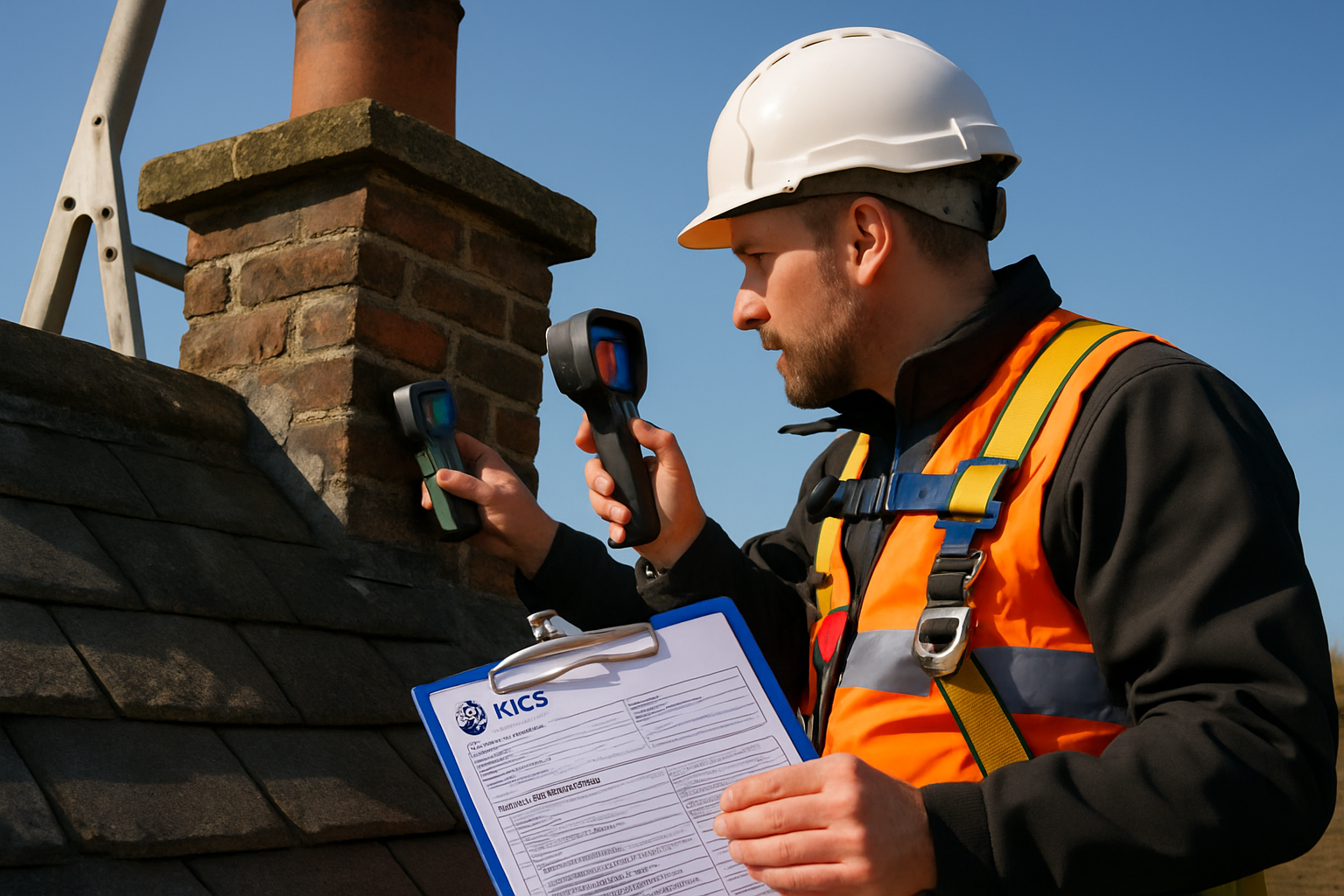
A RICS Roof Surveyor is a professionally qualified building surveyor who holds membership with the Royal Institution of Chartered Surveyors and specializes in assessing the condition, performance, and structural integrity of roofing systems. These experts undergo rigorous training, examination, and continuous professional development to maintain their chartered status [1].
Professional Qualifications and Standards
RICS members must meet stringent requirements that set them apart from general contractors or unqualified inspectors:
- Educational Requirements: Minimum of an accredited degree in surveying, construction, or related field
- Practical Experience: Structured training period typically lasting 24 months under supervision
- Professional Assessment: Rigorous Assessment of Professional Competence (APC) examination
- Continuing Development: Mandatory 20 hours of CPD annually to maintain current knowledge
- Professional Indemnity Insurance: Comprehensive coverage protecting clients against professional negligence
- Ethical Standards: Adherence to RICS Rules of Conduct and professional ethics framework
Specialized Roof Inspection Expertise
RICS Roof Surveyors possess specialized knowledge across various roofing systems and materials:
🏠 Pitched Roofs: Slate, tile, shingle, and metal roofing systems
🏢 Flat Roofs: Built-up felt, single-ply membranes, liquid waterproofing, and green roofs
🔧 Roof Components: Chimneys, flashings, valleys, gutters, and ventilation systems
⚡ Modern Technology: Thermal imaging, moisture detection, and drone surveys
📋 Building Regulations: Current compliance standards and historical construction methods
Understanding RICS Survey Levels for Roof Inspections
The Royal Institution of Chartered Surveyors offers three distinct survey levels, each providing different depths of roof inspection. Understanding these options helps property owners select the appropriate service for their circumstances.
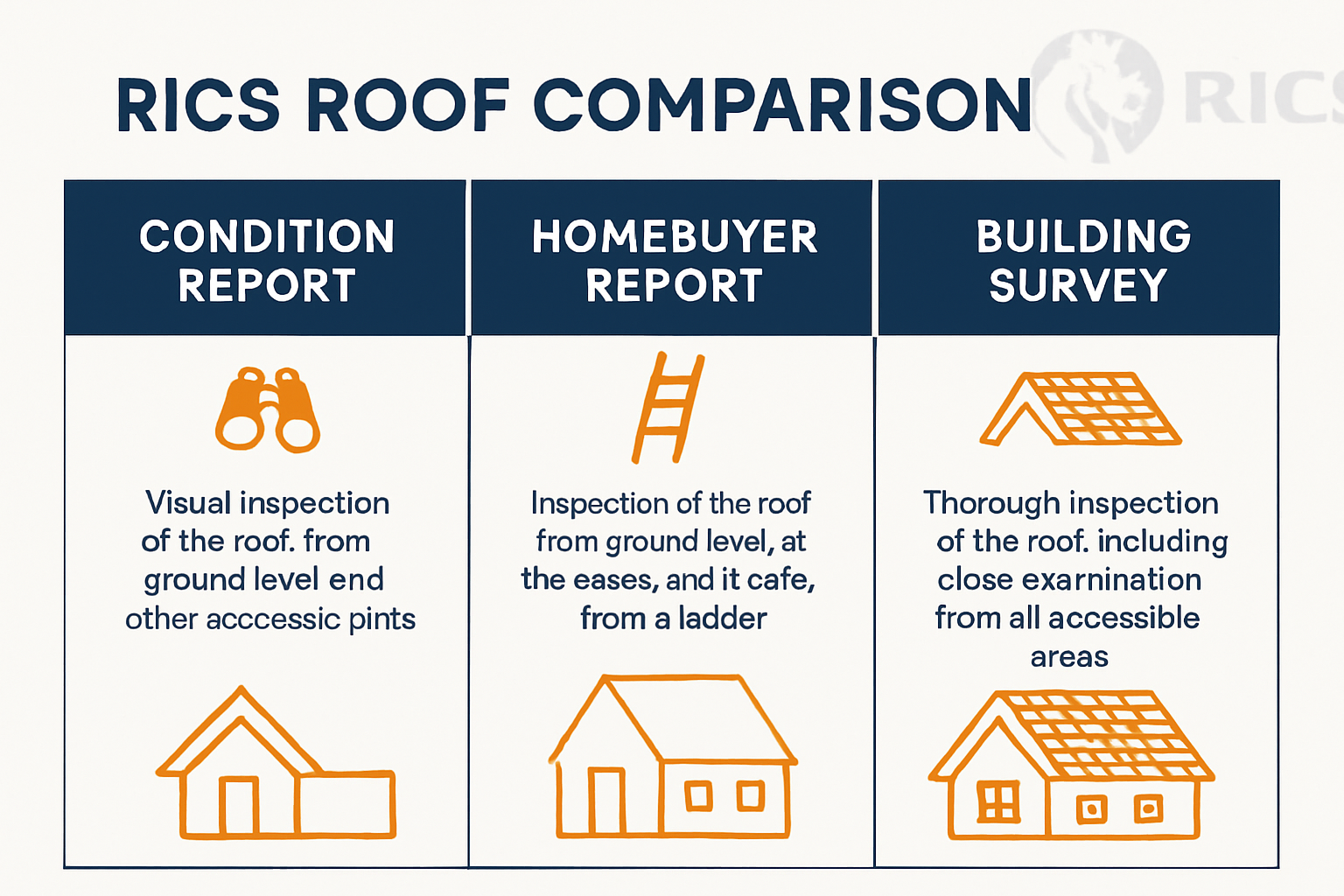
Level 1: RICS Condition Report
The Condition Report represents the most basic survey level, suitable for conventional properties in reasonable condition.
Roof Inspection Scope:
- Visual inspection from ground level using binoculars
- Assessment of visible roof covering condition
- Identification of obvious defects or damage
- Brief commentary on overall roof condition
- No detailed investigation of hidden areas
Best For:
- Modern properties (less than 10 years old)
- Standard construction without unusual features
- Properties in apparent good condition
- Budget-conscious buyers seeking basic assurance
Limitations:
❌ No access to roof space or loft areas
❌ Limited assessment of hidden defects
❌ No detailed repair cost estimates
❌ Minimal investigation of underlying structures
Level 2: RICS HomeBuyer Report
The HomeBuyer Report provides a more comprehensive roof assessment, representing the most popular survey choice for residential properties [2].
Roof Inspection Includes:
- Visual inspection from ground level and adjacent areas
- Internal roof space inspection (where safely accessible)
- Assessment of roof structure, timbers, and insulation
- Evaluation of chimneys, flashings, and rainwater goods
- Identification of defects with condition ratings (1-3 scale)
- Repair urgency indicators and maintenance advice
| Feature | Condition Report | HomeBuyer Report |
|---|---|---|
| Roof Space Access | ❌ | ✅ |
| Defect Rating System | ❌ | ✅ |
| Repair Advice | Basic | Detailed |
| Hidden Defects | Limited | Moderate |
| Average Cost | £300-£500 | £400-£900 |
Ideal For:
- Properties built post-1900 in reasonable condition
- Standard construction methods and materials
- First-time buyers requiring detailed information
- Properties where no major alterations are apparent
Level 3: RICS Building Survey
The Building Survey (formerly Full Structural Survey) delivers the most thorough roof inspection available from a RICS Roof Surveyor.
Comprehensive Roof Assessment:
- Detailed inspection of all accessible roof areas
- Close-range examination using ladders (where safe)
- Structural timber assessment for rot, beetle infestation, and deflection
- Comprehensive evaluation of roof coverings, underlays, and ventilation
- Detailed analysis of chimneys, parapets, and roof junctions
- Moisture ingress investigation and thermal performance review
- Extensive photographic documentation
- Detailed repair specifications and cost guidance
Recommended For:
✅ Period properties or listed buildings
✅ Properties over 50 years old
✅ Buildings with known defects or alterations
✅ Unusual construction methods or materials
✅ Properties requiring renovation or conversion
✅ High-value investments requiring maximum assurance
Why Choose a RICS Roof Surveyor Over General Contractors?
Many property owners question whether they need a chartered surveyor or whether a local roofer’s opinion suffices. The distinction carries significant implications for protection, objectivity, and professional accountability.
Independent Professional Opinion
RICS Roof Surveyors provide completely independent assessments without commercial interest in subsequent repair work. Unlike contractors who may benefit from identifying extensive repairs, chartered surveyors operate under strict ethical guidelines prohibiting conflicts of interest [3].
“A RICS surveyor’s duty is to the client and the profession, not to generate work for associated trades. This independence is fundamental to providing objective, trustworthy advice.” – RICS Professional Standards
Legal Protection and Accountability
Professional indemnity insurance carried by RICS members provides crucial protection:
- Financial Coverage: Typically £1 million minimum coverage for negligent advice
- Legal Recourse: Clear professional standards enabling dispute resolution
- Regulatory Oversight: RICS complaints and disciplinary procedures
- Expert Witness: Court-recognized professional testimony if disputes arise
Comprehensive Technical Knowledge
RICS-qualified surveyors possess broader technical understanding than specialized tradespeople:
🔍 Building Pathology: Understanding how defects develop and interact
📐 Structural Implications: Recognizing roof issues affecting overall building stability
⚖️ Legal Frameworks: Knowledge of building regulations, planning, and party wall matters
💰 Cost Assessment: Realistic repair cost estimation based on current market rates
🏛️ Historical Construction: Expertise in traditional materials and conservation techniques
Common Roof Defects Identified by RICS Surveyors
Professional roof surveys regularly uncover defects that untrained observers miss. Understanding these common issues highlights the value of expert inspection.
Structural Issues
Timber Defects:
- Wet rot in roof timbers from prolonged moisture exposure
- Dry rot fungal attack in poorly ventilated spaces
- Woodworm and beetle infestation weakening structural members
- Inadequate or undersized roof timbers causing deflection
- Previous DIY alterations compromising structural integrity
Load-Bearing Concerns:
- Sagging ridge lines indicating rafter spread or failure
- Inadequate support for heavy roof coverings (slate, concrete tiles)
- Removed or cut structural members during loft conversions
- Inadequate bracing in exposed locations
Weatherproofing Failures
Roof Covering Deterioration:
- Slipped, cracked, or missing tiles exposing underlayment
- Delaminating slate from natural weathering or nail failure
- Perished felt or membrane on flat roofs
- Corroded metal roofing or flashings
- Storm damage and wind uplift effects
Water Ingress Points:
- Failed lead flashings at chimneys and abutments
- Deteriorated valley linings and gutters
- Inadequate or missing roof underlays
- Condensation issues from poor ventilation
- Ice dam formation in cold weather
Modern Performance Issues
Contemporary RICS Roof Surveyors also assess performance against current standards:
- ❄️ Thermal Performance: Inadequate insulation increasing energy costs
- 💨 Ventilation Deficiencies: Insufficient airflow causing condensation
- ☀️ Solar Panel Integration: Proper installation and roof loading assessment
- 🌧️ Climate Resilience: Adequacy for increasing extreme weather events in 2025
The RICS Roof Survey Process: What to Expect
Understanding the survey process helps property owners prepare effectively and maximize the value of their investment in professional inspection.
Pre-Survey Preparation
Information Gathering:
- Property age and construction details
- Previous survey reports or building records
- Known defects or repair history
- Access arrangements and safety considerations
- Specific concerns requiring particular attention
Site Access Requirements:
- Clear access to loft hatches and roof spaces
- Removal of stored items blocking inspection areas
- Safe access to external areas around the building
- Notification to occupants about inspection timing
- Arrangements for ladder access if required
On-Site Inspection Methodology
A thorough RICS Roof Surveyor inspection typically follows this systematic approach:
External Assessment:
- Ground-level visual inspection using binoculars and photography
- Assessment of roof pitch, orientation, and overall configuration
- Examination of roof coverings for damage, wear, and defects
- Evaluation of chimneys, parapets, and projecting features
- Review of rainwater disposal systems and drainage
- Inspection of flashings, valleys, and vulnerable junctions
Internal Inspection:
- Roof space access and initial safety assessment
- Structural timber inspection for defects and adequacy
- Roof covering underside examination for water staining
- Insulation type, depth, and condition assessment
- Ventilation provision and effectiveness review
- Service penetrations and potential weakness points
- Photographic documentation of significant findings
Technical Investigations:
- Moisture meter readings in suspect areas
- Thermal imaging for insulation defects (where commissioned)
- Structural deflection measurements if concerns identified
- Sample testing recommendations for specific materials
Report Delivery and Interpretation
Professional survey reports typically arrive within 5-10 working days and include:
📄 Executive Summary: Key findings and urgent matters
📊 Condition Ratings: Standardized assessment scale
📸 Photographic Evidence: Annotated images of defects
💷 Repair Guidance: Priority recommendations and indicative costs
📋 Maintenance Advice: Preventative measures and lifespan estimates
Cost Considerations for RICS Roof Surveys in 2025
Investment in professional roof surveying varies based on multiple factors, but represents valuable insurance against costly surprises.
Typical Fee Structures
| Survey Type | Property Value | Typical Fee Range |
|---|---|---|
| Condition Report | Up to £500k | £300 – £600 |
| HomeBuyer Report | Up to £500k | £450 – £900 |
| Building Survey | Up to £500k | £600 – £1,500 |
| Building Survey | £500k – £1m | £900 – £2,000 |
| Specialist Roof Survey | Any | £350 – £800 |
Fee Variables:
- Property size and complexity
- Geographical location and accessibility
- Survey level and scope of inspection
- Additional services (thermal imaging, drone surveys)
- Urgency and turnaround requirements
Return on Investment
The cost of professional surveying represents exceptional value when considering potential savings:
Example Scenario:
- Survey Cost: £800 (Building Survey)
- Defects Identified: Failed valley requiring replacement
- Repair Cost Avoided: £4,500
- Net Saving: £3,700 plus negotiating leverage
Beyond immediate financial benefits, RICS surveys provide:
✅ Negotiating Power: Evidence for price reduction or repair conditions
✅ Future Planning: Realistic budgeting for upcoming maintenance
✅ Insurance Claims: Professional documentation supporting claims
✅ Peace of Mind: Confidence in property condition and investment
Selecting the Right RICS Roof Surveyor
Not all chartered surveyors possess equal expertise in roofing matters. Careful selection ensures optimal service quality and value.
Essential Selection Criteria
Professional Credentials:
- Current RICS membership (verify at rics.org/find-a-member)
- Relevant post-nominal letters (MRICS or FRICS)
- Specialist qualifications in building surveying
- Professional indemnity insurance confirmation
- Local knowledge and experience in your property type
Experience and Expertise:
- Demonstrated experience with similar properties
- Specialist knowledge of relevant construction periods
- Understanding of local building characteristics
- Portfolio or case studies of previous work
- Professional references or client testimonials
Important Questions to Ask
Before commissioning a RICS Roof Surveyor, consider these essential questions:
- What survey level do you recommend for my property and why?
- How many years of experience do you have with [property type]?
- Will you personally conduct the inspection or delegate to an assistant?
- What access equipment will you use for roof inspection?
- How long will the inspection take and when will I receive the report?
- Do your fees include follow-up queries and clarification?
- Can you provide recent examples of similar surveys?
- What professional indemnity insurance level do you carry?
Red Flags to Avoid
⚠️ Warning Signs:
- Reluctance to provide RICS membership verification
- Significantly lower fees than competitors without explanation
- Pressure to commission additional services immediately
- Vague descriptions of inspection methodology
- No professional indemnity insurance or inadequate coverage
- Unwillingness to provide references or example reports
- Dual role as surveyor and contractor offering repairs
The Future of RICS Roof Surveying: Technology and Innovation
The surveying profession continues evolving with technological advancement, enhancing the capabilities of RICS Roof Surveyors in 2025.
Emerging Technologies
Drone-Based Inspections:
Modern surveyors increasingly employ unmanned aerial vehicles (UAVs) for:
- Safe inspection of dangerous or inaccessible roof areas
- High-resolution photographic documentation
- 3D modeling and measurement capabilities
- Reduced inspection time and improved safety
- Comprehensive visual records for future comparison
Thermal Imaging Applications:
Infrared technology reveals hidden defects invisible to conventional inspection:
- Moisture ingress detection before visible damage appears
- Insulation deficiency identification
- Air leakage pathway visualization
- Structural thermal bridging assessment
- Energy efficiency evaluation
Digital Reporting Platforms:
Advanced software enhances report quality and accessibility:
- Interactive digital reports with embedded photographs
- Cloud-based access for all stakeholders
- Video walkthroughs of significant defects
- Automated maintenance scheduling recommendations
- Integration with property management systems
Sustainability and Climate Adaptation
Contemporary RICS Roof Surveyors increasingly address environmental considerations:
🌱 Green Roof Assessment: Evaluation of living roof systems and biodiversity benefits
☀️ Solar Integration: Technical review of photovoltaic installations and roof suitability
💧 Rainwater Harvesting: Assessment of collection systems and roof compatibility
🌡️ Climate Resilience: Evaluation against extreme weather and temperature events
♻️ Lifecycle Analysis: Sustainable material selection and environmental impact
Conclusion: Making Informed Decisions About Roof Surveys
The roof represents one of the most critical protective elements of any property, yet it remains one of the most frequently overlooked during property transactions and ownership. Engaging a qualified RICS Roof Surveyor provides professional expertise, independent assessment, and comprehensive protection that far exceeds the modest investment required.
Whether purchasing a new property, maintaining an existing building, or planning renovations, professional roof surveying delivers tangible value through:
- Early defect identification preventing expensive emergency repairs
- Objective professional opinion free from commercial conflicts
- Legal protection through professional indemnity insurance
- Negotiating leverage in property transactions
- Future planning with realistic maintenance budgets
- Peace of mind from expert assessment
Your Next Steps
For Property Buyers:
- Commission an appropriate RICS survey level before exchange of contracts
- Review the roof section of survey reports carefully
- Obtain specialist roof surveys for older or complex properties
- Use survey findings to negotiate price adjustments or repair conditions
- Plan future maintenance based on surveyor recommendations
For Property Owners:
- Schedule periodic roof inspections every 3-5 years
- Address minor defects promptly before they escalate
- Maintain comprehensive records of repairs and maintenance
- Consider specialist surveys before major renovation projects
- Update insurance documentation with current condition assessments
Finding Your RICS Surveyor:
- Visit the RICS Find a Surveyor directory at rics.org
- Request detailed quotations from multiple qualified professionals
- Verify current RICS membership and professional indemnity insurance
- Review experience with similar properties in your area
- Discuss specific concerns and ensure they’ll be addressed
The expertise of a chartered professional provides invaluable protection for what is typically the largest financial investment most people make. Don’t compromise on quality when it comes to understanding the condition of your roof—engage a RICS Roof Surveyor and invest in professional peace of mind.
References
[1] Royal Institution of Chartered Surveyors. (2024). “Professional Qualifications and Standards.” RICS Professional Standards Framework.
[2] RICS. (2023). “RICS Home Survey Standard.” Royal Institution of Chartered Surveyors Guidance Note.
[3] RICS. (2022). “Rules of Conduct for Members and Firms.” Royal Institution of Chartered Surveyors Professional Ethics.
SEO Meta Title and Description
Meta Title: RICS Roof Surveyor Guide 2025 | Expert Survey Advice
Meta Description: Complete guide to RICS Roof Surveyors in 2025. Learn about survey types, costs, benefits, and how to choose qualified professionals for roof inspections.
Need a roof inspected in London? Our fixed-fee roof surveys in London use drone imaging and chartered roofing surveyors — no scaffolding required.
How Prince Surveyors can help: explore our roof surveys in London or learn about our drone roof inspections.