

What’s in a Level 3 Survey: A Comprehensive Guide to the Most Detailed Property Inspection
Buying a property represents one of the most significant financial decisions most people will ever make. Yet, hidden structural problems, subsidence issues, or serious defects can turn a dream home into a costly nightmare. What’s in a Level 3 Survey becomes a critical question when you’re considering purchasing an older property, a building with obvious defects, or one that’s been significantly altered. This comprehensive inspection goes far beyond a basic valuation and can save buyers from catastrophic financial mistakes.
Understanding the full scope of what a Level 3 Survey (formerly known as a Building Survey or Full Structural Survey) entails helps property buyers make informed decisions about whether this detailed inspection is right for their situation. This guide explores every aspect of this thorough property assessment, from what surveyors examine to how much it costs and when it’s absolutely essential.
Key Takeaways
- Level 3 Surveys are the most comprehensive property inspections available, providing detailed analysis of a building’s condition, structural integrity, and potential defects
- This survey type is essential for older properties (built before 1900), unusual constructions, significantly altered buildings, or properties showing visible defects that require expert evaluation
- Expect to pay £600-£1,500+ depending on property size and location, with the investment potentially saving tens of thousands in unexpected repair costs
- The survey includes detailed examination of all accessible areas, from foundations to roof spaces, with expert commentary on defects, repair urgency, and cost implications
- Unlike basic valuations, Level 3 Surveys prioritize the buyer’s interests with actionable recommendations for maintenance, repairs, and further specialist investigations
Understanding the Three Levels of Property Surveys
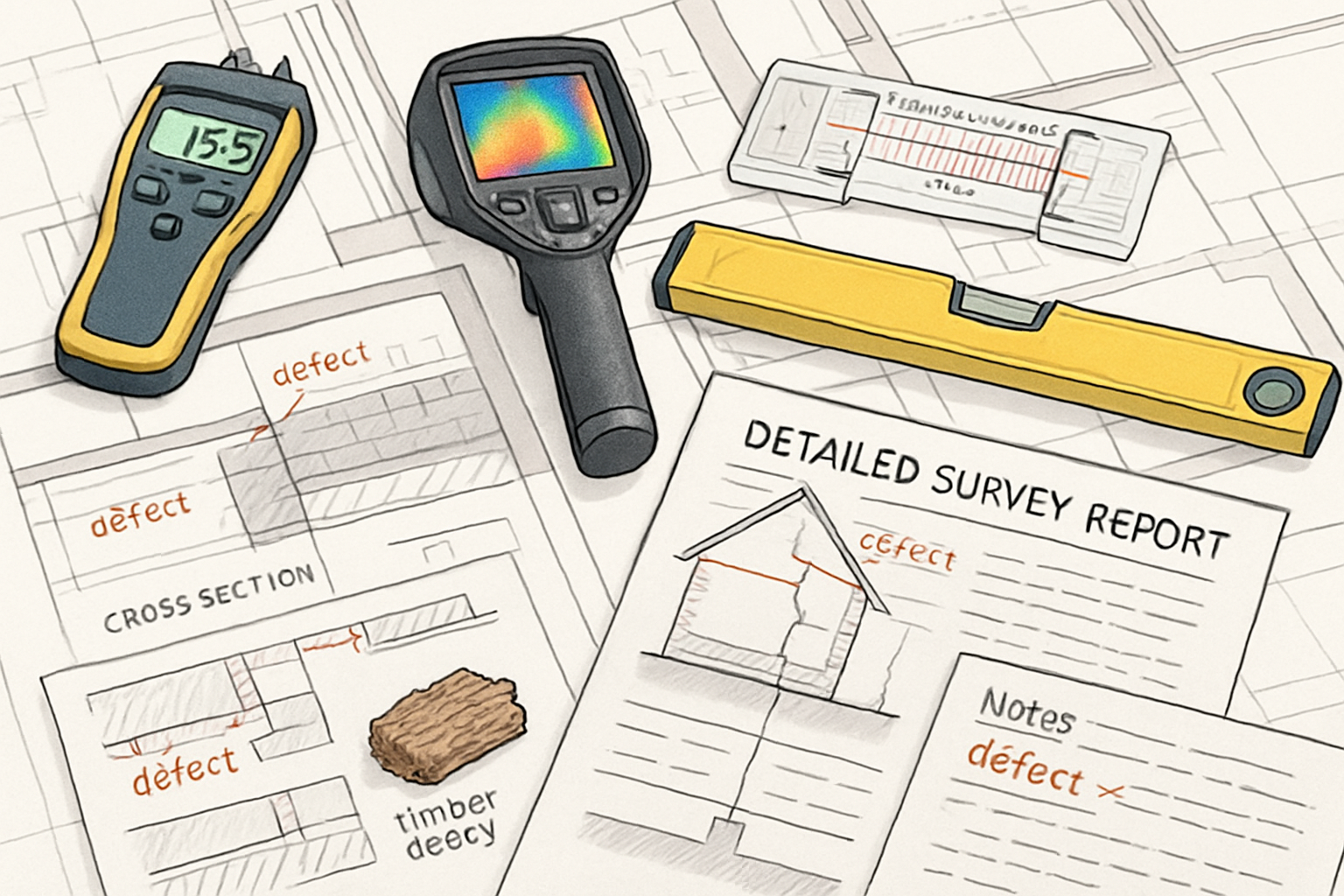
Before diving into what’s included in a Level 3 Survey, it’s important to understand how it differs from other survey options available in the UK property market.
The Survey Hierarchy
The Royal Institution of Chartered Surveyors (RICS) established three standardized survey levels in 2016 to help buyers choose appropriate inspection depth[1]:
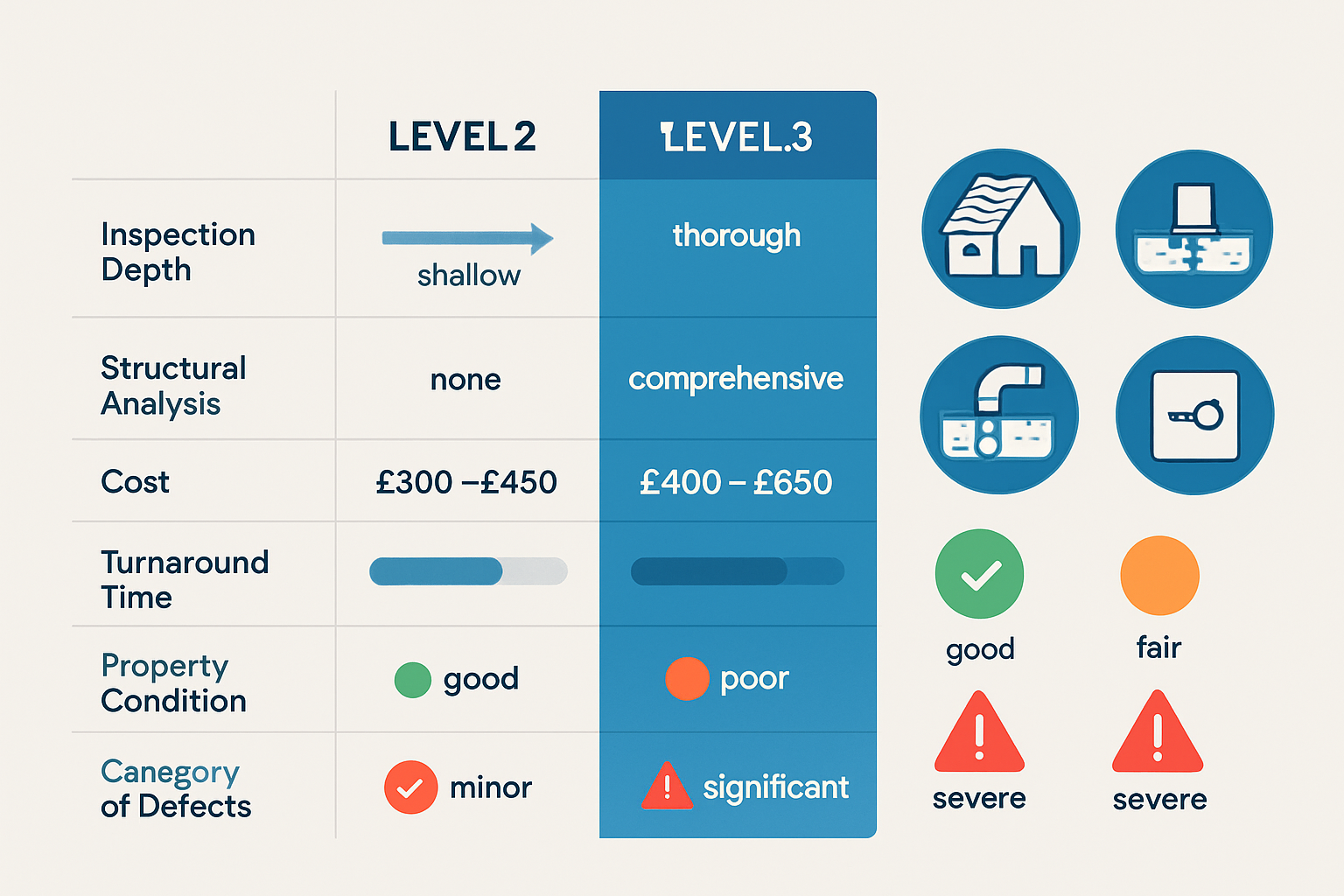
| Survey Level | Best For | Inspection Depth | Typical Cost |
|---|---|---|---|
| Level 1 (Condition Report) | New-build or excellent condition properties | Basic visual inspection | £250-£400 |
| Level 2 (HomeBuyer Report) | Conventional properties in reasonable condition | Standard inspection with valuation | £400-£900 |
| Level 3 (Building Survey) | Older, altered, or defective properties | Comprehensive detailed analysis | £600-£1,500+ |
Why Level 3 Stands Apart
A Level 3 Survey represents the gold standard of property inspection. Unlike its less comprehensive counterparts, this survey provides an exhaustive analysis that leaves virtually no stone unturned. Surveyors conducting Level 3 inspections spend significantly more time on-site—often 3-6 hours for an average property—and produce detailed reports that can exceed 50 pages[2].
What’s in a Level 3 Survey: Core Components Explained
The comprehensive nature of a Level 3 Survey means it examines virtually every accessible aspect of a property. Here’s what surveyors investigate during this thorough inspection.
🏗️ Structural Elements Assessment
The structural analysis forms the foundation of any Level 3 Survey. Surveyors meticulously examine:
Foundations and Substructure
- Ground conditions and drainage around the property
- Foundation type and visible condition
- Signs of subsidence, heave, or settlement
- Underpinning evidence and quality
- Basement or cellar condition (dampness, structural integrity)
Load-Bearing Walls and Framework
- Masonry condition and pointing quality
- Timber frame integrity (where applicable)
- Vertical and horizontal structural movement
- Crack patterns and their significance
- Wall tie condition in cavity walls
Roof Structure
- Rafter, purlin, and truss condition
- Ridge beam and wall plate integrity
- Signs of sagging, spreading, or distortion
- Timber condition (rot, beetle infestation)
- Structural alterations and their adequacy
“A Level 3 Survey isn’t just about identifying problems—it’s about understanding the building’s story, how it has performed over time, and what challenges it may face in the future.” — RICS Guidance
🏠 External Fabric Inspection
Surveyors conduct detailed examinations of all external elements:
Roofing Materials
- Tile, slate, or other covering condition
- Missing, slipped, or damaged elements
- Valleys, hips, and ridge details
- Flat roof construction and condition
- Estimated remaining lifespan
Rainwater Disposal Systems
- Gutter condition, capacity, and alignment
- Downpipe integrity and connections
- Soakaway functionality
- Evidence of overflow or blockages
External Walls
- Render or cladding condition
- Brickwork and mortar quality
- Cavity wall construction verification
- Damp-proof course presence and effectiveness
- External decorations condition
Windows and Doors
- Frame condition and material
- Glazing integrity and type
- Operation and weatherproofing
- Signs of decay or failure
- Security features assessment
🔧 Internal Elements and Services
The internal inspection covers every accessible room and space:
Internal Walls and Ceilings
- Plasterwork condition
- Structural or non-structural determination
- Signs of movement or cracking
- Damp penetration evidence
- Previous repair quality
Floors and Staircases
- Floor construction type
- Levelness and structural integrity
- Timber floor condition (rot, beetle damage)
- Staircase safety and condition
- Balustrade security
Services Overview
While Level 3 Surveys don’t include specialist testing, surveyors provide observations on:
- Heating systems: boiler age, type, and visible condition
- Electrical installations: consumer unit age, visible wiring concerns
- Plumbing: pipework materials, visible leaks, water pressure
- Drainage: internal waste systems and visible defects
🌡️ Damp and Insulation Analysis
Moisture-related issues receive particular attention:
Damp Investigation
- Rising damp evidence and extent
- Penetrating damp sources
- Condensation problems
- Moisture meter readings
- Recommendations for specialist damp surveys
Thermal Performance
- Insulation presence and adequacy
- Cavity wall insulation verification
- Loft insulation depth
- Energy efficiency observations
- Recommendations for improvements
🪲 Timber Condition and Pest Assessment
Timber elements undergo careful scrutiny:
- Woodworm infestation evidence (exit holes, frass)
- Wet rot and dry rot identification
- Fungal decay in structural timbers
- Previous treatment evidence
- Recommendations for specialist timber surveys
What’s in a Level 3 Survey Report: Document Breakdown
Understanding the report structure helps buyers extract maximum value from their investment.
Report Sections and Content
Executive Summary
A concise overview highlighting:
- Critical defects requiring urgent attention
- Significant defects needing future repair
- Overall property condition rating
- Key recommendations
Detailed Room-by-Room Analysis
Comprehensive descriptions of every accessible space, including:
- Specific defects identified
- Condition ratings
- Photographic evidence
- Repair recommendations
External Areas Assessment
Detailed coverage of:
- Gardens and boundaries
- Outbuildings and garages
- Driveways and pathways
- Drainage systems
Technical Analysis
Expert commentary on:
- Construction methods and materials
- Structural performance
- Alteration quality and building regulation compliance
- Maintenance history interpretation
Recommendations Section
Prioritized advice covering:
- Urgent repairs (Category 3 defects): requiring immediate attention
- Significant repairs (Category 2 defects): needing planning and budgeting
- Minor issues (Category 1 defects): normal maintenance items
- Further specialist investigations needed
- Estimated repair cost guidance
📊 Condition Ratings Explained
Level 3 Survey reports use a standardized rating system[3]:
Condition Rating 1 ✅
No repair currently needed. Normal maintenance required.
Condition Rating 2 ⚠️
Defects requiring future repair or replacement. Budget planning needed.
Condition Rating 3 🚨
Defects requiring urgent repair or further investigation. Serious concerns.
When You Absolutely Need a Level 3 Survey
Not every property requires this level of scrutiny. Understanding when it’s essential versus optional helps buyers invest wisely.
Essential Scenarios for Level 3 Surveys
Pre-1900 Properties
Older buildings present unique challenges:
- Historical construction methods unfamiliar to modern builders
- Solid wall construction with different moisture dynamics
- Aged materials nearing end of serviceable life
- Multiple alterations over decades
- Potential for hidden structural modifications
Properties with Visible Defects
When obvious problems are apparent:
- Significant cracking in walls
- Roof sagging or distortion
- Damp staining or mold growth
- Structural movement evidence
- Previous subsidence history
Unusual Construction Types
Non-standard buildings require expert analysis:
- Timber-framed houses
- Thatched properties
- Listed buildings
- Prefabricated construction (PRC houses)
- Self-built or architect-designed homes
Significantly Altered Properties
When major modifications are evident:
- Loft conversions
- Extensions and additions
- Structural wall removal
- Change of use conversions
- Underpinning work
Properties for Renovation
Planning major works requires baseline understanding:
- Renovation project purchases
- Properties requiring modernization
- Buildings with deferred maintenance
- Investment properties needing assessment
Optional but Beneficial Situations
Level 3 Surveys also provide value for:
- High-value properties where comprehensive understanding justifies cost
- Properties in areas with known geological issues
- Buildings where you plan long-term residence
- Properties where mortgage lenders require detailed surveys
What’s in a Level 3 Survey Cost: Investment Analysis
Understanding the financial commitment helps buyers budget appropriately.
Typical Cost Ranges (2025)
Survey costs vary based on several factors:
By Property Value
- Properties under £250,000: £600-£900
- Properties £250,000-£500,000: £800-£1,200
- Properties £500,000-£1 million: £1,000-£1,500
- Properties over £1 million: £1,500-£3,000+
By Property Size
- 1-2 bedroom flat: £600-£800
- 3-bedroom house: £800-£1,100
- 4-5 bedroom house: £1,000-£1,400
- 6+ bedroom or complex property: £1,500+
Regional Variations
- London and Southeast: 20-30% premium
- Major cities: 10-20% premium
- Rural and northern areas: Lower end of ranges
Return on Investment
Consider the potential savings:
Hidden Defect Discovery
- Subsidence repairs: £5,000-£50,000+
- Roof replacement: £5,000-£15,000
- Damp treatment: £1,000-£10,000
- Structural repairs: £3,000-£30,000+
Negotiation Leverage
Detailed defect identification enables:
- Price reduction negotiations
- Seller-funded repairs before completion
- Informed decision-making about proceeding
- Realistic renovation budgeting
Many buyers recover their survey cost multiple times over through price negotiations alone[4].
The Level 3 Survey Process: What to Expect
Understanding the timeline and process helps manage expectations.
Step-by-Step Journey
1. Surveyor Selection (1-3 days)
- Research RICS-qualified surveyors
- Obtain multiple quotes
- Verify professional indemnity insurance
- Check reviews and credentials
2. Booking and Scheduling (3-7 days)
- Provide property details
- Arrange access with estate agents
- Confirm scope and any special requirements
- Make payment or deposit
3. Site Inspection (Half to full day)
- Surveyor spends 3-6 hours on-site
- Photographs defects and concerns
- Takes measurements and readings
- Accesses all available spaces (lofts, cellars, etc.)
4. Report Preparation (7-14 days)
- Analysis of findings
- Research into construction methods
- Report writing and formatting
- Quality control review
5. Report Delivery and Review
- Digital report delivery
- Initial review and questions
- Follow-up consultation (often included)
- Decision-making period
Access Requirements
Surveyors need access to:
- All rooms and habitable spaces
- Loft spaces (if safely accessible)
- Cellars and basements
- Garages and outbuildings
- External areas around the property
Important limitation: Surveyors cannot cause damage, move furniture, or access dangerous areas. Some defects may remain hidden if access is restricted.
Limitations of Level 3 Surveys
Even the most comprehensive survey has boundaries that buyers should understand.
What’s NOT Included
Specialist Testing
Level 3 Surveys don’t include:
- Electrical installation testing (requires qualified electrician)
- Gas safety certification
- Drainage CCTV surveys
- Structural engineering calculations
- Asbestos testing
- Environmental contamination assessment
Inaccessible Areas
Surveyors cannot inspect:
- Beneath floor coverings
- Behind fitted furniture
- Inside cavity walls
- Underground drainage (without specialist equipment)
- Areas requiring scaffolding (unless specifically arranged)
Future Predictions
Surveys provide current condition assessment but cannot:
- Guarantee future performance
- Predict when defects will worsen
- Provide absolute cost certainty for repairs
- Identify all latent defects
When Additional Surveys Are Needed
The Level 3 Survey may recommend further investigations:
- Structural engineer assessment: for significant structural concerns
- Damp specialist survey: for extensive moisture issues
- Timber treatment survey: for suspected serious infestation
- Drainage survey: for suspected underground drainage problems
- Electrical condition report: for aging or unsafe installations
- Asbestos survey: for properties built before 2000
Maximizing Value from Your Level 3 Survey
Getting the most from this investment requires active engagement.
Before the Survey
Prepare Questions
Compile concerns to share with the surveyor:
- Specific areas of worry
- Known history of problems
- Planned alterations or improvements
- Previous survey findings (if available)
Provide Property Information
Share any available documents:
- Building regulation approvals
- Planning permissions
- Previous survey reports
- Guarantee certificates (damp-proofing, timber treatment)
After Receiving the Report
Thorough Review
- Read the entire report carefully
- Highlight critical defects
- Note recommended further investigations
- List questions for the surveyor
Follow-Up Consultation
Most surveyors include phone consultation:
- Clarify technical terminology
- Discuss repair priorities
- Understand cost implications
- Explore negotiation strategies
Obtain Repair Quotes
For significant defects:
- Get multiple contractor quotes
- Use specialist contractors for specific issues
- Obtain written estimates for negotiation evidence
Negotiation Strategies
Use the survey effectively:
Price Reduction Approach
- Calculate total repair costs from quotes
- Request reduction based on documented defects
- Provide survey excerpts to seller’s agent
- Be prepared to compromise
Seller Repair Option
- Request seller completes urgent repairs
- Negotiate retention of funds until work completed
- Obtain building regulation compliance certificates
Walk-Away Decision
Sometimes the survey reveals deal-breakers:
- Structural issues beyond acceptable risk
- Repair costs exceeding budget
- Undisclosed major defects
- Building regulation non-compliance issues
Common Defects Found in Level 3 Surveys
Understanding typical findings helps set realistic expectations.
Frequently Identified Issues
Structural Concerns
- Minor cracking from settlement (common, often not serious)
- Lintel failure over windows and doors
- Wall tie corrosion in cavity walls
- Roof spread or sagging
- Foundation movement
Damp and Moisture
- Rising damp from failed damp-proof course
- Penetrating damp from defective pointing
- Condensation from poor ventilation
- Roof leak damage
- Plumbing leak evidence
Timber Defects
- Historic woodworm (often inactive)
- Wet rot in external joinery
- Dry rot in poorly ventilated areas
- Structural timber decay
- Inadequate timber treatment
Roofing Issues
- Aging roof coverings nearing replacement
- Missing or slipped tiles/slates
- Defective flashing details
- Inadequate roof ventilation
- Gutter and downpipe defects
Services Concerns
- Aging boilers and heating systems
- Outdated electrical installations
- Lead or polybutylene plumbing
- Inadequate insulation
- Asbestos-containing materials
Defect Severity Context
Not all defects are equal. Experienced surveyors help prioritize:
Critical Issues 🚨
Require immediate attention or further investigation before purchase.
Significant Concerns ⚠️
Need budgeting and planning but don’t necessarily prevent purchase.
Maintenance Items ✅
Normal wear requiring routine attention over time.
Level 3 Survey vs. Other Inspection Types
Comparing options helps confirm the right choice.
Level 3 vs. Level 2 (HomeBuyer Report)
Key Differences:
| Aspect | Level 2 | Level 3 |
|---|---|---|
| Detail Level | Standardized format | Tailored, comprehensive |
| Report Length | 15-25 pages | 40-80+ pages |
| Inspection Time | 1.5-3 hours | 3-6 hours |
| Defect Analysis | Traffic light system | Detailed technical analysis |
| Advice Depth | General guidance | Specific recommendations |
| Valuation | Usually included | Optional add-on |
When to Upgrade from Level 2 to Level 3:
- Property older than anticipated
- More defects visible than expected
- Unusual construction discovered
- Planning major renovations
- Significant investment justifies thoroughness
Level 3 vs. Specialist Surveys
Level 3 Surveys provide breadth; specialist surveys provide depth:
Structural Engineer Survey
- Focuses exclusively on structural integrity
- Includes calculations and engineering analysis
- Required for serious structural concerns
- Often recommended following Level 3 findings
Damp and Timber Survey
- Detailed moisture mapping
- Invasive investigation (drilling, sampling)
- Treatment specifications
- Insurance-backed guarantees available
Drainage Survey
- CCTV camera inspection
- Identifies underground defects
- Maps drainage systems
- Detects blockages and damage
The Level 3 Survey often identifies the need for these specialist investigations.
Choosing the Right Surveyor
Surveyor quality significantly impacts report value.
Essential Qualifications
Look for:
- RICS membership (MRICS or FRICS designation)
- Professional indemnity insurance (minimum £1 million)
- Local area knowledge (understanding regional construction)
- Relevant experience (similar property types)
- Positive reviews (recent client feedback)
Red Flags to Avoid
Be cautious of:
- Significantly cheaper quotes (may indicate rushed work)
- Lack of RICS qualification
- Unwillingness to discuss methodology
- No professional indemnity insurance
- Pressure to use specific contractors
Questions to Ask Potential Surveyors
Before Booking:
- How long have you been conducting Level 3 Surveys?
- How many similar properties have you surveyed?
- What’s included in your fee?
- How long will the inspection take?
- When will I receive the report?
- Do you offer a follow-up consultation?
- Can you provide sample reports?
- What’s your complaints procedure?
Real-World Impact: Case Studies
Understanding practical outcomes illustrates survey value.
Case Study 1: Victorian Terrace Discovery
Property: 1880s three-bedroom terrace, £425,000 asking price
Survey Cost: £950
Key Findings:
- Significant subsidence evidence (Category 3)
- Failed damp-proof course throughout
- Roof requiring complete replacement within 2 years
- Outdated electrical installation
Outcome: Buyer negotiated £35,000 price reduction based on documented repair costs. Survey investment returned 37 times over.
Case Study 2: Renovation Project Assessment
Property: 1920s detached house requiring modernization, £380,000
Survey Cost: £1,100
Key Findings:
- Structurally sound with minor settlement cracks
- Original single-glazed windows throughout
- Adequate foundations for planned extension
- No significant hidden defects
Outcome: Buyer proceeded confidently with renovation plans, avoiding unexpected structural surprises. Accurate budgeting prevented cost overruns.
Case Study 3: Deal-Breaker Identification
Property: Converted barn, £550,000
Survey Cost: £1,350
Key Findings:
- Serious structural movement in conversion
- Building regulation non-compliance
- Extensive timber decay in original beams
- Estimated repair costs: £80,000+
Outcome: Buyer withdrew from purchase, saving potential financial disaster. Survey cost was best £1,350 ever spent.
Conclusion: Making an Informed Decision About Level 3 Surveys
Understanding what’s in a Level 3 Survey empowers property buyers to make intelligent decisions about this comprehensive inspection option. This detailed assessment provides unparalleled insight into a building’s condition, structural integrity, and potential challenges—information that proves invaluable when making one of life’s biggest financial commitments.
The investment in a Level 3 Survey, typically £600-£1,500, pales in comparison to the potential costs of undiscovered defects. From subsidence repairs costing tens of thousands to roof replacements and structural issues, the survey frequently pays for itself many times over through price negotiations, informed decision-making, or preventing disastrous purchases altogether.
Actionable Next Steps
If you’re considering a Level 3 Survey:
- Assess your property’s characteristics against the essential criteria: age, condition, construction type, and alterations
- Research and contact 2-3 RICS-qualified surveyors to obtain quotes and assess their experience
- Budget appropriately for both the survey cost and potential repair work identified
- Prepare questions and concerns to share with your chosen surveyor
- Schedule the survey as early as possible in your purchase timeline to allow time for negotiations
- Plan for follow-up investigations that may be recommended in the report
- Use the findings strategically in price negotiations or repair agreements with sellers
- Engage contractors for quotes on significant defects to support negotiation positions
Remember: A Level 3 Survey isn’t an expense—it’s an investment in informed decision-making. Whether it confirms a property is sound, identifies negotiation opportunities, or reveals deal-breaking defects, this comprehensive inspection provides the detailed knowledge needed to proceed with confidence or walk away with clarity.
The peace of mind that comes from truly understanding your potential property’s condition is invaluable. In the complex world of property purchase, a Level 3 Survey serves as your expert guide, illuminating hidden issues and providing the technical knowledge needed to make the right decision for your circumstances.
References
[1] Royal Institution of Chartered Surveyors (RICS). (2020). “RICS Home Survey Standard.” RICS Professional Standards and Guidance.
[2] HomeOwners Alliance. (2024). “Building Survey (Level 3): The Complete Guide.” UK Property Survey Research.
[3] RICS. (2019). “Surveys of Residential Property: RICS Guidance Note.” 3rd Edition.
[4] Which? Consumer Research. (2023). “Home Surveys: How Much Can You Save?” UK Consumer Property Analysis.
SEO Meta Title and Description
Meta Title: What’s in a Level 3 Survey? Complete 2025 Guide
Meta Description: Discover what’s in a Level 3 Survey, when you need one, costs, and how this comprehensive property inspection can save thousands in hidden defects.
How Prince Surveyors can help: explore our Level 3 building surveys or learn about our Level 2 vs Level 3 guide.